
Last updated: October 31, 2026 · Reviewed by export engineering
A factory is defined by what it makes in-house and what it refuses to promise, not by a model count.A catalogue proves that products exist. Only the station list, the partner list and the refusals prove who builds them, and those three lists are what this page sets out.
Capability boundary
What a factory is accountable for
Buyers arrive with a reasonable assumption: a manufacturer that lists 70 production-ready models across 6 families must build all of them. That assumption survives until the first audit. A model can exist in a catalogue for several reasons, and only one of them is a complete in-house build. The body may come from a partner foundry, the finish may come from a plating shop, the firmware may run on a licensed platform, and the certificate may belong to a laboratory that tested a sample once. None of that makes the lock bad. Hiding it makes the buyer unable to plan.
So this page answers the second half of the question, the part a catalogue never answers: where the capability stops. It replaces a product grid with three things a sourcing manager can check: which steps happen inside the building, which stations produce which documents, and what a factory of this size will not do even when asked. The model range itself stays on hotel door locks, fingerprint locks and glass door locks. What follows is the audit trail behind them.
Status
Made in-house, outsourced, or not offered
Every row below is a capability, not a product. The status column is the honest answer, and the third column explains what changes for the buyer when the answer is partner or not offered. A status can differ by model, so the document pack for a specific model states the build path before the order is confirmed.
| Capability | Status | Why it matters to you |
|---|---|---|
| Mortise and lock body assembly | In-house | The mortise decides backset, latch throw and egress behaviour; an assembled body can be re-checked against a drawing before the finish is applied, which a bought-in body cannot |
| PCBA assembly and firmware flashing | In-house for board assembly, flashing and test; bare PCB fabrication and SMT placement at a board partner | You get a firmware version record tied to a serial range, and a board change is a documented change rather than an anonymous substitution |
| Finish and plating | Partner plating lines, with finish approval in-house against a physical reference | Colour and salt-spray behaviour depend on the plating shop; approval is made on a signed sample, not on a photograph or a colour code alone |
| Handle and escutcheon fabrication | In-house machining and assembly; castings and extrusions from a die-casting partner | A handle shape can be adjusted inside the platform without new tooling, but a changed casting means a partner run and its own first-article check |
| Card encoder assembly | In-house | The encoder is the part your reception team touches every shift; a known build and a known firmware version keep card issuance repeatable |
| Hotel software | Partner platform, with in-house configuration, integration and deployment support | The app and cloud features follow a third-party release cycle; what we control is configuration, integration testing and the support route |
| Tooling and mould making | Partner mould shop, with tooling tracked and owned per the written contract | Tooling cost and ownership are stated separately in the quotation, so you know whether you are paying for an asset or for a development stage |
| Third-party lab certification | Not offered; tests are commissioned from accredited laboratories and the certificate is issued by the lab | Nobody in this building can certify a lock. What we can do is supply the model-specific report and declaration that the lab issued for that model |
| On-site installation abroad | Not offered; installation is carried out by your team or by a local installer | Installation quality stays with the party that stands behind the work locally; the factory supplies documents, training and remote diagnosis instead |
Two rows cause most of the surprise. Software is the first: an app configured on Tuya Smart or TTLOCK is not an app owned by the factory, and a buyer who needs an owned app is buying a software project, described at OEM and ODM. Certification is the second: a factory that says it is certified to a standard is usually describing its quality system, not the lock in the box. The distinction is set out at certifications and compliance documents and at standards we reference. Both surprises are cheaper to absorb before tooling than after.
The genuinely in-house work is the mechanical side: a 201 stainless steel body, a No. 2 hotel mortise and a handle set assembled and tested under one roof. That matters because a hotel card lock such as the SLK-2020 at 306 mm x 75 mm x 15 mm is judged on the door, not on the datasheet, and the party that assembled the body is the party that can correct a fit problem on the next batch. Interior leaves in the field usually measure between 38 mm and 55 mm, and the survey records each leaf to the nearest 1 mm rather than trusting the drawing.
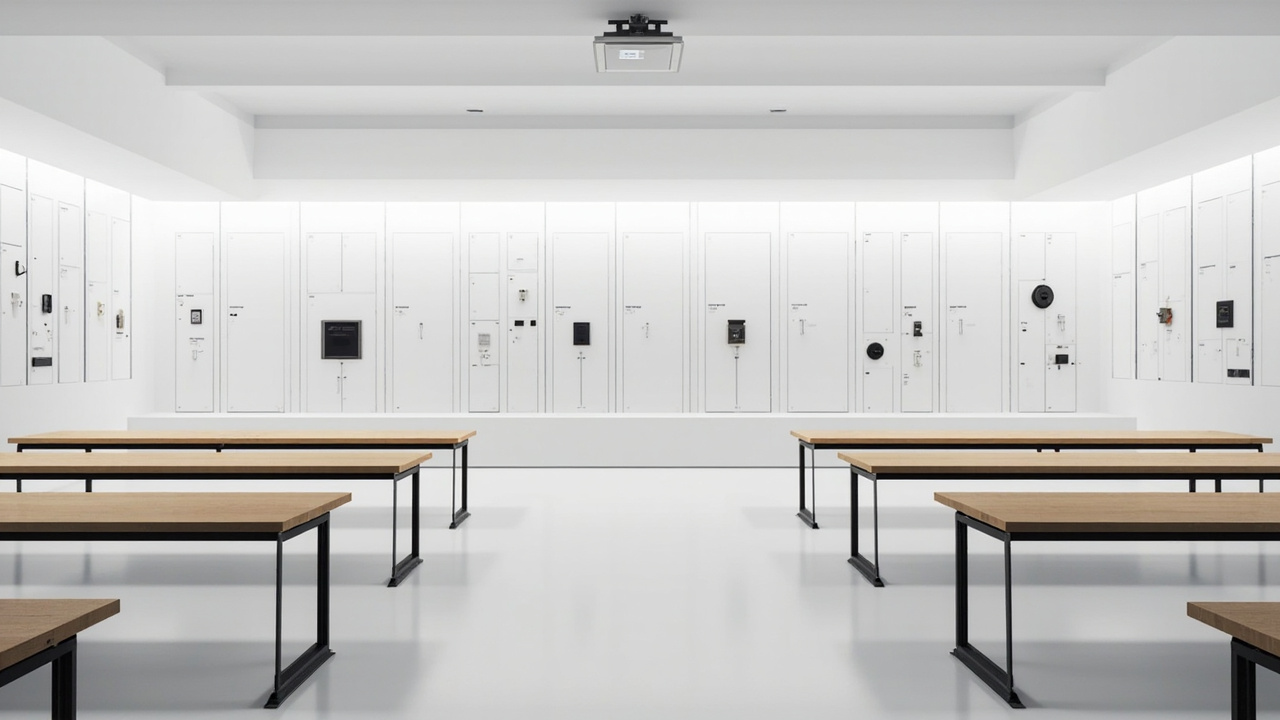
A manufacturer is judged on the second order
The first order is a sample run with extra attention. The second order is the one that shows whether the line, the quality process and the paperwork hold up when nobody is watching.
- Assembly and test stay on the same line for your programme
- Every unit carries a batch trace back to its assembly shift
- The document pack is issued from the model record, not rebuilt per order
Stations
Process stations you can audit
Six stations carry the evidence. Each one produces a document, and the document is the point: a station without a record cannot be audited, only observed. The list below is the route a buyer walks during a visit, and the order matches the physical flow of a lock from parts to a released carton.
| Station | What happens | What document is produced |
|---|---|---|
| Incoming parts inspection | Parts are checked against the drawing on receipt: mortise dimensions, plating appearance, board revision and battery date code; a lot is rejected or accepted as a lot | IQC record with lot number, sampled quantity and measured values, signed by the inspector |
| Sub-assembly | Mortise, latch, spring, clutch and handle are assembled and adjusted; units are labelled so a defect can be traced back to a station and a shift | Travel card or work-in-process label that follows the unit through every station |
| Firmware programming | The approved build is flashed at the fixture and bound to a serial number; a failed flash is rejected rather than re-flashed until it passes | Firmware version record per batch, with the serial range and the build identifier |
| End-of-line function test | One record per unit: card read at 13.56 MHz, 4 x AA cells verified for voltage and contact, mechanical key override checked, auto-lock delay and low-battery alert confirmed | Test log per serial number, with the pass or fail result and the tester on duty |
| Packed-carton inspection | Carton count, accessory bag, manual language, label text and barcode are compared with the approved proof before sealing | Packing checklist and carton label record linked to the order number |
| Shipment release | Pallet or container count, carton condition and document set are matched before the goods leave the building | Release note, packing list and inspection report issued against the shipment |
The end-of-line test is the station buyers ask to see twice, because it is the only one that touches every unit rather than a sample. An order of 200 units therefore produces 200 test records, one per serial, and a buyer can ask for the serial range in the release note and compare it with the log. A 90-minute visit is enough to watch three units go through the bench from card read to key override, which is the practical answer to the question of whether the test is real. The wider quality gates, including sampling rules and failure handling, are described at quality control and at manufacturing.
Scheduling
Scale and order fit
Capacity is a scheduling question, not a headline number. A factory of this size runs a mixed line, so what changes between order profiles is how the line is loaded and how often it is interrupted, not a single throughput figure that applies to every model. The table describes the logic a planner uses; the numbers that matter for your order are quoted per order.
| Order profile | Model mix | Tooling involved | Set-ups in the run | What changes in scheduling |
|---|---|---|---|---|
| Trial order | A few models, small quantity, used for a market test or a single project | None; stock models off the catalogue | 1 set-up | Scheduled into a gap between larger runs, so the lock body is shared and only packing and labelling are dedicated |
| Repeat catalogue order | Established models at a steady interval, often the same finish | None | 1 set-up | Planned as a repeating slot; the advantage is that material can be reserved before the order is confirmed and the test fixture is already set for that build |
| Multi-model container | Several families in one shipment, for example hotel card locks, keypad locks and glass door locks together | None, unless a finish is new | 3 to 6 set-ups | Sequenced by family so colour changes are grouped; the last model to complete sets the shipment date, which is why a late change on one model moves the whole container |
| OEM programme | One or two models with a buyer brand, fixed packaging and a firmware configuration | Packaging die-line and print plates; no lock tooling | 2 set-ups | Reserved against the buyer's confirmed forecast; approval of artwork and the golden sample gates the slot, and an unapproved carton holds the locks rather than the line |
| ODM development | A new housing, PCBA or reader position, with its own model identity | Mould, PCB layout, fixtures and a dedicated test fixture | 1 set-up after freeze | Development milestones come before line time: tooling, first article, validation and freeze, and the mass slot is booked only after the golden sample is signed |
The practical consequence is that two orders of the same quantity can have different schedules because one of them changes a finish and the other does not. Finish changes are batched, so a colour that is already running joins an existing slot while a new colour waits for a plating run. Product mix matters for the same reason: a container that runs across 3 families needs 3 set-ups, and a container of one model needs one. That is also why the answer to how long an order takes is quoted per order rather than published, and why an early confirmation of the model list is worth more than an early payment date.
Verification
Evidence levels from photos to an on-site audit
Evidence is graded, and a buyer should know which level a claim sits at before treating it as proof. The five levels below apply to any statement about the factory, including the statements on this page.
| Level | What it is | How a buyer obtains it |
|---|---|---|
| L1 - Photos and video | Images of stations, benches and packed goods, usually supplied with the model or during a quotation | Ask for dated images of the specific station and the model batch, not a gallery of the building |
| L2 - Live video call at the line | A scheduled walk through the stations during a production run, with the batch visible on camera | Book a time slot during the run; ask for the serial range and the work order on screen so the batch can be matched to the shipment |
| L3 - Documents per model | Drawings, test report, declaration, label content and manual for the exact model number ordered | Request the document pack for the model and check that the model number on each page matches the order |
| L4 - Third-party inspection | An inspection carried out by a buyer-nominated agency against a written checklist, before shipment | Nominate the agency, agree the checklist and the sampling plan, and share the report before the balance payment |
| L5 - In-person audit | A visit to the Shenzhen site, walking the stations and reading the records on the spot | Agree a date through the factory tour, send the audit questions in advance, and bring the model list you intend to order |
Most disputes about a factory are disputes about level, not about truth. A photograph proves that a bench exists; it does not prove that a batch passed through it. A live call proves a batch is running; it does not prove the finish matches the approved sample. A model document pack proves what was tested; it does not prove what is in the carton. The combination of L3 documents and an L4 inspection is the normal package for a first order, and L5 is what a buyer uses when the relationship is large enough to justify a flight. The documents behind those levels are maintained at the testing laboratory and the compliance document center.
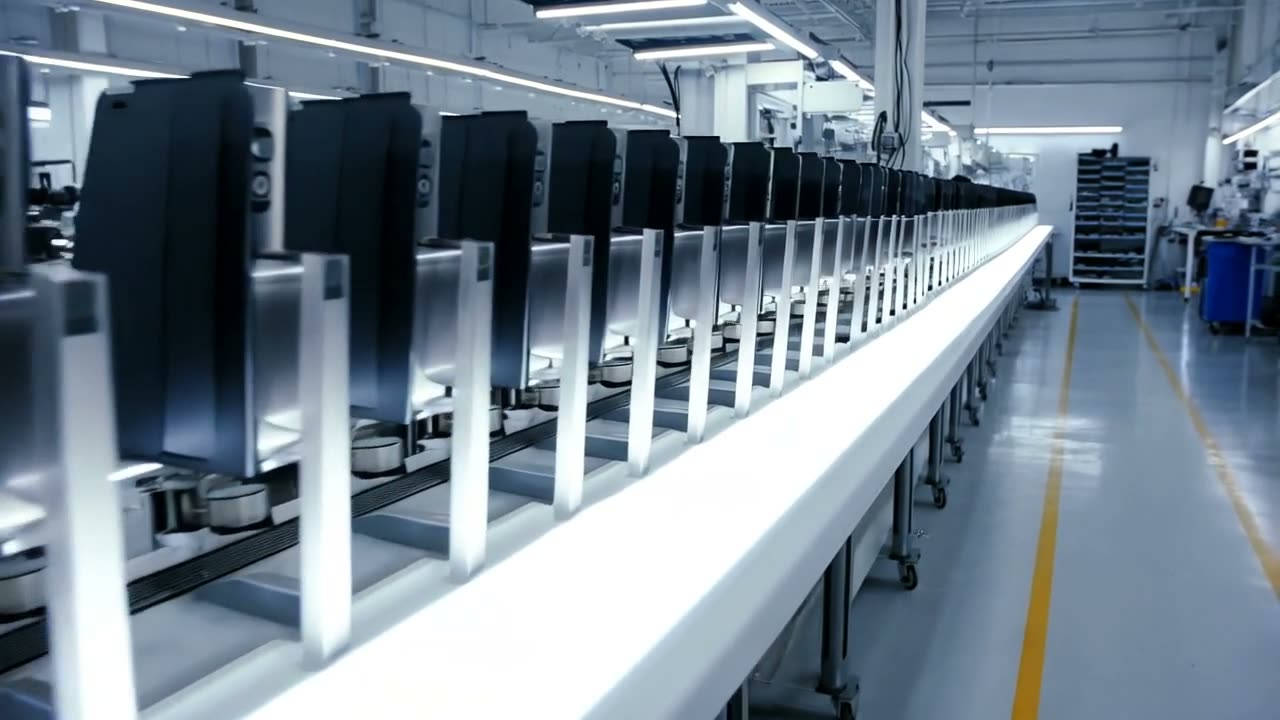
The production line where a repeat order is assembled
The clip runs along the assembly line: units in fixtures, tooling and parts trays laid out in order, and the same checks repeated at every station. This is the arrangement your repeat order is built in, which is why a second shipment is priced and scheduled the same way as the first.
Visit
The 90-minute audit route
Ninety minutes is enough to see the six stations and read the records, if the route is planned rather than improvised. The order below follows the physical flow of a lock, which is the order in which a quality problem would appear.
Minutes 1 to 10: model map and office. The visit starts with the catalogue, not the line: 6 families, 70 models, the 20 hotel RFID card lock models and the model you intend to order. The point is to confirm that the model is a build path and not a photograph. Photograph: the model board and the plan of the layout. Not photographed: other buyers' packaging artwork on adjacent desks.
Minutes 10 to 30: incoming store and IQC bench. Watch a lot being checked against a drawing, and ask to see a completed IQC record with a lot number. The useful question is what happens to a rejected lot, not how clean the shelf is. Photograph: the bench, the gauges and a blank record. Not photographed: supplier labels that name another customer's order.
Minutes 30 to 55: sub-assembly and firmware. Third station: a unit being assembled, labelled and traced. Fourth station: a board being flashed at the fixture, with the version record opened on screen. Photograph: the travel card and the programming fixture. Not photographed: the fixture parameter screen, which carries production settings.
Minutes 55 to 75: end-of-line bench. Fifth station: watch at least 3 units complete the full test, including the card read at 13.56 MHz, the 4 x AA cell check and the mechanical key override. Ask for the test log for the serial range in front of you. Photograph: the bench and a redacted test log page.
Minutes 75 to 90: packed goods and release desk. Sixth station: sealed cartons, a label compared with the approved proof, and the release documents for the shipment. Photograph: carton exteriors, the packing list and the release note. Not photographed: opened cartons of another buyer's finished order.
The route is deliberately front-loaded with records rather than machines. A machine can be bought; a record system cannot be installed for a visit. The two limits are practical: the visit shows the process that is running on that day, and it does not cover a model that is not in production. A buyer who needs to see a specific model should book the visit against that model's slot, which is why a tour date is normally agreed after the model list, not before. A factory tour is arranged against an agreed model list and a confirmed production slot rather than on demand, and the shipping and loading arrangements that follow a visit are covered at logistics and shipping and supply chain.
Boundaries
What this factory does not do
Not included: in-country installation, certification body services, guaranteed stock across the whole catalogue, and custom silicon development. These are not gaps we intend to close; they are the boundary of a factory that builds locks and documents what it built.
- We do not install locks in your country. Installation is a local trade with local liability, and a factory crew that arrives for 2 weeks cannot service a building afterwards. The documents, training and remote diagnosis that replace it are at installation support.
- We do not act as a certification body. A test report is issued by a laboratory, and a factory certificate describes a quality system, not a lock. Model-specific reports are supplied on request, and no one here will sign a declaration on behalf of a lab.
- We do not hold stock across all 70 models. Parts and common models are kept for service; a model outside the normal run is scheduled, not picked from a shelf. A buyer who needs immediate delivery should confirm which models are in stock at the time of the order.
- We do not develop custom silicon. Reader and radio design uses proven modules at 13.56 MHz and licensed platforms; a bespoke chip is a semiconductor programme with its own years-long cycle, not a lock project.
- We do not promise a certificate, a price, an MOQ or a lead time before the model and market are fixed. Those four numbers belong to a specific order, and they are confirmed in writing with the quotation.
Everything inside the boundary is ordinary work: bodies, boards, firmware builds, finish approval, carton inspection, model documents and training material. The four refusals are worth stating because each one is occasionally requested and always expensive to fake. A distributor who wants a local installation partner is better served by the partner programme at become a distributor, and a buyer who needs a private label run rather than a new product should start at private label. The company structure and the business we decline are described at about us.
FAQ
Manufacturer questions buyers send before a visit
How many of the models are built entirely in-house?
No single percentage answers that, because the build path differs by model. The mechanical body, the board assembly, the firmware flash and the end-of-line test are in-house. Plating, castings, bare PCB fabrication and the software platform are partner work. The document pack for a specific model states its build path, and the status column above is the general rule.
Which parts of a lock come from partners?
Plating and surface treatment, die-castings and extrusions, bare PCB fabrication and SMT placement, and the third-party app platform. Each partner is named in the model document pack on request, and each change of partner is treated as a change to the model rather than a routine substitution.
Can you certify a lock for our market?
No. Certification is issued by an accredited laboratory, and the certificate belongs to the model that was tested. What the factory provides is the sample submission, the technical file and the model-specific report the laboratory issued. Which documents a market expects is set out at certifications.
Can you install the locks in our country?
No. Installation is carried out by your team or a local installer, with factory documents, training and remote diagnosis behind it. The reason is liability and response time: a crew that flies in cannot return within 48 hours when one door in a 200-room building misreads a card.
Do you hold stock across the whole catalogue?
No. Common models and service parts are kept, and a model outside the normal run is scheduled into the line. Stock status is confirmed per model at the time of the order, and the spare list that supports an installed fleet is described at spare parts.
What can we photograph during a factory visit?
Stations, benches, gauges, blank records, carton exteriors and your own order's documents. Not other buyers' packaging artwork, supplier labels with another customer's name, opened cartons of a finished order, or the fixture parameter screens. The route and the limits are listed above, and a visit is booked through the factory tour.
Check the capability, then book the audit
Send the model list, the destination market and the evidence level you need. We reply with the build path for each model, the documents that exist for it, and a visit plan that matches your schedule; MOQ policy, price and lead time are confirmed in writing with the quotation.
Request a quoteWhatsApp the export desk