
Last updated: October 31, 2026 · Reviewed by export engineering
Most about pages answer a question nobody asked. This one answers the three a buyer actually asks before a first order: what this company is made of, who takes responsibility for my order once the money leaves my account, and whether I can check any of it without trusting the page. Everything below is either a fact with a named issuer or a boundary drawn where the business stops.
Structure
What this company is, in one table
Six rows. Each row names the fact, how to check it, and who signs the document that proves it.
| Fact | How you verify it | Who issues the evidence |
|---|---|---|
| What we make | Six product families, 70+ production-ready models, including 20+ hotel RFID card lock models. Count the catalog, model by model; the count is not a capacity number. | Export engineering, on each catalog revision |
| Where we are | Office at Caitian Garden, Caitian Road, Futian District, Shenzhen, China; production in the Shenzhen manufacturing area. | The office manager, on company letterhead |
| How long | More than 10 years focused on smart lock production. | The company registry, on the registration extract |
| Who we sell to | Importers, distributors, hotel groups, project contractors and OEM brands, with buyers in 80+ countries. | The shipping desk, from actual shipment records with customer names redacted |
| How you reach a person | Phone (+86) 1368 6469 587, WhatsApp 8613686469587, [email protected] for sales and [email protected] for support. | Nobody. A number either answers or it does not, which is why it is printed here. |
| What we do not claim | No factory-wide certificate for a product. Product documents belong to the model, and the model document pack states what is held. | The certificate issuer named inside each document |
The company is a manufacturer and an exporter, not a trading house that relabels a catalogue. What that means in practice is narrow and useful: the models are produced to a fixed build, the changes you can buy are defined in advance, and the engineering that answers your door schedule is the engineering that runs the line. What it does not mean is that every component is made under one roof. Components come from suppliers, assemblies are built and tested on the floor, and the boundary between the two is written on the supply chain page.
Responsibility
Who owns what in an order
Seven stages. One named person per stage, and the handover rule that stops an order falling between two desks.
| Stage | Who owns it | What you receive | Handover rule |
|---|---|---|---|
| Enquiry and quotation | Quotation desk, sales | A written quotation with line items, trade terms and the MOQ policy stated for that order | Nothing is quoted from a phone call alone; the quotation is the record |
| Technical confirmation | Export engineering | A model recommendation against your door schedule, with the fit assumptions written down | Engineering answers the technical question, not the salesperson, and both are copied on the thread |
| Sampling | Sample desk | A unit of the exact model, finish and firmware generation, with its document pack | The sample is kept as the reference unit; a later argument about finish is settled against it |
| Production | Production planning | A production schedule naming model, finish, quantity and the inspection points | Any change after the schedule is released becomes a written change, not a verbal adjustment |
| Inspection | Quality control | Inspection records and the end-of-line test result for the batch | A batch that fails inspection is not released because a shipment date is close |
| Shipping | Shipping desk | Packing list, carton marks, the transport document draft and the HS code used | Shipping documents are issued against the inspected quantity, not the ordered quantity |
| After-sales | Support engineer | Written diagnosis, replacement parts or a firmware note, and the warranty route | The support thread stays with the same engineer until the case is closed |
You will meet three people in a normal order: the quotation contact, the export engineer and the support engineer. That is deliberate. A buyer who has to explain the same door schedule to four departments usually ends up with two versions of it, and the version that arrives on the floor is rarely the one the buyer signed. The quantities a quotation carries are as plain as the roles: one spare lock per 50 doors as its own line, one encoder per issuing desk, and a spare card pool at 5% of the credential count. At 200 doors that is 4 spare locks and 2 desks.
The seven stages above are the ones written into project management when an order has fixed milestones, and they are the same seven that a factory visit walks past on the tour route.
Production
The line that builds the order
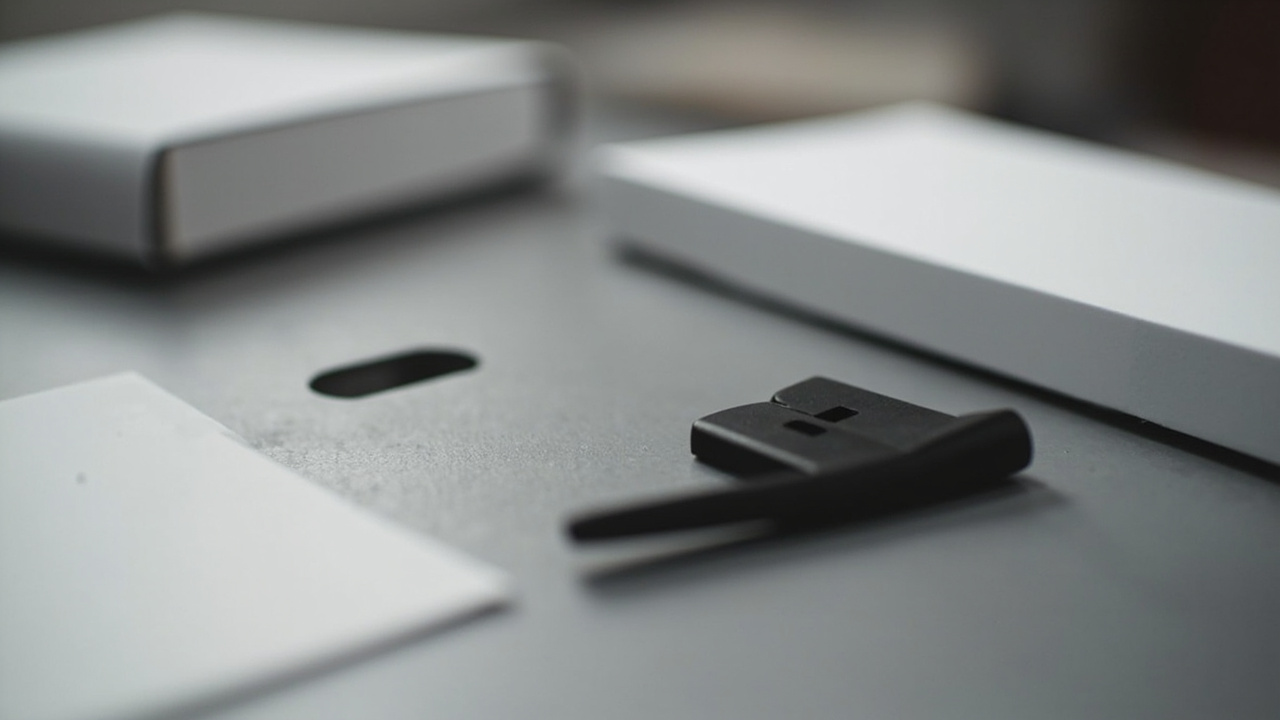
Assembly and test run in one hall. The same stations, the same fixtures and the same recording produce a unit you can trace back to a shift.
Development
Where a new model starts
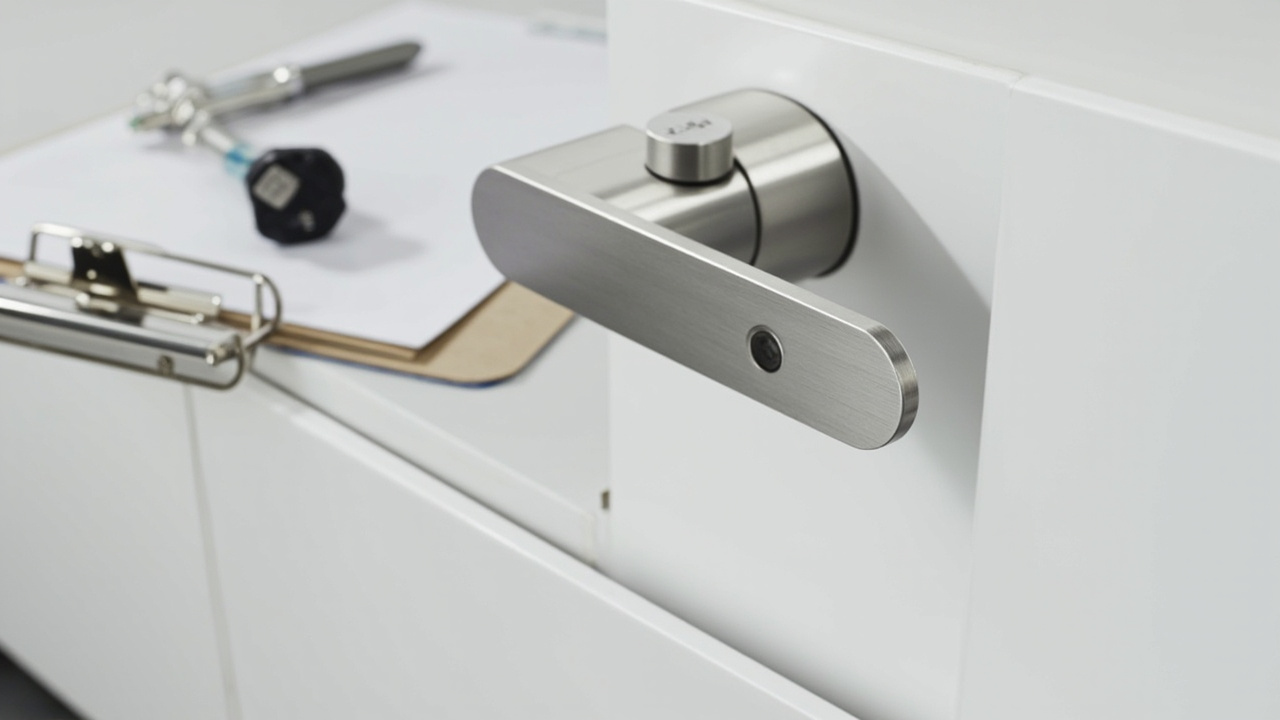
Development sits beside production on purpose. A drawing that has not been walked on the floor has not been finished.
Quality
Checks recorded before shipment
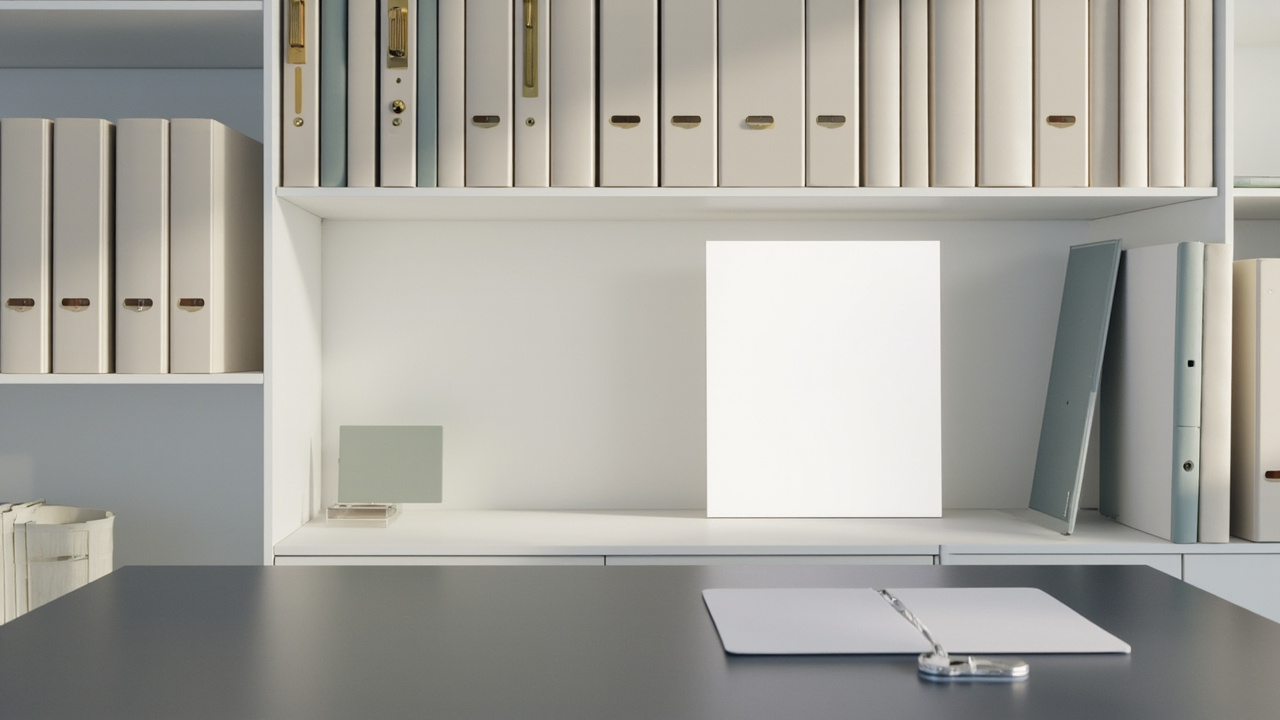
Inspection results are written per batch with the units sampled and the failures counted, so a buyer can read the record instead of taking a statement on trust.
Export desk
One route from enquiry to shipment
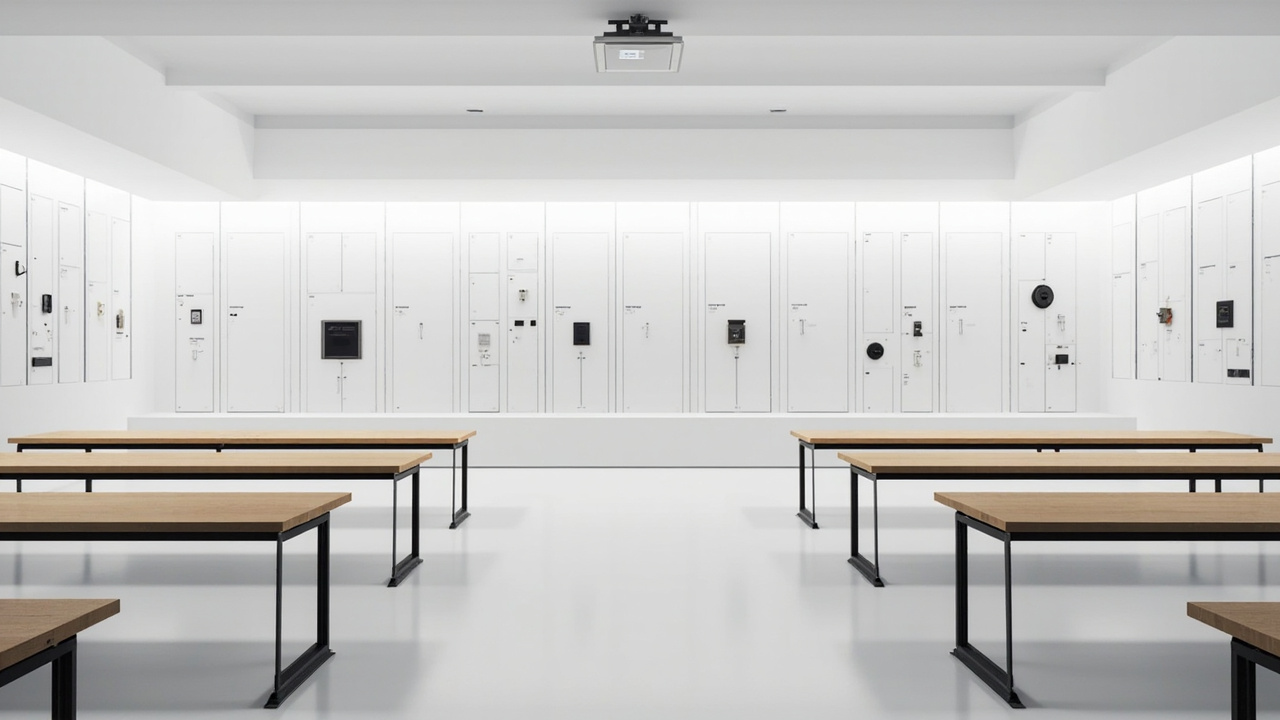
Specification, samples, documents, production updates and shipping paperwork are handled by a single desk so a buyer does not have to reassemble the story from several inboxes.
Place
Where the work happens: office, floor and shipping desk
Three locations do three different jobs, and a buyer should know which one is answering an email. The office sits at Caitian Garden on Caitian Road in Futian District, Shenzhen. Sales, export engineering and document control work from there: quotations, door schedule reviews, the model document packs, and the paperwork that goes with a tender. The address on the invoice and the letterhead is this office.
The production floor is in the Shenzhen manufacturing area. Assembly, programming and end-of-line testing happen there, and so does the packing that produces the carton marks on your packing list. The line runs to a schedule, which is why a change asked for after the schedule is released is handled as a written change rather than as a favour. The stations and the inspection points are described on manufacturing and the sampling rules on quality control.
The shipping desk sits between the two. It books the transport, prepares the documents, matches the packing list to the inspected quantity, and answers the questions that arrive after the container leaves: which HS code was used, what the carton dimensions are, and what happens when a consignee rejects a pallet at destination. Those answers are on logistics and shipping, and the desk that gives them is the desk that prepared the file. At 500 doors the file set becomes a project file rather than an order file, which is why the milestone route exists.
One thing follows from this geography: nobody in the company will tell you the factory is next to the office. It is not. The sales address is a place to send documents and to meet, and the floor is a place to audit.
Portfolio
How six product families divide the work
A family is a build type, not a brand. Most orders mix two or three.
| Family | What it is for | Typical model | What it is not |
|---|---|---|---|
| Hotel RFID card locks | Guest rooms and rented units where a desk issues and expires cards | SLK-2020: 201 stainless steel body, 306 x 75 x 15 mm, No. 2 hotel mortise, 4 x 1.5 V AA cells at 6 V nominal, PC-linked encoder, mechanical key override | Not a networked door controller. Standard models run offline. |
| Card and keypad access locks | Offices, classrooms, plant rooms and rentals where a code or a card is enough | SLK-509, SLK-818, SLK-8831 keypad models | Not an audit system on its own. Records live in the lock until they are read. |
| Fingerprint locks | Indoor wooden doors in homes and small offices | SLK-Y22 | Not an outdoor product, and not a substitute for a card system at a desk |
| Glass door locks | Frameless glass and double glass office doors | SLK-G200; SLK-B09 face recognition on double glass doors | Not a fit for a timber leaf, and not a fire-door solution |
| Outdoor and weatherproof locks | Aluminum patio doors, gates and weather-facing entrances | SLK-D11, SLK-D12, SLK-D15 | Not rated for every climate by default; the document pack states what is held |
| Cabinet and locker locks | Storage cabinets, lockers and small-format doors | Cabinet lock family | Not a room lock. The controller logic is per bank, not per door. |
The families exist because the build differs, not because the marketing needed six pages. A hotel card lock is a mortise body with a reader, a battery pack and a mechanical override; a glass lock is a different mechanical problem entirely; a cabinet lock is a small-format mechanism with a controller. In numbers, the standard hotel body is 306 x 75 x 15 mm and sits on a leaf from 38 to 55 mm thick, which is why a 35 mm office leaf takes a different body rather than a longer screw. Mixing two families in one order is normal and does not create two suppliers. What it does create is two document packs, because the certificate and the test report belong to the model, not to the family and certainly not to the company.
Markets
Markets we serve, markets we do not
Buyers in 80+ countries have taken delivery of these models. In practice the enquiries cluster around four commercial situations: an importer building a range for its own market, a hotel or apartment operator buying for a specific property, a project contractor buying against a tender, and an OEM brand buying to its own specification. Each of those has a different entry page: distributor terms, the relevant scenario page, project management, and OEM and ODM respectively. The arithmetic does not change with the buyer type: a 200-room property over 4 floors needs 200 room locks, 4 spare locks at one per 50 doors, 2 encoders and a 5% card pool.
What decides whether a market is served is not the country. It is whether the buyer can import the goods, install them and hold the local compliance file. We can supply the model document pack and the test reports that exist for the SKU, and we can state which standard a document addresses. We cannot issue a local approval for a market where no document exists, and we will not pretend that a Chinese test report substitutes for a European notified-body certificate or a North American listing.
That is why the answer to "do you have the certificate for my market" is a document request rather than a yes. The market matrix on certifications is the page that maps a target market to the file set a buyer usually needs, and it is written to be read next to the document pack rather than instead of it.
Boundary
What this company does not do
- We do not install or commission locks abroad. Delivery covers hardware, software where applicable, the encoder, cards and written commissioning documents. Installation is the buyer's or the project's scope, supported remotely through installation support.
- We do not supply doors, frames or fire labels. Those belong to the door supplier and the project's fire consultant, and a 30 mm hollow leaf or a heritage frame is a different product question before it is a lock question.
- We do not design or certify fire systems. The alarm interface, the release logic and the fire panel connection are outside our scope on every page of this site.
- We do not sell direct to consumers. There is no retail checkout and no single-unit consumer channel here; single samples are sold through sample ordering for evaluation.
- We do not claim a factory-wide product certificate. The certificate belongs to the model. A document that names the company and not the SKU is not the document a tender is asking for.
- We do not grant exclusivity without a written agreement. Territory and protection terms sit on the distributor page, and they are negotiated, not assumed from a first order.
- We do not publish a price list or an MOQ table. Both depend on model mix, finish, quantity and destination; the MOQ policy is confirmed in writing with each quotation.
- We do not promise a test result in advance. The bench reports what it ran; a number on a web page is not a test report.
Evidence
How to verify every claim on this page
If a statement cannot be checked, it should not be on the page. Here is the check for each kind of statement.
| What we say | How you check it yourself | What you get back |
|---|---|---|
| We are a manufacturer in Shenzhen | Book a visit, walk the floor and watch a lock being assembled and tested | A dated visit note, your own photographs, and the line stations described on manufacturing |
| 70+ models, six families | Count the catalog line by line and match each model to a URL | A catalog revision with a date, and the product index |
| 10+ years, 80+ countries | Ask for the registration extract and a redacted destination list from shipment records | Two documents issued outside the sales team |
| The model holds a named standard | Ask for the model document pack by SKU and market | The report or declaration, with the issuer named inside it; see certifications |
| The batch was inspected | Ask for the inspection record and the end-of-line result before the balance is paid | Records signed by QC, tied to the batch number on the packing list |
| The bench ran a test | Ask for the report by model and standard, and ask which values were measured rather than quoted | The report from the testing lab, with its own date and unit |
The pattern is the same in every row: a document with a date, an issuer and a scope, produced by someone other than the person who wants the order. Buyers who want the whole set at once should start with the compliance document centre, which lists the file set by tender type.
Answers
Company questions buyers ask in the first call
Are you a factory or a trading company?
A manufacturer and exporter. Assembly, programming and end-of-line testing happen on the production floor in the Shenzhen manufacturing area, and the office in Futian handles sales, engineering and export documents. Components are bought in from suppliers, and the boundary between what is made and what is bought is written on the supply chain page.
Who is my contact after the order is placed?
The export engineer who confirmed your door schedule. Sales stays copied on the thread, but technical answers come from the engineer. After delivery, the same thread moves to a support engineer who owns the case until it is closed, so you are not re-explaining the lock to a new person each time.
Can I visit the factory before ordering?
Yes. Visits are booked through the factory tour route, and the walk covers the line stations, the test bench and packed goods. If travel is not possible, a dated walkthrough recording is the alternative, and both are arranged through the contact page rather than agreed informally in a chat.
Do you have ISO 9001 or CE certificates?
Standards are named on this site because buyers reference them, not because the site can certify anything. Whether a current certificate is held is stated in the document pack for the model and company, with the issuer named inside the file. A page cannot substitute for the certificate, and a factory-wide claim is not a product document.
Can you put our brand on the product and the box?
Yes, at defined tiers from label and packaging to hardware changes. Each tier changes the certificate situation and the lead time in a different way, and both are stated per tier on the OEM and private label pages before artwork is commissioned.
What markets do you not sell into?
We do not sell direct to consumers, and we do not take orders where the buyer needs a local approval that no document exists for. Defence procurement and projects requiring a local manufacturing certificate are also outside the range. Everything else is decided by whether the goods can be imported, installed and documented.
Do you give exclusivity in a territory?
Only under a written distributor agreement with stated terms. The tiers, the territory boundaries and the exceptions are set out on the distributor page. A first order does not create exclusivity by itself, and no salesperson can grant it verbally.
What happens if a lock fails in year two?
The support engineer diagnoses from the batch number and the model, then supplies a part or a replacement through the spare parts route. The warranty schedule signed at handover says what is covered and what is bought separately, and the same batch number ties the failure to the inspection record.
Start with a quotation, not a brochure
A quotation is the first document where a company has to commit to something checkable: the model, the line items, the terms and the MOQ policy for your order. Send the door schedule and the destination market, and the reply comes from the office that will also handle the export documents. If the first question is about the company rather than the product, the contact page reaches a person faster than a form.
Request a quotationBook a factory tour