
Last updated: October 31, 2026 · Reviewed by export engineering
Every defect in a smart lock has an address. It is created at one station and found at a later one.If the second station does its job, the buyer never sees the defect. If it does not, the defect is discovered on a door in a finished building.
A smart lock fails in one of four places: the clutch motor that drives the bolt, the mortise that holds the latch, the firmware that decides what the lock accepts, and the battery path that feeds all three. Each has an owner station here, and each leaves a defect signature that a later station is built to catch. The question is not whether a factory has stations. It is which station owns your model, and what that station gets wrong when it is rushed. This page answers both.
Stations
Stations and their failure modes
Nine stations sit between a supplier pallet and a sealed carton. Each is a place where a defect can be created, and each is also a place where a defect from an earlier station can be caught. The third column is the defect that station is known to create; the fourth is the mechanism that catches it. A defect with no catcher is a defect that reaches a door.
| Station | What happens | Typical defect it creates | How it is caught |
|---|---|---|---|
| Incoming parts inspection | A lot is checked against the drawing on receipt: mortise dimensions, plating appearance, board revision, battery date code. The lot is accepted or rejected as a lot, not part by part. | A lot accepted on a sample that hides a dimensional drift, or a pallet where two board revisions share one bin. | The IQC record names the lot, the sampled quantity and the measured values; a mixed bin shows up when the assembly bench reports a part that will not enter its fixture. |
| Mortise assembly | Latch, deadbolt, spring, follower and faceplate are assembled and adjusted against the No. 2 hotel mortise drawing, then cycled by hand. | A latch that throws short, a deadbolt that binds at the faceplate, a mortise that will not accept a 0.5 mm spindle offset. | A manual cycle in both directions on the assembly bench, and again on the mechanical override at end-of-line. |
| Clutch and motor fitting | The micro motor and clutch are fitted to the body, the gear mesh is checked, and current draw is read at the fixture. | A motor mounted with a skewed gear that runs freely on the bench and binds after 200 cycles, a clutch that slips under load, a harness pinched at the escutcheon edge. | The drive test runs the motor in both directions at end-of-line; a pinched harness reads above the fixture current window. |
| PCBA and firmware programming | The approved build is flashed and bound to a serial number; the board revision is checked against the work order before the fixture starts. | A unit carrying an older build, a board flashed with the right image but the wrong parameter set, a serial number entered twice. | The test bench reads the version back and compares it with the work order; the version record is printed per batch with the serial range. |
| Reader calibration | The RFID antenna is tuned to read at 13.56 MHz, and the fingerprint module threshold is set against a reference finger set at the start of each shift. | A reader that reads at 2 cm on a bench and fails on a 45 mm steel door, a fingerprint threshold set too tight for dry skin in winter. | Read distance is checked at three positions on the bench, and a calibrated reference card and reference finger are used per shift. |
| Handle and finish | Handle, escutcheon and castings are assembled, then the surface is compared with the signed colour reference under a fixed light. | A lot drifting one shade away from the reference, a plating pit at a finger contact point, a badge pad print rotated two degrees. | Comparison against the signed golden sample at the station, plus a colour check on each plating lot before it is released to assembly. |
| Final assembly | Body, board, reader, keypad and battery holder go into the housing; the gasket is seated and the screws are torqued to the drawing. | A gasket sitting proud so the sealed build is weaker than the drawing, a battery contact that only closes when the case is pressed. | Gasket seating is checked against a depth gauge; the battery path is loaded with 4 x AA cells and tested, not merely checked for presence. |
| End-of-line function test | Every unit, never a sample: power-on, motor both directions, credential read and write, keypad or biometric verification, low-battery alert, mechanical override, lock-state feedback, firmware version. | A unit that passes on the bench and fails on the door because the reader was aligned for the rig, or a low-battery alert that never fires. | The test itself, with one record per serial number, signed by the tester on duty. |
| Packing | Carton, accessory bag, manual language, label text and barcode are compared with the approved proof before the carton is sealed. | A carton holding the right lock and the wrong manual language, a barcode pointing to another model, a missing override key. | Pre-shipment inspection on packed cartons, plus the carton label record tied to the work order. |
The pattern is that no station reliably catches its own defect. Mortise assembly cannot see that the casting it was issued is 0.5 mm out of tolerance; the error appears when the faceplate is offered to a real door. A motor fitted with a skewed gear runs freely on a bench and binds after 200 cycles, which is why the drive test runs both directions rather than one. A reader trimmed for a bench rig can read at 2 cm and still fail on a 45 mm steel door. In each case the defect is created at one station and confirmed at another, and the gap between the two is the whole reason a second check exists.
Two dimensions matter more than any badge on a wall. A hotel card lock such as the SLK-2020 measures 306 mm x 75 mm x 15 mm and carries a No. 2 hotel mortise; a faceplate error of 1 mm is enough to produce a lock that passes every electronic test and still will not sit square. Interior leaves in the field usually measure between 38 mm and 55 mm, which is why the fit is checked per door type rather than per model. The station blamed for a fit problem is usually the last one that touched the lock; the station that caused it is usually the one that never saw a door.
Make or buy
What is made here and what arrives finished
No lock factory of this size builds every component, and a buyer who assumes otherwise plans the wrong schedule. Of the eight components below, the mortise, the encoder and the assembly, flashing and calibration work are in-house. The clutch motor, the PCBA, the fingerprint sensor module, the RFID reader module and the keypad overlay arrive from specialist partners as finished or semi-finished goods, and the battery holder arrives as a moulded part. Saying this plainly is not a weakness. It tells you which part of the schedule belongs to this building and which part belongs to a supplier calendar you cannot see.
| Component | Origin | Why it matters to your lead time |
|---|---|---|
| Mortise | Assembled and adjusted in-house from cast and machined parts; the castings arrive from a die-casting partner | The longest mechanical item on a card lock. A drawing change to backset or latch throw restarts the partner casting order, so the mortise is the component that decides whether a date holds. |
| Clutch motor | Supplied by a motor specialist; geared, fitted and current-tested in-house | The motor is a bought module on its own supplier schedule. A change of motor specification is a new component approval with a supplier sample, not a substitution from a shelf. |
| PCBA | Bare board fabrication and SMT placement at a board partner; assembly, flashing and board test in-house | A board revision adds a partner cycle before flashing can start. A PCBA change is therefore weeks of supplier work, not an afternoon of rework. |
| Fingerprint sensor module | Supplied as a module by a specialist partner; mounted, aligned and thresholded in-house | Module supply is the constraint, and sensitivity has to be set for the climate the lock ships into. A housing change that moves the sensor reopens the alignment work. |
| RFID reader module | Supplied module operating at 13.56 MHz; tuned and tested in-house against MIFARE cards | Antenna tuning happens here, so the read distance you get depends on the fit as well as the module. A change to the front panel is a retune. |
| Keypad overlay | Printed by a membrane partner from buyer artwork; fitted and tested in-house | Artwork approval gates the print, and a print run has its own calendar. A language change is a new print run, never a sticker over the old one. |
| Battery holder | Moulded part from a tooling partner; contacts and spring checked and loaded in-house | Contact geometry decides whether 4 x AA cells survive container vibration. A holder change is a mould change with its own first article. |
| Encoder unit | Assembled, flashed and tested in-house | The part the reception desk uses every shift. Its firmware version has to match the lock fleet, so it is built and versioned with the same run. |
The split matters in both directions. Because the mortise is assembled and adjusted here, a change to backset or latch throw can be quoted as a drawing change and re-checked at the bench before the finish goes on. Because the clutch motor is bought as a module with its own specification, a motor change needs a supplier sample and its own approval. Because the bare board is placed at a board partner, a PCBA revision adds a partner cycle before programming begins. When a buyer asks how long an order takes, the honest answer is the longest of these paths, and the path changes with the component that moves. That is why lead time is quoted per order and depends on model mix, finish and customization rather than published as a single number.
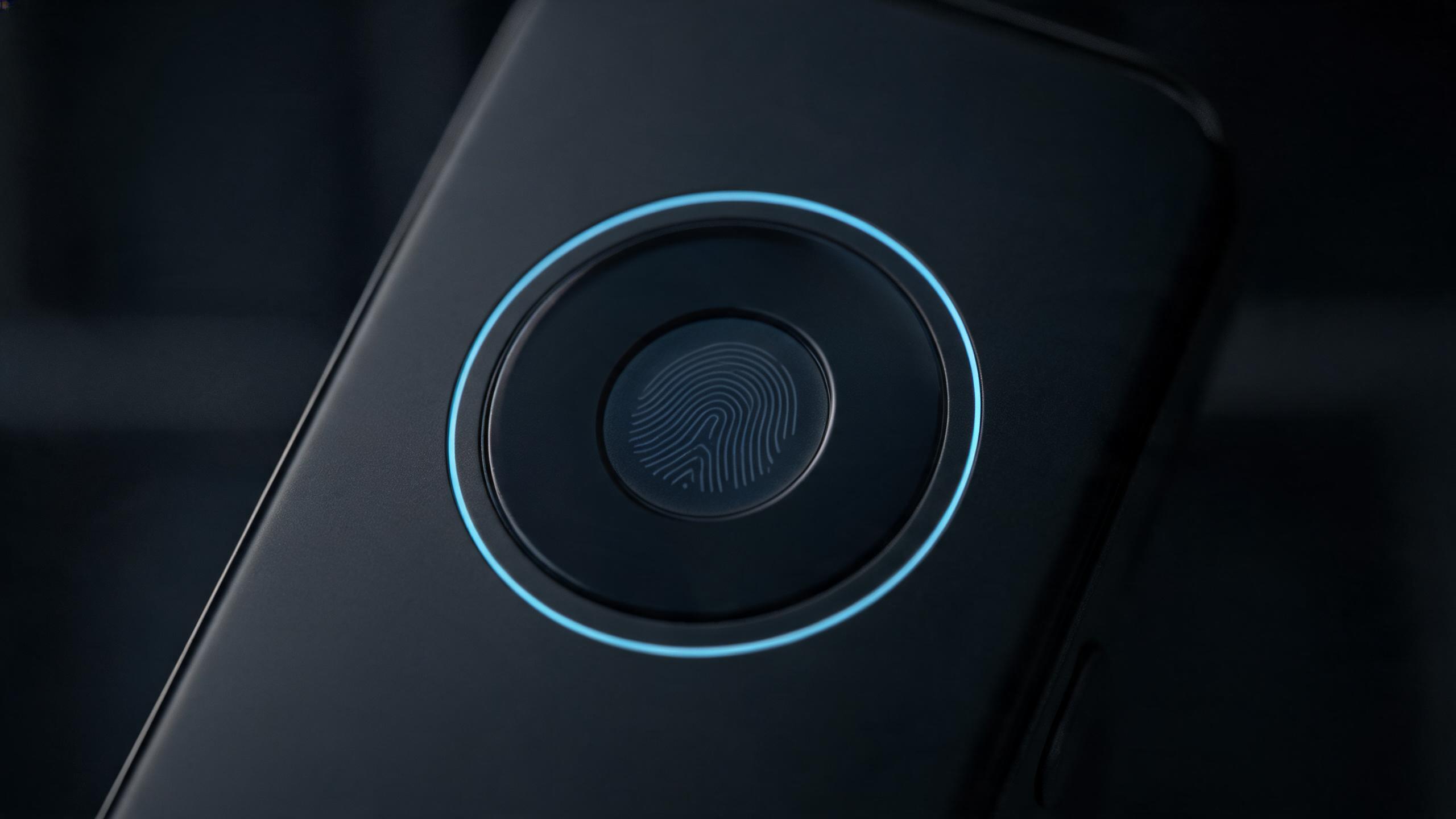
Line 01
Incoming material
Motors, boards, cylinders and housings are checked against the drawing before they reach a station. A rejected part is recorded against the supplier, not against the operator.
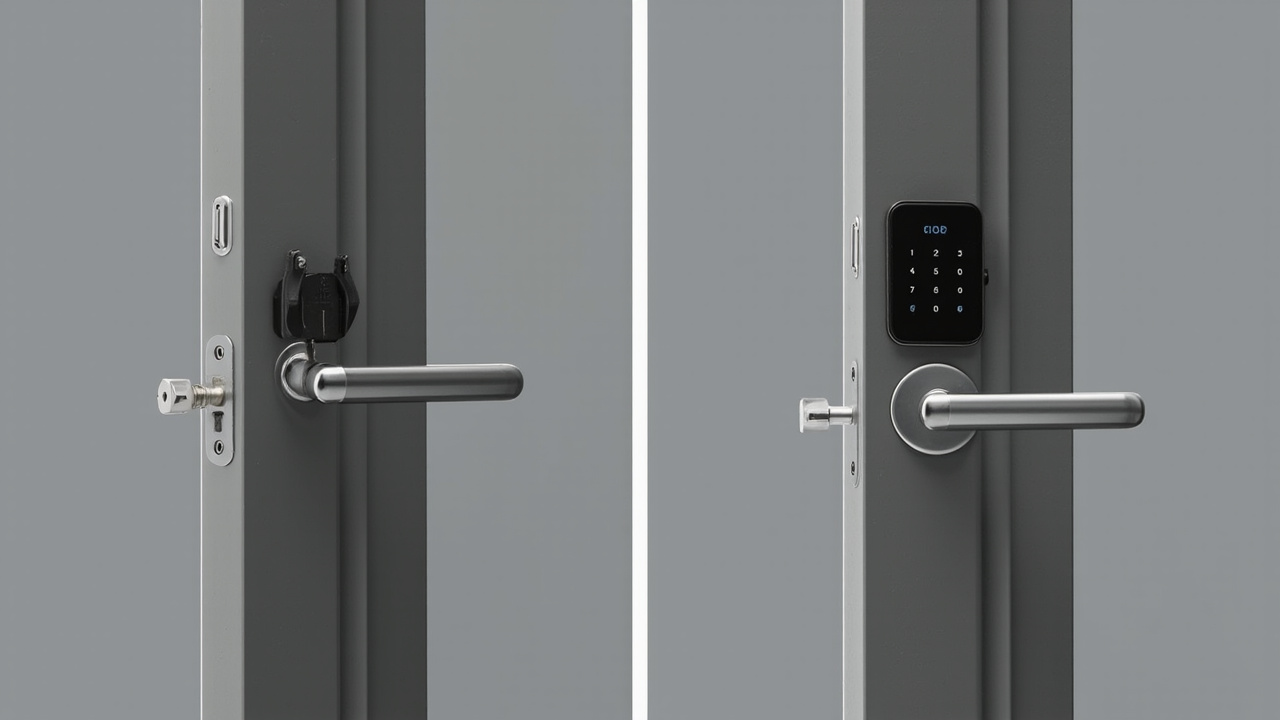
Line 02
Retrofit and replacement routes
Both build routes run in parallel. The route is decided by the door, not by convenience, and the fixture differs accordingly.
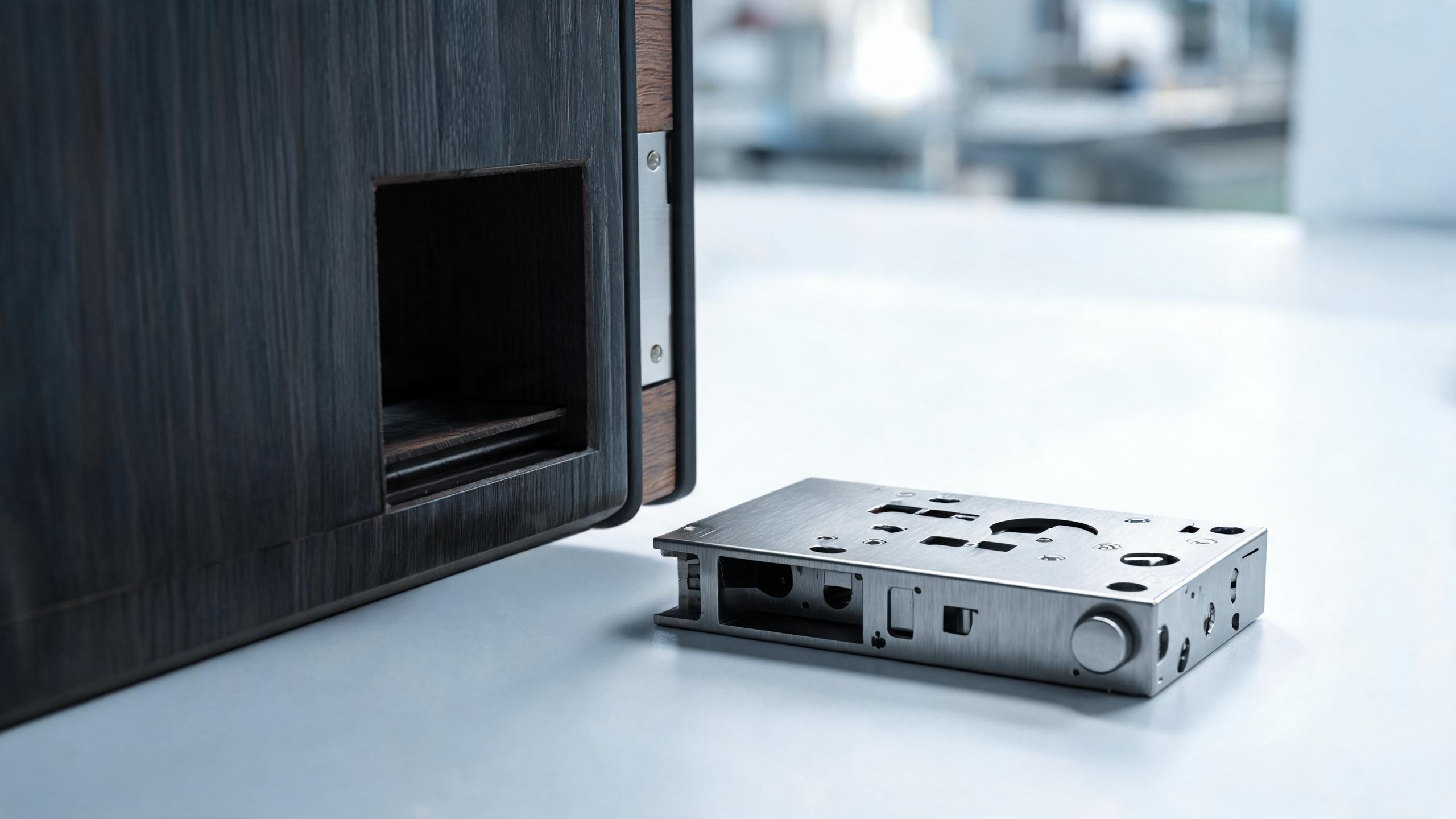
Line 03
Mortise and cylinder fitting
Spindle, cylinder and case are matched to the door thickness and the backset recorded on the order.

Line 04
Final assembly and packing
The finished unit is function-tested, labelled with its batch, then packed against the carton plan for the destination.
Scheduling
Order profile to production set-ups
Schedule behaviour follows the shape of an order more than its size. Two orders of 200 units can differ by a working week of line time because one changes a finish and the other re-runs a colour that is already loaded. The table states what each profile costs in set-ups and what the schedule has to absorb. Capacity is not published here, because a throughput figure that applied to every model would apply to none; the slot for a specific order is quoted per order.
| Order profile | Model lines | Finish changes | Set-ups in the run | What the schedule has to absorb |
|---|---|---|---|---|
| Single-model trial | 1 model | 1 finish, normally one already running | 1 | The body shares a running lot and only packing is dedicated. The slot is taken from a gap between larger runs, so a date moves when that larger run slips. |
| Repeat catalogue order | 1 to 2 models | Same finish as the previous run | 1 | Material can be reserved before the order is confirmed and the test fixture already holds that build. The risk is a silent firmware revision, which is why the version record is reopened at every run. |
| Multi-model container | 3 to 6 models | 1 to 3 finishes | 3 to 6 | Colour changes are batched by finish, and the slowest model sets the container date. A late change on one model moves every carton behind it. |
| OEM branded run | 1 to 2 models | 1 finish plus a print colour | 2 | Artwork proof and the golden sample gate the slot. An unapproved carton holds finished locks in the store rather than holding the line idle. |
| ODM first build | 1 new model | 1 new finish reference | 1 after freeze | Tooling, first article, validation and freeze come first. Line time is booked only after the golden sample is signed, so development is sequential with production, never parallel. |
Two consequences follow. A finish change is the most expensive sentence in a purchase order, because it adds a plating run and a colour approval on top of the assembly slot. The model count decides how many times the line stops, so a container of 6 models carries 6 chances of a set-up that runs late. A buyer who wants a stable date freezes the model list and the finishes early and keeps the volume flexible; a buyer who keeps the model list open for a month has moved the risk to the loading day. The component view of that risk sits on supply chain, and the branding view on private label and OEM and ODM.
Traceability
Traceability: what is recorded per purchase order
Traceability is a set of documents that can be matched to a serial number, not a barcode printed on a carton. At the end of a run a purchase order should answer four questions: which lot of parts went in, which firmware build came out, which units passed the end-of-line test, and how many cartons were sealed. The table lists the records that carry those answers and where a buyer reads them.
| Record | What it holds | Where the buyer reads it |
|---|---|---|
| Batch and lot labels | Supplier lot, receipt date and the IQC result for each component lot used in the order | Attached to the IQC record and referenced on the work order |
| Travel card or work-in-process label | Model, work order, station sequence and the shift that handled the unit | Follows the unit through assembly; a copy is filed with the run |
| Firmware version record | Build identifier, parameter set and the serial range that received it | Read back at the test bench and printed for the batch |
| End-of-line test log | One line per serial number: pass or fail, tests run, tester on duty | Supplied with the shipment documents, or on request before the balance payment |
| Carton label and packing list | Carton number, model, quantity, barcode and the accessory set inside | Compared with the approved proof at packing and again at release |
| Release note | Pallet or container count, serial range and the document set issued | Issued against the shipment and matched to the commercial invoice |
A buyer reads these records in one order. Start with the release note, take the serial range, read the test log for that range, then scan one carton barcode and compare it with the approved proof. Fifteen minutes is enough to confirm three things: the batch exists, it was tested unit by unit, and the carton in the warehouse is the carton in the document. If any of the three fails, the question is no longer a quality question but a shipment question, and it is answered before the balance payment rather than after arrival at the port. The four gates that surround these stations, and the sampling that applies to each of them, are set out on quality control; the part numbers that keep an installed fleet running are listed at spare parts.
Evidence
What you can see or request during production
Evidence taken during a run is different from evidence taken after it. During the run you can watch a station work on your model; after packing you can only read the record it left behind. Both are useful and neither replaces the other. This is what a buyer can ask for while the order is still open.
- Dated photographs of the specific station running your model, not a gallery of the building
- The work order number and the serial range shown on camera during a scheduled call
- The firmware version read back on the bench and compared with the build named in your specification
- A redacted page of the end-of-line test log showing serial, result and tester
- One carton from your own order opened at the inspection bench with the accessory bag laid out
- The IQC record for the lot in use, with the sampled quantity and the measured values
- The signed and dated golden sample kept at the line for comparison
- A third-party inspector nominated by you, walking the same stations with a checklist you wrote
A photograph is the weakest form and still worth requesting, because a dated image of your batch is a claim that can be checked later. A live call is stronger, since the serial range can be written down while it is on screen. The strongest form is an inspector on site who signs a report against your own checklist. A visit can be arranged through the factory tour, the bench itself is described at the testing laboratory, and the market documents that sit behind a model are set out at certifications.
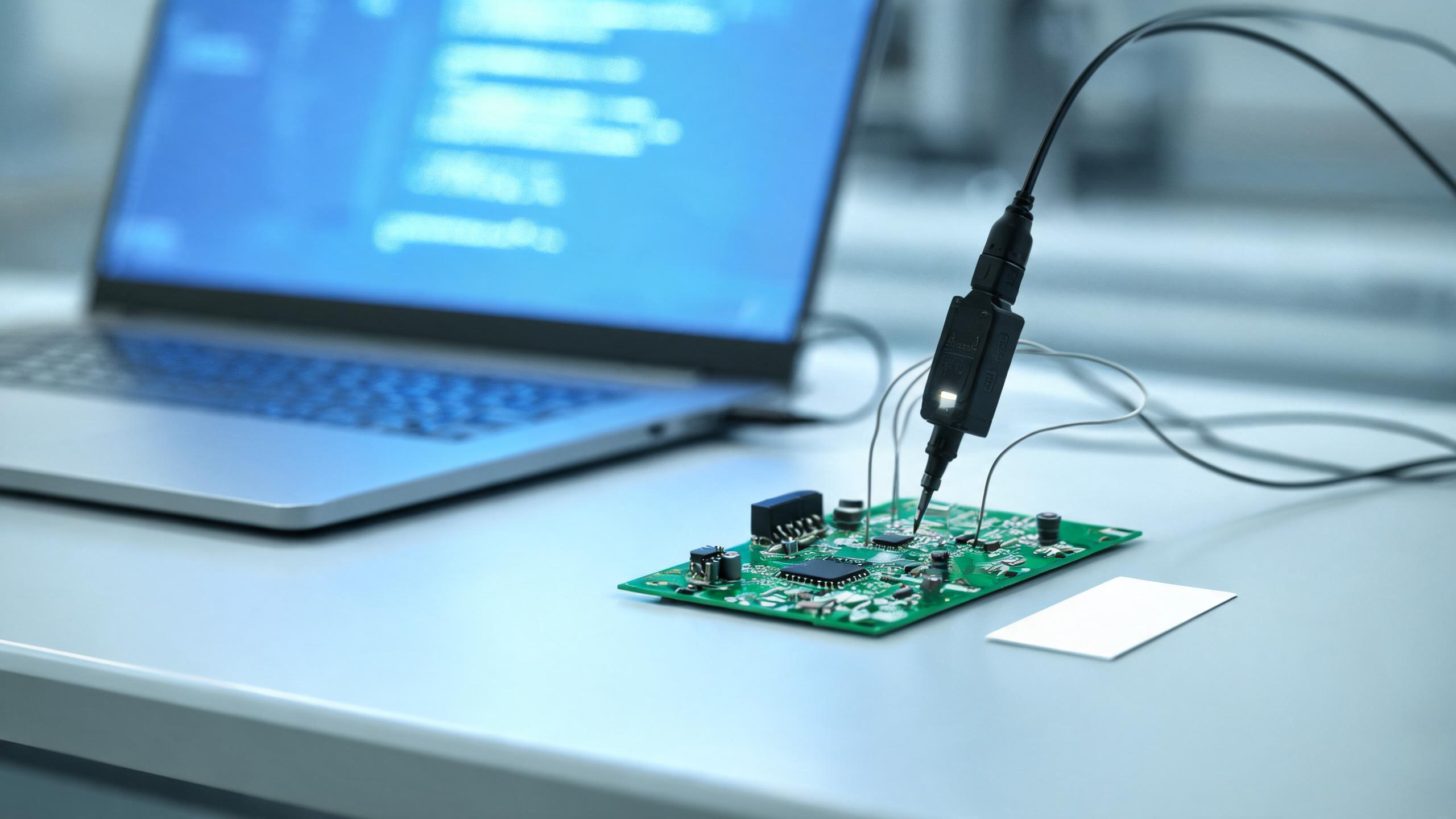 Firmware flashing as a production step
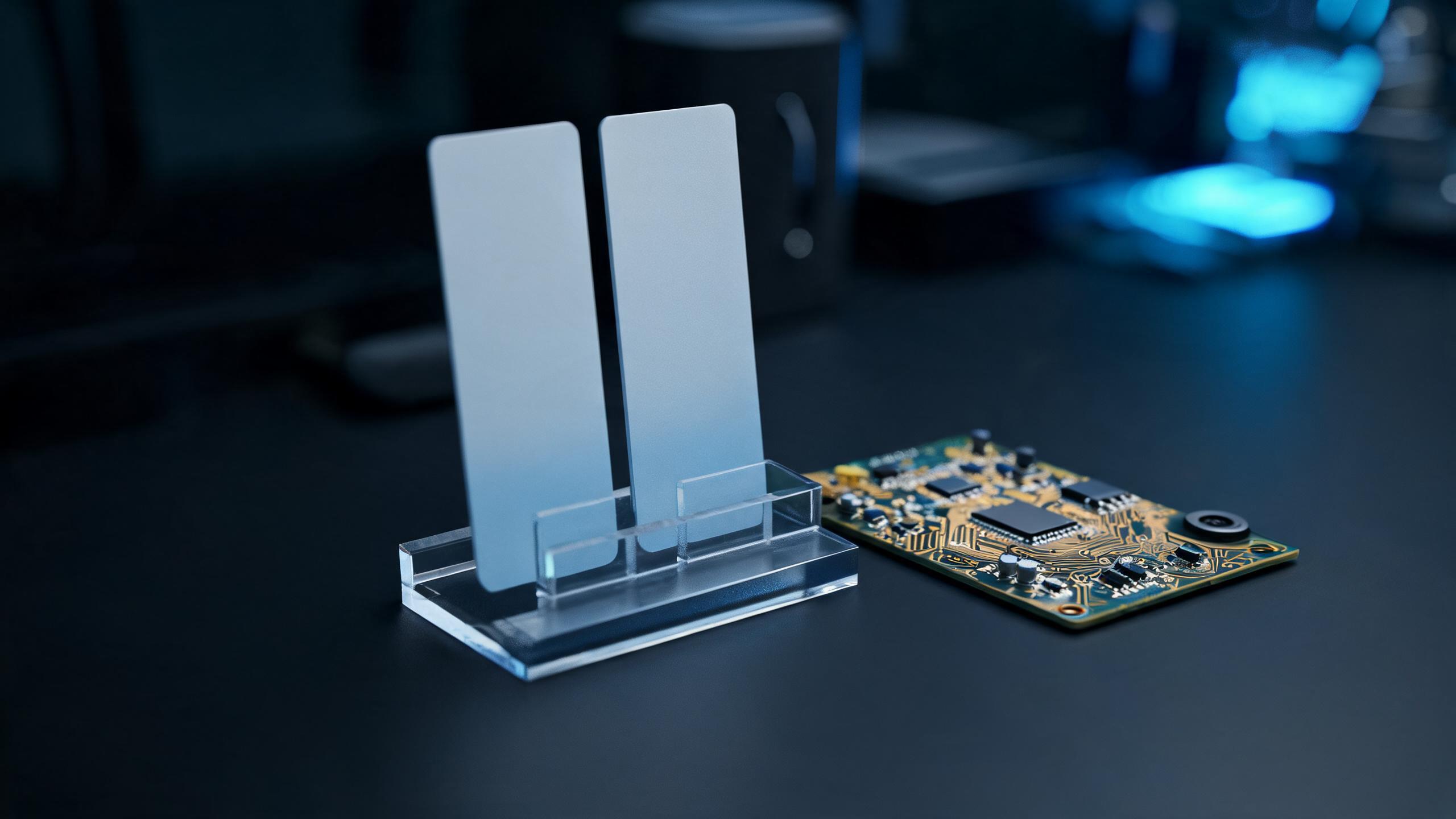 Card platform fitted to the order
 Multi-site projects built on the same line
 Narrow stile doors need a different fixture set
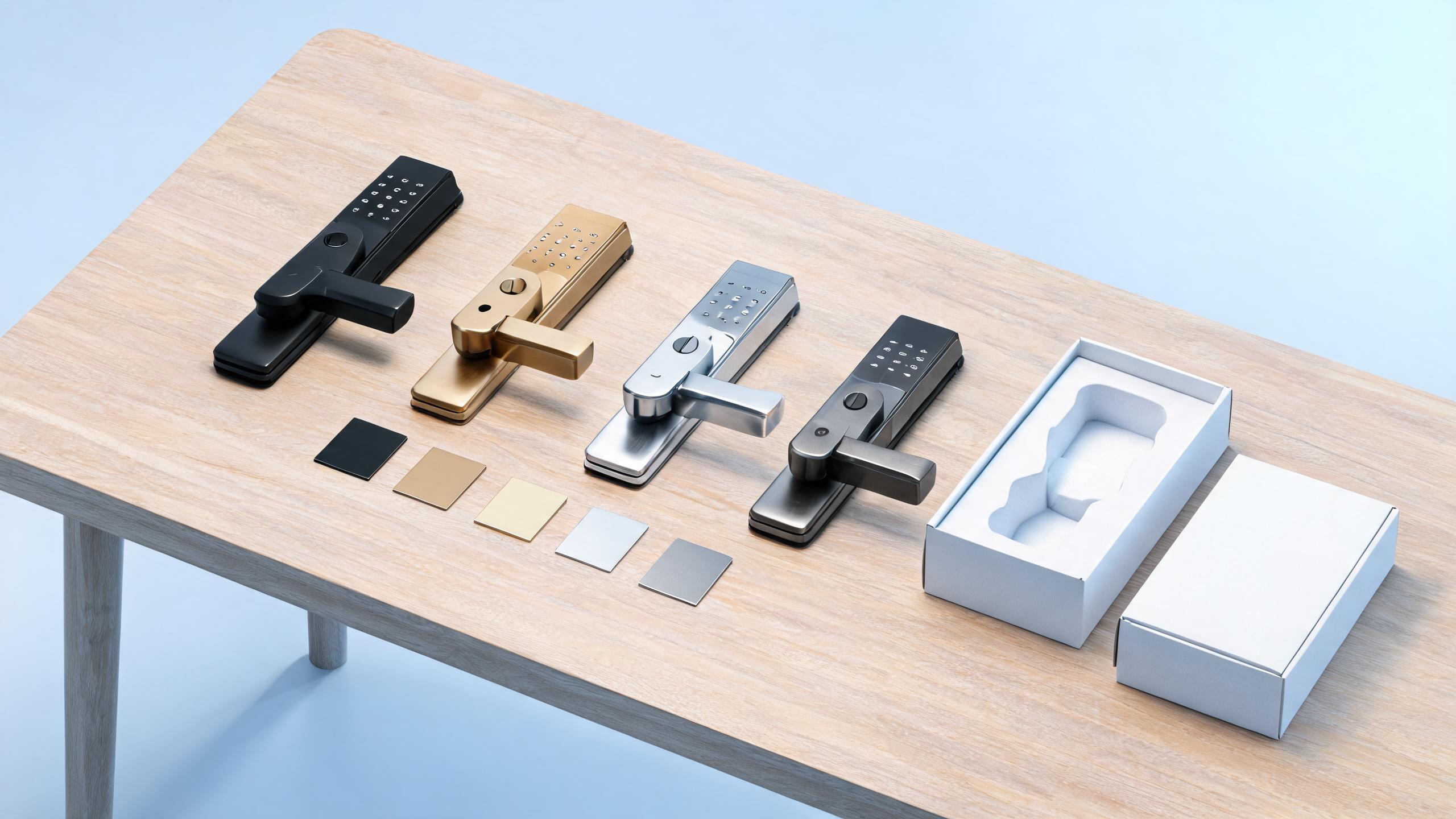 One production run, several finishes and models
 Development work sits next to the line
Boundary
What this production line does not do
Not included: housing die-casting, plating for every finish, certification issuing and mixed-brand packing. These four are stated here because each is occasionally assumed to be part of a normal factory order, and each changes who carries the risk when it goes wrong.
- We do not die-cast housings in this building. Castings and extrusions arrive from a die-casting partner under their own first-article check, so a housing change is a partner tooling project rather than a line adjustment.
- We do not run plating for every finish. Plating is partner work and the finish you approve is approved against a physical reference produced on that partner's line; a colour no local line can hold is a different problem from a colour that is out of tolerance.
- We do not issue certificates. A test report is issued by an accredited laboratory and belongs to the model that was tested. This building supplies the sample submission, the technical file and the report the laboratory issued, never a certificate of its own.
- We do not pack two brands in one carton without written approval. Mixed-brand packing creates a label, warranty and customs mismatch, so it is accepted only as a written instruction on the purchase order and never as a verbal request at the packing table.
- We do not promise a capacity number or a lead time before the model list is fixed. Both depend on set-ups, finish runs and partner components, and both are confirmed in writing with the quotation.
Everything inside the boundary is ordinary production work: assembly, flashing, calibration, testing, packing and the records listed above. The refusals are cheap to state and expensive to fake. A buyer who needs a housing cast in a specific alloy, or a finish that no local line can hold, should raise it before tooling rather than after the first container, because the answer changes both the route of the model and the documents that travel with it. The wider capability picture is on smart lock manufacturer, and the model families that run on this line include RFID door locks and fingerprint door locks.
FAQ
Manufacturing questions buyers send before an order
Which station creates the defect I am most likely to see?
In the field, most failures trace back to the clutch motor and the mortise, because those are the two parts that move under load every day. The station that owns them is clutch and motor fitting, and the station that catches them is the end-of-line drive test run in both directions. Cosmetic complaints are the second common category and they are created at handle and finish, where a plating lot drifts one shade away from the signed reference.
How do I know my order actually ran through the end-of-line test?
The release note carries the serial range, and the test log carries one line per serial within that range. A log cannot be written for serials that do not exist, so matching the two catches a skipped test. A buyer can go further and ask for a live call at the bench, with the serial range on screen and the tester's name recorded, or nominate an inspector to witness the run. The bench and its records are described at testing laboratory.
Are all parts made in this building?
No. The mortise, the encoder and the assembly, flashing, calibration and test work are in-house. The clutch motor, the bare PCBA, the fingerprint sensor module, the RFID reader module, the keypad overlay and the castings come from specialist partners, each with an incoming or first-article check. The document pack for a specific model states its build path, and a change of partner is handled as a change to the model rather than a routine substitution.
Can you mix two brands in one carton?
Not without a written instruction on the purchase order. Mixed-brand packing creates a label, warranty and customs mismatch, and the party that unpacks the carton is usually not the party that placed the order. Two brands in one shipment are normal as separate cartons with separate labels; two brands inside one carton need an instruction in writing and a named owner for the risk.
Which parts of the lead time are outside your control?
Partner components and buyer approvals. Castings, plated parts, bare boards and the sensor and reader modules each carry a supplier cycle that starts before line work can begin, and artwork, golden sample and door schedule approvals sit on your side of the table. Lead time is quoted per order and depends on model mix, finish and customization, which is why the useful question is which component or approval is holding the date.
Can I watch my order being made?
Yes, during a scheduled run and by appointment. Book the slot against the model you are ordering, not before it, because a station shows the work that is running that day. A visit is arranged through the factory tour; a live call is the shorter option when a flight is not justified. Neither form gives access to another buyer's packaging artwork, opened cartons or fixture parameter screens.
Send the model list and the door schedule
Send the models, the finishes, the destination market and the door schedule you will install into. We reply with the station route for each model, the partner components that set the date, and the records that will travel with the shipment; current MOQ policy and lead time are confirmed in writing with the quotation.
Request a quoteRequest the catalog