
Last updated: October 31, 2026 · Reviewed by export engineering
This page is an index, not an article. It exists so that a buyer can find the one page that answers the question in front of them, instead of reading six pages and sending an email anyway. The index is sorted three ways: by the stage of the purchase, by the twelve questions asked most often, and by the role of the person asking. Every entry points to a page that answers it in full.
If the question is not here, the last section explains how to send it. A question that arrives with the model code, the door details and the destination market usually becomes a written answer within one exchange, and sometimes becomes a page. A question that arrives as "tell me about your locks" becomes a catalogue, which is not what the buyer needed.
Stage one
Find the question by the stage you are in
Most sourcing questions belong to one of six stages. The table names the stage, the question that usually appears there, and the page where it is answered. Starting at the wrong stage is the most common reason a buyer reads three pages and still cannot decide.
| Stage | Typical question | Where to read |
|---|---|---|
| 1. Define requirements | Which lock fits this door, this building and this budget? | Buyer resources for the 24-field checklist, applications for the scenario map |
| 2. Compare and sample | How do I compare two models without visiting a showroom? | Smart lock buying FAQ, order samples for the sample route |
| 3. Certificates and tenders | Which documents does the tender panel expect, and how fast can they be produced? | Compliance documents, certification FAQ |
| 4. Order and ship | What is the MOQ, the payment term and the shipping mode? | MOQ and payment FAQ, shipping FAQ |
| 5. Install and operate | Who trains the installer, and what does support actually cover? | installation FAQ, installation support |
| 6. Maintain after 3 years | Can I still buy the spare part, and does the warranty still apply? | warranty FAQ, spare parts |
The stages overlap in practice. A buyer defining requirements often needs the certificate answer first, because a tender closes earlier than the order. Where that happens, read the later stage first and return to the checklist with the constraint in hand. The stage order is a reading guide, not a process the buyer has to follow.
Most questions here are comparison questions
The recurring questions are not about whether a lock works. They are about which of two working locks is right for a given door, a given market and a given budget. The comparison sheets exist for exactly that.
- Keypad against RFID: which one a building actually needs
- Fingerprint against face: cost, environment and expectation
- OEM against ODM against private label: where the responsibility sits
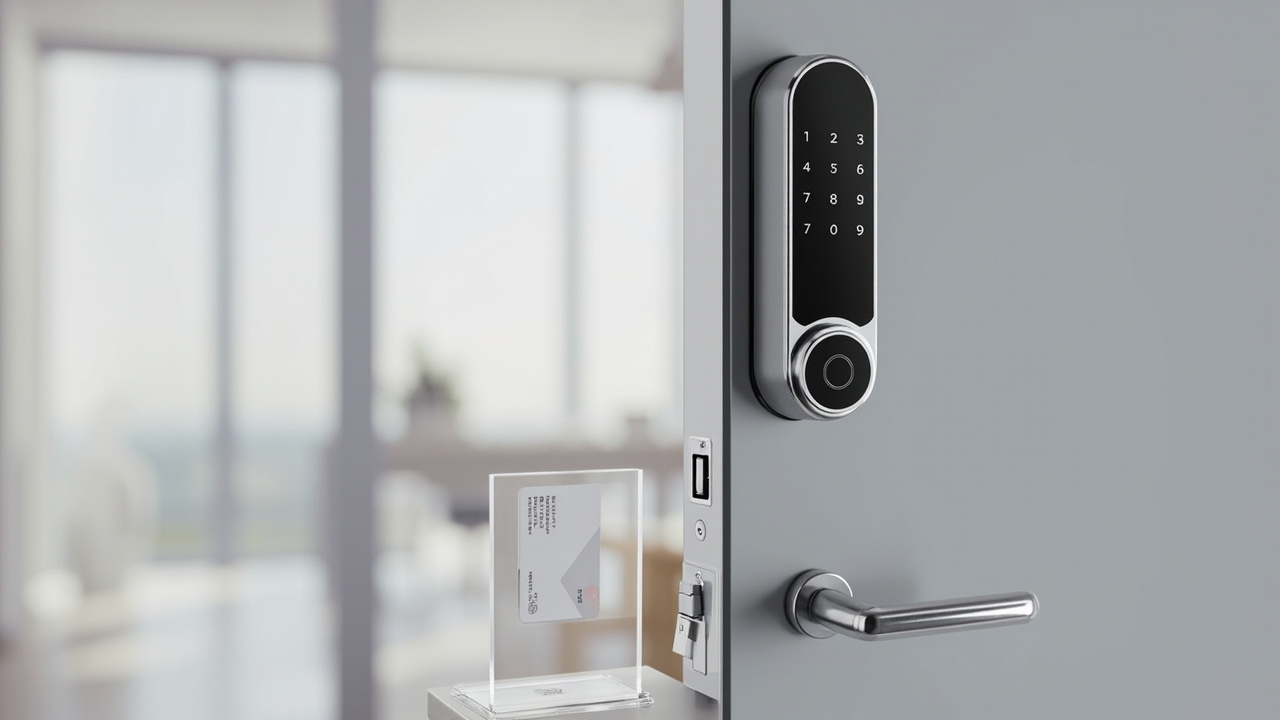 Comparisons
Stage two
Top twelve questions, one line each
These are the twelve questions that arrive most often, each reduced to a one-line answer with the page that develops it. The one-line answer is deliberately short: it is enough to decide whether to open the page.
| Question | One-line answer | Read more |
|---|---|---|
| What is the minimum order? | The current MOQ policy is confirmed in writing with each quotation, because it depends on the model and the customization. | MOQ and payment |
| Can you put our brand on the lock? | Yes, through the branding layers; a logo and a carton are one tier, and a changed housing is a new model. | OEM and ODM |
| Which lock suits a hotel guest room? | A card lock of the SLK-2020 class, a 306 mm x 75 mm x 15 mm escutcheon with a No. 2 hotel mortise, an encoder at reception and offline operation. | Hotel locks |
| Does a card lock need Wi-Fi? | No. A card lock stores its own permissions and works offline, with the encoder handling issuance. | Technology and app |
| What does a short-stay rental need? | A code or app credential and a way to expire access at checkout, without a reception desk. | Rental locks |
| How do I know the door will fit? | Measure leaf thickness 38-55 mm, backset 60 mm or 70 mm, and handing on the actual door before fixing the model. | Installation |
| Which certificates come with the lock? | The model-specific certificate and report pack is supplied on request; the certificate belongs to the model, not to the factory. | Certifications |
| How is the order shipped? | Sea or air freight against the Incoterm you name, with the packing list and document set following the same schedule. | Shipping |
| What does the warranty cover? | The lock against the written specification, not installation damage and not a door that was not prepared. | Warranty |
| How do I start buying without a meeting? | Fill the checklist, count the doors, then send the RFQ with both attached. | Buying process |
| Can you match our existing key system? | Mechanical override is standard on card models; a master-key plan is a specification item, not an afterthought. | Buying process |
| What software runs the system? | Standalone, PC-linked encoder, TTLOCK or Tuya, on a 13.56 MHz card interface, depending on whether the property wants a local database, a cloud app or a PMS link. | Technology and app |
Two of these answers contain a number because the number is part of the specification: the leaf thickness and the backset. The rest are kept short on purpose. A one-line answer that tries to be complete becomes a paragraph nobody finishes, and the page behind the answer exists for the detail.
Stage three
Index by role: buyer, engineer, installer, operator
The same project produces different questions in different chairs. The table below maps four roles to the questions each one actually asks, and to the page that answers them in that role's language.
| Role | Questions this role brings | Where to start |
|---|---|---|
| Buyer or purchasing lead | MOQ, payment terms, Incoterm, price validity, spare ratio, and whether a second supplier is needed | MOQ and payment FAQ, shipping FAQ, request a quote |
| Product or project manager | Specification, sample approval, milestone ownership, change control and the handover file | Buyer resources, project management, OEM and ODM FAQ |
| Installer | Door preparation, handing, mortise type, battery access, and what to do when the lock will not fit | Installation FAQ, installation support |
| Property operator | Card issuing, lost-card handling, audit exports, battery replacement, and spare parts after three years | Warranty FAQ, spare parts, technology and app FAQ |
A role index is more useful than it looks. In a hotel project the purchasing lead and the maintenance manager can read the same answer and draw opposite conclusions from it: the purchasing lead sees a price line, the maintenance manager sees a battery service interval. At 200 doors the card allowance is about 441 cards with a 5% loss margin, and one gateway covers about 30 doors indoors; those numbers belong to a different role from the price line, which is why the index names the role first.
Documents
Documents, certificates and tenders
Questions about paper are the ones most often asked at the wrong moment. A certificate question asked after the order is placed is a scope check; the same question asked before the tender closes is a document request with a deadline. The distinction matters because the answer is different in each case.
For a tender, start with compliance documents, which carries the matrix by tender type, the issue-time table and the redaction rules. For a single model, start with certifications, which explains what each document covers and what it leaves out. For the standards a report refers to, standards lists them by name, and for the test behind a report, the testing laboratory describes the bench.
- A certificate names a model, a standard edition and a laboratory; check all three before it goes into a submission
- An ISO 9001 certificate describes a site's quality system, not a lock's performance
- A fire-door report covers one tested assembly, including the closer and the hinges, not the lock in isolation
- A redacted review set is available before an order; originals travel with the shipment where the market requires paper
The one question this index does not settle is what your own market requires you to file. That is a question for your compliance adviser, because it depends on the entity placing the product on the market rather than on the product alone.
 RFID and Bluetooth, side by side
 Fingerprint and keypad, side by side
 OEM, ODM and private label, side by side
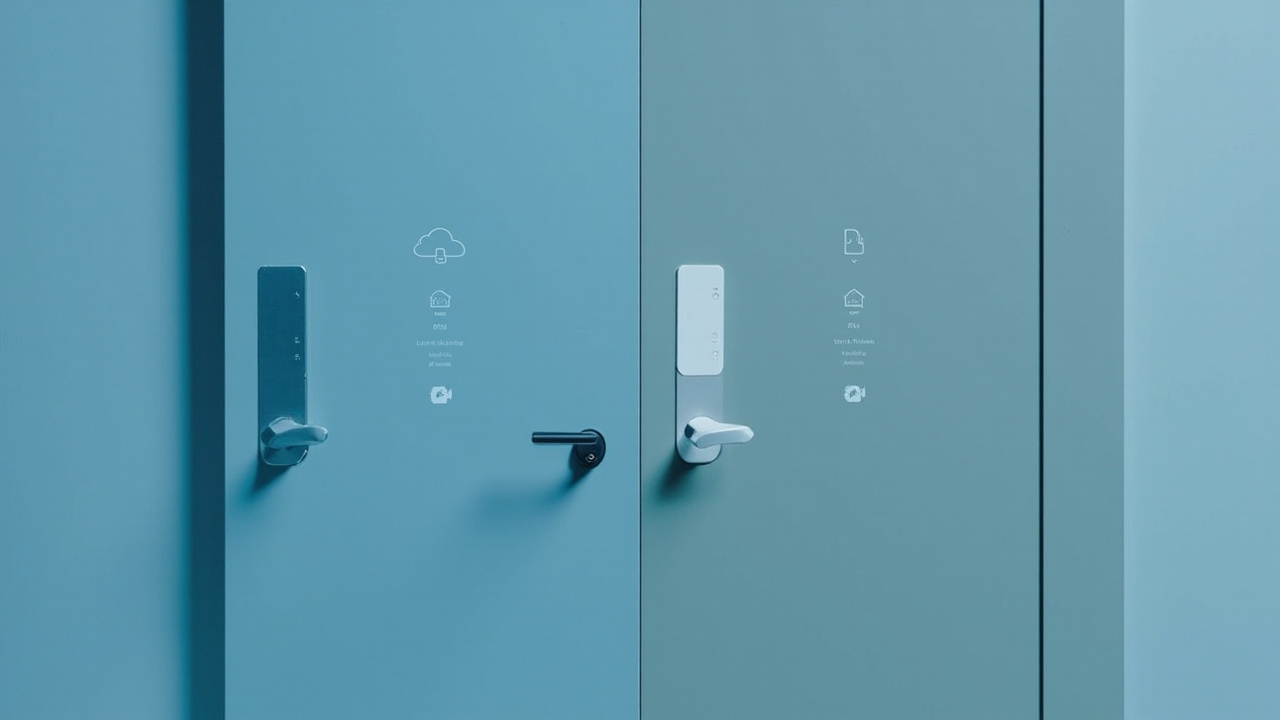 TUYA and TTLock, side by side
Money
Money, MOQ, payment and shipping
Commercial questions have one feature in common: the answer is a written quotation, not a page. The pages here explain the structure of the answer, so that a buyer can read a quotation and see which line is which.
The MOQ policy is confirmed in writing with each quotation, and it moves with the model, the finish and the customization. The lead time is quoted per order and depends on model mix, finish and customization. The payment structure, the Incoterm and the freight mode are agreed before production starts, and the packing list follows the shipping plan rather than the other way round. The detail is at MOQ and payment and shipping, and the shipment documents are described at logistics and shipping.
A buyer who wants a budget number before a full quotation should send the model list, the quantity table and the destination. That produces a budget range, which is useful for a board paper and not a commitment. A buyer who wants a firm number sends the checklist, because price depends on what is in the specification.
Detail
Questions we cannot answer without your details
Some questions sound simple and cannot be answered honestly without specific inputs. The list below names the detail each one needs. A question sent with these details usually gets a full answer in one reply; a question sent without them gets a request for the details.
- "Which lock fits my door?" needs leaf thickness in mm, backset in mm, handing, frame material and a photograph of the existing hardware. A 2 mm error in backset is enough to misalign the mortise, so the measurement matters more than the description.
- "What will the order cost?" needs the model or models, the quantity by model, the finish, the destination and the Incoterm.
- "How long is delivery?" needs the model mix, the customization tier and the quantity, because lead time is quoted per order.
- "Can you match a competitor's lock?" needs a photograph of the lock and the door edge, the mortise type and the measured dimensions.
- "Which certificates do we need?" needs the destination market, the door type and whether any leaf is fire rated.
- "Will it work with our PMS?" needs the PMS name and version, and the interface documentation the property already holds.
- "Can you support installation in our city?" needs the city, the door count, the installation schedule and who is responsible for site access.
- "Can we reorder in 3 years?" needs the model code and the batch or order reference, so the part can be matched rather than guessed. A planning default of 1 spare lock per 50 doors covers the common failure without a special order.
Each of those questions has a page that explains the structure of the answer, but none of them can be answered for a specific project without the inputs above. That is not a refusal; it is the difference between a catalogue sentence and an engineering answer.
Can you recommend a lock without seeing the door?
We can recommend a model family from a description, and we cannot confirm fit. The confirmation needs leaf thickness, backset, handing and the frame profile, measured on the door. A recommendation without those four is a starting point for a sample, not a specification.
Why do you ask for the destination market so early?
Because the same lock needs different documents in different markets. EU, US, UK, Gulf and Southeast Asian routes each ask for a different evidence set, and the model document pack states what is held for each. Asking early avoids quoting a model that cannot carry the paper your tender needs.
Why is a one-line price not possible?
Price depends on the model, the finish, the packaging, the quantity and the trade term. A one-line price would be a guess with a number attached, and a guess becomes a dispute at the invoice. The quotation lists the lines so that each one can be checked and changed.
Why does lead time change between two similar orders?
Because lead time is quoted per order and depends on model mix, finish and customization. A mixed order with two finishes and a private-label carton takes a different path through material preparation and packing than a single-model order. The quotation states the basis rather than a single number.
Why can't you confirm the certificate before I name the model?
The certificate belongs to the model, not to the factory. A report covers a model code, a tested configuration and a standard edition, so naming the model is the first step. Once the code is named, the model document pack lists what exists and what does not.
Can you answer a question about a competitor's product?
Partly. We can describe how a comparable function is implemented in our range and what the trade-offs are. We cannot certify another supplier's product or confirm its test results, and we will not describe a competitor's certificate as if it were ours.
What information makes a question answerable in one reply?
The model code or the door details, the quantity, the destination market and the decision deadline. Those four turn an open question into a task with an owner and a date, and the reply can then carry a document rather than a description.
Boundary
What this index does not cover
Not included: this index points to answers. It does not answer legal, commercial or installation questions that depend on your project.
- A price for your order. The index explains how price is built; the number is confirmed in writing with a quotation.
- A legal opinion on your market. The document pages describe what is held and what is usually requested; your adviser decides what you must file.
- A fit confirmation for a door we have not measured. The installation pages explain what to measure, not what your door measures.
- A guarantee that a spare part will exist indefinitely. The spare-parts page explains how parts are matched to a model and a batch, not a perpetual availability promise.
- Answers about another supplier's product. We describe our range and the questions to ask any supplier; we do not audit a competitor.
- A substitute for a sample. Reading answers shortens the decision and does not replace the sample that confirms fit and software behaviour.
The boundary is what keeps the index usable. A page that attempts to answer everything becomes a page that answers nothing precisely, and a buyer who needs a decision ends up with a reading list. Where the index stops, the question route below starts.
Process
How to send a question that becomes a page
- Send the question in one sentenceA question that takes three sentences to state is usually two questions. Split it, and send the one that blocks the decision first.
- Add the four factsModel code or door details, quantity, destination market and the date you need the answer. Without those, the reply is a general explanation rather than an answer.
- Say what you have already readName the page you started from. That avoids a reply that repeats it, and it tells us where the index failed.
- Expect a written answer, then a pageThe first reply is written and specific. When the same question arrives from several buyers, it becomes a page in this index, and the answer is edited to be useful without the original context.
Questions that become pages tend to share a shape: a decision, a constraint and a number. "Which model for a 55 mm fire-rated corridor door with a 70 mm backset" is that shape. "What is your best lock" is not, and it receives a catalogue link rather than a page.
Next step
Send the question with the model code
Send the question with the model code, the door details, the quantity and the destination market. If the model is not decided yet, send the door details and the scenario instead, and the reply will name the model families that fit rather than a single product.
The fastest route for a project that is already defined is the RFQ, and the fastest route for a project that is not is the checklist at buyer resources. Both produce a written answer, and both are shorter than a call.
Send the question, the model code or the door details, the quantity and the destination. The reply is specific, and it is written.
Current MOQ policy is confirmed in writing with each quotation, and lead time is quoted per order and depends on model mix, finish and customization.
Send the question with the RFQAsk the export desk