
Last updated: October 31, 2026 · Reviewed by export engineering
A buyer with a tender document has one question about any test bench: what can it actually decide, who signs the paper, and can the result be used in my market. This page answers that without turning the bench into a marketing story. It lists what is run here, how each item is judged, how long a run occupies the rig, and the four things that must go to a third party. Every duration below is bench arithmetic: the number of cycles and the rig rate, not a result.
Scope
What the bench is for, and what it is not
The bench answers one question well: does this build still do what it was designed to do after it has been used.
The bench exists for two jobs. The first is end-of-line verification: a lock that leaves the line is exercised on the functions the buyer will use in the first week, so a dead motor or a misaligned latch is caught before the carton closes. The second is design wear: a sample of a model is run until something fails, so the failure shows up in a test log rather than in a hotel corridor nine months later. Both jobs are about behaviour over time. Neither is about issuing a certificate.
A test bench cannot declare a product compliant. Compliance is declared by the body that holds the accreditation and issues the document, and that document is tied to a model, a standard and a scope. What the bench produces is evidence: a dated record with the serial number, the number of cycles actually run, the conditions and the failure point. That record supports a document pack. It does not become one.
Three kinds of work never happen here, and it is worth being blunt about them. Fire testing is not run here in any form, because a door assembly is tested as an assembly. EMC emission and immunity tests are not formally run here; a pre-scan can catch a design problem early, and nothing more. And a bench cannot reproduce a building: a 306 x 75 x 15 mm body that survives 20,000 cycles on a rig has not been installed, and installation errors are the largest single cause of field failure, which is why installation support exists as a separate page.
The bench is part of the quality chain rather than an alternative to it. Incoming parts are checked under quality control; the build stations are described on manufacturing; the documents that a market file needs are mapped on certifications.
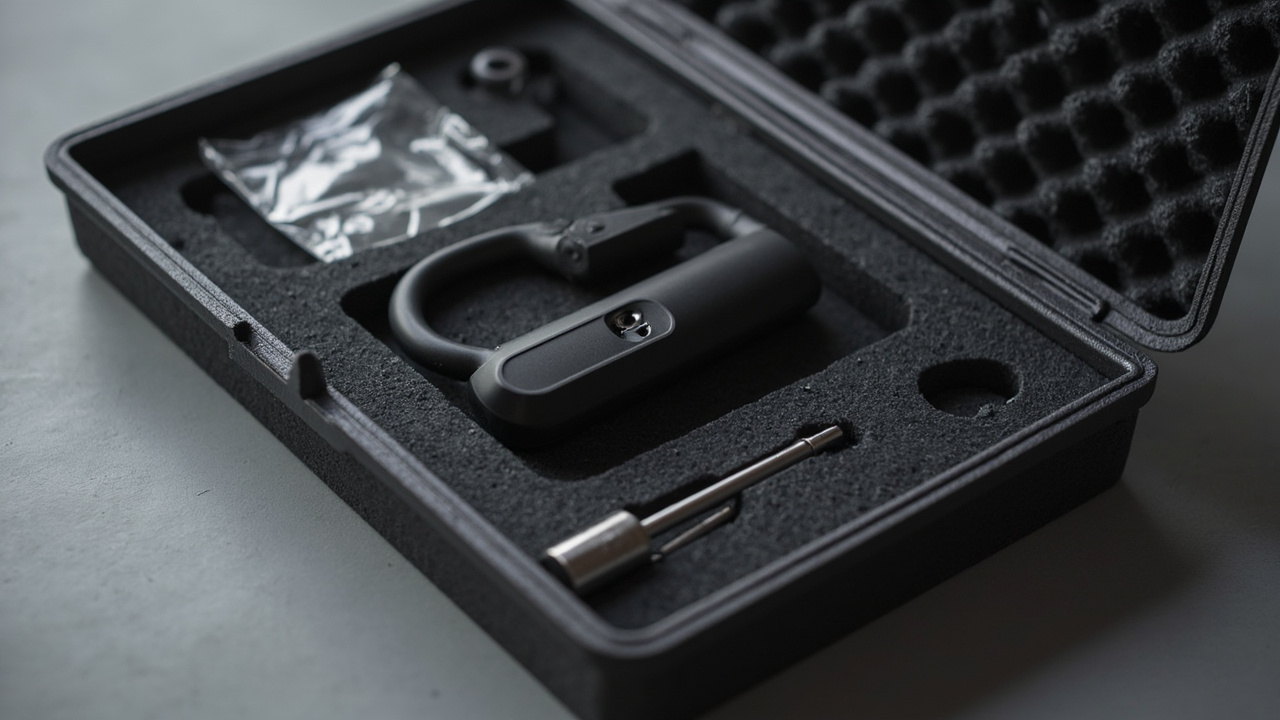 On siteA third-party report and an internal check are different evidence.
What the laboratory does and does not prove
The laboratory produces evidence about a sample under defined conditions. It does not approve your product, and it does not cover the door the lock is later fitted to. Both limits are stated on the report itself.
- Tests are run against a named model, a named sample and a stated setup
- Conditions are recorded: temperature, humidity, cycle count and duration
- Internal routine checks and third-party reports are kept as separate records
Test items
Test items: equipment, standard, criterion, duration
Twelve items. The duration column is the time a rig is occupied, calculated from the cycle count and the rig rate: one rig completes 720 cycles in 1 h at 12 cycles per minute.
| Test item | Equipment | Standard referenced | How failure is judged | Rig time |
|---|---|---|---|---|
| Latch and bolt cycle | Motor-driven endurance rig, adjustable rate | ANSI/BHMA A156.13 for mortise locks; EN 12209 | Three consecutive failures to release, or a bolt that does not reach full throw | 1 lock at a time; 20,000 cycles at 12 per minute is about 28 h |
| Lever and handle fatigue | Torque arm on the same rig | EN 12209 | Lever that does not return, or permanent deformation beyond the return test | 5,000 cycles at 10 per minute is about 8 h |
| Card read repeatability | PC-linked encoder and a fixed card set | ISO/IEC 14443A; MIFARE Classic and DESFire EV2 | One missed read in a run of 100 is logged as a failure and repeated | 100 reads at 1 every 2 seconds is about 4 minutes |
| Code entry | Keypad actuator with an entry counter | The model's own keypad specification | A key that fails to register, or a code accepted when it should be refused | 500 entries at 1 every 3 seconds is about 25 minutes |
| Fingerprint matching | Enrolment station and a fixed user set | Algorithm stated in the report header | Genuine refused or impostor accepted, counted per attempt and printed | 1 user set per hour, enrolment included |
| Battery runtime | Constant-load discharge rig with a voltage log | 4 x 1.5 V AA cells, 6 V nominal | Runtime ends when a valid credential no longer releases the latch | Rig occupied for the whole discharge, logged in h |
| Low-battery alert | The same rig, alert output tapped | Model specification | Alert not given before release is lost, or alert given with no remaining release | Runs alongside the discharge, no separate rig time |
| Mechanical key override | Key, torque gauge and a cycle counter | EN 12209 | Key binds, or the override fails to release after the stated operations | 100 operations at 1 per 20 seconds is about 33 minutes |
| Motor current and stall | Bench supply with a current clamp | EN 62368-1 as the safety reference | Current drawn beyond the rated value, or a stall that does not recover | 1 lock, 10 actuations, under 15 minutes |
| Carton drop | Drop tester, packed carton | The buyer's own protocol, printed in the report | Loss of function or visible damage after the drop sequence | 1 carton per setup, under 1 h |
| IP preparation | Dust and water chamber, for preparation only | IEC 60529, at the IP level the model states | Water or dust ingress beyond the stated level, judged at the external test | 1 sample set per day of chamber time |
| EMC pre-scan | Spectrum analyser and LISN | EN 61000 and EN 55032, FCC Part 15 | Emissions above the limit line, or a design that cannot be brought under it | 1 sample, about 4 h including setup |
The cycle counts above are the planning figures we schedule against, not a claim about what any model has achieved. The count for a specific order is set by the standard the buyer names or by the purchase order, and the report prints the number that was actually run. A report that shows 18,400 cycles is more useful than a brochure that claims 200,000, because the first one can be checked against the rig log.
Endurance
Endurance: how a lock is worn out on purpose
One cycle is defined once and then counted the same way for every model, or the numbers mean nothing.
One cycle here means a complete use: a valid credential is presented, the lock verifies it, the motor retracts the latch, the door is opened and closed on the rig, the bolt extends, and the lock returns to rest. The same sequence is run on a leaf from 38 to 55 mm, which is the range the fixture is set for. The rig repeats the cycle without a person, at a rate the operator sets and records. Cycles are counted by the rig, not by the hour, so a slower rate extends the calendar time and does not change the count.
A run is stopped when one of three things happens, and each one is written into the log with the cycle number at which it occurred.
- Release failure. A valid credential is presented three times in a row and the latch does not retract. This is the failure a guest complains about, and it is the one the rig is designed to find first.
- Incomplete throw. The bolt moves but does not reach the position the strike needs, so the door looks locked and is not. It shows up as a mechanical binding long before it shows up as a complaint.
- Mechanical degradation. The lever sags, the key override drags, or the escutcheon works loose on the leaf. The lock still opens, and it is on its way to the first failure.
Each run keeps a sample of the same build, and the sample is opened at the end. Wear on the latch cam, the motor brush and the spring is photographed next to the cycle count, because a number without the part that wore out does not tell a buyer what to stock as a spare. When a run produces a failure, the finding goes back to the build and the model's spare parts list is checked against it.
Power
Battery runtime and low-battery behaviour
Runtime is a property of the cell, the load and the temperature, which is why the report names all three.
The standard build takes 4 x 1.5 V AA cells, 6 V nominal. The bench discharges a fresh set under a constant load that represents a door in normal use, and logs the voltage and the release count as it falls. Two numbers come out of the run: the time to the low-battery alert, and the number of releases between the alert and the point where a valid credential no longer opens the door.
The second number is the one procurement teams should ask for, because it decides the maintenance rule. A property that ignores the alert is relying on that margin, and a property that reacts to the alert needs to know how many days of normal traffic the margin covers. The bench reports the releases; the property converts that into days using its own door count, and nobody should be converting it for them in a brochure. On a property with 200 doors, a margin measured in releases has to be read against the reads that 200 doors produce in a day.
Three conditions are always recorded with the result: the cell brand and type used, the ambient temperature at the rig, and the firmware generation in the lock. Change any one and the number changes. That is why a runtime figure quoted without those three is unusable, and why this page does not print a runtime figure at all. For buyers comparing cells, the same lock can be run on two brands in sequence and the reports placed side by side.
The alert itself is tested as a behaviour rather than a component. The rig taps the alert output and confirms that the signal appears before release is lost, that it repeats on later reads, and that it clears when fresh cells are fitted. A lock that alerts and then dies within a handful of releases is a design problem, not a battery problem.
 Fingerprint sensor grades and how they are tested
 RFID read range and card platform testing
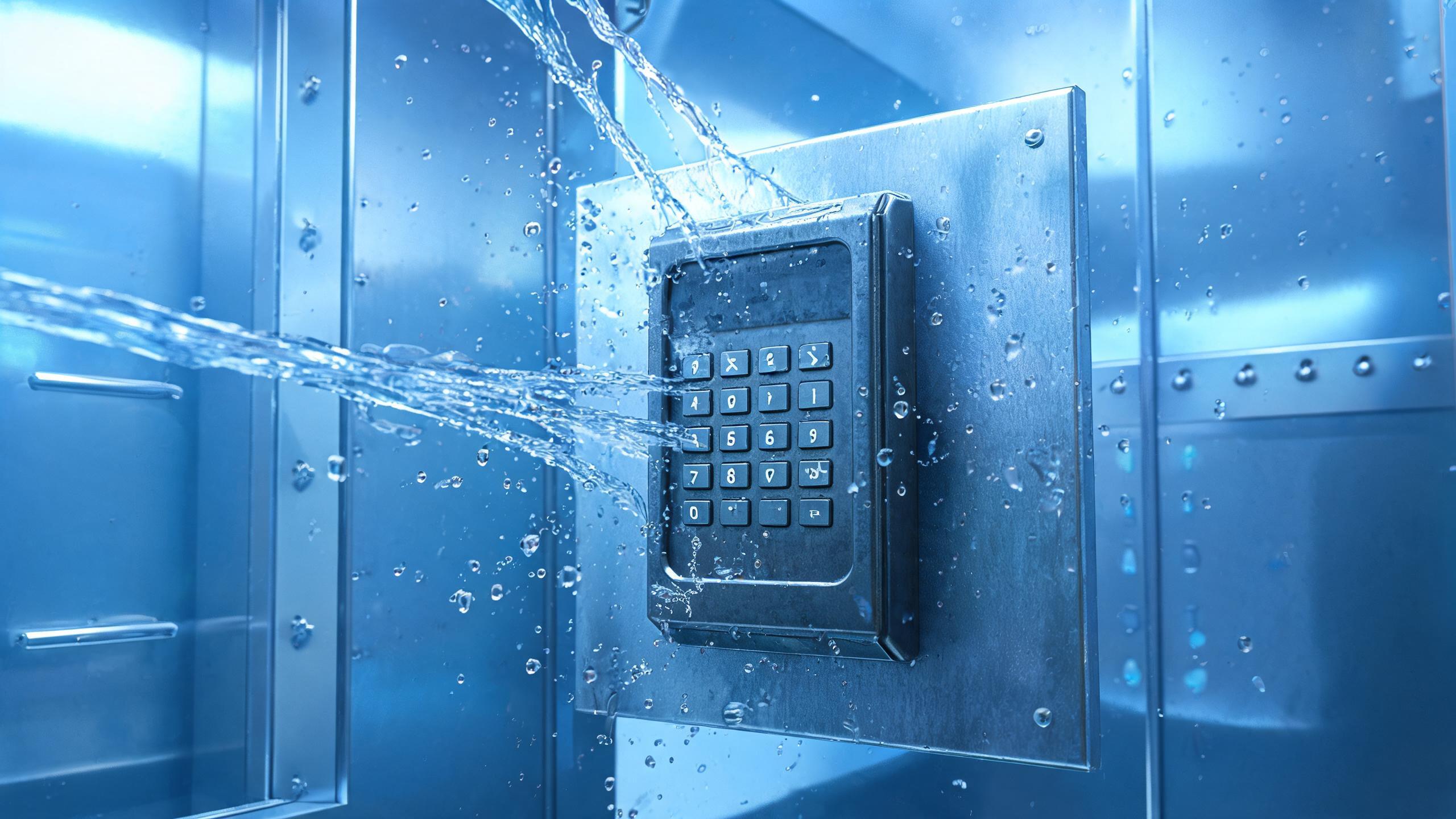 Ingress protection test conditions
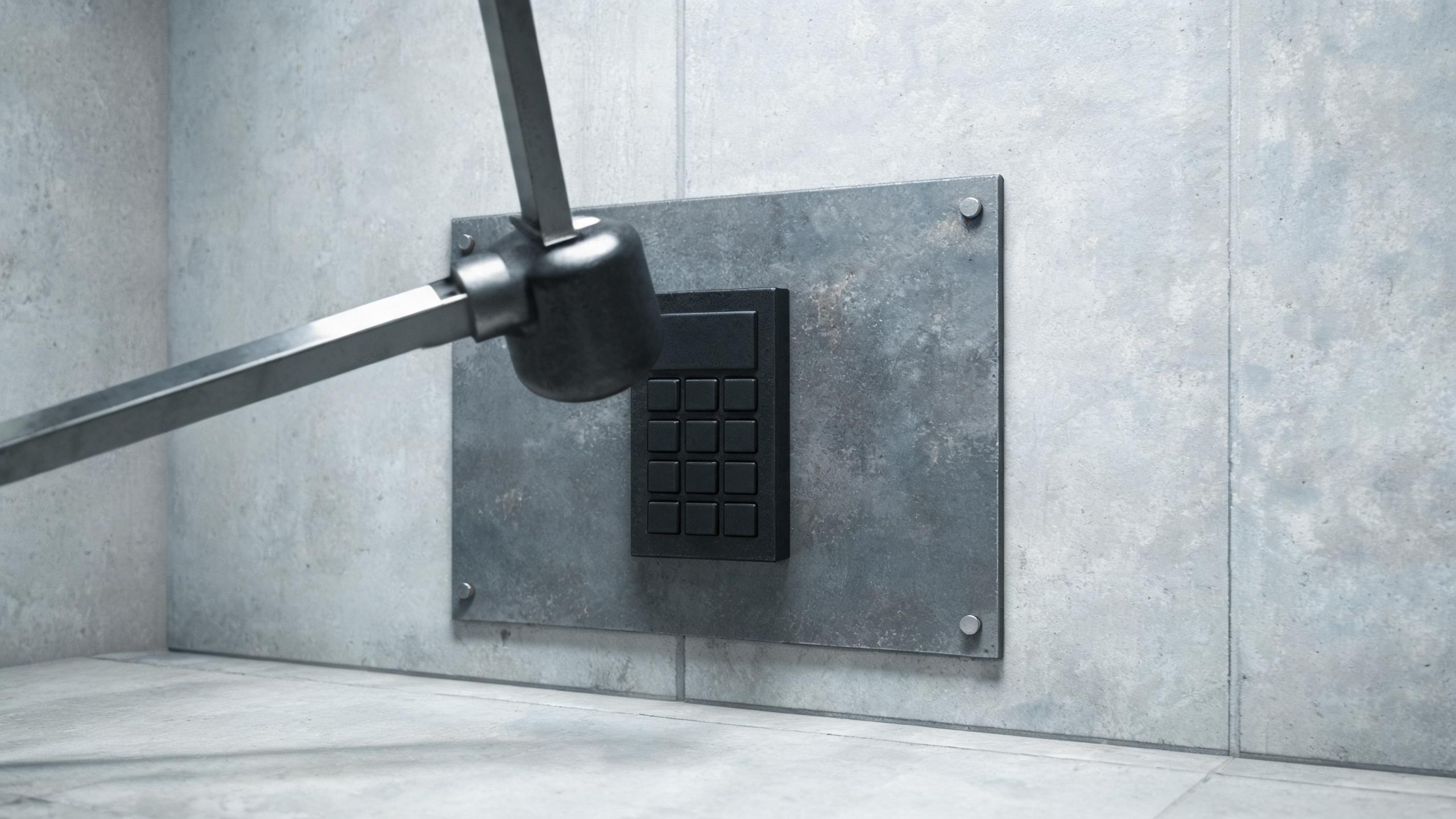 Impact rating for public-area hardware
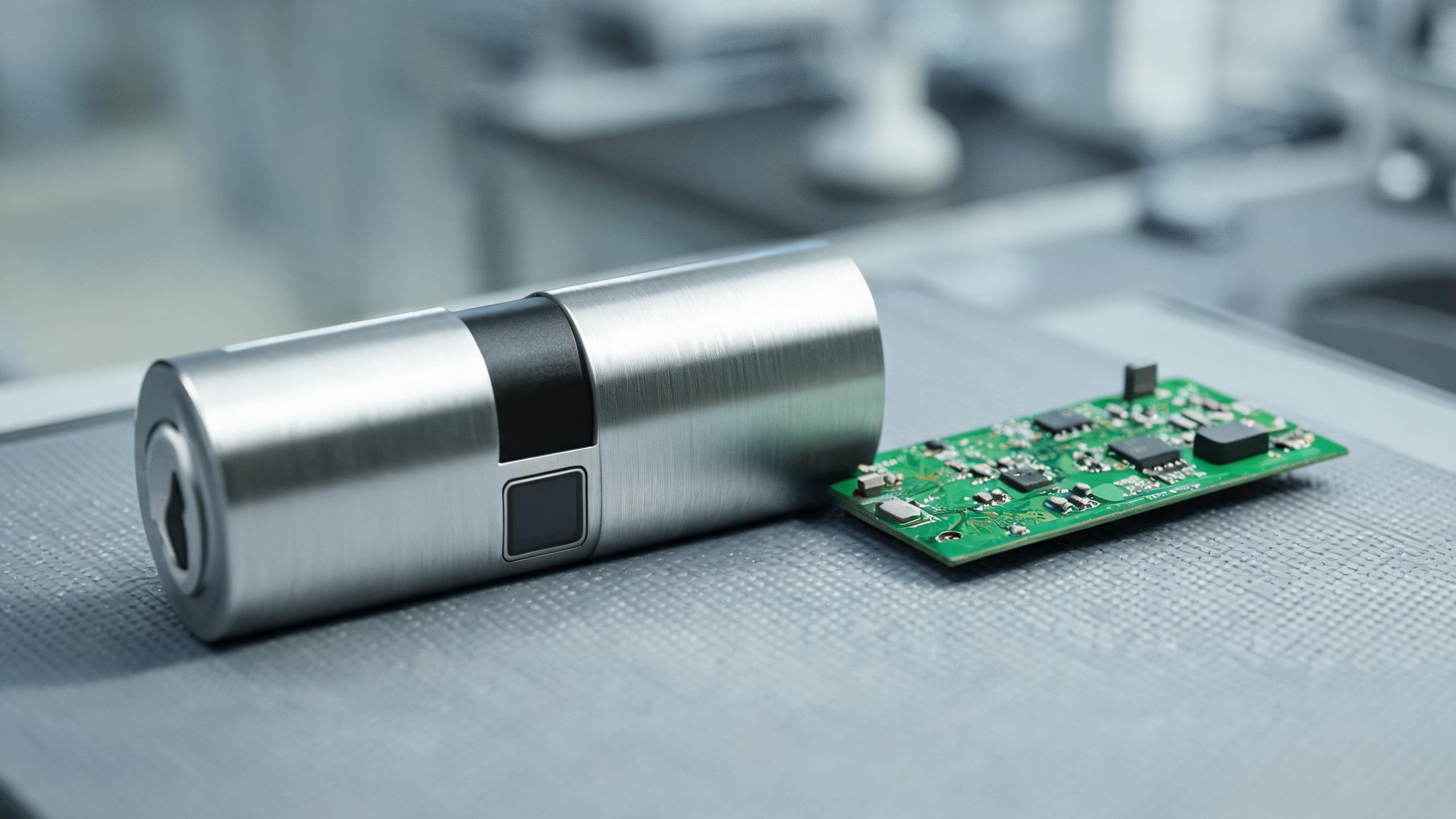 EN 14846 referenced in European tenders
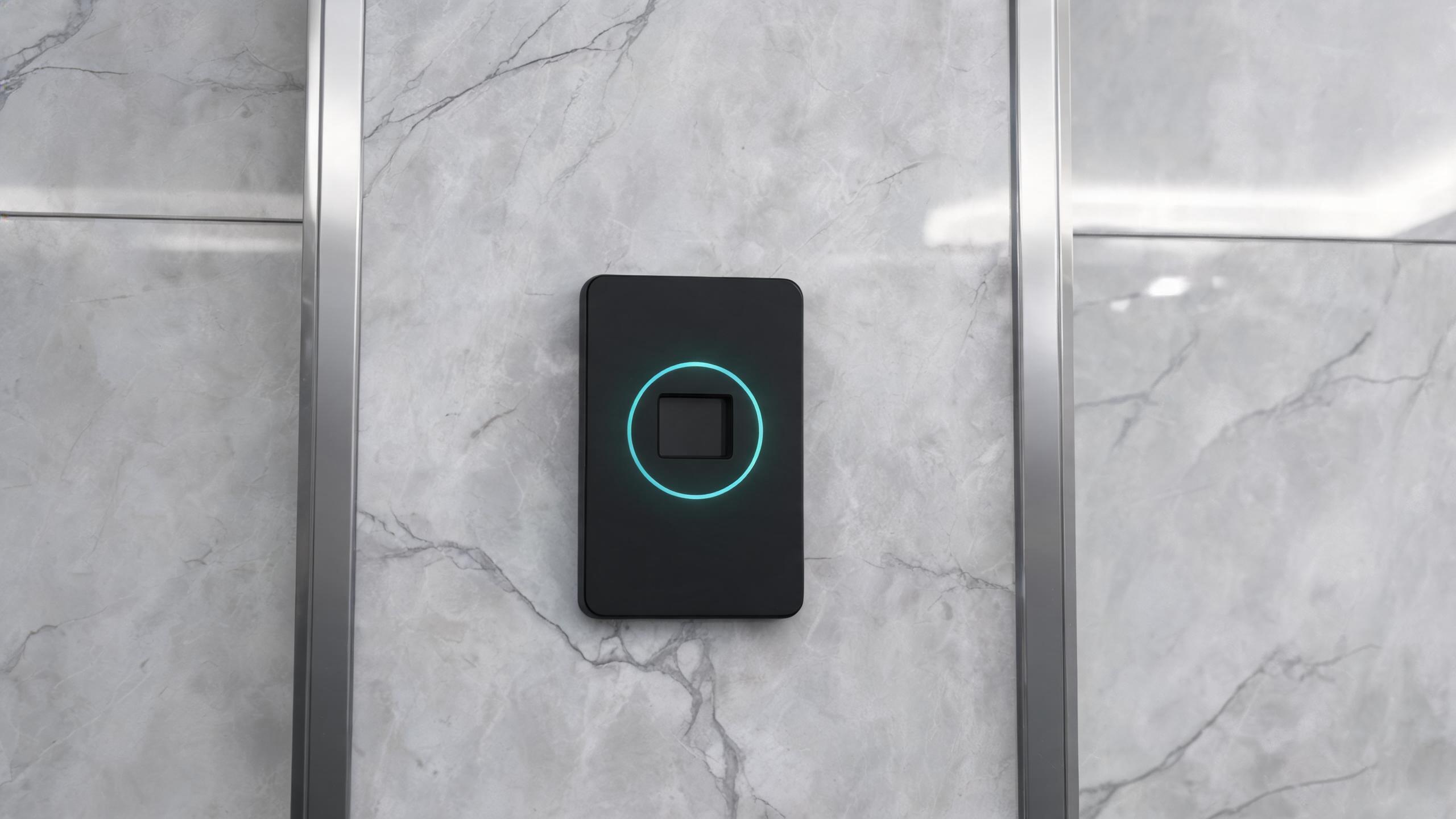 Palm vein reader assessment
Boundary
IP, EMC and fire: tested here, witnessed elsewhere
Three areas where preparation is ours and the conclusion is somebody else's.
| Area | Done here | Must be witnessed elsewhere | Standard buyers reference |
|---|---|---|---|
| Ingress protection | Sample preparation, sealing checks, chamber time booked for a pre-run | The formal IP test and the report that states the level | IEC 60529 |
| EMC emissions | Pre-scan on a spectrum analyser to catch a design problem early | The formal emission and immunity test, and the test report a market file accepts | EN 61000, EN 55032, FCC Part 15 |
| Electrical safety | Design review against the standard, and current and stall checks on the bench | The safety test report for the model | EN 62368-1 |
| Fire door hardware | Nothing. This does not apply to the bench in any form. | The whole assembly test, with the door, frame and hardware as one set | UL 10C, NFPA 80, EN 1634-1, EN 14846 |
| Restricted substances | Supplier declarations collected and checked against the bill of materials | Material analysis where a market file requires it | RoHS 2011/65/EU |
The pattern is the same in all five rows: preparation can be done here, and a conclusion cannot. A pre-scan that finds a design problem saves a failed test later, and it is worth doing for that reason alone. It is not evidence of compliance, and it would be dishonest to present it as such. Where a buyer needs the formal document, the request goes to a laboratory that holds the accreditation for that test, and the model document pack records what was obtained.
Fire is the row to read twice. There is no version of this bench that tests a fire door, because the test is of an assembly under a fire curve, and a lock alone is not an assembly. UL 10C and NFPA 80 describe the assembly test in the US market; EN 1634-1 covers the European door test and EN 14846 the electromechanically operated lock. A buyer writing a tender should ask the door supplier for the assembly document and the lock supplier for the model document, and should not accept either one standing in for the other.
Comparison
In-house result versus third-party report
Both are useful. They answer different questions, and confusing them is how a tender file gets rejected.
| Dimension | In-house bench record | Third-party report |
|---|---|---|
| Who signs it | The test engineer who ran the rig | An accredited laboratory, under its own accreditation scope |
| What it covers | The exact unit, firmware and build that were on the rig | The model and standard named on the report, with the samples it tested |
| What it is accepted for | Internal release, design change verification, buyer due diligence | Market entry, tender submission, customs or regulator requests |
| What it cannot do | It cannot certify, and it cannot be presented as a certificate | It cannot describe your install, your door or your batch beyond the samples tested |
| How it is traced | Rig log, serial number and cycle count, kept with the batch | Report number, sample identification and the laboratory's own records |
| What it costs in time | Scheduled against the rig, in hours | Quoted by the laboratory per test, and booked against its calendar |
A buyer who needs both should ask for both, in that order. The bench record tells you whether the design is sound and whether a change broke something. The third-party report tells a market that the model meets a named standard. A supplier who offers only the second, with no bench record behind it, is usually a supplier who cannot tell you what changed between the sample and the shipment.
Request
How to request a report for a model
Four inputs make a request answerable. The model, exactly as it appears in the catalog. The standard the report has to address, named by number rather than by description. The destination market, because the same test can need a different document format. And the purpose: due diligence, a tender submission, or an internal change verification. Each purpose produces a different file, and a request that names none of them usually produces a catalog extract instead of a report.
What comes back depends on what exists. If a report exists for the model and the standard, the copy is supplied with its date and the issuer named. If it does not exist, the answer says so and names the laboratory route and the time that route takes, quoted per request. What is never supplied is a report for a different model presented as if it covered this one, or a document with a number removed to make it look applicable.
Redaction is normal and is agreed in advance. Customer names, prices and quantities are removed from a copy supplied for due diligence; the test data, the standard, the date and the issuer stay. A redacted copy with the test values removed is not a redacted copy, it is a useless one, and buyers should reject it. The complete file set for a tender is assembled through the compliance document centre, which lists what each tender type normally asks for.
Limits
What a test result does not prove
- It does not certify a model. Only the issuing body certifies, and only within the scope printed on the document.
- It does not cover the batch. A report covers the samples tested. Batch quality is controlled by inspection, described on quality control.
- It does not describe your door. A lock that passes on a rig has not met your leaf, your frame or your closer.
- It does not transfer to a fire assembly. A lock document is not a door document, and the assembly is tested as a set.
- It does not survive a design change. A new motor, a new firmware generation or a new latch changes the unit that was tested.
- It does not predict a climate. A runtime measured at room temperature says little about a door in a coastal corridor.
- It does not replace installation quality. Most field failures come from the fit, not the mechanism.
Answers
Testing questions buyers ask before a tender
Do you test every unit that ships?
Every unit is exercised on the functions the buyer uses in the first week at end-of-line, which is a functional check rather than an endurance run. Endurance runs are done on samples, because a 20,000-cycle run occupies a rig for about 28 hours at 12 cycles per minute and cannot be repeated on every lock.
Can I get a test report for a model before ordering?
Yes, where one exists. Send the model, the standard by number, the destination market and the purpose. If a report exists you get a copy with its date and issuer; if it does not, the reply names the laboratory route and the time it takes, quoted per request.
Is an in-house report accepted in a tender?
Sometimes as supporting evidence, rarely as the document the tender asks for. Tenders usually name an accredited laboratory and a standard. An in-house record is useful for due diligence and for showing what changed between builds, and it should be submitted as support rather than as a substitute.
How many cycles does a lock have to survive?
That is set by the standard the buyer names or by the purchase order, not by a number on this page. The bench schedules against a count and the report prints the count actually run. What the bench guarantees is that the criterion and the counting method are stated, so two reports can be compared.
Do you test IP and EMC in house?
Only as preparation. A pre-scan and chamber preparation can expose a design problem early, and the formal IP and EMC documents come from a laboratory that holds the accreditation. IEC 60529, EN 61000, EN 55032 and FCC Part 15 are the references buyers quote, and the model document pack says what is held.
What is the difference between your report and a certificate?
A report records what was tested, on which samples, against which standard, and with what result. A certificate is issued by a body with the authority to declare conformity. A report can support a declaration of conformity, and it does not replace one.
Can you test my sample, not yours?
Yes, when the sample is a defined build and the test is one the bench can run. The report then names your sample and the build it represents, which is useful before a mass production release. It cannot be turned into a market certificate, because the issuing body is not involved.
How long does a report request take?
It is quoted per request, because it depends on whether the report exists and on the laboratory calendar where it does not. What can be stated here is the bench side: the rig time for each item is listed in the table above, and a copy of an existing record is issued with the model document pack.
Send the model and the standard
Two lines start the request: the model exactly as it appears in the catalog, and the standard by number. Add the market and the purpose and the reply can be specific about which document exists and which route is needed. Buyers preparing a tender file usually send the whole list at once through compliance documents; buyers checking a design change send the change note with the model. Either way, a sample on your own door is the check that no report can replace.
Request a model reportCertifications and documents