
Last updated: October 31, 2026 · Reviewed by export engineering
Branding is a label change. ODM is a development project. Buyers lose money when they order one and expect the other.The tier you choose decides tooling, sampling rounds, certificate scope and who carries the risk when the result does not match the brief.
A first brief usually arrives as one sentence: put our brand on the lock. That sentence hides four different projects with four different contracts. Tier 1 changes what the buyer sees at unboxing. Tier 2 changes what the buyer touches. Tier 3 changes what the lock does. Tier 4 changes what the product is. The two expensive mistakes are buying T1 expectations at a T4 price and buying a T4 scope on a T1 budget: the first produces a branded stock lock that stalls at a retail audit, the second produces a development project that stalls at the packaging proof. Decide the tier first; every other answer on this page follows from it. If the whole brief is only a brand promise, the shorter route is described on the private label page; the questions buyers send before signing are collected at OEM and ODM FAQ.
Tier ladder
Four customization tiers
Each tier is a contract shape, not a price list. The table states what changes, what has to be built before a saleable unit exists, how many sample rounds are normal, and who owns the result if something goes wrong. With more than 10 years of smart lock production and 70+ models already in the catalogue, most requests land in T1 or T2 because the platform choice has already been made by the catalogue, which runs from hotel card locks to fingerprint door locks.
| Tier | What changes | Tooling needed | Sampling rounds | Who owns the result |
|---|---|---|---|---|
| T1 - Label and packaging | Carton, label, manual, quick-start card, accessory bag, warranty slip; the lock stays the stock model, including firmware and certification | None on the lock; a carton die-line and print plates at the packaging printer | 1 | Buyer owns the artwork; the factory owns the model identity |
| T2 - Hardware cosmetic | Finish, colour, handle shape within the platform, escutcheon print or badge, keypad print | Surface treatment setup and a print pad or jig; a new mould only if the shape changes, which moves the job to T4 | 1 to 2 | Buyer owns the appearance standard; the factory owns the body and the process |
| T3 - Firmware, app and credential behaviour | Default language, code length, auto-lock delay, sound, lockout rules, app name and icon, credential mix such as adding RFID to a keypad model | Firmware build and a regression bench; app configuration on the platform account; no hardware tooling unless the credential needs a module | 2 to 3 | Buyer owns the feature specification; firmware source stays with the factory or the platform |
| T4 - Full ODM | Housing, PCBA, mechanical body, mortise, keypad layout, reader position | Die-cast or injection mould, PCB layout, antenna tuning, assembly fixtures and a dedicated test fixture | 3 plus a first article | Buyer owns tooling only if paid and written; design rights follow the contract |
A T1 order behaves like a print job attached to a stock lock: a proven body such as the SLK-2020 at 306 mm x 75 mm x 15 mm takes a new brand without a drawing change, and exposure is artwork, carton quantity and a print schedule. A T2 order behaves like a production change, because the appearance standard moves and colour needs a signed physical reference before a plating batch starts. A T3 order behaves like a software project with a bill of materials attached, and every build needs its own version record. A T4 order behaves like a product launch: tooling, first article, validation, certification and a frozen specification before a single saleable unit ships.
What the tier decides
The same question gets a different answer depending on the row you sit in. These five answers are the ones that change a budget after the order is placed.
| Decision | T1 / T2 answer | T3 / T4 answer |
|---|---|---|
| Minimum quantity basis | Set by the carton printer's own run plus the stock model's quantity; the lock minimum is rarely the binding one | Set by tooling amortisation and by firmware variants that must be built, tested and version-controlled separately |
| Lead time basis | The stock model schedule plus a print and packing stage | Development milestones, then tooling, then a pilot; quoted per order and never published as a standard number |
| Certificate scope | Model identity unchanged, so the existing model documents stand and the brand mapping is recorded in writing | A new model number, changed radio module, changed firmware or new enclosure can require delta testing or a full re-test |
| Spare parts | Same part numbers as the stock model, taken from the normal spare list | New part numbers; the spare list is fixed at the pre-production stage, before mass production |
| Change after approval | Re-proof the artwork and, if plates are already made, print again | Re-opens tooling, sampling and possibly certification, costed by ECN against the frozen specification |
Minimum quantity is not one number for a factory, it is one number per model and per tier. Current MOQ policy is confirmed in writing with each quotation, together with the quantity at which the tooling line stops dominating the unit price; a 100-unit first order is normally a T1 or T2 order, because tooling has to be paid by volume that does not exist yet. Certificates work the same way: the certificate belongs to the model, not to the factory, so a T1 run stays inside the existing technical file while a T4 model starts a new one. The document matrix by market is explained at certifications and compliance documents.
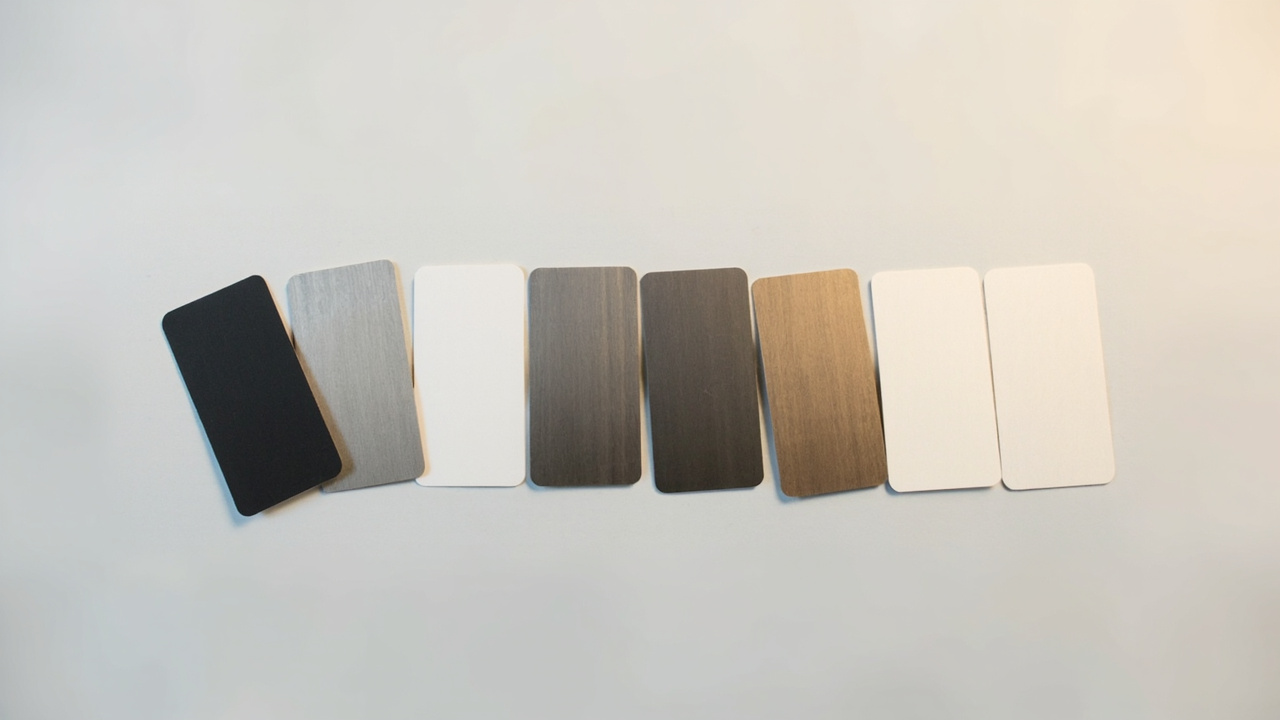
Stage 01
Requirement brief
The programme starts with a written brief: door type, reader, power source, target market and the certification route. Nothing is tooled until that brief is signed.
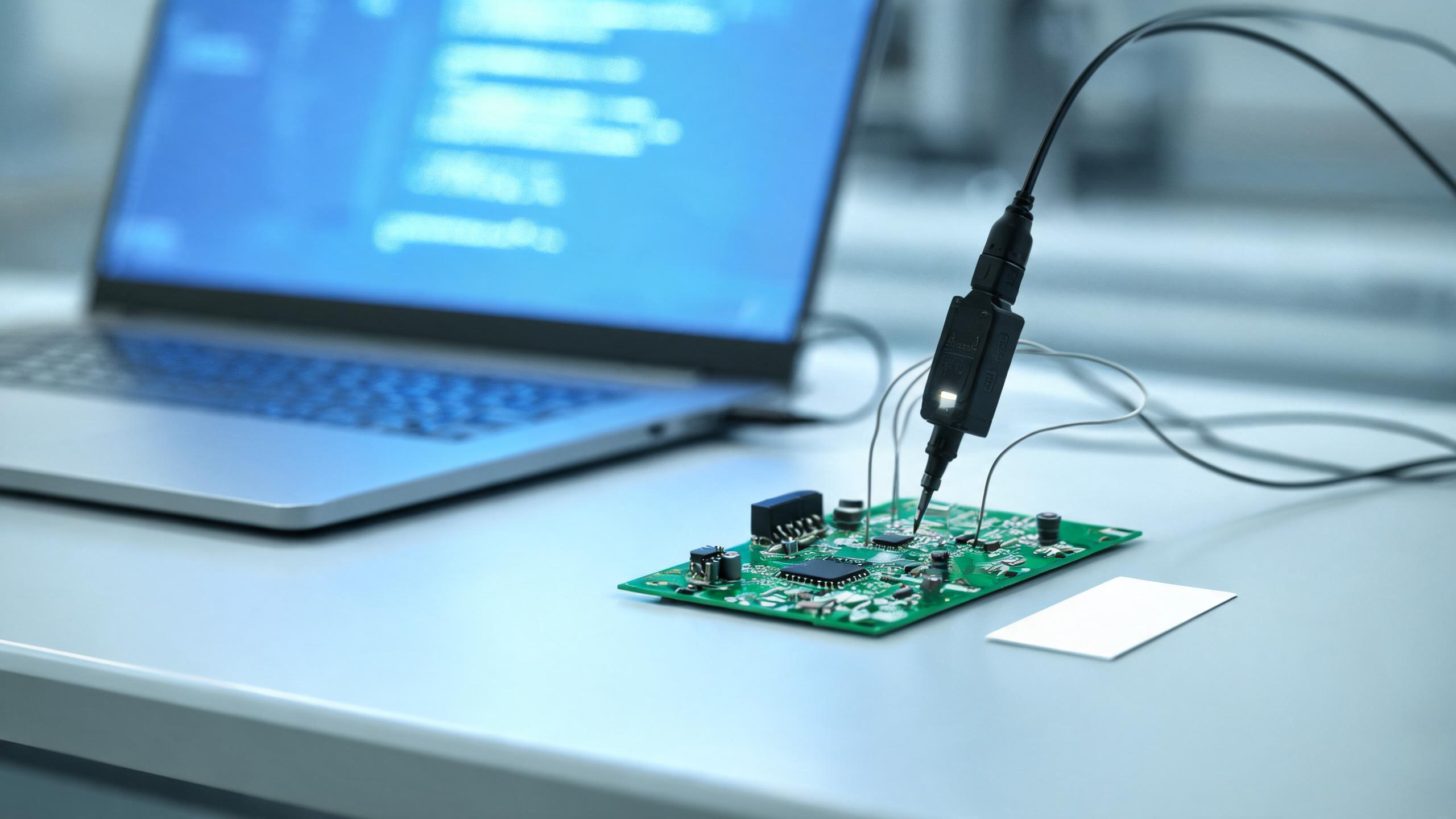
Stage 02
Hardware and firmware split
The electronics supplier and the mechanical team work from separate drawings that meet at a defined interface. You can supply the app layer or use the reference one.
Stage 03
Pilot build
A pilot build runs the new configuration through assembly and test before mass production. Findings from the pilot change the drawings, not the schedule.

Stage 04
Mass production and packing
The approved configuration moves to the line. Packing lists, carton marks and the document pack follow the model, not the programme.
Tooling, IP and exclusivity
Ownership is decided by a clause, not by a conversation. The default positions below are what a buyer gets if nothing is negotiated, and each one can be changed only in writing before development starts.
| Item | Default position | How it is changed |
|---|---|---|
| Mould ownership | Buyer pays, the tool is tagged with the buyer mark and stored at the factory; it runs only for that buyer's orders during the agreement | A written clause covering transfer, buy-out, storage, maintenance and tool-life records; or the cost is amortised into the unit price with no separate asset |
| PCBA design files | Retained by the factory, including layout, Gerber and fixture data | A controlled copy under NDA for a paid T4 project, limited to the files named in the agreement and subject to component supplier terms |
| Firmware source | Not handed over; the buyer receives a version record and the release binary for the approved build | Source escrow or a licence agreement negotiated as separate commercial terms; this is not standard on any tier |
| App ownership | On Tuya Smart or TTLOCK the app is configured, not owned: name, icon, colours and language are set on a third-party platform whose features and release cycle stay with the platform | An app built on the platform SDK, or a self-developed cloud and app; each carries its own development, store submission and evidence cost |
| Exclusivity | None; the platform and model stay available to other buyers | A written term naming territory, configuration, committed volume and period, with a stated consequence if the volume is missed |
| Warranty liability | The factory warrants the lock against the written specification; the buyer carries the brand promise to the end user | A split agreed in the distribution agreement: who handles the first-line claim, who pays freight, and what the end-user wording says |
Two statements on this page save the most money. First, on a third-party platform the app is configured, not owned: the buyer controls the icon, the name and the language, and the platform controls the feature set, the release calendar and the cloud. Second, full firmware source handover is not standard practice, and any promise of it has to be written into the contract before work starts. Changing the credential hardware, for example adding a MIFARE reader at 13.56 MHz to a keypad model, is a new configuration rather than a finish option. A 200-room hotel estate cannot absorb several firmware variants either, which is why a T3 project standardises on one build per model. A buyer who needs both an owned app and owned firmware is choosing a T4 software scope with its own evidence burden, not a branding upgrade.
The spare list behind a T4 model is set before the mass run, and a fleet normally carries one spare lock per 50 doors. Exclusivity is a commercial trade, not a favour. It is normally bought with a territory, a configuration and a committed volume, and it should say what happens to the mould, the app account and the stock if the volume is not reached. Warranties follow the same logic: the factory can warrant what it makes to a written specification, and the buyer owns the promise made in the retail channel. Test scope and report formats are described at the testing laboratory, and the spare list that follows a T3 or T4 model is set up through spare parts.
The 10-step project path
Ten steps, ten inputs, ten outputs, and one known stall point per step. A project that skips a step does not save time; it moves the delay to the next approval.
- Brief and feasibilityInput: door data, target market, credential list and a realistic volume band; output: a feasibility note that separates platform configuration from work that needs tooling. Projects stall here when the door data is a photo instead of a measured schedule.
- Specification sign-offInput: the feasibility note; output: a written specification covering materials, finish, firmware version, credential mix, accessories and packaging. Projects stall here when two stakeholders hold different scopes and the document is left vague to keep everyone comfortable.
- Door surveyInput: every door leaf measured, with thickness recorded to the nearest 1 mm, plus backset, existing prep and fire label; output: a fit drawing with the mortise, spindle and cylinder selection. This step stalls most often, because a mixed door population cannot be resolved on one sample.
- Quotation and tooling decisionInput: the signed specification; output: a quotation with tooling, NRE, MOQ basis, sample plan and terms. Projects stall here when the buyer compares unit price only and treats the tooling line as optional.
- Tooling and first articleInput: a tooling order and approved 3D data; output: first-off parts with a dimensional report against the drawing. Stalls happen when the first article is corrected twice and nobody re-issues the drawing.
- Engineering sample and packaging artworkInput: the first article and the buyer artwork; output: engineering samples plus a packaging proof on the real die-line. The stall point is packaging artwork approval, where barcode, language set and label text are usually incomplete.
- Validation on real doorsInput: sample locks and the doors they will serve; output: a written fit, function and credential test record that names the firmware version. Stalls happen when the buyer tests one door and calls the model validated.
- Golden sample and freezeInput: validated samples; output: a golden sample signed and dated by both sides, a frozen specification and an ECN baseline. The stall is the signature: without it, mass production has no reference to be inspected against.
- Certification and document packInput: the final model identity and the destination market list; output: model-specific test reports, declarations, label content and a manual that matches them. Projects stall when the market list grows after testing has started.
- Pre-production, pilot and mass runInput: the golden sample and approved packaging; output: a pilot report, inspection records and packed cartons. The last stall is packaging that lands after the locks are ready, or a firmware build that differs from the one in the golden sample.
Door survey and packaging approval are the two gates that decide whether the schedule holds. Most interior leaves fall between 38 mm and 55 mm, but the survey records the actual figure on every door, and a 20-door pilot before the full run is the normal way to test the fit inside the building. Both gates sit on the buyer side of the table, and both can be prepared before the quotation is issued. The production controls that follow the pilot are set out at manufacturing and quality control.
Change control: the ECN rule
A change is any edit to a frozen item: a drawing, a material, a finish reference, a firmware build, packaging artwork, the accessory list or a line of label text. It does not matter how small the edit looks on a phone screen. If the item has been approved and its document exists, editing it is a change and it needs an ECN.
A change is normally free of engineering charge when it is requested before the golden sample is signed and before tooling is cut or print plates are made, because the next sample round absorbs it. New work created by the change is still quoted, since NRE is a cost and not a courtesy. A change re-opens tooling when it touches housing geometry, the PCBA layout, the credential hardware, artwork after plates exist, or a firmware build that has already been released.
The rule that ends most disputes is simple: no change is accepted verbally. A phone call, a chat message or a note in a meeting is a request, not an instruction. The written ECN states the change, the reason, the affected documents, the cost and the schedule impact, and a revised quotation is signed before any rework begins. The ECN log then becomes one of the records a buyer can inspect at shipment.
Change rule: no ECN, no rework. A change without a written ECN and a revised quotation is not started, and a change that arrives after the plates are made is quoted as new work rather than absorbed in the batch.
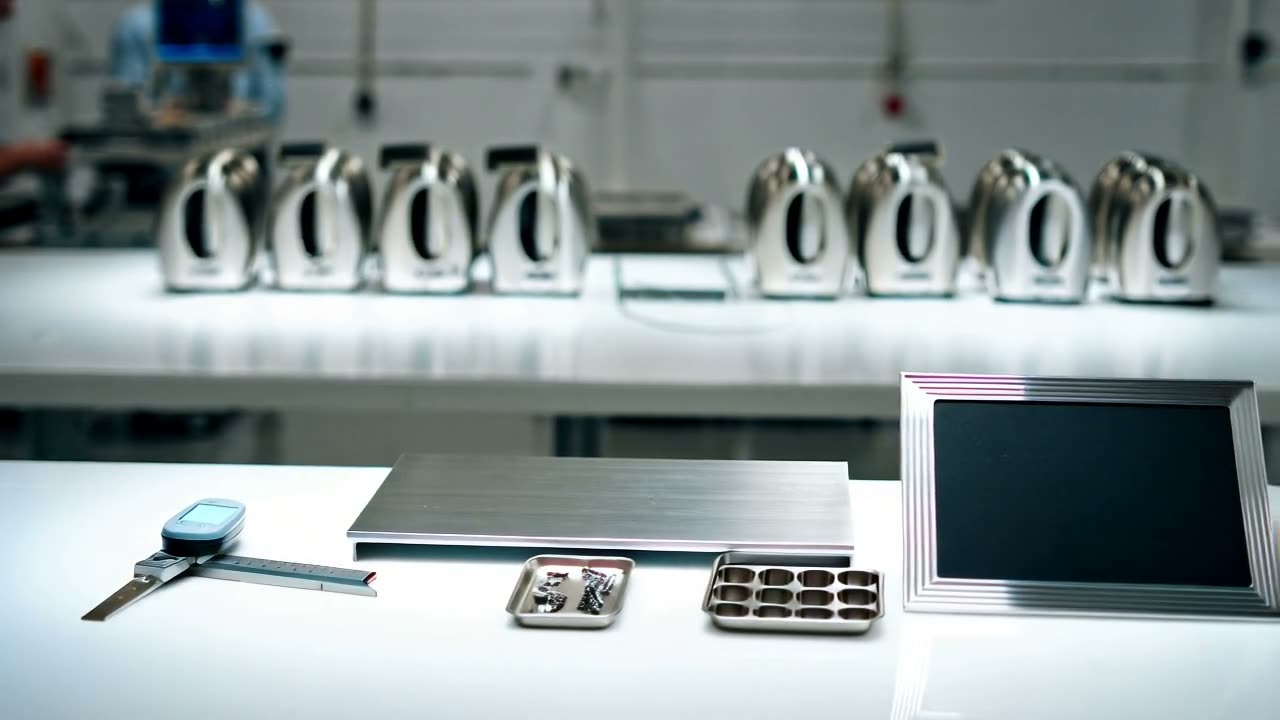
An OEM workbench: your configuration on the bench
Custom work is verified on a dedicated bench before it goes into production. The video shows a custom panel being checked against the drawing and the production line running behind it, which is the arrangement your programme will use.
Sampling rounds and what each one is for
Three rounds are normal for a T3 or T4 job and one is enough for most T1 jobs. Each round answers a different question, and each one freezes something that cannot be re-opened for free.
| Round | Purpose | What is fixed afterwards | Set size |
|---|---|---|---|
| Engineering sample | Fit and function on real doors, credential reads, firmware behaviour, battery and audio | Mechanical interfaces, firmware build baseline and credential mix | 1 to 2 units |
| Golden sample | Appearance and finish, colour match, marking position, keypad feel, signed by both sides | Cosmetic reference and the appearance standard used for inspection | 2 to 3 units, one kept at each end |
| Pre-production sample | Packaging and the full accessory set: carton, manual, label, cards, tools, bag | Packaging artwork, accessory list and packing sequence | 1 packed carton from the first print run |
The same three rounds apply whether the first order is 200 units or 500 units; only the set sizes and the print quantities change. A buyer who skips the golden sample usually pays for the difference later in rejected cartons and disputed finish. A buyer who skips the pre-production sample discovers the accessory gap after the container is loaded. Samples can be arranged through order samples, and the inspection standards applied to the mass run are described at quality control.
What a buyer can inspect
Evidence is not a brochure. Six artefacts answer the six questions that come up after a shipment arrives, and each one can be requested before the balance payment.
| Artefact | What it proves | How to verify it |
|---|---|---|
| Golden sample, signed and dated | The appearance and function standard the batch was built to | Compare mass units against it, or ask a third-party inspector to compare them |
| ECN log | Every change made after the freeze, with cost and approval | Request the log with the shipment documents; entries must match the invoice |
| Firmware version record | Which build is in which batch | Read the version in the app or on the test bench and match it to the record |
| Model-specific test report | What the model actually holds, not what the factory holds in general | Check the model number and the issuing laboratory printed on the report |
| Packaging die-line and proof | The carton matches the approved artwork | Scan the barcode on a production carton and compare the print to the signed proof |
| Video call at the line | The batch exists and is being built on the stated line | Book time during the run, not after packing, and ask for the serial range on camera |
Document packs are built per model, and the model-specific certificate is supplied on request rather than assumed from a generic factory list. Buyers who need drawings, declarations and test reports for a tender should start from certifications and compliance documents.
What this service does not cover
The limits below are stated before a project starts, because each of them becomes expensive once sampling has begun.
- We do not copy a competitor's patented housing or a protected trade dress, even when a drawing or a sample of that product is supplied.
- We do not promise a certificate before the model and the destination market are fixed, because the document follows the model identity and not the intention.
- We do not hold tooling cost as a hidden line item, so a quotation shows tooling, NRE and unit price separately and states whether tooling is paid or amortised.
- We do not start a T4 project without a signed specification and a named decision maker on the buyer side, since every later dispute returns to that document.
- We do not accept a change that exists only in a chat thread, and a verbal instruction never authorises rework.
What sits inside the boundary is ordinary work: platform configuration, cosmetic changes, firmware features, tooling, sampling, packaging and the model document pack. What sits outside is usually a legal question dressed as an engineering question, and it is better answered before the first invoice.
OEM and ODM questions buyers send before signing
Does a logo change require new certification?
Usually not. A logo, a carton and a manual leave the model identity intact, so the existing model documents stand and the brand mapping is recorded in writing. The risk appears when the change also moves the model number, the radio module or the firmware build, because then the report may no longer describe the product being shipped. Model-specific documents are supplied on request, and the market-by-market view is at certifications.
Who owns the mould when we pay for the tooling?
Ownership follows the written clause, not the invoice. The common arrangement is that the buyer pays, the tool is tagged with the buyer mark, it is stored at the factory and it runs only for that buyer's orders during the agreement. Transfer, buy-out, maintenance and tool-life records belong in the same clause. If the tooling is amortised into the unit price instead, no separate asset exists to move.
Can we receive the firmware source code?
Not as a standard deliverable. The default package is the release binary plus a version record that ties each batch to a build. Source handover is a separate commercial term, usually escrow or a licence agreement, and it is easier to negotiate before development starts than after the product ships. On a third-party platform the app is configured rather than owned, so an owned app and owned firmware together describe a software project, not a branding tier.
How many sampling rounds should we plan for?
One proof round is enough for most T1 packaging jobs, two rounds cover a T2 cosmetic change, and two to three rounds plus a first article are normal for T3 and T4. Each round freezes something, so the count is less about preference and more about how many items you are changing. The rounds and their set sizes are listed above; sample orders start at order samples.
What counts as a change after the golden sample is signed?
Any edit to a frozen item counts: drawing, material, finish reference, firmware build, packaging artwork, accessory list or label text. It becomes a written ECN with a cost and a schedule impact, and it re-opens tooling when it touches housing geometry, the PCBA layout, the credential hardware or artwork after plates are made. No change is accepted verbally, and no rework starts before the revised quotation is signed.
Can you quote a firmware change without a door survey?
Yes for a configuration change, because default language, code length, auto-lock delay and sound do not depend on the door. A feature change still needs the door and credential context, since behaviour has to be validated on the locks it will run on. Send the model, the current build, the required behaviour and the test doors, and the scope is answered before any price is quoted; related questions sit at the OEM and ODM FAQ.
Start with a tier, not a price
Send the model or platform, the changes you want, the target market and your first-order quantity band. We reply with the tier the brief actually sits in, the tooling and sampling it needs, and a quotation that names every line; current MOQ policy and lead time are confirmed in writing per order.
Request a quoteWhatsApp the export desk