
Last updated: October 31, 2026 · Reviewed by export engineering
A factory tour is an evidence collection exercise, not a hospitality event. What you leave with depends almost entirely on what you asked to see before you arrived. Ninety minutes on a line can produce a serial range, a test log and a carton label that tie to your order, or it can produce photographs of machines that prove very little. This page sets out the route, the formats, the checklist and the questions that turn a visit into records you can audit later.
Most buyers who cannot fly to China still need to answer one question: what can be verified without standing in the building, and what stays out of reach at every evidence level. The site has spent more than 10 years on smart lock production across 70 production-ready models, so the process is not a first batch being filmed for a buyer. The short answer is that the records travel and the building does not. A test log, an IQC sheet, a firmware version record and a carton label can be photographed, dated and reconciled against an invoice, and those four items carry more weight than a video walk-through. The visit adds one thing documents cannot: you see the batch that is running on the day, which tells you whether the process is habit or rehearsal.
The route
The 90-minute route, station by station
The route below is 90 minutes of walking time, excluding the discussion that comes before and after. It follows the physical flow of a lock from parts on a shelf to a released carton, because that is the order in which a quality problem would show up. Every station has a record attached to it, and the fourth column names the record worth asking for. A station without a record can be watched but not audited, which is why the route spends more minutes at benches than at machines.
| Minute | Station | What you can see | Evidence to capture |
|---|---|---|---|
| 0 to 10 | Model board and order desk | The 6 families, the 70 production models, the 20 hotel RFID card lock models, and the open work order for the model under discussion, with its drawing revision on screen | A photograph of the work order header showing your order number and model code, plus the drawing revision letter |
| 10 to 20 | Incoming parts and IQC bench | Cartons opened lot by lot, mortise bodies measured against the drawing with calipers, plating compared with the signed finish panel, battery date codes read on the cell wrapper | A completed IQC record with lot number, sampled quantity, measured values and the inspector signature; the disposition slip for the last rejected lot |
| 20 to 35 | Mortise assembly | The 201 stainless steel body at 306 mm x 75 mm x 15 mm for a model such as SLK-2020, going together with the No. 2 hotel mortise: latch and deadbolt travel measured, spring return checked, handle and escutcheon fitted | A sample travel card, the assembly drawing the station works from, and a photograph of the latch throw under the caliper, recorded to the nearest 1 mm |
| 35 to 45 | Clutch and motor fitting | The clutch and motor module seated in the mortise, the wiring loom dressed away from the bolt path, the mechanical key override turned by hand before the cover closes | The fit or torque check initialled on the travel card, and one unit opened at this station so the module position is visible on camera |
| 45 to 60 | Programming and reader calibration | Boards flashed at the fixture, the firmware version opened on screen, the reader calibrated and a card read at 13.56 MHz, then read again after the antenna is moved | The firmware version record with the serial range, the card read log, and the calibration reference the station uses |
| 60 to 75 | End-of-line test | Every unit on the bench: card read, the 4 AA cells checked at 1.5 V each for voltage and contact, key override exercised, auto-lock delay timed, low-battery alert confirmed | The test log for the serial range in front of you, and 3 units watched through the full sequence rather than a single demonstration |
| 75 to 85 | Packed goods | Sealed cartons, accessory bag opened against the packing list, manual language checked, label compared with the approved proof, barcode scanned into the packing list | The packing checklist for your order and a label photograph carrying your model code, quantity and order number |
| 85 to 90 | Shipping and release | Pallet build, carton count matched to the packing list, the release note signed before the truck is loaded | The release note, the packing list and the serial range declared on the shipment document |
Two stations deserve the most minutes. The end-of-line bench touches every unit rather than a sample, so an order of 200 units should produce 200 test records, one per serial number, and the range printed on the release note should close on the last page of that log. Packed goods is where a model code becomes a physical carton: the sealed label is the last point at which a wrong model, a wrong manual language or a missing accessory bag can be caught before the pallet is built. The sampling rules behind both stations, including acceptance levels and failure handling, sit at quality control, and the full station sequence is described at manufacturing.
One constraint is fixed before the visit begins: the line shows the batch running that day. A model outside its production slot will not be on the bench, and no honest line leader can stage one on request. That is why a date is agreed after the model list is fixed, and why the same advice appears in the audit guidance at the manufacturer page.
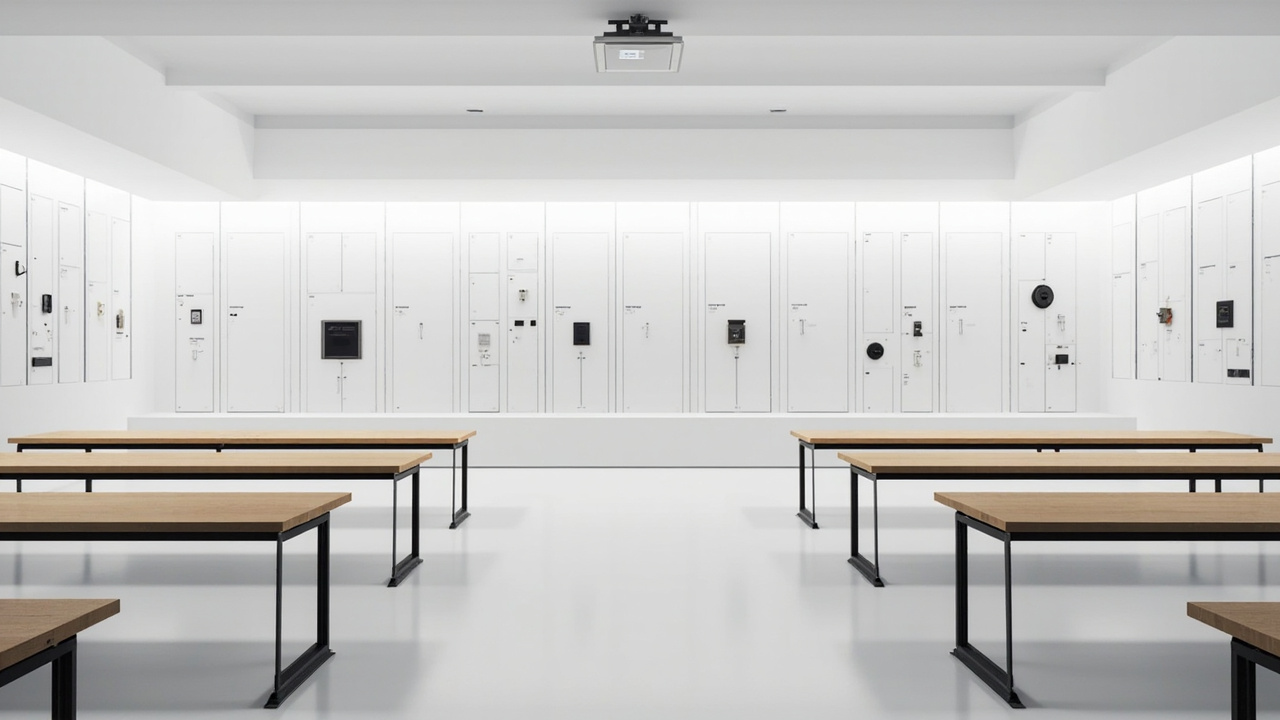 Assembly hall: work in progress under inspection
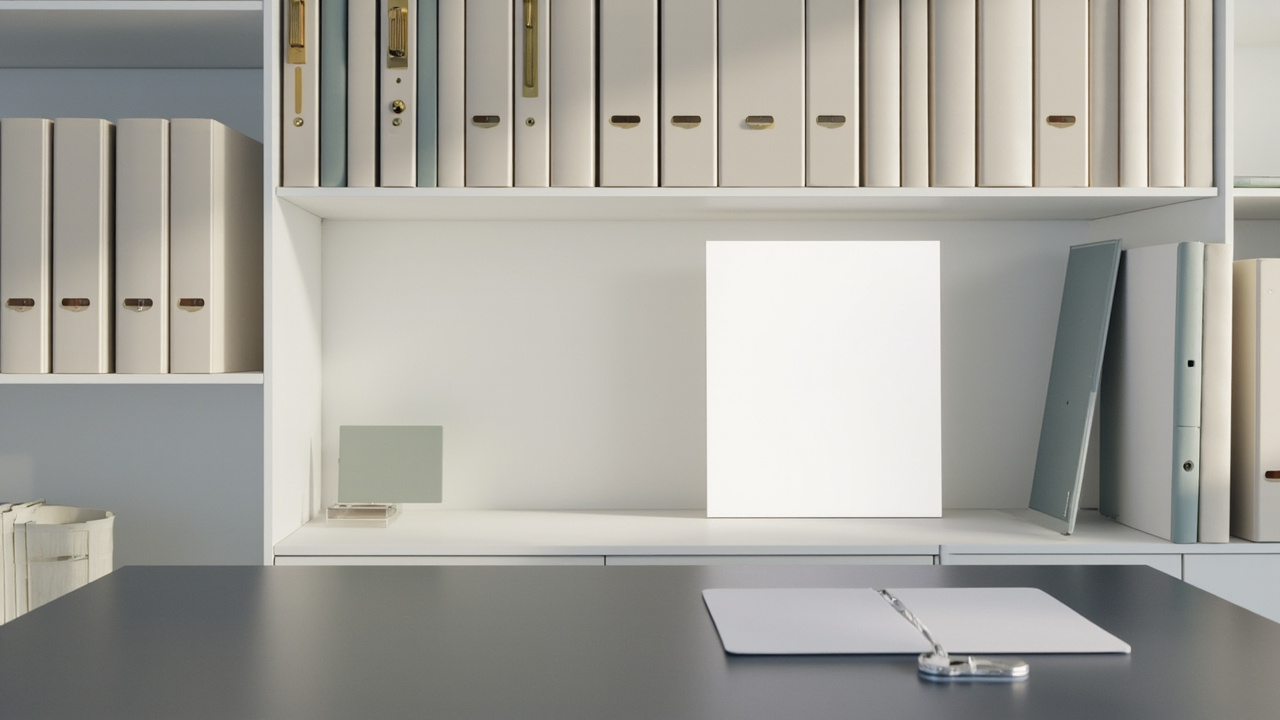 Incoming inspection: parts checked against the drawing
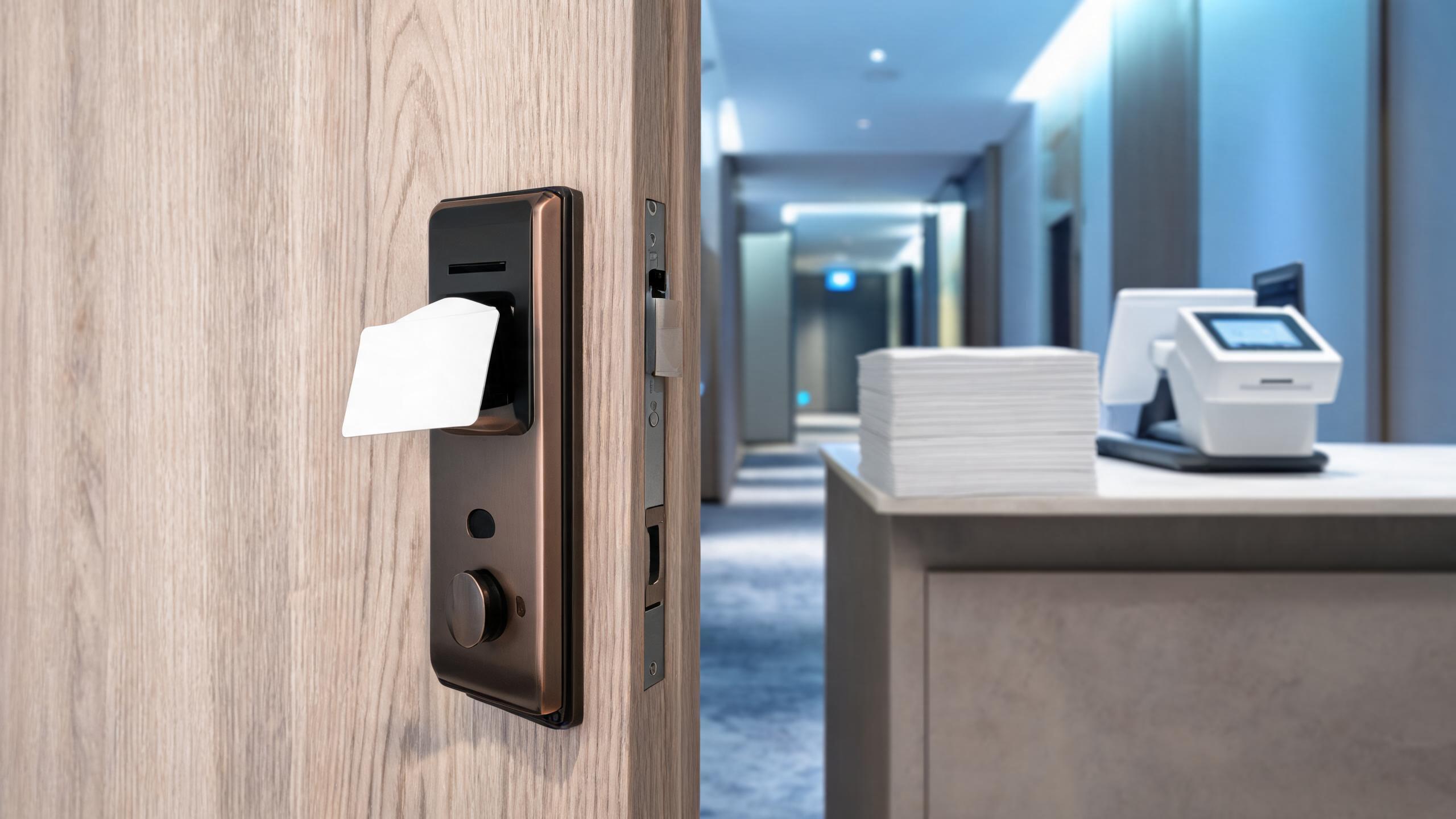 Hotel card lock station
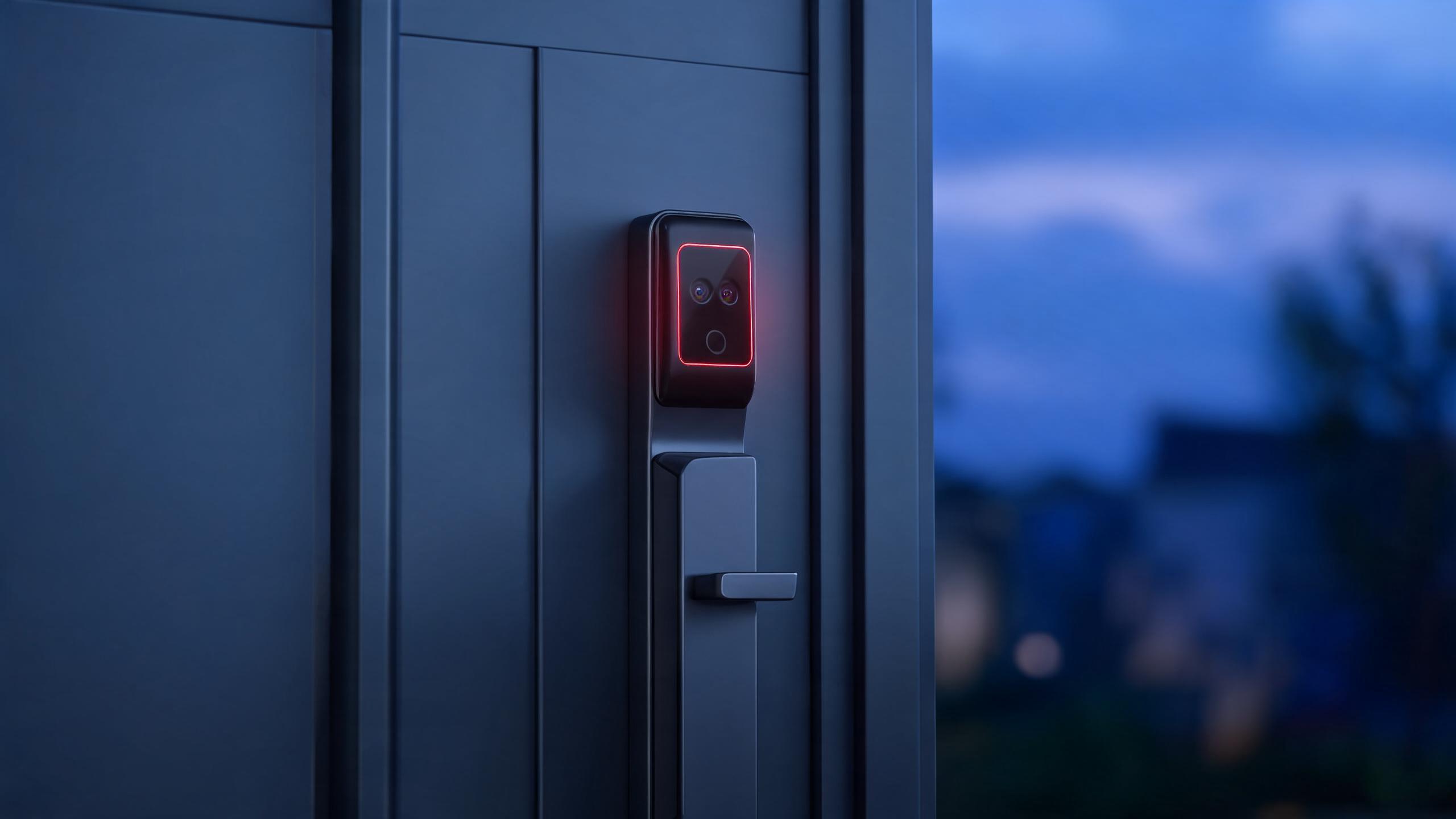 Face recognition module and reader assembly
Formats
Four tour formats and what each one can prove
Format is a choice about evidence level, not about convenience. The same factory looks different through a live camera, a curated photo set, a site visit and an inspector's report, and each format answers a different question. Choose the format from the decision you are trying to make: shortlist, first order, repeat order or a claim on a tender.
| Format | Duration | Best for | Limitation |
|---|---|---|---|
| Live video call at the line | 45 to 60 minutes, booked inside a production window | A first look, a repeat buyer confirming a batch is running, anyone who cannot travel | The camera shows only where it points; documents are hard to read on video; time zones have to meet a shift, not a desk |
| Guided photo set with annotations | Reviewed in 20 to 30 minutes; images are dated | Shortlisting 2 or 3 suppliers, tender files that need dated images, internal approval packs | The supplier selects the frames, so an empty bench is easy to leave out; serial numbers appear only if you ask for them |
| In-person visit | 90 minutes on the line, plus 30 to 60 minutes for documents | A first order at volume, a new model family, an audit against your own checklist | Shows the process running that day, not a model outside its production slot; travel cost sits with the buyer |
| Third-party inspection | 4 to 8 hours on site, set by the agency | Buyers who cannot travel and need an independent report before balance payment | The agency verifies the checklist it is given; it does not judge design intent, and its report is not a certificate |
Two of these are routinely confused. A guided photo set is a document: it can be re-read, compared and attached to an approval file. A live call is an event: it proves that a batch existed at the time of the call and that someone was willing to point a camera at it. Neither replaces an inspection, because an inspector works to your checklist rather than to the factory's camera angle. The usual sequence for a first order is a photo set at shortlist, a live call inside the production slot, an inspection before shipment, then a visit once volume justifies the flight.
For buyers who never travel, the strongest combination is the photo set plus the model document pack plus an inspection with a written checklist. That package is what the evidence levels at the testing laboratory are built to support, and it is the combination a tender panel can actually read.
Boundaries
What stays invisible on every tour
Not included on any tour, at any format: supplier names on the shop floor, other buyers' orders and cartons, the cost sheet behind the quotation, staff working on other brands, and the internal working of a certification body. Each of these belongs to somebody else, and each has a substitute that a buyer can use instead.
- Commercial supplier names. A plating line, a die-casting partner and a board house are named in a model document pack when a technical file requires it, but not on a wall board. Supplier terms are confidential, and a name on a screen is the start of a sourcing trip for a competitor.
- Other customers' orders and cartons. Pallets in the dispatch area belong to other buyers, and their labels, artwork and quantities are covered by our own confidentiality terms. Your own cartons are shown in full, and the labelling rules are set out at private label.
- Full BOM cost. You can see the component list for your model and the build path behind it. You will not see purchase prices, margins or the cost sheet. Price is quoted per order, and the components that drive it are explained at supply chain.
- Staff working on other brands. The line runs several brands in the same month. Footage of another buyer's branded product is not ours to publish, even when the hardware under the label is identical.
- Certification body internal process. The laboratory's files, witness arrangements and internal review belong to the laboratory. What the factory can hand over is the report that laboratory issued for the model, which is the point made at certifications and at certification FAQ.
None of the five omissions hides a defect in your order. Each is a boundary that belongs to a supplier, another buyer or a laboratory, and each has a document that stands in its place: the model pack, a signed confidentiality agreement, the quotation, the approved artwork proof and the lab report. A tour that promises to show everything is usually the tour that shows nothing checkable.
Preparation
Pre-tour checklist before a date is agreed
A tour date is agreed after the model list, not before it. Six items should be ready before you book travel or a video slot, because each one decides which station gets the minutes and which records are pulled in advance.
- The models under evaluation, by model code, with the quantity band planned for each one
- The door schedule: leaf thickness in mm, typically between 38 mm and 55 mm on interior leaves, door material, fire rating where it applies, and the number of doors per type
- Your questions ranked by importance, with the first 3 marked as the ones you will not leave without asking
- The person who has authority to approve, technical sign-off and commercial terms, and whether they are the same person
- An interpreter, if the discussion will move into drawings, firmware settings or test clauses
- A confidentiality template, if your legal team requires one before photographs or record copies leave the building
A list of 12 questions asked in sequence usually ends with the 6 that mattered left unanswered at the door. Ranking them is not politeness; it is the only way to protect the last 20 minutes, which are the minutes nobody plans. If your door schedule is not ready, a first visit is still useful, but it becomes a capability tour rather than a model-specific one.
 Development room
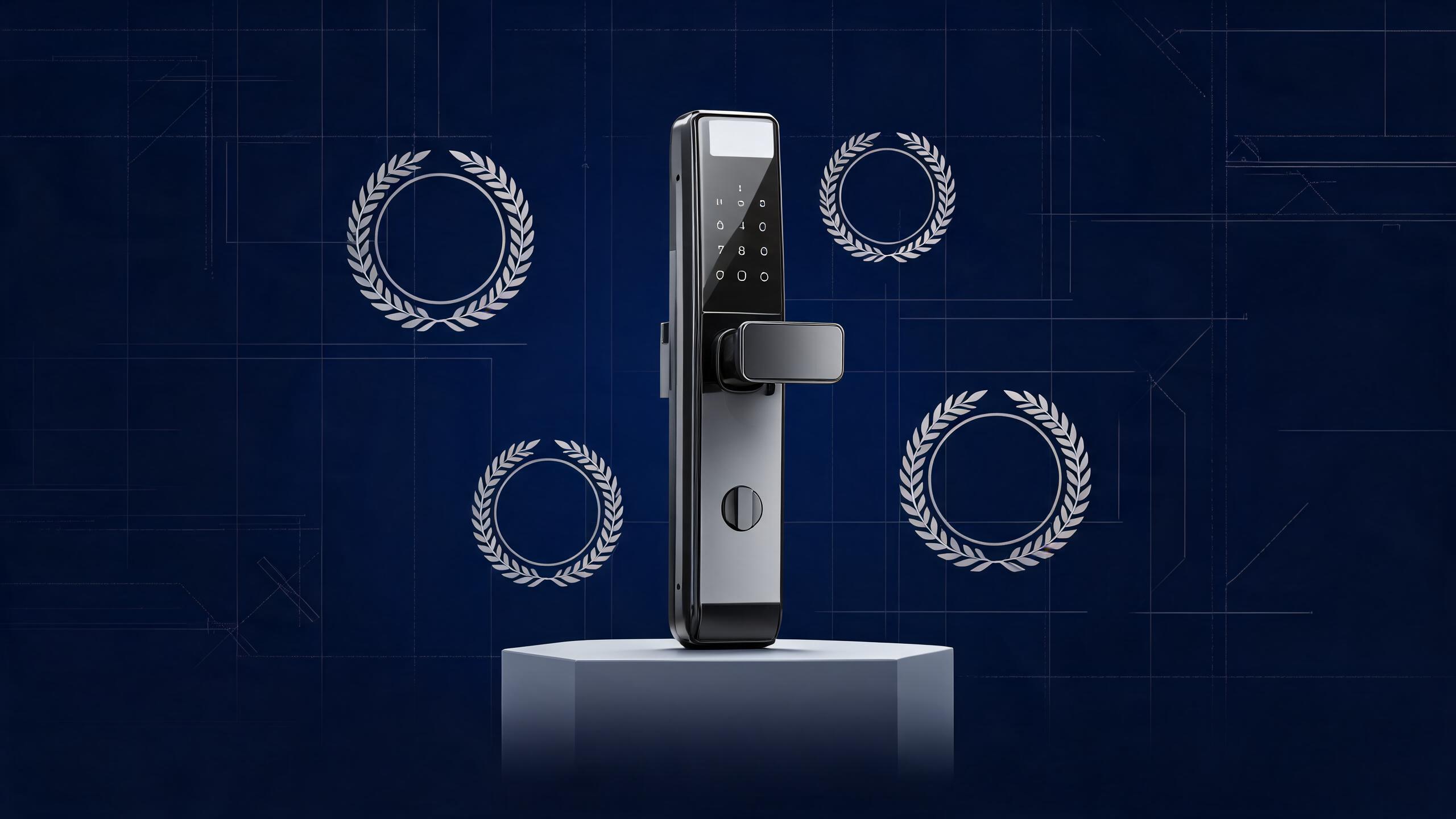 Standards library on site
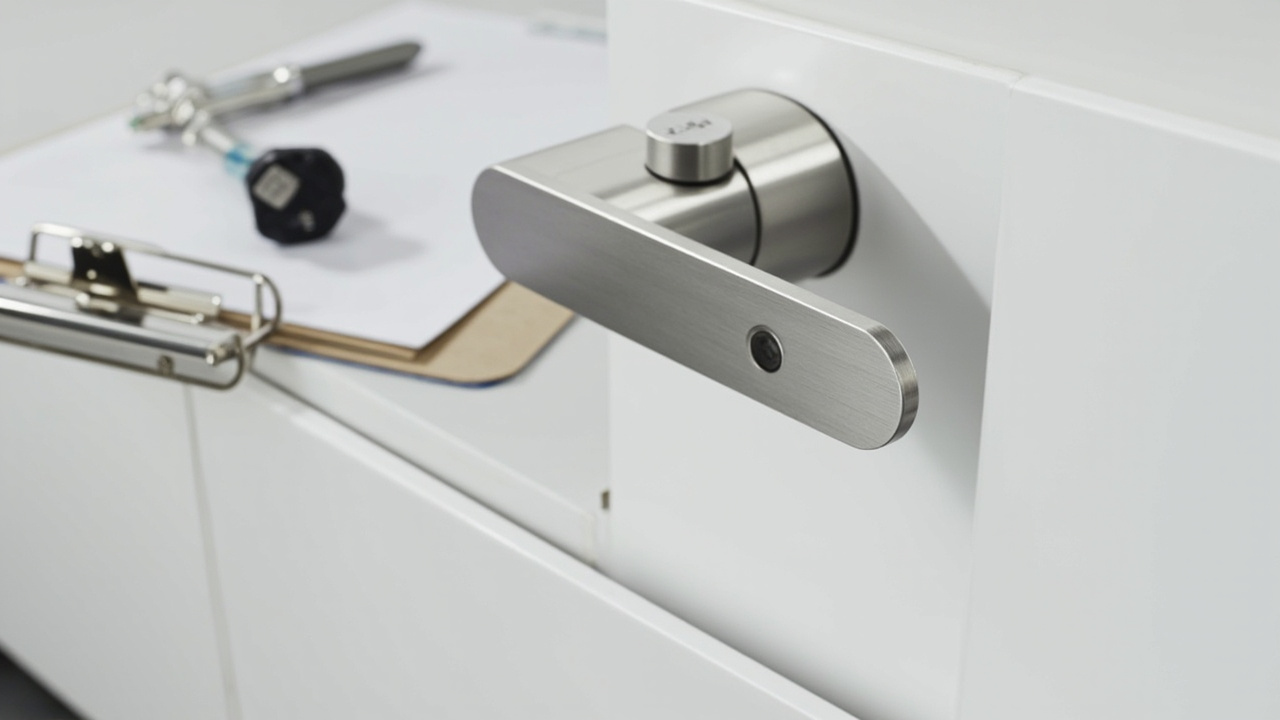 How to check this factory yourself
 Test laboratory on site
Questions
Questions that actually produce evidence
Every question below asks for something that exists in the building and can be produced on the spot. A question that can be answered with yes or no produces no record; a question that forces a screen, a sheet or a physical unit to appear produces one you can keep.
| Question to ask | What the answer proves |
|---|---|
| "Show the test bench rejecting a failed unit." | That a fail path exists and is used, and that a rejected unit is recorded rather than re-flashed until it passes |
| "Read a card issued by the encoder and open the lock with it." | That issuance and reader agree on the same credential set at 13.56 MHz, end to end rather than by specification sheet |
| "Show the packed carton label with my model code on it." | That the label, the packing list and the work order number are tied together before the pallet is closed |
| "Open the firmware version record for this serial range." | That the batch runs an identified build, and that a board change would appear as a documented change rather than a silent one |
| "Show the IQC record for the lot used in this batch." | That incoming parts were measured and accepted as a lot, with a sampled quantity and an inspector name |
| "Open one carton and count the accessory bag against the list." | That the packed configuration matches the quotation for your order, including manual language and cell count |
| "Show the most recent rejected lot and where it went." | That rejects are dispositioned in writing, not quietly returned to stock for the next buyer |
| "Walk me to the serial numbers on my release note." | That the units in the carton are the units that passed the bench, which is the claim most disputes turn on |
Ask these in the order the product travels, and take a photograph of the date and time on the bench clock at the first station. A dated image at the start anchors every other record collected during the visit, and it is the cheapest form of proof a buyer can carry home.
Logistics
In-person visit logistics
An in-person visit is a scheduled production event, not a drop-in. The details below are what a buyer needs to plan before booking flights, and the office address for the meeting is Caitian Garden, Caitian Road, Futian District, Shenzhen, with the production site in the Shenzhen manufacturing area.
| Logistics item | What to plan for |
|---|---|
| Lead time to arrange | The date is matched to the production slot for your model, so the request goes in with the model list. A visit requested before the model is fixed tends to land on a day when that model is not running |
| Duration on site | 90 minutes on the line plus 30 to 60 minutes for drawings, records and the question list; a half day covers the route comfortably |
| Documents for entry | Passport or identity card for site registration, the model list, the door schedule and your written checklist; a signed confidentiality agreement if your legal team requires one |
| What to wear | Closed shoes and trousers; a visitor vest and any required eye protection are issued at the entrance before the line is entered |
| Photography | Stations, benches, gauges, blank records, your own cartons and your own order documents are allowed. Ask before photographing any screen, and expect the five exclusions above to be enforced |
| Language and interpretation | The export desk works in English; an interpreter is worth arranging if the conversation moves into firmware settings, test clauses or a customs classification question |
Send the plan to the export desk through contact before the flights are booked, so the line leader knows which records to pull and which model to schedule. The route is then fixed against your questions rather than against the building, which is the difference between an audit and a walk. Shipping arrangements that follow a visit, from pallet build to documents, are covered at logistics and shipping and at shipping FAQ.
Verification
Turning a visit into records you can check
Evidence collected on the day: dated photographs with the station name in the frame, the work order number and serial range read aloud on camera, redacted copies of the IQC and end-of-line records, and the release note for the shipment. Four items, matched to one order number, are enough to reconstruct what happened.
Reconcile the four items before you leave the building. The model code on the carton label should match the model code on the work order and on the test log header. The serial range on the release note should close on the last page of the test log. The drawing revision letter quoted at the first station should match the revision on the assembly drawing at the mortise station. The tester name on the log should match the person who walked you through the bench, which is a small check that usually tells you whether the records are being maintained or produced for the visit.
None of this replaces a document issued by a laboratory, and nothing photographed on a tour becomes a certificate. What the visit does is establish that the process exists, that the records are current and that the batch you are buying was made the way the documents describe. Bring the spare ratio into the conversation while the line is in front of you: a fleet planned at one spare lock per 50 doors is a different order from one planned without spares, and the parts that support it are listed at spare parts. The document side of the story, including what a model pack contains and who signs what, is at certifications; the commercial side continues at sample orders and at about us.
Related pages
Where to read next before you book
FAQ
Factory tour questions buyers ask
Can we tour the factory without travelling to China?
Yes, in three of the four formats above. A live video call inside a production window, a dated and annotated photo set, and a third-party inspection with your checklist all work remotely. The remote formats prove that a batch and its records exist; the in-person visit adds the ability to read a record on the spot and follow a reject through its disposition.
How long does a tour take and what should we prepare?
Allow 90 minutes on the line and 30 to 60 minutes for drawings, records and questions. Prepare the model list with quantity bands, the door schedule with leaf thickness in mm and fire ratings, a ranked question list, the name of the person who can approve, and a confidentiality template if your legal team needs one. A tour date is agreed after the model list, because the line shows the batch that is running.
What are we not allowed to photograph?
Supplier names, other buyers' orders and cartons, the cost sheet, staff working on other brands, and certification body internal files. Stations, benches, gauges, blank records, your own cartons and your own order documents are all allowed, and photographs of a screen are agreed with the line leader first.
Can we see our own model being built rather than a demonstration unit?
Only if the model is scheduled to run that day. The visit is booked against your model's production slot, and a model outside the slot will not appear on the bench. Where the timing does not fit, the alternative is a photo set and the model document pack, which show the same records without the live batch.
Will you sign an NDA before a visit or a live call?
A mutual confidentiality agreement is normal, and yours is reviewed before the date is confirmed. It protects both sides: your door schedule, drawings and branding stay private, and other buyers' packaging and supplier terms stay private on our side. Send the template with the model list so the review does not hold the schedule.
Is a third-party inspection a substitute for a tour?
It is a substitute for travel, not for evidence. An inspection verifies a written checklist and produces an independent report before shipment, which is stronger than a camera for a specific order and weaker than a visit for judging whether a process is routine. Many buyers use an inspection for the first shipment and a visit once the relationship carries volume.
Book a tour or ask for the records instead
Send the model codes, the quantity band and the destination market, and say which format you can use: a live call inside a production window, a dated photo set, or a visit on site. We reply with the route that matches your questions and the records that exist for those models. MOQ policy, price and lead time are confirmed in writing with the quotation.
Book a factory tourRequest a quote