
Last updated: October 31, 2026 · Reviewed by export engineering
Most residential lock returns come from three causes, and none of them is the lock body: wrong door geometry, a credential model that does not match the household, and battery behaviour nobody explained to the person who lives there. This page takes those three in order. It gives the leaf thickness and latch ranges a lock actually needs, maps five household types to the credential that works, and states what a family must understand before the first fingerprint is enrolled.
Fit first
Fit matrix: which home doors take a residential lock
Five door types cover most houses and flats. A leaf outside these ranges is a different product, not a longer screw.
| Door type | Leaf thickness | Mortise or latch | Model family | Constraint |
|---|---|---|---|---|
| Interior wooden door | 35-45 mm | Existing tubular latch, or a small mortise where the leaf is solid | SLK-Y22 indoor fingerprint lock | A 15 mm escutcheon needs a flat, solid face. A hollow-core leaf needs blocking behind the latch, or the plate crushes the core the first time someone leans on the door. |
| Entry security door (steel) | 40-50 mm leaf inside a 40-70 mm frame profile | Steel-door mortise, or a rim solution where the leaf cannot take one | Keypad family, SLK-509, SLK-818, SLK-8831 | No self-tapping screws into a honeycomb core. Confirm a solid frame member behind every fixing point before the first hole is drilled. |
| Narrow-profile door | 30-40 mm leaf on a slim stile | 60 mm single latch, no mortise | SLK-S829 single-latch fingerprint lock | The stile face has to clear a 60 mm backset plus the escutcheon. Below roughly 90 mm of usable face width, the body overhangs the door edge and the door stops closing. |
| Glass door | 10-12 mm tempered glass, measured as pane thickness | None. The lock clamps or patches to the pane | SLK-G200 frameless glass lock | Works on a full frameless pane with a clear patch for the reader. A glass door in a 25 mm aluminium stile cannot take it, and a laminated pane with an interlayer needs its own fixing check. |
| Double-leaf door | 40-55 mm per leaf, timber, or 10-12 mm per glass leaf | Mortise on the active leaf only | Keypad or fingerprint family on the active leaf | The inactive leaf needs a flush bolt, not a second reader. Two readers on one opening double the battery service and add no control. |
Where a lock cannot be fitted: a leaf thinner than 30 mm; a door with no solid frame member at the fixing points; a sliding or folding leaf, because a swing-lock mortise has nothing to sit in; a narrow-stile glass door; and any door whose fire label would be voided by cutting it. In those cases the answer is a different opening, a different product, or a mechanical lock with the credential kept outside the door. Send the measurement and the photograph before the order, not after.
A home lock is judged on the days it is not used
The design decisions that matter at home are low-battery behaviour, what happens when a phone is out of charge, and whether the door can still be opened from the inside. Those three answers matter more than the feature list.
- Low-battery warning with a defined mechanical key override
- Inside free exit, regardless of the electronic state
- A local option for households without a reliable internet connection
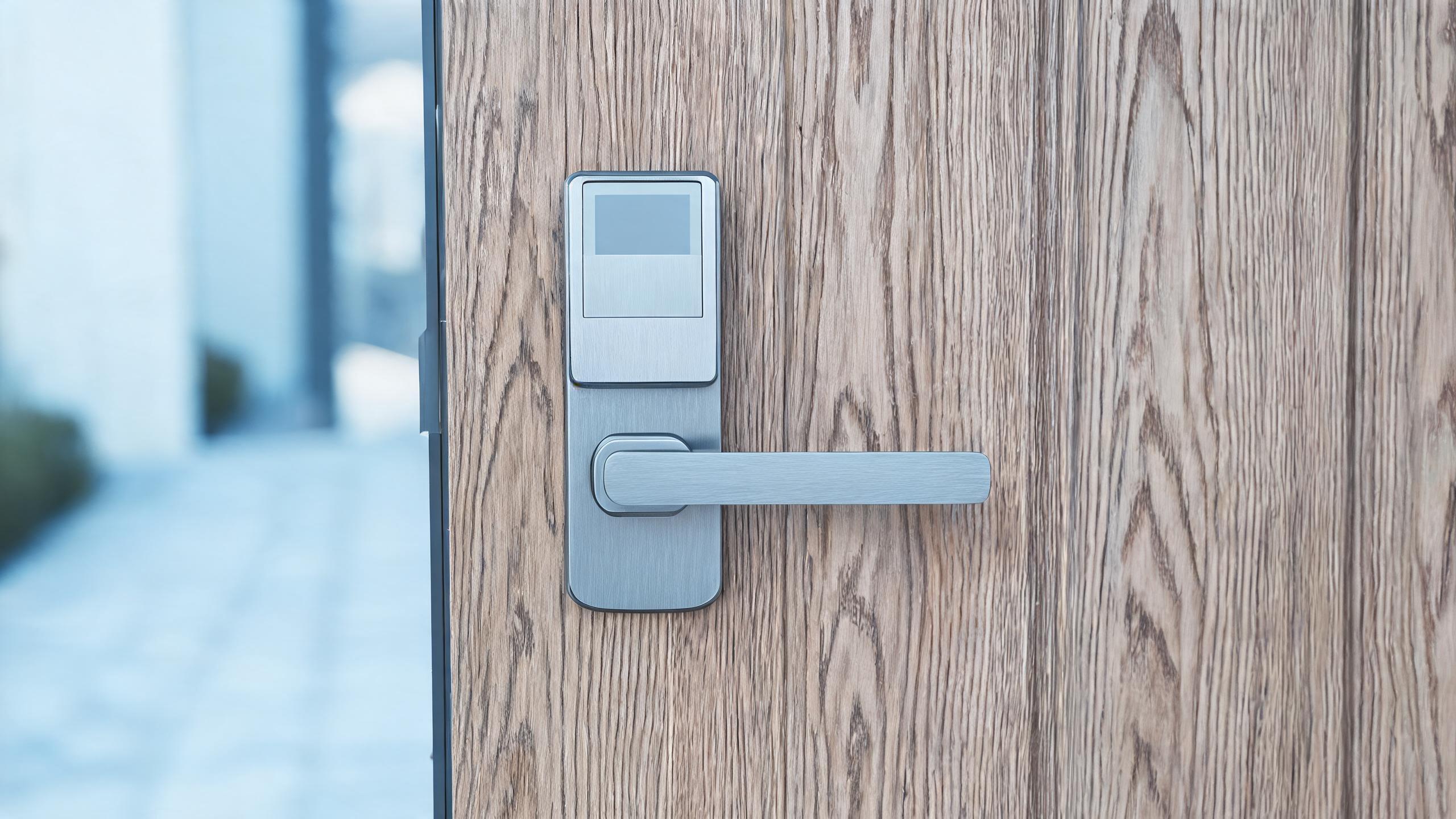 Home useThe everyday failure is a flat battery on the wrong day.
Household model
Who lives there decides the credential, not the model
Every household below can be served by the same lock family. What changes is the credential mix and how many of them the family has to maintain.
| Household type | Credential that works | Credential that fails | Recommendation |
|---|---|---|---|
| Multi-generational family | Fingerprint plus a four-to-six digit code for the people who dislike touching the reader | App-only ekeys for grandparents who do not carry a smartphone or refuse to install an app | Two admin credentials held by two different adults, a keypad code per generation, and one card for the relative who visits weekly. Nobody should depend on a single phone. |
| Rental with frequent tenants | A dated code with a start and an end, plus one card | Fingerprints left in the lock from the previous tenancy, and a shared code the landlord never changes | One code per tenancy agreement, deleted at handover along with every fingerprint; a factory reset between tenancies when the lock changes hands. Fingerprints are the credential most often forgotten at turnover. |
| Home with children | Fingerprint for a child tall enough to reach the reader, plus a code the parents hold | Cards, which get lost at school, and ekeys on a phone that runs out of charge | Enrol two fingers per child with the parent present; keep the mechanical key outside the house; print the emergency contact rule on the inside of the meter cupboard. |
| Home with elderly residents | Keypad code, card, and the mechanical key as the primary fallback | Fingerprint alone where skin is thin and dry, and small keypads read without glasses | Ask for a keypad with legible digits, test the fingerprint reader on the actual resident before committing, and never remove the mechanical key from the household routine. |
| Single occupant with domestic help | A one-time or weekday-window code for the helper, deleted or expired at the end of the arrangement | A standing master code written on a note by the door, and an ekey on a phone that changes hands | Issue the helper code per visit window from the app, keep the guest code separate, and check the entry record once a week. A standing code outlives the employment. |
Model families are compared on fingerprint door locks and keypad door locks. Households in rented flats and shared buildings usually start from landlords and rental owners, and second homes from villas and vacation homes.
Household briefing
What the household must understand before the first enrolment
Six items. If a household cannot explain all six a month after installation, the lock will be blamed for something it did not do.
- The battery type and the count. Card and keypad models run on 4 x AA alkaline cells, and the count is printed inside the battery cover. Buy one spare set per lock at installation, write the date on the pack, and do not mix old and new cells in the same lock.
- How low battery is announced. The lock warns before it refuses: an audible prompt at each unlock, and a battery line in the app on connected models. A warning that is heard and not acted on becomes a lockout, usually on a school morning or a rainy night.
- Where the mechanical key lives. One key per lock, kept outside the house: a car, a trusted neighbour, or a key safe. A key in the drawer behind the door is not an emergency key, it is a spare.
- How to add and delete a fingerprint. Enrolment happens at the lock in admin mode, using the admin code or the admin fingerprint. Each person enrols two fingers so one cut or bandaged finger does not lock them out. Deletion is the same menu, and it has to be done when someone leaves, not left for the next occupant.
- What a factory reset does. It erases every user credential, including the admin code and the app pairing. It does not open a door that is already closed: the mechanical key opens the door first, then pairing and enrolment are repeated from the app.
- What to do when the door swells. Timber leaves move with the season, and a bolt that drags in a humid month is a door and frame problem. Check the gap, adjust the strike, and never force the mortise with the handle. The lock reports the symptom; the door causes it.
Power and access
Battery and emergency opening: what happens and who acts
Every household should be able to read this table from memory. The numbers below are the only ones that matter at the door.
| Event | Lock behaviour | Household action |
|---|---|---|
| Normal use | Unlocks in under 1 second and logs the event locally. No network is needed at the door. | Replace the 4 x AA cells at the warning, not at the lockout. Keep one spare set per lock in the house. |
| Low battery warning | Audible prompt at each unlock, plus a battery indicator in the app where the model is connected. The door still opens. | Note the warning on the household list and replace the cells within days. A set of 4 x AA costs less than a locksmith call. |
| Dead battery | Refuses every credential and the keypad stays dark. The mechanical cylinder still works. | Open with the mechanical key, replace the 4 x AA cells in under 5 minutes, then test one fingerprint and one code before closing the door. |
| Lost phone or forgotten code | Nothing changes at the door. The credential still exists until it is deleted. | Use the mechanical key or another household credential, then delete the lost credential at the lock and re-enrol the person. |
| Mains power cut | The lock is unaffected, because the door runs on cells. App and gateway functions stop until power returns. | Nothing at the door. Use the code, the fingerprint or the key, and expect app records to catch up later. |
| Factory reset or change of occupant | All user credentials are erased, including admin and pairing. | Open with the mechanical key first, re-pair the app, set a new admin, and re-enrol every resident in one sitting. |
| Swollen leaf or misaligned strike | The bolt does not seat cleanly and the lock may report a jam. The credential is still valid. | Adjust the strike and check the gap. Do not cut the bolt or force the handle; call the installer if the leaf has moved more than a few millimetres. |
 Home access for older residents
 Landlords and rental owners
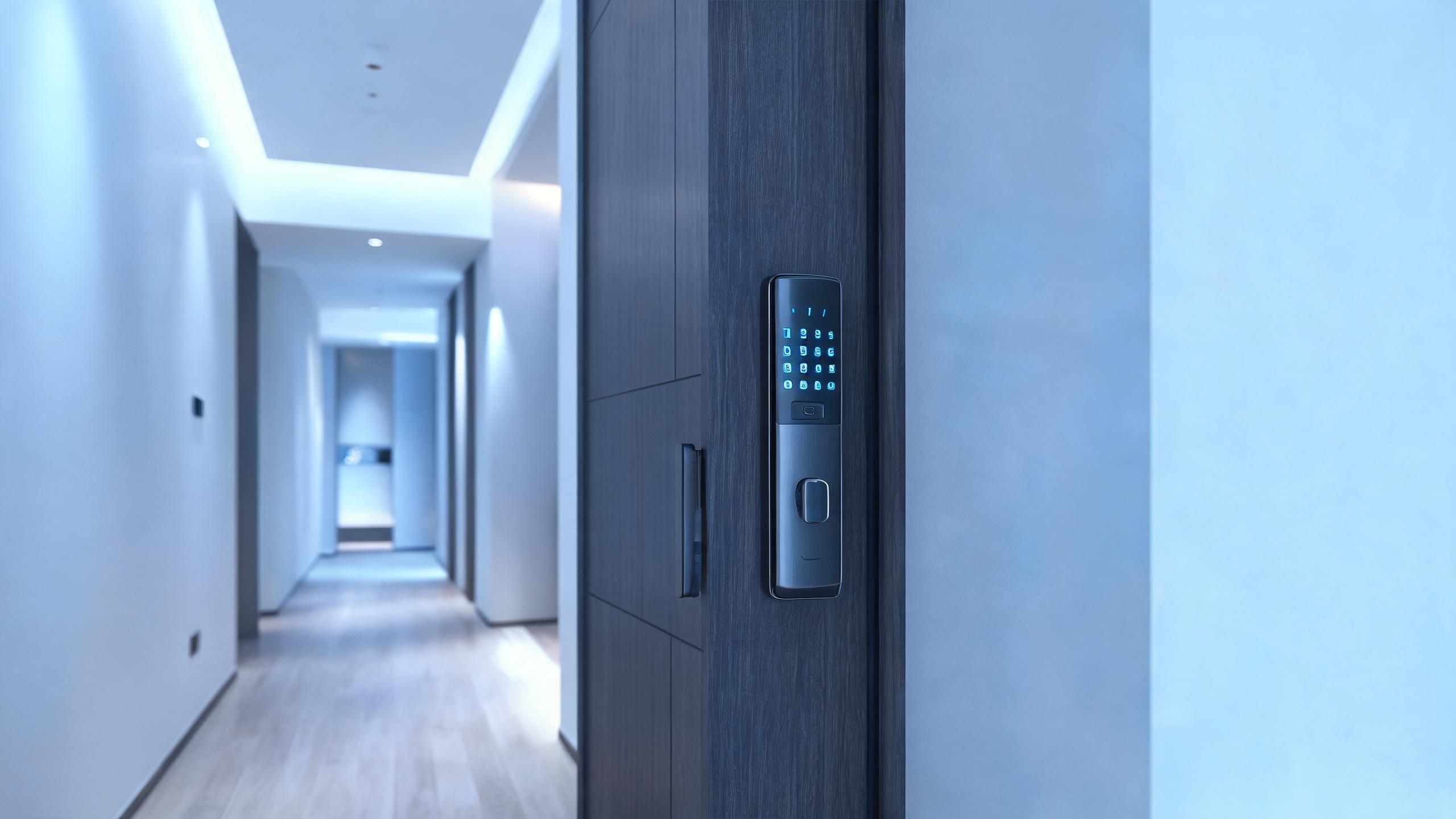 Self check-in for short-stay lets
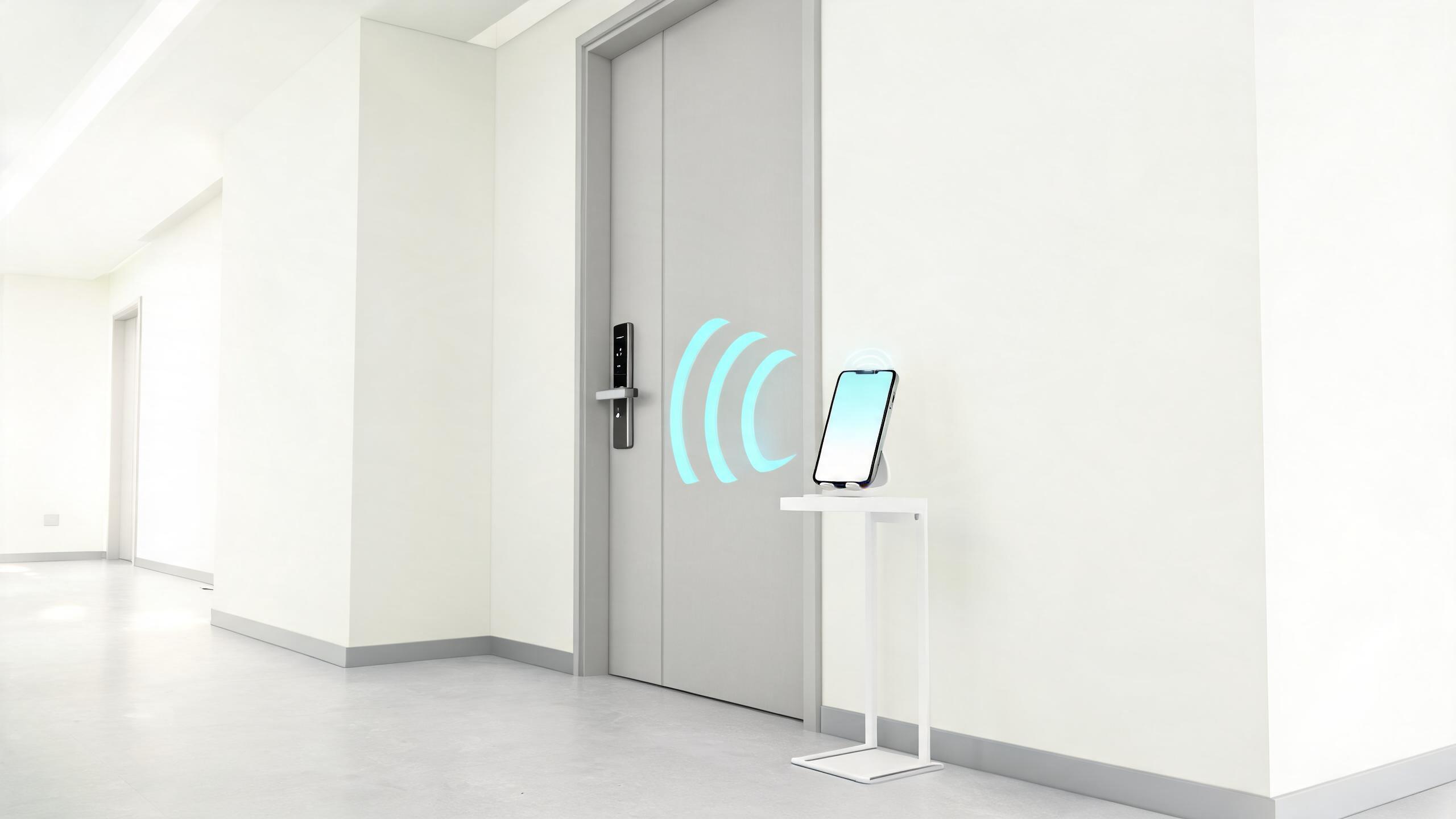 Bluetooth without a hub on site
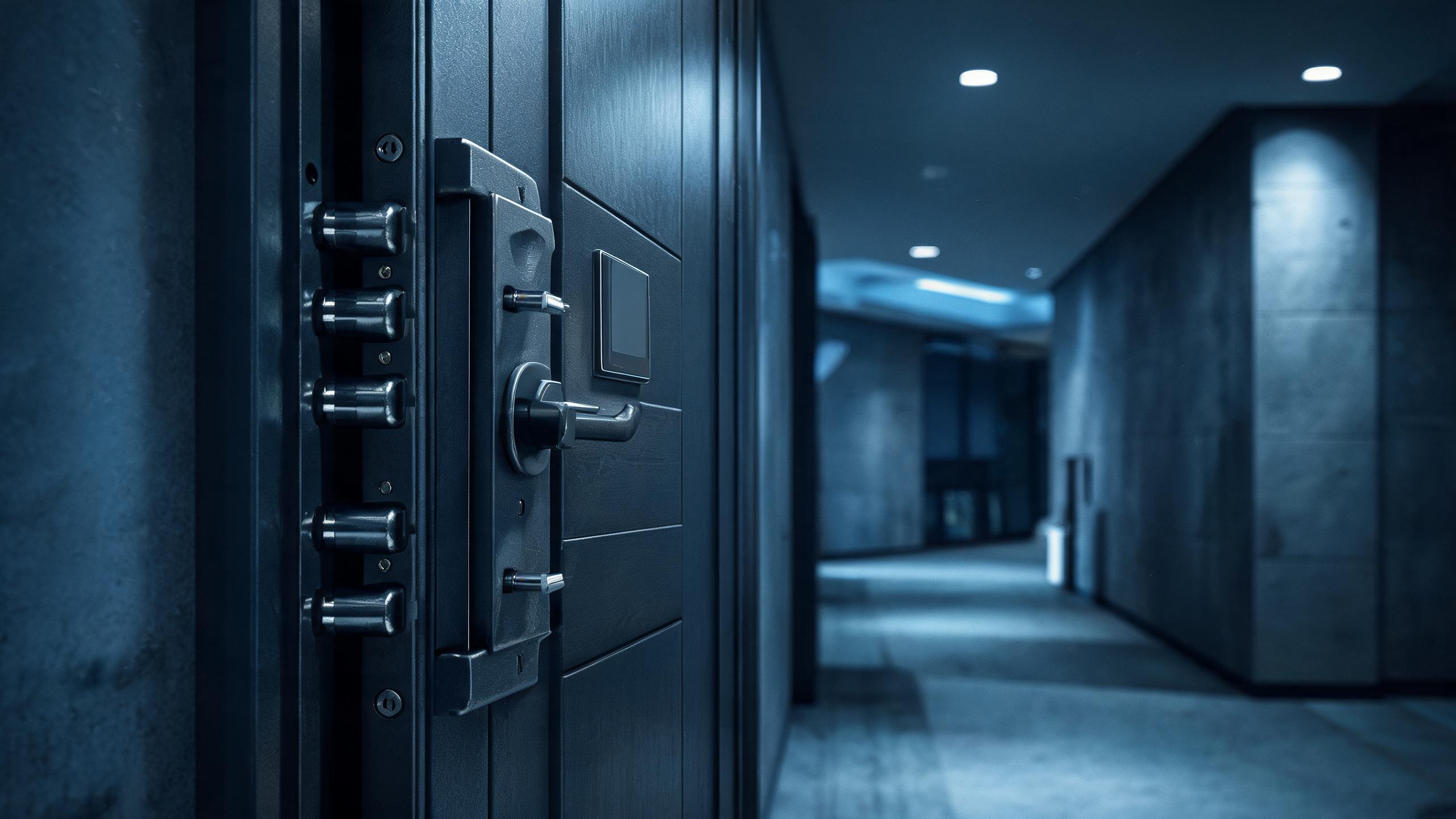 Security doors need a longer spindle and a reinforced case
 Villas and second-home projects
One door, half an hour
Installation in 30 minutes, with a self-check at every step
Replacement on an existing door, with the old latch already in place. A new mortise in a steel door takes longer and is not this job.
- Measure the leaf and the frame (5 minutes)Record thickness at three points, the stile face width, the backset and the direction of the handle. Self-check: all four numbers are written down and the thickness sits inside the range for the model you ordered.
- Mark the plate and the reader height (8 minutes)Use the supplied template, not a tape measure alone. Reader height is set so the shortest regular user reaches it without stooping. Self-check: the template sits square on the leaf, the door still opens fully, and no fixing point lands in a hollow section.
- Fit the mortise or the latch (10 minutes)Cut to the template depth, clear the chips, and confirm the bolt extends and retracts without binding. Self-check: the bolt throws fully with the handle, the face plate is flush, and the door closes against the frame without lifting.
- Calibrate the lock and pair the app (3 minutes)Set the admin code, set the clock, and pair the lock if the model is app-managed. Self-check: the admin code opens the door twice in a row and the lock reports the correct time.
- Test every credential and the mechanical key (4 minutes)Enrol two fingers, add a code for a second person, and cycle the mechanical key both ways. Self-check: each credential opens the door 3 times, a deliberately wrong code is refused, and the key opens the door with the battery tray removed.
Total working time is about 30 minutes on a prepared timber door, and the last step is the one that should never be skipped. A lock that has been fitted but not cycled three times per credential is a lock whose first real test is a family member at the door. Written commissioning steps ship with every order, and installation questions are answered on installation FAQ and installation support.
Model shortlist
Four models that cover most home doors
Same idea on four different openings. The door decides the model; the household decides the credential mix.
SLK-Y22 indoor wooden door lock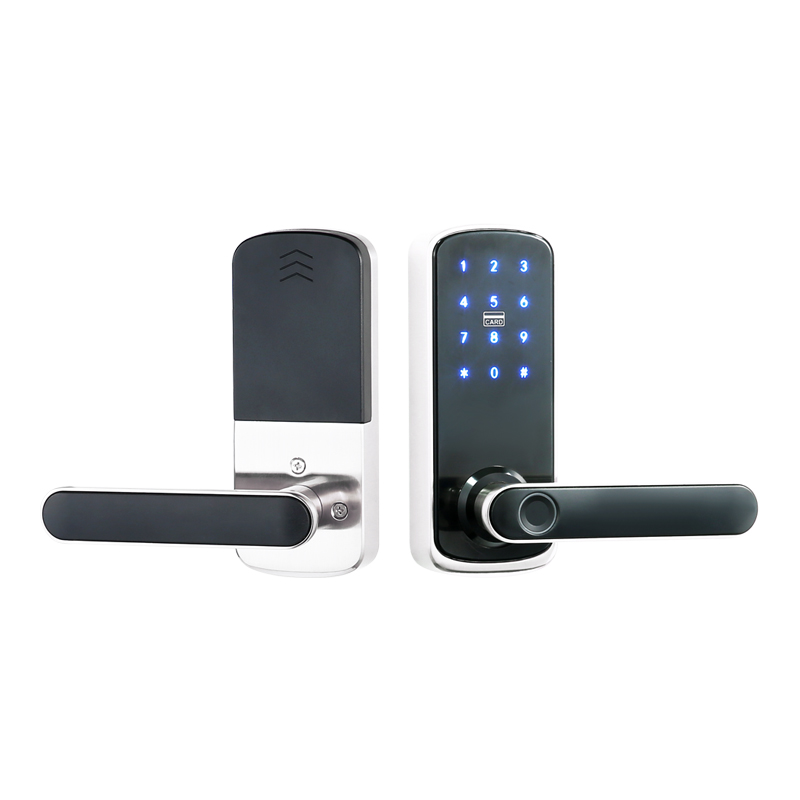
SLK-Y22 →
Fingerprint and code on an interior wooden leaf, 35-45 mm. The model for bedrooms, studies and the door between a garage and a hall.
Fingerprint and keypad lock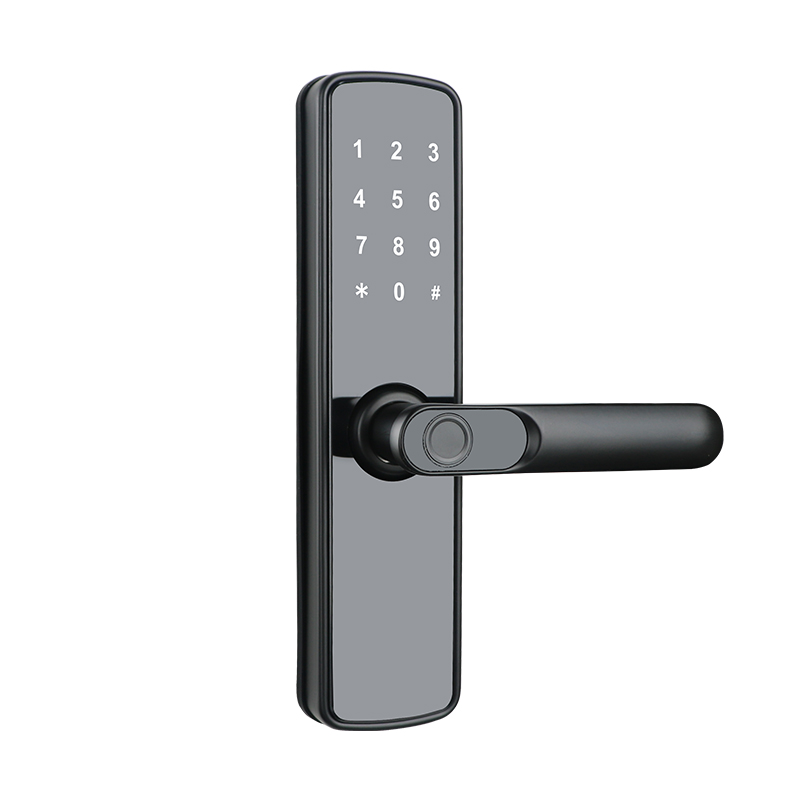
Fingerprint and keypad lock →
Fingerprint, code, card and mechanical key on one entry door. The household model that suits a multi-generational family, because no single credential is compulsory.
SLK-G200 frameless glass lock
SLK-G200 →
For the 10-12 mm frameless glass entrance on a villa or a garden room. A different fixing on the same credential system, not a different building.
SLK-S829 single-latch lock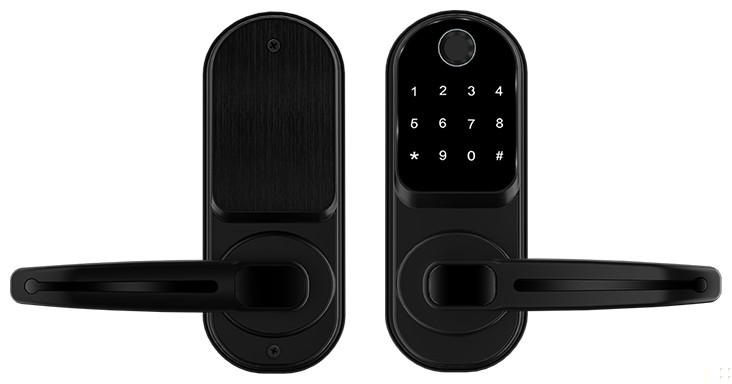
SLK-S829 →
Single latch on a narrow stile where a mortise will not fit. The answer when the survey says 30-40 mm leaf and no room for a lock body.
Boundary
What a residential lock is not
- Not a certified fire-door solution. A home lock is not supplied as a fire-rated assembly. Where a door carries a fire label, its hardware has to match the tested configuration; UL 10C and NFPA 80 are the references the door supplier works to, and the model document pack states what this lock holds.
- Not a replacement for a building access system. A residential lock secures one door. It does not manage the lobby, the lift, the garage gate or the mailroom, and it does not replace a building-wide controller.
- Not guaranteed to fit a thinner door. Below 30 mm of leaf, or below roughly 90 mm of usable stile face, we do not claim a fit. The order is confirmed against your measurement, not against the product photo.
- Not suitable for exposed coastal installation unless the model is IP-rated. Salt air and driving rain attack the reader and the electronics. An indoor model on a sea-facing gate is the warranty claim nobody wants; choose an outdoor-rated model instead.
- We do not install in your country. Delivery covers hardware, documents and remote engineering support. Local labour, travel and site access are outside the scope.
Evidence
What a household or buyer can verify before ordering
Four checks that replace a brochure sentence with something you can hold, watch or read.
- A sample on your own door. Order one lock through sample ordering, fit it to the real leaf, then cycle the fingerprint, the code and the mechanical key. A sample that fits on the bench and not on the door is the most common reason a residential order is returned.
- Model document pack. Ask which declarations and test reports exist for the exact SKU and market. The certificate belongs to the model, not to the factory; the certifications page explains the difference and what to request.
- Production evidence. A dated line video and the end-of-line test step show how the unit you ordered is assembled and checked. Production is documented on manufacturing and quality control.
- A written fit confirmation. Send the leaf thickness, the stile width, the backset and two photographs. The reply names the model, the latch and the fixing method in writing, so the fit is a document rather than an assumption.
For larger residential work, the same discipline applies floor by floor: see the rental apartment solution for unit counts and turnover, and applications for the other building types this hardware serves. Outdoor gates and garden doors sit on outdoor door locks, where the IP rating is the first question rather than the last.
Answers
Residential lock questions buyers ask before the order
What leaf thickness does a home smart lock need?
Interior wooden doors usually fall between 35 mm and 45 mm, steel entry leaves between 40 mm and 50 mm, and narrow-stile doors between 30 mm and 40 mm with a single latch. Below 30 mm we do not claim a fit. Measure at three points on the leaf, because a door that has been repainted or adjusted is rarely the same thickness at the top and the bottom.
Which credential should a family standardise on?
Fingerprint plus a keypad code, with the mechanical key kept outside the house. Fingerprint is fast and needs nothing carried; a code covers the person whose fingerprint will not read on a dry winter day. Cards are for visitors and helpers, because a card is the credential most easily lost. An app-only household works until one phone is lost or out of charge.
How often do the batteries need changing?
There is no published figure in months, because runtime follows traffic, temperature and the reader type. The lock warns before it stops opening, and the household replaces 4 x AA cells when the warning appears rather than when the door refuses. Keep one spare set per lock and date the pack when it is bought.
What do I do if the lock will not open and the battery is dead?
Use the mechanical key. Every model on this page carries a key override, and the key should live outside the house. Once inside, replace the 4 x AA cells, then test one fingerprint and one code before closing the door. If the key is also inside the house, that is the failure the plan should have prevented.
What has to be deleted between tenants?
Every fingerprint, every user code, and every app pairing, in that order. Fingerprints are the credential most often left behind, because deleting them needs a deliberate trip to the lock. Where the property changes hands, a factory reset is the clean option: it erases all user data, then the new admin code and the new residents are enrolled in one session.
Why does the door stick in humid weather?
Timber expands across the grain when the humidity rises, so the leaf grows a few millimetres and the bolt starts to drag on the strike. Adjust the strike and check the gap; do not cut the bolt, and do not increase the force on the handle. The lock is reporting a building condition, and the fix belongs to the door and frame.
Send four measurements; get a fit confirmed in writing
A residential quotation needs the leaf thickness, the stile width, the backset and the door type, plus one photograph of the opening. Send those with the quotation request and the reply names the model, the latch and the fixing method, with the document pack listed per SKU. Trade buyers ordering for several homes usually add the catalog request and compare families on fingerprint door locks; questions about app behaviour are answered on technology and app FAQ.
Request a residential lock quotationOrder a sample first