
Last updated: October 31, 2026 · Reviewed by export engineering
A smart lock order does not run out of stock all at once. It runs out at one part, on one line, for one model.The buyer who knows which part that is has a schedule. The buyer who does not has a series of explanations.
Every quotation carries a date, and every date is assembled from parts that sit on five different calendars. Some belong to this building, some to a supplier two streets away, and some to a semiconductor allocation you cannot visit. This page maps those calendars, names the parts that have no substitute, and states what a buyer should lock before August. Where a number would be invented, the page says so and points to the record that carries the real one.
Risk map
Where the risk sits in a smart lock bill of materials
A bill of materials for a hotel card lock looks flat on paper: a mortise, an escutcheon, a clutch motor, a control board, a reader, a battery holder, an override cylinder, a latch, a gasket, a carton, a bag of screws. It is not flat in risk. Three types sit in the same list and fail in different ways.
Commodity risk covers screws, gaskets, cartons and printed inserts, where three suppliers can quote one drawing and the failure mode is price or a short delay. Engineering risk covers anything approved against your model: the casting, the plating colour, the keypad print, the board revision. Those parts are available, but a change reopens a first-article check, which is a calendar event rather than an inventory event. Allocation risk covers the reader module, the fingerprint module and the control board, where a specialist supplier decides how much constrained output goes to which customer in which quarter.
A fourth category gets skipped at quotation stage and hurts at reorder stage: the part that is yours alone. A badge print, a casting with your logo in the mould, a keypad overlay in your artwork, a carton in your language. None can be borrowed from another customer's lot, because no other lot carries your artwork.
The SLK-2020 shows the mix inside one model. It measures 306 mm x 75 mm x 15 mm and carries a No. 2 hotel mortise with 4 x AA alkaline cells. The mortise is made and adjusted here, the cells are a commodity with a date code read at incoming inspection, the reader sits on an allocation calendar, and the escutcheon cannot be re-sourced without a new finish reference. Four items, four failure modes, one delivery date. Door leaves in the field commonly measure between 38 mm and 55 mm, so a casting that drifts by 0.5 mm passes as a part and fails as a fit against a 1 mm faceplate allowance, and the electronic schedule stays on time while the mechanical one does not.
Components
Critical components: source type, lead time, substitution
Twelve lines carry most of the schedule risk. The lead-time column states which clock starts the part, not how many days it takes, because a days figure printed on a website would describe one model in one season. The substitution column states what is possible when the part does not arrive, which is less than most buyers hope.
| Component | Source type | Lead-time basis | Substitution path |
|---|---|---|---|
| Mortise (lock body) | Made here from castings by a regional die-caster | Starts at drawing freeze; a backset or latch-throw change restarts the casting order | Approved drawing only; a No. 2 hotel mortise cannot become a narrow-profile body without changing the door preparation |
| Escutcheon and front panel | Regional partner for casting and plating | Starts at the signed colour reference; a new finish is a new plating run | An approved finish on the same casting; a different colour is an approval, not a swap |
| Clutch motor | Specialist module supplier; geared and current-tested here | Starts at supplier sample approval | Only a motor already approved for the model; a substitute needs a drive test and a cycle run |
| RFID reader module | Specialist module with imported semiconductor content | Starts at module order; allocation is decided upstream, tuning adds a bench step on arrival | Same module family and card standard; at 13.56 MHz a MIFARE Classic reader and a DESFire EV2 reader are not interchangeable on an installed fleet |
| Fingerprint module | Specialist module with imported sensor content | Starts at module order; the threshold is set here against a reference finger set | None across sensor generations without re-alignment and a new threshold record |
| Main control board | Bare board and SMT at a regional board house; flashing and test here | Starts at board revision release; imported ICs and the board slot run in parallel | A revision already released for the model; a component substitute needs a re-test and a new version record |
| Battery holder | Regional moulder; contacts checked and loaded here | Starts at mould order; a holder change is a tool change | Same cell count and contact geometry; 4 x AA and 4 x AAA are different products, not options |
| Override key cylinder | Regional lock-cylinder specialist | Starts at keying instruction; a master-key schedule is a second order | Same profile and keying schedule; a different profile strands every key already issued |
| Packaging | Regional printer | Starts at artwork proof approval; a language change is a new print run | A neutral carton with a printed label, recorded as a decision |
| Screws and fasteners | Regional commodity supplier | Starts at purchase order; held against the model list | Free within the drawing, because the part is specified by dimension |
| Seals and gaskets | Regional moulder | Starts at mould order; a profile change is a tool change | Same profile and hardness; a thicker gasket fixes nothing if the housing gap is the cause |
| Latch bolt and deadbolt | Made here from regional steel stock | Starts at material release; heat treatment and plating are partner steps inside it | Same throw and faceplate geometry; a longer throw needs a different door preparation |
Only three lines accept a free substitution: screws, gaskets within a profile, and packaging under a documented neutral-carton decision. Everything else is a new approval. That is not a limitation of this factory; it is what it means to build a lock a hotel can service for years, because a part that changes quietly fails quietly on a door in another country. The sourcing logic is described at manufacturing, and the checks a substitute must pass are at quality control.
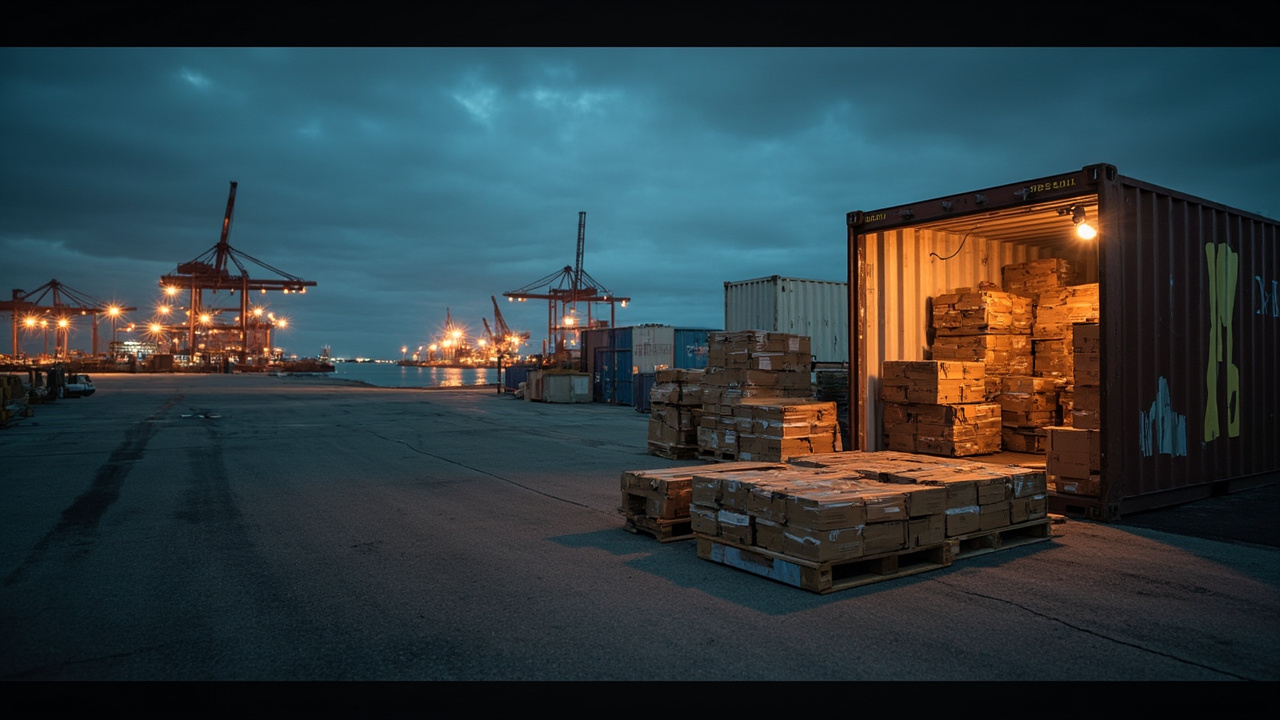 Order to container: how a shipment is planned
 Site-ready packing for project delivery
 Destination market paperwork prepared before loading
Clocks
Lead time is five clocks, not one
A single lead-time number averages five calendars, and an average hides the only thing a buyer needs: which clock finishes last. The five below start on different events, run in parallel, and join at kit issue, when every line must be in the store before assembly can be scheduled.
| Clock | Starts when | Runs in parallel with | What stops it | What the buyer controls |
|---|---|---|---|---|
| Metal parts | Drawing freeze and casting order | Electronics and packaging | A dimensional change after the casting order, or a plating lot that misses the colour reference | The drawing, the finish reference, and when the drawing is frozen |
| Electronic parts | Board revision release and module order | Metal parts and packaging | Allocation at the module supplier, or a firmware parameter set that is not frozen | The firmware build and the credential standard the fleet must read |
| Battery | Cell order, against cell count and chemistry | Everything else, with its own date-code rule | A date code too old for the destination market, or a cell order placed after the lock order | The cell specification and whether cells ship inside the lock |
| Packaging | Artwork proof approval | The three clocks above | A language change after proof, or a barcode pointing at another model | The proof approval date, the cheapest date a buyer can move |
| Assembly and test | Kit issue, when the other four have landed | Nothing; it is the join | A missing line from any clock, a set-up stop, or a fixture that does not hold the build | The number of models and finishes, which sets the number of set-ups |
The join is where averages go wrong. If four clocks finish in 4 weeks and the fifth lands in week 7, the order ships in week 7, not in the average. A buyer who asks how long a lock takes gets a number built from a typical mix; a buyer who asks which clock is longest for this model, this finish and this artwork gets a planning answer and a written date.
Two consequences follow. The cheapest schedule improvement is usually artwork and golden-sample approval, because those are buyer-side clocks that cost nothing to start early. The most expensive change is a finish, because it re-enters the plating clock while every other clock keeps its place. A card lock runs on 4 x AA cells at 1.5 V nominal, so the cell clock is real: a late cell lot also arrives with an older date code. Lead time is quoted per order and depends on model mix, finish and customization, and the quotation names the clock that set the date.
Season
Peak season: what changes between August and November
Between August and November the same order takes longer, and the reason is not this building. Every partner is serving several customers at once, and the customers who booked earlier hold the slots. A buyer who plans a Q4 installation against a July lead time plans against a calendar that no longer exists.
Five things change in that window. Plating and casting slots fill first, because every finish competes for the same partner lines and a new colour reference is the slowest item in the queue. Board house allocation tightens against consumer electronics for the same retail season, so a board revision released in September waits. Cell supply moves on its own cycle, and late cells arrive with a date code closer to end of shelf life. Print queues lengthen, which is why a language change in October becomes a January problem. Freight separates from production: sailing schedules tighten, and the last booking that still lands before a retail date moves earlier every week.
This building does not publish a monthly throughput figure, because one that held for a model mix would mislead on another. The shape of the constraint is easier: line time is finite, set-ups consume it, finish changes consume more of it than model changes, and partner clocks sit outside it. In the window, the order that wins is the one whose model list and finishes were frozen early, not the one that was largest.
Three dates are worth writing down before August. Freeze the model list and finishes. Approve artwork and the golden sample. Book the shipping window against the model list rather than a quantity, because the quantity can move and the slot cannot. A buyer who holds the model list open through the peak has moved the risk from the factory to the loading bay. The freight side is at logistics and shipping, and the order-level view at project management.
Single source
Single-source parts and what a buyer can do
Four parts are effectively single-source at the point of order: the reader module, the fingerprint module, the control board and the clutch motor. Each is a module with a specification validated on a bench, and each comes from a supplier whose output is allocated rather than stocked. A second source for these is not a cheaper supplier; it is a second approval, and an approval costs a sample, a bench run and a document.
That limits what a buyer can demand. A buyer can make five decisions instead.
- Name the module in the specification. A model whose reader standard is written down cannot shift to a module that reads a different card family without breaking the installed fleet.
- Approve one alternate in advance. Done once, with a sample and a bench run, recorded against the model and not exercised until needed.
- Buffer the module, not the lock. A module buffer is small, cheap to hold and usable across models that share it; a buffer of finished locks is expensive and slow to build.
- Freeze the firmware build in writing. Substitutions fail at the parameter set more often than at the reader, so the build identifier belongs in the purchase order.
- Buy the first batch of spares with the first batch of locks. A year-three spare must be matched by batch; a spare from the production lot already matches.
What a buyer should not do is treat a substitution as an inventory decision at the packing table. A module swapped without a bench run reads a card at 2 cm on the bench and fails at 45 mm on a steel door, and a motor with a skewed gear runs freely and binds after 200 cycles. Either way the failure appears in the buyer's market rather than here. The rule worth writing into the contract: no substitution on an approved model without a written change notice and a re-test.
 Warehouse and logistics door hardware
 Cold and outdoor environments on request
Spares
Spare ratios worth writing into a contract
A spare ratio is the cheapest insurance in a lock project and the easiest line to cut. The ratios below are arithmetic, not a promise: they hold a spare stock at about 2 percent of the installed fleet, plus a buffer on the two parts most likely to fail in service.
| Fleet size | Lock spares | Reader or fingerprint module buffer | Why this ratio |
|---|---|---|---|
| 50 doors | 1 lock | 3 modules | One swap on the first failure; modules cover parts that fail without taking the whole lock out of service |
| 200 doors | 4 locks | 10 modules | Keeps a rolling replacement going while a failed unit is returned and assessed |
| 500 doors | 10 locks | 25 modules | One delivery serves several service teams on a multi-building site |
| 1,000 doors | 20 locks | 50 modules | Keeps a year-three reorder small enough to be a stock item rather than a production run |
Two percent of a 200-door fleet is four locks; five percent is ten modules. Both numbers are small enough that no buyer refuses them at order stage and large enough that no operator wants to buy them later at spot terms. The module buffer is set higher because a reader or a fingerprint module is replaced on a door without removing the mortise, so the lock the guest keeps using stays where it is.
Three clauses make a ratio work. State it as a quantity in the purchase order, not an intention. State the batch the spares come from, so year-three matching has an anchor. State who holds the stock, because a ratio that exists on paper and not in a store fails on the first weekend of a hotel opening. The parts catalogue is on spare parts, and the records behind a claim are at warranty questions.
Boundary
What this supply chain does not promise
Not included: a published capacity figure, guaranteed module allocation in peak season, a fixed lead time before the model list is frozen, and a second source that has not been through first article. All four appear in most RFQs and none can be answered truthfully at quotation stage.
- We do not publish a monthly capacity number. Throughput depends on model mix, finish changes and partner clocks, so one figure would describe one order and mislead on the next.
- We do not guarantee module allocation between August and November. The supplier decides allocation upstream; the honest commitment is a booking date and a written notice if a module slips.
- We do not fix a lead time before models, finishes and artwork are frozen. A date given against an open list is an estimate, and an estimate repeated in a contract becomes a claim nobody can meet.
- We do not approve a substitute without a bench run. A substitution that skips the bench is a change to the product, and it is handled as one.
- We do not hold buyer-owned stock without a written agreement. Consignment is possible, but it needs an owner, a count and a rule for the end of the programme.
Everything inside the boundary is ordinary work: sourcing, first article, incoming inspection, scheduling, traceability and a written notice when a clock slips. Everything outside it is a promise about someone else's factory, and a buyer who receives one should ask which document records it. The production side is at manufacturing; the model-specific file set is at compliance documents.
Evidence
What a buyer can verify on a supply chain audit
A supply chain audit is not a tour of a warehouse. It is a small set of records read against each other until they agree, and a buyer can run it in a morning.
- The bill of materials for the model, with source type marked on every line not made here
- The first-article report for each partner part, dated against the drawing revision in use
- The incoming inspection record for the lot in production, with sampled quantity and measured values
- The date code on the cell lot, read against the age rule the destination market requires
- The firmware build read back on the bench, compared with the build in the specification
- The approved alternate list, showing which modules have a second approval and which do not
- The batch labels on the bins feeding the work order, and any written change notice since the last run
Read in one order and the audit becomes one question: does the part in the bin match the part in the document, and does the document match the part on the door. A first-article report proves a partner part was checked once; an incoming record proves the lot in use was checked again. Neither proves a supplier will deliver next quarter. What they prove is that a failure can be traced to a lot, which is what makes a claim settleable.
A visit is arranged through the factory tour, the bench that checks partner parts is at the testing laboratory, and the market documents behind a model are at certifications.
FAQ
Supply chain questions buyers ask before a repeat order
Which part is most likely to delay my repeat order?
The finish and the printed artwork, not the electronics. A repeat order that keeps the model, finish and carton artwork reuses everything approved the first time. A colour or a manual language restarts a partner clock, and that clock is longer than the assembly slot it delays.
Can you hold stock for my programme?
Buffer stock can be agreed, but it needs a written owner, a count and an end-of-programme rule. Buyer-owned consignment is cleaner for a hotel programme, because the stock stays on the buyer's books. Without a written agreement, no stock is reserved for a future order.
What happens if a module supplier slips in September?
The line keeps working on models that do not use that module, and the affected model moves back in the kit queue rather than stopping the building. The buyer gets a written notice with the new date and the reason, because a slip hidden until loading day is a missed sailing rather than a late carton.
Do you keep spare parts for a model after it is discontinued?
Spares are matched by part, model and batch, and the batch label on the original carton is what makes a match possible. A model that leaves the catalogue keeps its part records; what ends is new production. A fleet that wants a decade of service buys its module buffer with the original order.
Can I nominate a second source for a component?
Yes, as an approval rather than a purchase. The part is sampled, fitted and bench-tested against the model, and the result is recorded as an approved alternate. Until that record exists, a purchase order naming it is a change to the product, not a sourcing choice.
How do I plan a Q4 installation without a fixed lead time?
Plan backwards from the sailing date and forward from the approvals. Freeze models, finishes and artwork before the August window, book the slot against the model list, and ask for the five-clock view in writing so the last clock is named. Lead time is quoted per order and depends on model mix, finish and customization.
What does an MOQ depend on?
On the set-ups the order needs: models, finishes and print runs. A single-model order in a running finish shares a body lot; a five-model container with three finishes does not. The current MOQ policy is confirmed in writing with each quotation, with the set-up count it assumes.
Send the model mix and the delivery window
Send the models, the finishes, the destination market and the month you need goods on a door. We reply with the five-clock view for each model, the partner parts that set the longest clock, and the spare ratio that keeps the fleet serviceable in year three. Current MOQ policy and lead time are confirmed in writing with the quotation.
Request a quoteRequest the catalog