
Last updated: October 31, 2026 · Reviewed by export engineering
Three private-label risks are underestimated more often than any others: certificate scope, packaging approval delay, and spare-parts mismatch after a model revision. None of them appears in a unit price. Certificate scope decides whether your branded lock can legally ship to the market you are selling into. Packaging approval decides whether the print plates are made twice. A revision decides whether the spare lock in your warehouse still fits the lock on the wall.
Six branding layers and what each touches
Private label is not one operation. It is six operations that are often priced as one line, and each one has a different effect on the document pack, the schedule and the quantity that makes it worthwhile. With more than 10 years of production behind the current catalogue, most of these layers are already routine on a stock model; the exceptions are the layers that touch firmware or a certificate.
| Layer | What changes | Certificate impact | Lead-time impact | Minimum quantity basis |
|---|---|---|---|---|
| Lock marking | Laser logo on the escutcheon or keypad, a badge, or a printed brand mark | None on the model identity; the marking is recorded so the shipped unit matches its documents | No extra stage when marking runs in-house; an outsourced badge adds a step | Per model and per marking method; lower than packaging |
| Colour box | Carton print, sleeve, insert card, retail-ready packaging | None on the lock, but every regulatory mark printed on the carton must match what the model actually holds | A print run sits before packing and is the most common approval bottleneck | Set by the carton printer and usually above the lock minimum |
| Manual and quick-start guide | Language set, illustrations, warnings, importer address block | None, provided the text claims nothing beyond the model documents; a manual that overstates compliance is a problem in itself | Translation and proofreading sit before print, so both are on the critical path | Usually the same run as the carton |
| App branding | Name, icon, colours, splash screen and language on a Tuya Smart or TTLOCK account | None for the lock; the app is configured on a platform, so platform privacy and store rules apply | Platform review sits outside the factory schedule and cannot be promised as a fixed date | Usually no minimum beyond the lock order; account setup is one-time |
| Finish and colour | Surface treatment and colour reference on the front plate and handle | None when the finish sits within the model's stated options; a new coating process is a product change, not a branding change | Plating runs in batches, so a small order waits for a batch slot | Per finish, because a plating batch minimum applies |
| Firmware defaults | Default language, code length, auto-lock delay, sound level, lockout timing | Safe while the change stays inside the certified build; a new feature moves the job up a tier and may need re-testing | A separate build needs regression testing before it can ship | Per firmware variant, because each build is version-controlled separately |
The practical ranking is simple: marking is the cheapest layer to add and the easiest to repeat on the next order. Cartons, manuals and firmware gates are the layers that decide the schedule. App branding looks like a marketing task and behaves like a software release, because the release date belongs to the platform. The tier logic behind these layers, including what a firmware feature genuinely costs, is set out on the OEM and ODM page.
Where branding stops
Four things look like branding in a brief and are not. Each of them changes the product, the document pack or the part number, and each one has to be quoted as engineering rather than as print.
- Branding does not change the certified model. The certificate belongs to the model and the manufacturing identity, so a new brand does not create a new certificate and also does not widen the old one.
- Branding does not add a credential type. Adding a MIFARE reader at 13.56 MHz to a keypad model, or a fingerprint reader to a card lock, is a configuration change with its own hardware, firmware and testing.
- Branding does not change the mortise, spindle or backset. Door geometry belongs to the mechanical design, and a proven body such as the SLK-2020 at 306 mm x 75 mm x 15 mm is defined by its drawing rather than by its logo.
- Branding does not create a new SKU code without a model revision. A new code with the same product is a paperwork shortcut that breaks traceability at the first warranty claim.
- Branding does not transfer the technical file to your company. Who signs the declaration and who holds the file is a market question, answered per market and per model.
If the brief needs any of the five items above, the right page is OEM and ODM, not this one. Branding on top of a stable model is fast and repeatable; branding used as a substitute for product change is where projects stall.
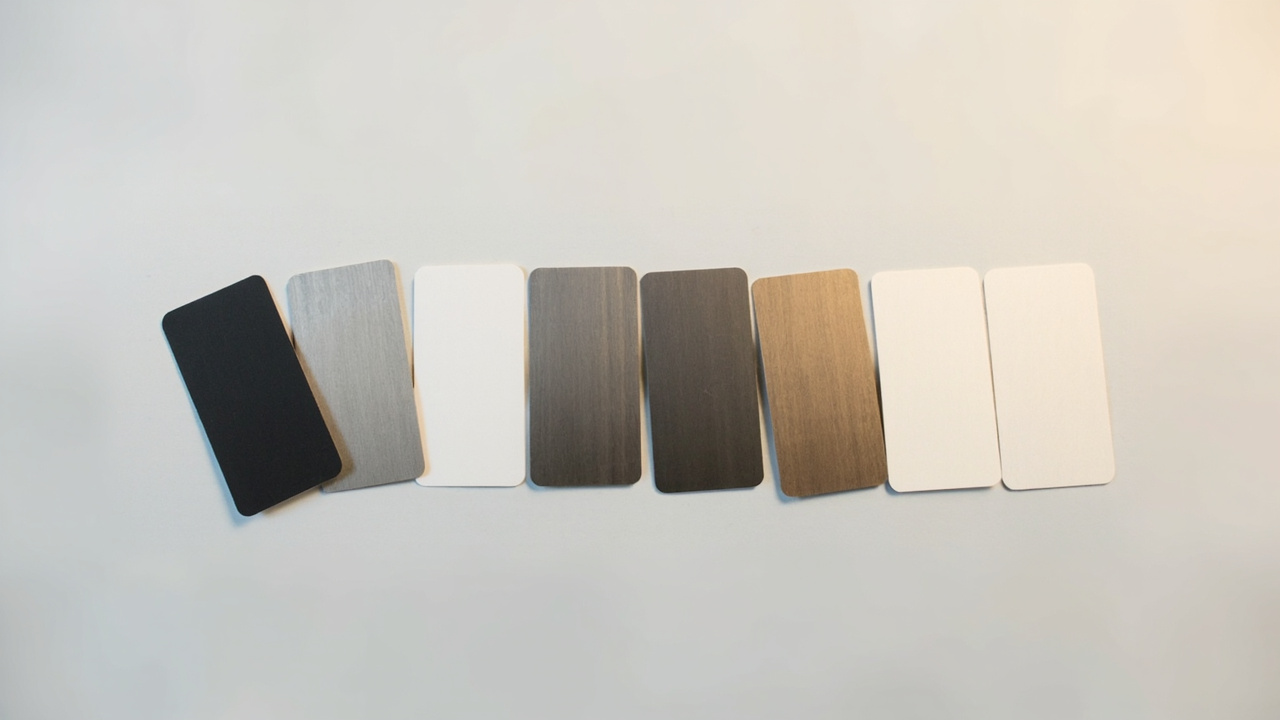 Your finish, your carton, your brand
 App layer: ours, yours or a white label
 Which programme fits your order volume
Packaging artwork specification
Most packaging rejections are not design problems, they are file and data problems. The table states the specification per item, who supplies it, and the rejection that repeats most often.
| Item | Specification | Who supplies | Common rejection |
|---|---|---|---|
| Die-line | 1:1 vector dieline from the carton factory, with fold lines, a 3 mm bleed and a 5 mm safe margin | Carton supplier issues the template; the buyer builds artwork on it | Artwork built on an old or scaled dieline, or a JPEG sent instead of a vector file |
| Colour mode | CMYK process for images and gradients, spot colours named by Pantone reference for the brand colour; RGB files are not accepted | Buyer brand guide | RGB artwork that shifts on press, or a brand colour rebuilt from a screenshot |
| Barcode | EAN-13 (13 digits) or UPC-A (12 digits) at the agreed size, with a quiet zone, printed dark on a light background; a QR code only as a secondary code | Buyer supplies the number and the retail listing; the printer places the code | A barcode too close to the trim, low contrast, or a number that does not match the listing |
| Carton shipping marks | Buyer name, PO number, model, quantity, gross weight in kg, carton dimensions in mm and the country of origin where required | Buyer supplies commercial data; the factory lays out the marks | A missing PO, a quantity that does not match the packing list, or a missing country of origin |
| Language set | Every language required by the destination market, complete in one manual; mixed-language pages fail retail audits | Buyer supplies the translation or approves a factory draft | A manual in the wrong language set, or a warning page dropped in translation |
| Regulatory text | CE marking, battery, WEEE and recycling statements only where the model document pack supports them | Factory drafts from the model file; the buyer confirms importer details | A CE mark printed on a model with no CE evidence, which is a compliance failure rather than a print error |
| Poly bag and desiccant | Bag carrying the suffocation warning symbol, desiccant sized for the sea transit, accessories bagged by type | Factory default, checked against the market rules | An unmarked bag, or no desiccant on a long sea route, which surfaces as corrosion at the destination |
The die-line and the barcode are the two items that most often return a proof to the buyer. Both are cheap to fix before a proof is made and expensive to fix after plates exist. What the certificate behind the regulatory text actually covers is explained at certifications and compliance documents.
Brand asset checklist
Send all seven items with the first brief. Missing items are the reason a packaging stage restarts, and each one costs a proof round rather than a phone call.
- Logo in vector format (AI, EPS or SVG), with one-colour and reversed versions for dark surfaces.
- Brand colour references as Pantone numbers plus CMYK values, not only a hexadecimal code.
- Barcode prefix and GTIN allocation from the national GS1 member organisation, or the retailer's own number range.
- Manual content in the target language, or a written approval to use the factory draft translation.
- Importer name and address block for the label, in the form the destination market requires.
- Warranty wording that the buyer will actually honour in its own retail channel.
- Warning symbols required by the market, including battery, suffocation and recycling marks where they apply.
A brand with more than one market should send one checklist per market rather than one merged set, because the language list and the importer block differ and a merged file usually produces a carton that satisfies neither. If the product is a fingerprint model, the manual also needs a section on enrolment and a fallback method, which is why door-level product pages such as fingerprint door locks are useful input to the copy.
From artwork upload to mass print
Five steps, five sign-offs. Each step has a named signer on both sides, and the cost of a change rises sharply at step four.
- Artwork upload and dieline checkBuyer artwork contact and the factory artwork desk sign the file check. If the dieline, bleed or safe margin is wrong, no proof is produced and the job waits.
- Digital proof and proofreadBuyer marketing signs the content; factory QA signs the technical and regulatory text. Changes at this step cost nothing, which is why all wording changes should be collected here.
- Physical proof or white dummyThe buyer brand owner signs the printed proof and the colour reference is frozen. A change after this point restarts the proof and loses the slot in the print queue.
- Plate making and printFactory planning and the print supplier sign the plate order. Once plates are made, an artwork change means new plates and a new print run, quoted as a written ECN before anything is reprinted.
- Mass print, packing and inspectionFactory QC signs against the approved proof and the packaging checklist. If a file was changed after step four, the record shows who changed it and the reprint is charged to that side.
The rule that prevents most disputes is dated proof control: every proof carries a version number and a date, and only the latest signed version is printed. A buyer who changes artwork after plates are made should expect a new plate cost, a new print run and a new schedule, because the old plates cannot be edited. Packing inspection follows the controls described at quality control and manufacturing.
What to order first
Three order types answer three different questions. Buying the third before the first two have been answered is how a private label programme acquires a container of cartons it cannot use.
| Order type | Contents | Purpose | First order size |
|---|---|---|---|
| Unbranded sample | Stock model in the chosen finish, neutral carton, standard manual, full accessory set | Check fit, function, app and credential behaviour on the real door before any brand decision | 1 to 2 units |
| Branded pre-production sample | Branded lock, printed carton, printed manual, label, barcode and accessories, exactly as the mass order will ship | Check the branding, the packaging proof and the barcode scan before plates and materials are committed | 2 to 3 units with 1 packed carton |
| Mass order | Production quantity on the approved artwork, the frozen golden sample and the approved firmware build | Commercial supply under documents that match what was approved, with inspection records per batch | Confirmed in writing per quotation |
Samples are ordered through order samples, and the current sample terms are confirmed in writing. A 100-unit first order rarely needs a bespoke carton programme, while a 200-room hotel project usually does, because the packaging becomes part of the property standard. A branded pre-production sample is the cheapest insurance in the programme: it proves the carton, the manual and the label before a print run is committed, and it gives the buyer a physical reference for the first incoming inspection.
Spare parts after a model revision
Spares are matched by three identifiers, not by brand: the model, the batch and the firmware version. A private label carton carries the buyer's brand, but the spare part inside it is still identified by the model and the revision that were current when the lock was built.
A revision can change a handle, a cylinder, a PCBA or a motor without changing the outside of the lock. That is exactly the case where a spare ordered later does not fit an earlier unit. The safe rule is to order spare locks with the same batch as the main order, or with a documented compatible revision, and to record the revision on the installation sheet and in the property file. Door data belongs in the same record: most interior leaves fall between 38 mm and 55 mm, and the thickness should be noted to the nearest 1 mm, because a spare with the wrong spindle length binds on the door instead of fitting it.
For a fleet, a practical starting ratio is one spare lock per 50 doors, adjusted for climate, traffic and the number of credential types in use. Spare locks should carry the same firmware build as the installed units, because a spare with a newer build can behave differently on the same software platform. The part families, matching rules and reorder process are described at spare parts, and market coverage is discussed with distributors at become a distributor.
What you can verify before the print run
Four artefacts settle the four questions a buyer asks after the cartons arrive. All four are available before mass print, and all four can be checked without visiting the factory.
| Artefact | What it proves | How to verify it |
|---|---|---|
| Golden sample, signed and dated | The appearance, finish and marking standard the batch was built to | Compare a production unit under the same light as a second signed set kept by the buyer |
| Packaging proof, signed with version and date | The exact file the plates were made from | Lay a production carton beside the proof and compare colour, text and mark position |
| Barcode scan test | The printed code scans to the number on the retail listing and the packing list | Scan with a retail scanner and a phone camera at the planned shelf distance |
| Manual proofread record | The language set and the warnings were checked by a named person | Request the record with the language list and compare page by page |
The evidence set travels with the shipment: one signed golden sample stays at the factory, one stays with the buyer, and the production cartons are inspected against both. A buyer who wants a third-party check at packing can appoint an inspector; the inspection scope is agreed before the run, and the standards applied are those described at quality control.
Private label questions buyers ask before the first carton
Does private labelling change the certificate?
No. The certificate belongs to the model and the manufacturing identity, and a logo, a carton and a manual do not create a new model. What changes is the paperwork around the brand: who appears as the importer, what the label says, and which market the model is declared for. The model-specific document pack states what is actually held, and the market view is at certifications.
Why does packaging delay an order more often than production?
Because packaging is the only part of the order that needs a signature from someone outside the factory. Artwork arrives late, the barcode number is missing, the language set changes, and the physical proof is signed after the print slot has passed. Production waits on a file, not on a machine. Collecting the seven checklist items before the brief is the single most effective schedule control.
Can we print our own barcode on the carton?
Yes, when the number is allocated to your company and the code is supplied at the right size and contrast. An EAN-13 carries 13 digits and a UPC-A carries 12, so the number must match the retail listing rather than a label designed to look right. A QR code can sit beside the linear barcode as a secondary code, but it does not replace the retail barcode.
What happens if we change artwork after the plates are made?
The change becomes a written ECN: new plates, a new print run and a new schedule, quoted before any reprint starts. Plates cannot be edited back, so the old print investment is lost rather than reused. This is why the physical proof carries a version number and a date, and why only the latest signed version is released to print.
Are spare parts still available after a model revision?
Yes, but matching becomes specific. Spares are identified by model, batch and firmware version, and a revision can change a handle, a cylinder or a PCBA without changing the outside of the lock. Order spares with the same batch as the installed locks, or with a documented compatible revision, and record that revision on the property file. The matching rules are at spare parts.
Can the app carry our brand on Tuya or TTLOCK?
The app can be configured with your name, icon, colours, splash screen and language, and it is still a third-party platform app. The platform keeps the feature set, the release calendar and the cloud, so a promised launch date sits partly outside the factory's control. An app that is genuinely owned needs a different route, described on the OEM and ODM page; platform and app questions are also collected at the OEM and ODM FAQ.
Send the brand assets before the quantity
Start with the model, the destination market, the seven brand assets and the artwork files you already have. We answer the three risks first: what the model documents cover, where the packaging stage will sit in the schedule, and how spares will be matched after the first revision.
Request a quoteWhatsApp the export desk