
Technology
CCTV and video intercoms: the eyes beside the lock
Doors in professional buildings rarely stand alone: a camera or intercom verifies the visitor, the lock grants entry, and the two systems may be wired by relay or unified over the network. Integration depth defines security and privacy outcomes.
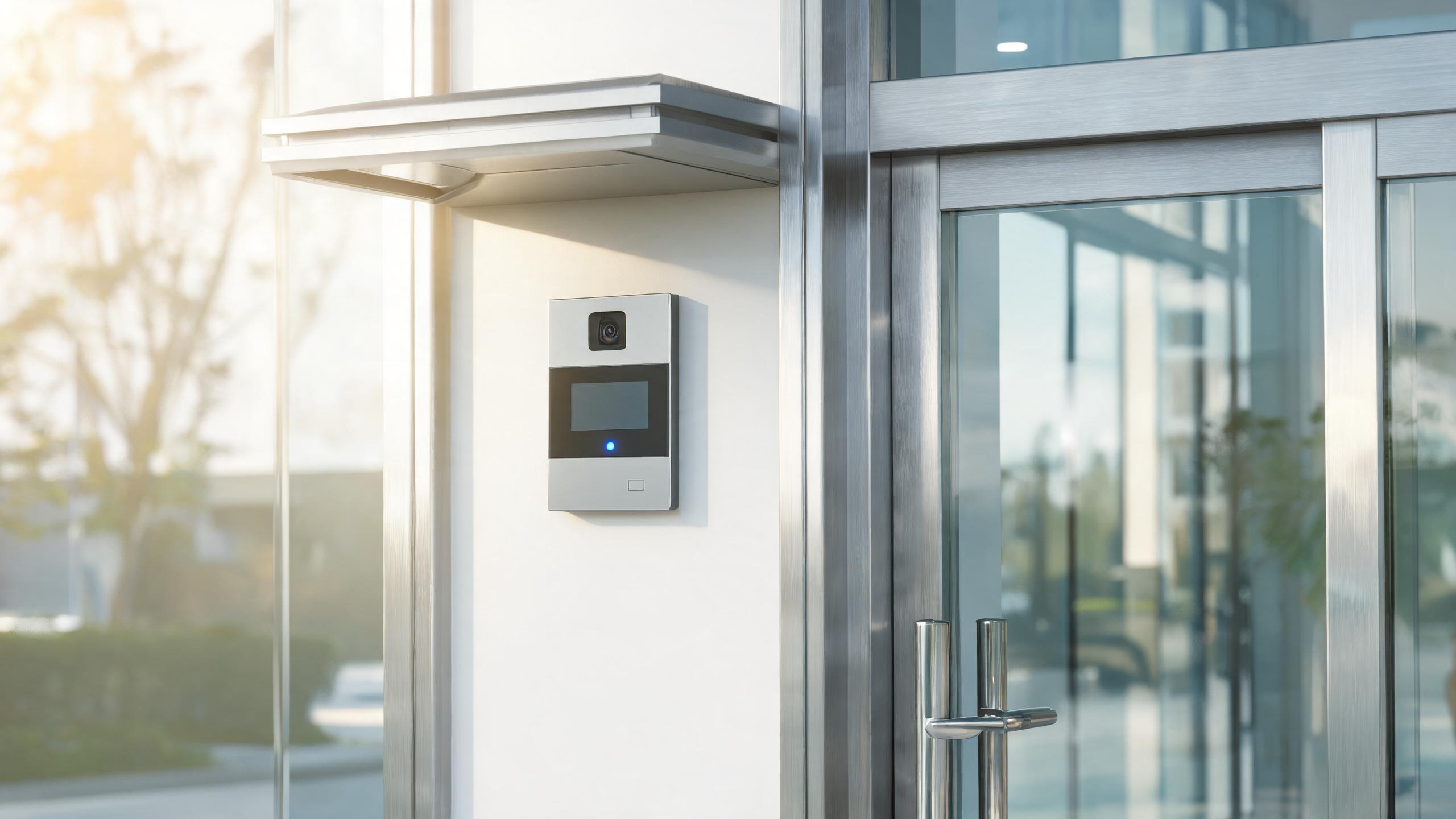
Video entry systems span a wide range, from a simple audio handset buzzing a magnetic lock to network video intercom platforms with HD door stations, smartphone apps, SIP calling and integration into a building video management system. The physical link to the lock is usually a dry-contact relay: the monitor, controller or intercom output pulses an electric strike, magnetic lock or motorized latch for a configured release time, with a separate request-to-exit sensor and door contact closing the loop. Networked designs add software layers — door stations call resident apps, reception desks or VMS clients, operators verify visitors on camera and trigger unlock remotely, and events from camera and lock are correlated for audits. Outdoor stations demand weather ratings and vandal protection, and camera-equipped entrances carry privacy duties toward visitors and staff. This guide explains the integration patterns and specification questions; intercom compatibility and relay logic for each lock model are confirmed in writing per quotation.
Intercom and CCTV at a glance
| Relay integration | The intercom or controller dry contact triggers the electric lock for a timed release; simple, reliable and works across vendors. |
| Network door stations | IP intercoms deliver HD video, SIP or app calls and remote unlock over the network, with PoE simplifying wiring. |
| VMS correlation | Larger sites link door events to camera streams in a video management system so each unlock appears with the matching footage. |
| Electric hardware | Strikes, magnetic locks and motorized latches each define release current, fail-safe mode and door-closer requirements. |
| Outdoor rating | Door stations need IP and IK ratings for rain, dust and impact; locks and readers on the same wall share the exposure. |
| Egress loop | Request-to-exit sensors and door contacts complete the integration so release, entry and door-held events are all audited. |
| Our policy | We provide lock hardware, relay specs and interface guidance; camera selection and VMS engineering belong to the security integrator. |
Answer unit
Which intercom depth fits a building?
Houses and small offices are well served by relay-wired video kits; apartment blocks and enterprises gain from IP door stations with app calling and VMS correlation, provided privacy notices and operator procedures are designed with the cameras.
| Site | Typical system | Integration focus |
|---|---|---|
| Villa or townhouse | Video kit with relay to the gate lock | Weather rating and gate release time. |
| Small office entrance | Network door station calling reception | PoE wiring, electric strike and door contact. |
| Apartment block | Multi-tenant IP intercom with apps | Directory management and one-trip elevator release. |
| Corporate headquarters | Intercom integrated with VMS and access | Event-to-video correlation and audit policy. |
| Serviced residence | Door station plus self check-in locks | Guest calling routes and after-hours remote unlock. |
| Government or secure site | Vandal-resistant stations, monitored room | Tamper alarms, recording policy and dual approval. |
Projects, products and evidence
The release circuit is where integrations succeed or fail: lock current, relay rating, surge suppression and fail-safe wiring must be calculated together, not chosen from separate catalogs.
| Opening | Typical door | Lock approach |
|---|---|---|
| Villa perimeter gate | Metal gate with video door station | Network station calling phones, relay to the gate motor lock. |
| Office glass entry | Aluminum-framed glass double door | IP station, electric strike on the controller, door contact. |
| Apartment entrance hall | Secure lobby with mailboxes | Multi-button or directory station, resident app release. |
| Loading dock | Steel roller door near a camera dome | Intercom at the dock, camera on the VMS, timed release. |
| Staff entrance | Hollow-metal door with reader | Reader plus camera; denied-read events pull live video. |
| Parking barrier lobby | Lift lobby behind a vehicle gate | Intercom to concierge, camera analytics and access logs. |
Intercom and lock coordination pack
Locks, intercoms and cameras are often sourced separately, so projects need a shared interface document. The items below align the lock supplier, intercom vendor and installer before walls close.
| Component | Typical logic | Notes |
|---|---|---|
| Relay specification | Lock current and voltage, relay contact rating and release time. | Under-rated contacts weld or fail within weeks. |
| Fail mode | Fail-safe or fail-secure behavior for strikes and magnets. | Must match fire egress design and signage. |
| Network plan | PoE ports, VLAN, SIP server or cloud service for door stations. | Drives cabling, switches and cybersecurity review. |
| Camera privacy plan | Recording zones, retention, notices and operator access. | Visitor and employee privacy laws apply at the entrance. |
| Event mapping | Which lock events trigger video popups or bookmarks. | Defines the daily security operator experience. |
Integrating intercom and locks in five steps
- Define call routingMap who receives calls: residents, apps, reception or monitoring.
- Size the release circuitMatch lock current, power supply, relay rating and surge protection.
- Plan the networkProvision PoE, VLANs and remote-access security for IP stations.
- Set privacy and recordingDocument camera zones, retention, notices and operator roles.
- Commission as a systemTest call-to-release timing, egress, tamper and event-video links.
Related technology guides
Video and integration guides related to this page
Questions about CCTV, intercom and lock integration
How does a video intercom actually release a smart lock?
Most often through a physical relay contact: when a resident taps unlock on the monitor, concierge software or smartphone app, the intercom or its controller closes a dry-contact circuit for a few seconds, energizing an electric strike, magnetic lock or motorized latch on the door. The lock side must be sized for this — correct voltage, current and surge suppression — and the release time is configured long enough to enter but short enough to prevent tailgating. Higher-end IP intercoms can also send a network command to an access controller, which then drives the lock and logs the operator who released it; that software path is preferable for audit-heavy sites. Door-contact and request-to-exit sensors complete the loop so the system knows whether the door actually opened. Relay specifications and network release options for each product are confirmed in writing per quotation.
Can residents see and unlock the entrance from a smartphone?
Yes on IP video intercom platforms: the door station calls an app over the internet or local network, the resident sees live video and can release the door remotely, often with options to speak, open a secondary gate or send a one-trip elevator command. The architecture requires the door station to be networked — typically PoE — with a cloud relay or SIP service for off-network calls, and security configuration matters: strong passwords, firmware updates and call encryption prevent intercom snooping. Release permissions can be time-bound for cleaners and deliveries. As with any remote unlock, sites should define who may release which door and keep an audit trail. We integrate locks with leading intercom platforms through relays or controller APIs; supported call platforms, network requirements and app behavior are confirmed per project.
Do we need CCTV cameras if the intercom already has a camera?
They answer different questions. The intercom camera covers the face-to-door verification moment and often supports a snapshot in the call, but it is optimized for that short interaction, not for continuous surveillance, wide-area coverage or evidence retention. CCTV cameras provide planned coverage of approaches, lobbies and elevators, continuous recording or analytics, and they integrate with the VMS used by the security team. In integrated designs, a denied badge or door-forced-open event can bookmark or pop the relevant camera, which neither device achieves alone. Some small sites accept the door-station camera as their only visual record; lobbies and regulated buildings generally require both. The security integrator designs camera coverage while we ensure the lock events the VMS consumes are available; interface options are documented per project.
What rules apply to cameras recording an entrance?
A camera at a business or multi-tenant entrance is generally lawful with proper governance, but it triggers privacy duties: visitors and staff should be informed by notice, recording should be limited to the entrance area rather than public pavement or neighboring doors, retention should be defined and access to footage restricted to authorized operators. Under GDPR-style regimes, recorded people can request information and deletion, and the property owner or employer is typically the data controller; audio recording and biometric or face-recognition features raise the bar further and should be assessed separately. Residential buildings additionally owe duties to tenants and must not point cameras into private areas. We supply the technical inputs — where cameras face, what events link to video, retention settings the platform supports — but deployers own the legal assessment, notices and operator training for their jurisdiction.
What fails most often in intercom and lock installations?
The mechanical-electrical boundary causes most call-backs: relays under-rated for lock inrush current weld shut or burn out, power supplies shared between strikes and intercoms brown out during release, door closers fight electric strikes that were never aligned, and fail-safe magnets lack backup power or proper egress signage. The second failure area is configuration: release times too long enable tailgating, network door stations installed on unsecured VLANs are discovered online, and app release rights copied to every resident without schedules. Professional projects prevent this with a circuit calculation sheet, separate surge protection, mechanical alignment checks, cybersecurity baseline and a joint commissioning script run by the intercom and lock installers together. We provide the electrical data and commissioning checklists for the lock side; integrator-side design is confirmed per project.
Coordinating locks with intercom and CCTV?
Send your entrance drawings, chosen intercom platform and electric lock hardware with your RFQ. We confirm relay ratings, network release options, fail modes and interface documentation for your integrator, and support joint commissioning on the pilot entrance.
Request Spec Sheet + QuoteTechnology overviewLast updated: October 31, 2026 · Reviewed by the Smart Lock Factory editorial team