
Manufacturer · video intercom
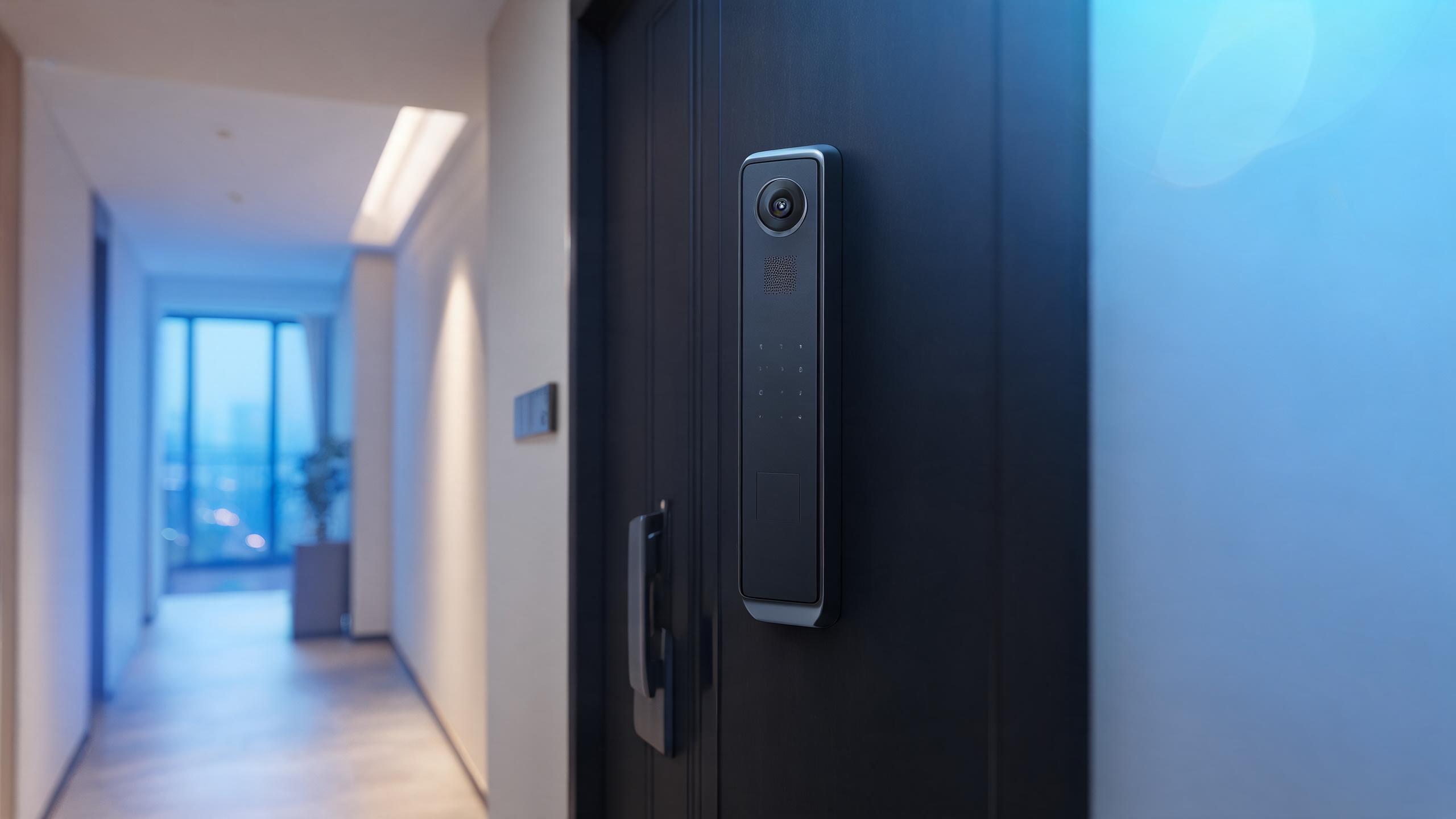
Video smart locks: camera, intercom and unlock in one device
A China manufacturer producing camera-equipped smart locks with two-way audio, app-based visitor calls, night vision and remote unlock — storage policy disclosed per ecosystem, privacy documentation provided, with OEM/ODM and model-specific cert files.
A video smart lock is actually four products in one housing — a lock, a camera, an intercom and an always-on connected device — which is why it needs four separate lines of due diligence. We manufacture video door locks for distributors, brands and project buyers who want visitor verification and remote unlock without pairing two separate products at the door. The range covers full locks with integrated cameras and peephole/replacement-form models across different SKUs, with camera resolution, night-vision method, two-way audio, motion or ring-triggered wake, and app-based remote unlock specified per model. Two policy questions matter more than headline resolution: where video is stored (local storage or an ecosystem cloud, with subscription terms set by the platform) and under what conditions remote unlock is permitted (verification steps in the app). Both are answered per SKU in a data-flow description, alongside the model's battery consumption profile and compliance files. All commercial terms are confirmed in writing per quotation.
Video lock manufacturing at a glance
| Camera forms | Integrated lock cameras and peephole/replacement-form models across the video range; resolution and lens angle stated per SKU |
| Night vision | Low-light/night-vision method varies by model (illumination type and behavior described on the spec sheet rather than shown only in demo footage) |
| Two-way audio | Visitor call and talk through the lock and app on covered models; audio quality depends on the site's network as well as the device |
| Remote unlock policy | App-based remote unlock with the platform's verification steps; buyers choose how aggressively this is enabled and train end users |
| Storage policy | Local storage and/or ecosystem cloud per SKU; any subscription, retention and deletion terms are set by the platform and must be disclosed to buyers |
| Trigger logic | Most models wake on ring, touch or motion events rather than recording continuously; exact event logic per model |
| Power profile | Camera and wireless modules increase battery load versus standard locks; battery guidance and optional powered configurations per SKU |
| Files & privacy | Model-specific compliance files and per-SKU data-flow descriptions for privacy review — certifications, QC |
Answer unit
Integrated video lock versus smart lock plus separate doorbell
Retailers and project buyers repeatedly face this pairing decision. The integrated device wins on installation simplicity and app consolidation; the separate pair wins on independent upgrade cycles and camera-feature depth. Score the factors that actually change cost and support load.
| Decision factor | Integrated video lock | Smart lock + separate camera/doorbell |
|---|---|---|
| Installation | One device, one door modification, one power budget | Two mounts; doorbell may need separate wiring or position |
| App & accounts | Single app workflow from seeing visitor to unlocking | Two apps unless both share one ecosystem |
| Power & battery | Higher battery load on one set of cells | Independent power; camera may be mains-powered |
| Repair & upgrade | One fault can replace the whole assembly | Camera or lock replaced independently |
| Feature depth | Balanced camera and lock features in one package | Each device can be best-in-class independently |
| Unit cost | One device purchase | Two device purchases plus integration setup |
How a video smart lock is built and checked
Camera alignment, audio path and remote-unlock security each get dedicated stations, because a defect in any one of them turns the device into either a lock complaint or a camera complaint — and marketplace reviews punish both.
- Incoming materialsCamera modules, microphones/speakers, illumination parts, PCBs, motors and lock bodies checked against the SKU specification.
- Electronics & assemblyCamera mounting and alignment, audio component fitment, sealing and full lock assembly under controlled stations.
- Firmware provisioningModel firmware loaded; ecosystem account provisioning and event/trigger defaults applied where the SKU requires.
- Video & audio testsImage capture, night function, two-way audio path and visitor-call flow verified per unit at end of line.
- Unlock & wireless checksRemote-unlock verification flow and gateway pairing tested; sample aging and battery-load checks per the batch plan.
- Privacy & packing checksDefault storage/event settings documented, lens protection, accessory count and carton labeling before warehousing.
Why this manufacturer
What video-lock buyers depend on
Camera discipline
Resolution, angle and night method stated per SKU rather than illustrated with best-case demo footage.
Remote-unlock security
Verification steps in the unlock flow, with configuration guidance so sellers set safe defaults.
Privacy documentation
Data-flow descriptions and storage-policy summaries for operator and reseller compliance review.
App ecosystem
Selected models on established platforms with account structures and update paths defined before launch.
Low-light performance
Night-vision behavior characterized so buyers know what night-time visitor images look like.
OEM depth
Logo, packaging, firmware defaults, app branding on supported ecosystems and finish variants.
Customization layers for video locks
Connected and video features make account and storage policy part of the approval artifacts, not just artwork. All terms confirmed in writing.
| Layer | What changes | Approval needed | Program level |
|---|---|---|---|
| Laser logo | Brand mark on the housing | Logo artwork proof | Branded stock |
| Packaging & manual | Color box, privacy notice inserts, setup guide | Dieline and proofs | Branded / private label |
| Event defaults | Motion zones, trigger sensitivity, notification policy | Configuration sheet | OEM |
| App branding | Branded app on supported ecosystems or white-label discussion | Account, storage and update agreement | OEM / turnkey |
| Finish & body variant | Color, peephole-form adaptation, regional lock body | Signed sample, compatibility check | OEM |
| New tooling / ODM | New camera arrangement or engineered platform | Design freeze, validation, milestones | ODM |
Video locks by application
Typical configuration example (L5)
120-unit residential retrofit with video intercom — typical BOM
This example illustrates a typical configuration, not a specific customer project. SKUs and connectivity counts always follow a real site survey.
| Line | Item | Typical detail |
|---|---|---|
| 1 | Video smart locks | ~120 units in the form factor matched to existing door prep and peephole arrangement |
| 2 | Gateways / hubs | Count follows building network coverage; omitted where the SKU uses direct connectivity |
| 3 | Storage provision | Local storage media per SKU and/or platform cloud policy documented for residents |
| 4 | Resident documentation | Setup guides, privacy notices and remote-unlock safety guidance |
| 5 | Spares & support | Key components and replacement-unit plan for the property management team |
Plan a real project on the project configurations hub.
Related manufacturers
Compare nearby lock categories
Video smart lock manufacturing: common questions
Is cloud video storage free, or is there a subscription?
Storage policy is set by the ecosystem platform of each SKU, not by the factory: some platforms provide local storage or a limited free tier, others require a subscription for cloud retention. The policy — including price, retention and deletion rules where published — is specified per model and must be disclosed to end buyers in listing material rather than discovered after purchase.
Can a burglar intercept the remote unlock and open the door?
Remote unlock travels through the platform's authenticated app and cloud architecture, with verification steps in the unlock flow. No connected product removes the need for safe practices: sellers should enable the platform's verification features, push firmware updates and educate users about account credentials. The per-SKU architecture description supports your security review before launch.
Does the camera record continuously?
Most video locks are event-driven: they wake on ring, touch or motion triggers rather than streaming continuously, which also protects battery life. Exact trigger logic, recording length and motion-zone settings differ per model and are stated on the specification sheet.
How well does it see visitors at night?
Night-vision method and image behavior vary by SKU and by the lighting at the specific doorway — a porch with streetlight looks different from a dark corridor. Request the model's night-vision description and evaluate a sample at the actual installation point rather than judging from staged product footage.
Does it replace a peephole, and what door thickness fits?
The range includes both full-handle locks with integrated cameras and peephole/replacement-form models; door thickness ranges and prep requirements differ by SKU. Measure door thickness and the existing peephole arrangement before ordering, and treat the video lock's battery budget separately from a standard lock because the camera and audio modules add load.
Request video lock factory pricing
Send your market, door type, storage preference and quantities — receive SKU-level specs, storage policy, MOQ and applicable cert files.
Request a quoteOrder samples firstLast updated: October 31, 2026 · Reviewed by the Smart Lock Factory editorial team