
Buying guides
Cabinet locks: electronic cam locks for lockers, cabinets and equipment enclosures
Cabinet locks are small but they guard records, valuables and tools. This guide compares electronic cam locks, locker latches and rack locks across credentials, master access, audit and power.
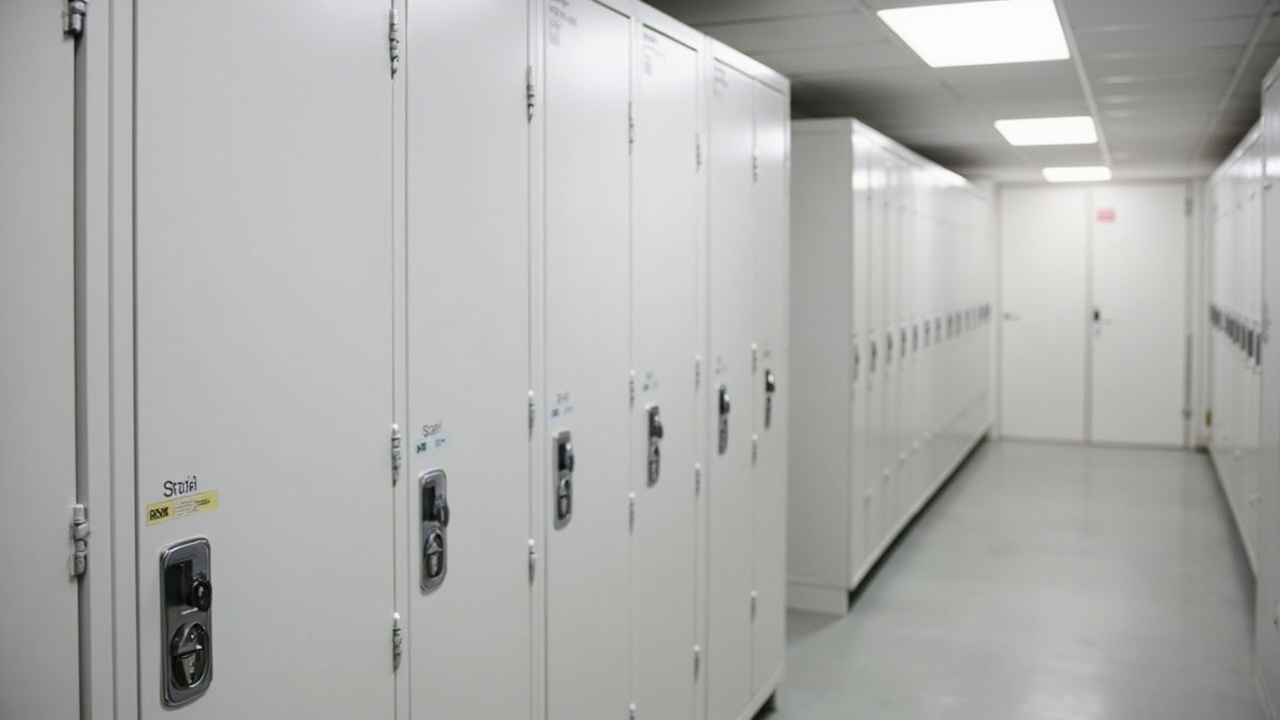
Cabinet and locker locks sit below the radar of most door-lock projects, yet they protect some of the most sensitive contents in a building: personnel files in filing cabinets, tools in service vans, medication in clinics, equipment in server racks, and guest belongings in gym, school and workplace lockers. Electronic cabinet locks typically replace a mechanical cam lock with a motorized or solenoid cam, a latch bolt, or a locking pin, operated by RFID wristbands and cards, PIN codes, Bluetooth from a phone, or a networked panel. Selection differs from door locks in three ways. First, the door is thin sheet metal, wood or composite, so dimensions, cam geometry and back-of-door clearance dominate fit. Second, fleet management matters: master credentials, batch revocation and, where supported, audit trails replace boxes of physical keys. Third, power is either small batteries per door or a wired locker controller for high-density deployments. This guide maps the options to lockers, filing cabinets, server racks and self-storage doors. Certificates and test reports for named SKUs are provided per RFQ; current MOQ policy, sample terms and lead time are confirmed in writing per quotation.
Cabinet lock facts at a glance
| Where used | Staff and gym lockers, school and university lockers, filing cabinets, office pedestals, server racks, self-storage units and service-van cabinets. |
| Mechanisms | Electronic cam locks rotate a cam behind the panel; latch and pin locks suit dedicated locker doors; rack locks follow server-cabinet formats and handle sets. |
| Credentials | RFID cards and wristbands, PIN codes, Bluetooth phones, one-time codes for visitors, and mechanical master keys for override. |
| Master and audit | Master credentials open groups of doors; higher-spec locks log who opened which cabinet and when, a decisive feature for records and medication. |
| Power | Battery per lock keeps retrofits simple; wired locker controllers power dozens of doors from one bus and report status centrally. |
| One-card design | Locker and door readers can share one card standard or app, so staff or guests use a single credential across entrances, rooms and cabinets. |
| Ordering terms | Current MOQ policy, sample terms and lead time are confirmed in writing per quotation; certificates and test reports for named SKUs are provided per RFQ. |
Answer unit
Which electronic cabinet lock fits which furniture?
Match the mechanism to the existing cut-out and cam space first, then choose credentials and management. Locker latches, cam locks and rack handles are not interchangeable form factors.
| Cabinet type | Typical lock approach | Management style |
|---|---|---|
| Staff and gym lockers | Battery RFID or keypad latch with free-assign mode | Users self-assign a card or code each visit; staff master key overrides. |
| School lockers | Rugged RFID cam lock with wristband option | Assigned or rented by term; batch reassignment between cohorts. |
| Filing and records cabinets | Audit-capable cam lock with named credentials | Every opening logged; master credential held by records management. |
| Server and network racks | Electronic rack handle or rack-format lock | Integrated with data-center access lists and audit requirements. |
| Self-storage doors | Heavy battery cam or latch with one-time codes | Tenant code issued per rental period; manager override and entry log. |
| Office pedestals | Compact Bluetooth or RFID cam lock | Shares the office card or phone credential with the room door. |
Use cases, openings and lock choices
Cabinet locks are sold by fit more than by feature. Sheet thickness, the existing cam-lock hole diameter, cam swing clearance behind the door and strike position decide which bodies physically install, so measure the furniture before selecting the electronics.
| Opening | Typical door | Lock approach |
|---|---|---|
| Corporate office | Metal pedestals and filing cabinets | RFID cam locks on the same staff card as office doors. |
| Gyms and fitness clubs | Banks of metal lockers, changing rooms | Battery RFID or keypad latches with wristbands and staff master. |
| Schools and universities | Corridor and sports lockers | Durable cam locks assigned per term, with batch management. |
| Self-storage facilities | Roller or swing unit doors | One-time-code smart cam locks with manager override and logs. |
| Healthcare and clinics | Medicine and records cabinets | Audit-capable locks with named credentials and reviewable history. |
| Logistics and field service | Van cabinets and tool chests | Rugged cam locks with weather sealing and driver-level credentials. |
Cabinet lock RFQ checklist
Small locks still need a complete specification. The checklist below covers the physical fit and the management design; both must be settled before a fleet order, because retrofitting hundreds of lockers twice is expensive.
| Component | Typical logic | Notes |
|---|---|---|
| Furniture data | Panel material and thickness, existing hole size, back-of-door clearance, cam swing space. | Determines which cam or latch bodies fit without new metalwork. |
| Cam and strike | Cam length, stop position and strike or locking-pin location. | Wrong cam geometry locks nothing even when the motor turns. |
| Credential scheme | Card standard, wristbands, PIN, Bluetooth or one-time codes; assign mode. | Confirms compatibility with existing door-access ecosystem. |
| Power and fleet | Battery per door versus wired controller; expected replacements. | Wired busses suit dense locker banks; batteries suit scattered units. |
| Master and audit | Master hierarchy, override key, log depth and export format. | Records, medication and cash rooms should specify audit-capable SKUs. |
From cabinet survey to deployed fleet
- Survey the furnitureRecord panel thickness, existing cam-lock cut-out, clearance behind the door and cam swing for each cabinet family.
- Define credential policyChoose shared card or app, one-time codes, assign mode, master hierarchy and audit requirements.
- Confirm fit and samplesWe confirm fit for named SKUs in writing and supply samples under current sample terms for a live trial.
- Pilot a bankInstall a representative bank, test assignment, override, battery life and daily abuse before the fleet order.
- Roll out and trainDeploy per schedule, record master procedures, and align spares; lead time is confirmed in writing per quotation.
Related buying guides
Related applications and solutions
Buyer questions about cabinet and locker locks
Can an electronic cam lock replace the cam lock already in my metal lockers?
In many cases yes, which is the main appeal of the form factor. Standard mechanical cam locks mount through a round hole in the locker door with a retaining nut, and electronic cam locks use the same or a very similar cut-out, swapping the barrel for a motorized body that presents a cam behind the panel. Before ordering, measure the hole diameter, door or panel thickness, the space behind the door for the cam to rotate, and the cam length that reaches the strike; locker stiles are thin and some electronic bodies are deeper than the barrels they replace. RFID, keypad and Bluetooth versions share this install logic, while dedicated locker latch locks are a different shape and usually belong on new locker builds rather than retrofits. We confirm fit per furniture type in writing and recommend a sample trial on the real cabinet before a fleet order.
Are battery cabinet locks better than wired locker systems?
They answer different problems. A battery lock per door is cheap to retrofit, needs no cabinet wiring and can be added a few doors at a time, which suits scattered pedestals, small gyms and self-storage retrofits; the trade is periodic battery service across the fleet. A wired locker controller powers and monitors dozens of doors over one bus, reports low battery or forced-door status centrally, and suits new builds, dense locker banks and premium gyms or workplaces that want live management. Cost per door is only one line: conduit, controllers, software and installation often make wired systems a larger project, while battery fleets carry a recurring service routine. Compare total installed and operating cost against the locker count and the operating staff available.
How do master keys and emergency opening work on electronic cabinet locks?
Three mechanisms are common. A mechanical master cylinder or override key physically opens the lock when electronics or batteries fail, held only by facility management. A master credential — a manager card or phone identity — opens defined groups of doors electronically and is typically logged. On networked or one-time-code systems, an administrator can issue an emergency code or remote release through the software. Specify which you require before ordering: audit-heavy environments often require that even master openings are recorded, while simple staff lockers may accept a mechanical override without logging. Whatever the system, the override procedure and its storage location should be written into site operations before the batteries ever fail.
Do cabinet locks record who opened each locker, and is the audit reliable?
Only some do, so audit must be specified rather than assumed. Basic RFID locker latches simply grant or deny access in free-assign mode and keep no history. Audit-capable cam locks and networked locker systems record credential identity, door number, time and sometimes failed attempts, either in lock memory downloaded via a programmer or live through a controller. Reliability depends on real-time clocks being maintained, identities being provisioned centrally rather than shared, and logs being exported into whatever compliance process applies. For medication, cash, examination records or evidence rooms, define the required record fields and retention before selecting the SKU, and ask for the audit specification of the named model per RFQ rather than assuming every electronic lock logs.
Can locker locks share the same card as the building door access system?
Yes when the radio standards and numbering are aligned. Most RFID cabinet locks support the common 13.56 MHz card families, and many projects deliberately choose locker locks that read the same staff or guest cards as the entrance and room readers, so one credential covers everything; Bluetooth locker locks can likewise join the same phone-based ecosystem. The risks are threefold: two reader families that nominally share a frequency but expect different card data formats, older 125 kHz installations that cannot be mixed with newer cards, and one ecosystem that manages doors but cannot enroll lockers. Confirm the exact card type and data structure both sides read, enroll a sample card on both readers during the pilot, and specify one credential ecosystem in the RFQ.
Specifying electronic cabinet locks for a locker or records project?
Send cabinet types, panel dimensions, credential ecosystem and audit needs. We confirm fit for named SKUs in writing, arrange sample trials and provide certificates per RFQ with the quotation.
Request Spec Sheet + QuoteOrder samplesLast updated: October 31, 2026 · Reviewed by the Smart Lock Factory editorial team