
Applications
Smart lockers: every compartment opened once, by the right recipient
Compartment-level credentials for parcel, staff and retail pickup lockers, delivery and collection workflows, audit and override management, and hardware built for high-cycle unattended use.
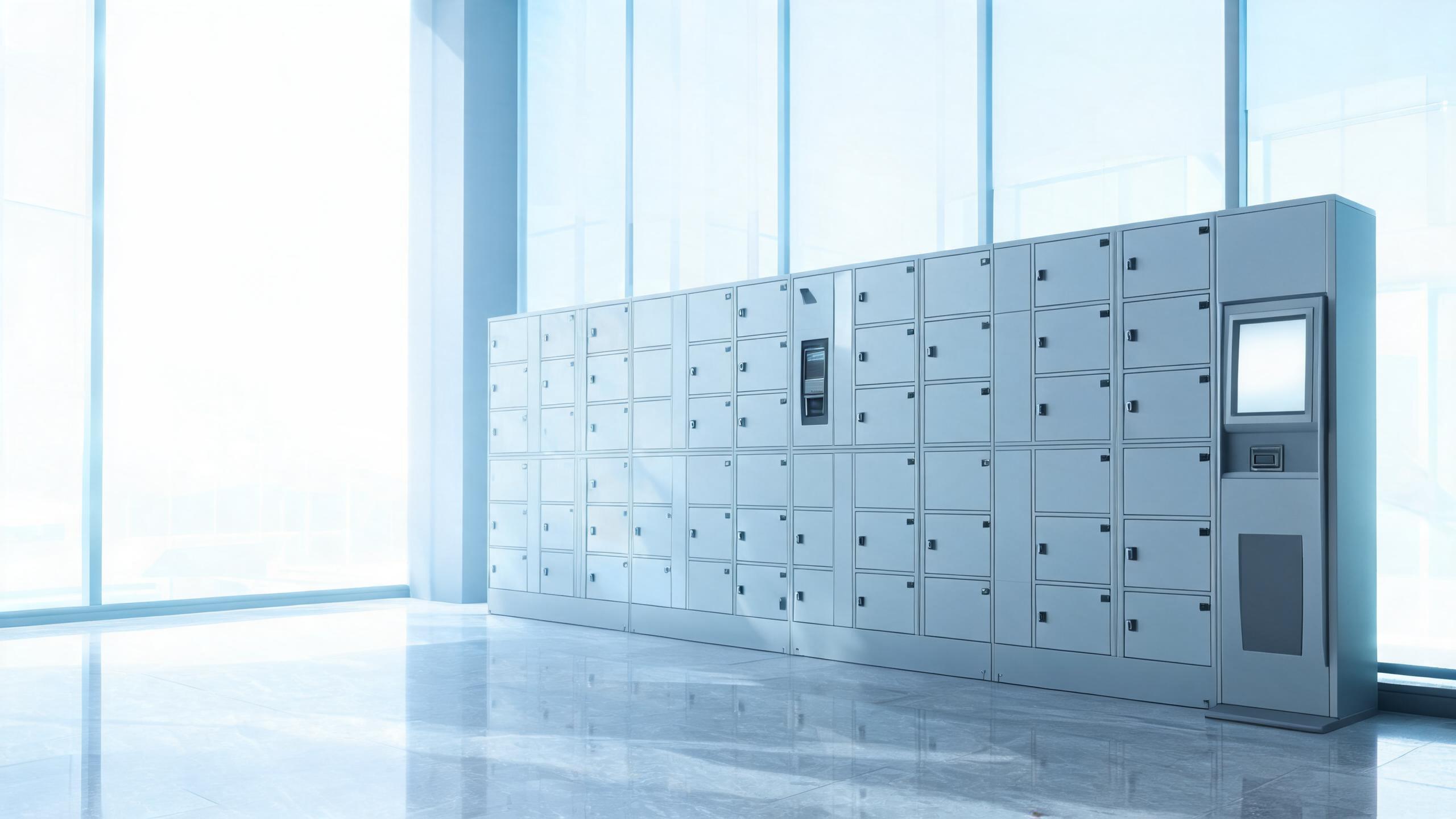
Electronic locker systems turn a row of compartments into an unattended service point: courier parcel lockers in apartment mailrooms, click-and-collect banks at retail, staff asset lockers in warehouses, student and gym lockers, and refrigerated pickup banks for groceries. The lock specification differs fundamentally from a building door — dozens or hundreds of small compartments, each opened rarely but reliably, with credentials generated per transaction, battery service across a dense bank, and an override workflow for jammed doors or failed pickups. Integration with the notification or locker-management platform issues one-time codes or mobile approvals, records every compartment event, and supports the operator’s customer-service process. The self-storage guide covers unit-level rental locks, the cold-storage page covers refrigerated environments, and cabinet lock platforms cover small-compartment hardware.
Electronic locker access at a glance
| Compartment logic | One-time transaction credentials ensure a compartment opens only to the assigned recipient or staff member |
| Use-case range | Parcel, click-and-collect, staff asset, student, gym and refrigerated grocery banks share one lock model but different rules |
| High-cycle duty | Compartment latches are built for dense, unattended openings with battery service across a full bank |
| Management platform | Codes and mobile approvals are issued by the named locker or notification platform scoped in writing |
| Override workflow | Jammed doors, expired codes and failed pickups use logged staff overrides rather than master codes handed around |
| Audit evidence | Per-compartment events support carrier disputes, missing-item claims and asset accountability |
| BOM shape | Compartment locks by bank size, controller scope, platform integration, override tooling and spare latches |
Answer unit
Keyed or simple mechanical locker locks, or electronic compartment locks managed by a platform?
Unattended transaction lockers require electronic compartments; mechanical locks remain only for personally assigned long-term lockers.
| Dimension | Mechanical locker locks | Electronic compartment locks via platform |
|---|---|---|
| Courier delivery | Recipient must carry a key | Courier assigns the compartment, recipient gets a one-time code |
| Missed pickup | Staff hunt for parcels | Code expiry and reminders follow platform policy automatically |
| Jammed door | Master key use unrecorded | Logged override identifies staff, locker and time |
| Bank scale | Key management explodes | Hundreds of compartments managed as one service |
| New use cases | Fixed assignment only | Same bank supports parcel, asset or retail rules by schedule |
| Typical fit | Small personal lockers | Parcel networks, retail pickup, workplaces, campuses |
Door types and lock-body match
Compartment geometry and environment define the hardware; indoor ambient, outdoor kiosk and refrigerated banks take different specifications.
| Opening | Typical door | Lock approach |
|---|---|---|
| Indoor locker compartment | Steel compartment door in standard bank | Compact electronic latch with transaction credentials and banked batteries |
| Parcel-room door | Mailroom entrance around the bank | Building access credentials for residents; carriers use the separate delivery workflow |
| Outdoor kiosk bank | Weatherproof freestanding kiosk | Sealed compartments and display rated for outdoor exposure and tamper |
| Staff asset locker | Warehouse or office asset bank | Assigned or transaction compartments with manager reporting |
| Refrigerated pickup bank | Insulated chilled compartments | Cold-rated latches and condensation-tolerant electronics by temperature zone |
| Admin / override station | Service panel or manager kiosk | Logged overrides, forced-open records and maintenance mode per bank |
Example BOM shape for a multi-site locker program
This example illustrates a typical configuration, not a specific customer project. Bank sizes, environments and use cases drive the list.
| Component | Typical logic | Notes |
|---|---|---|
| Compartment locks | Latches per compartment across all banks | High-cycle, low-maintenance design with banked battery service |
| Controller and integration | Bank controllers plus locker-platform scope | Notification and carrier fields confirmed in writing per platform |
| Environment hardware | Indoor, outdoor and refrigerated variants | Matched to exposure and temperature at each deployment |
| Override tooling | Manager credentials and maintenance mode | Every forced-open event logged for customer service review |
| Spare latches | Compartment latches held regionally | Fast swap keeps banks available; one dead door is visible immediately |
How a locker program rolls out
- Use-case and site surveyBank sizes, compartment mix, environments, carrier model and platform names are documented before hardware choice.
- Pilot bankOne bank runs delivery, pickup, expiry, jammed-door override and battery service end to end.
- Site rolloutBanks install and commission by location, with indoor, outdoor and refrigerated variants validated separately.
- Operator adoptionCarrier and site staff rehearse loading, recipient support and the logged override workflow.
- Assurance handoverService dashboards, dispute-report procedures, spare routing and uptime reporting are documented.
Related applications
Related storage and pickup pages
Smart locker systems: common questions
How do couriers deliver and recipients collect from smart lockers?
The carrier authenticates at the bank or through the platform, loads the parcel into an assigned compartment, and the platform issues the recipient a one-time code or mobile approval with the pickup location and expiry; the compartment opens only to that credential and records the collection. Expiry, reminders and return-to-courier timing follow configured policy, so a forgotten parcel does not occupy a compartment indefinitely. The workflow is integrated with the named locker-management and notification platforms, scoped in writing, and buildings that start with a single supported carrier can add carrier-agnostic loading later without changing compartment hardware. Access to the parcel room itself remains on the building’s normal resident credentials.
What happens when a compartment jams or a code fails?
Site staff or remote operators use a logged override workflow: the manager credential identifies who acted, which compartment was force-opened and when, producing a record that supports both the customer-service case and later hardware inspection, rather than relying on an unrecorded master key shared across shifts. The locker enters maintenance state, the parcel is moved or the latch scheduled for swap, and reporting flags doors with repeat incidents. Failed codes due to expiry are resolved through the platform’s reissue flow without an override at all. Regional spare latches keep the mean time to repair short because a single dead compartment in a small bank measurably reduces capacity.
Can the same lockers serve parcels, staff assets and click-and-collect?
Yes: the compartment hardware is common while the rules layer differs, so a workplace bank can hold employee parcel pickup by day, asset lockers for equipment by assignment, and after-hours service collections, each with its own credential type and reporting; a retail bank similarly mixes order pickup and returns. The platform configuration defines use rather than separate hardware, which is what makes multi-purpose banks economical. Refrigerated compartments for grocery pickup are the exception — those banks take cold-rated latches and condensation-tolerant electronics specified by temperature zone. The use-case mix is designed before bank sizing so compartment dimensions and counts match the real demand profile.
How are batteries and hundreds of compartments maintained?
Locker banks are designed for dense low-power operation: compartments draw power only on transaction, controllers report battery status bank by bank, and service teams replace batteries on planned rounds rather than reacting to dead doors, which matters because an unannounced failed compartment blocks a real delivery. Bank controllers and compartment latches are standardized so spare parts are interchangeable across sites, and high-cycle latch designs are selected for the expected daily transaction volume at each location — a transit hub bank and an apartment mailroom should not be specced identically. Uptime reporting per bank feeds the operator’s service-level management and site prioritization.
How is a locker-program BOM and MOQ scoped?
The BOM counts compartment latches by bank size and environment, controllers, platform integration, override tooling and regional spare latches, with MOQ and lead time confirmed in writing per quotation. Programs pilot one representative bank per environment — indoor, outdoor kiosk and refrigerated where applicable — before volume rollout, and multi-site operators standardize latch families so volume and spares accumulate across locations. Send the bank list with compartment counts, environments, use-case mix and platform names, and the quote is structured per bank type, which keeps procurement from pricing a refrigerated compartment the same as an ambient one.
Turn a row of doors into an unattended service point
Send the bank list, compartment counts, environments and platform names — receive a per-bank-type BOM with integration scope and written MOQ and lead-time terms.
Discuss your project (RFQ)Project configurationsLast updated: October 31, 2026 · Reviewed by the Smart Lock Factory editorial team