
Applications
Smart locks for self-storage: access that follows the rental, not the key
Unit keypads tied to paid status, gate entry that closes at overstay, roll-up and swing door fitment, and an operating model built for unmanned facilities.
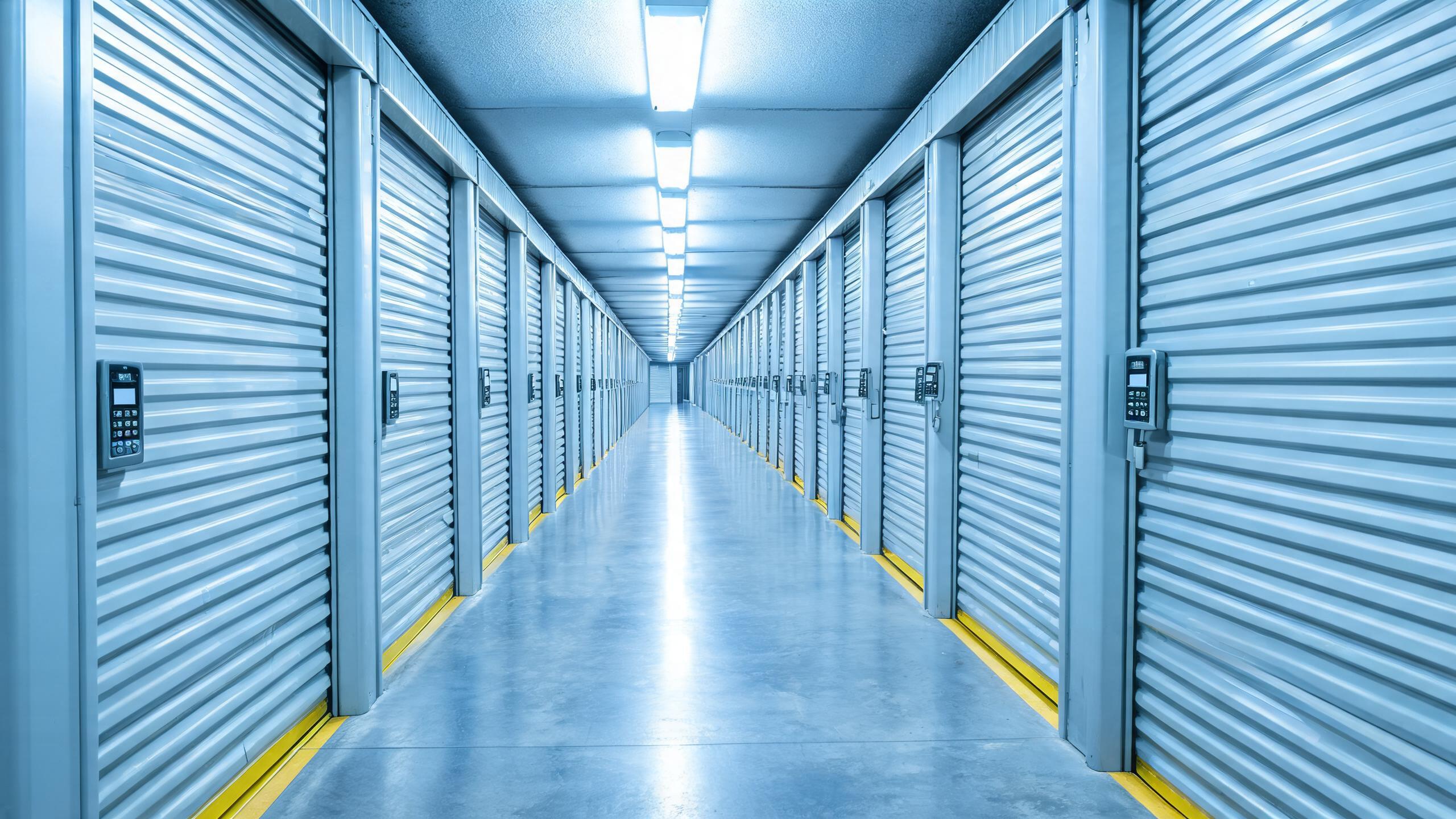
Modern self-storage competes on convenience and operating cost: drive-up or interior units rented online, accessed at 6 a.m. without staff, and sealed automatically the moment rent stops. Smart unit locks tie the door directly to rental status — a tenant codes in at move-in, access continues while the account is current, and the unit locks out at delinquency without a gate-cutting crew or a cylinder swap. The entry gate, manager doors, elevator lobbies and climate-controlled corridors run as a coordinated layer, which is what enables the unmanned or lightly staffed facility model. Roll-up doors, swing doors and container units each take different hardware, and dust, damp and temperature swings in unconditioned corridors narrow the specification. The warehouse and industrial guide covers larger logistics doors, the smart locker page covers compartment-level locking, and cabinet lock platforms cover small compartments.
Self-storage access at a glance
| Unit doors | Roll-up metal doors dominate drive-up and interior facilities, with swing and container units as separate fitment cases |
| Rental logic | Unit access follows account status: active codes open, and delinquency suspends access without a lock change |
| Gate layer | Entry gates and man-doors admit current tenants by schedule and close automatically at overstay |
| Unmanned model | Online rental, remote code issue and camera-led verification allow lightly staffed or fully unmanned operation |
| Environment | Dust, damp and wide temperature swings in unconditioned corridors select industrial-grade electronics |
| Overstay process | Automated notices and access suspension precede the documented lien procedure, with manager override retained |
| BOM shape | Unit locks per door type, gate controller integration, climate-zone hardware, manager credentials and spares |
Answer unit
Smart unit locks on every door, or gate-only access control?
Gate-only is the legacy model and it cannot enforce unit-level status. New facilities increasingly specify both as one rental-driven system.
| Dimension | Gate-only access control | Unit-level smart locks plus gate |
|---|---|---|
| Rental enforcement | Any tenant can reach any unit corridor | Only current renters open their own unit |
| Overstay | Gate code revoked; unit still mechanically usable | Unit itself denies entry at delinquency automatically |
| Unit audit | No record at the unit door | Entry events available per unit on connected platforms |
| Move-in | Staff issue a key or combination | Online renter receives codes and moves in unattended |
| Hardware cost | Lower initial cost | One lock per unit, offset by staff and loss savings |
| Typical fit | Older full-service facilities | New builds, unmanned sites, multi-site operators |
Door types and lock-body match
Roll-up door geometry is the defining constraint; swing and container doors follow simpler mounting logic.
| Opening | Typical door | Lock approach |
|---|---|---|
| Roll-up unit door | Corrugated metal sectional roll-up door | Unit lock purpose-built for roll-up latch geometry and dusty operation |
| Swing unit door | Metal exterior swing door | Haspl-mounted smart lock or integrated keypad latch matched to the door series |
| Shipping container unit | Corrugated container doors | Rugged outdoor-rated hardware tolerant of container flexing |
| Entry gate / man-door | Slide gate with operator plus pedestrian door | Keypad/reader integrated with the named gate operator and rental system |
| Climate corridor | Insulated interior man-door | Interior-rated electronics, tenant access by scheduled hours |
| Manager / office | Timber or metal office door | Staff credential lock, audit and override for the lien process |
Example BOM shape for a mid-size storage facility
This example illustrates a typical configuration, not a specific customer project. Unit-door mix and unmanned-operation depth drive the list.
| Component | Typical logic | Notes |
|---|---|---|
| Unit locks | One per unit by roll-up, swing or container type | Door series confirmed before lock model selection |
| Gate control | Entry lane keypads and operator integration | Rental-system scope confirmed against the named platform |
| Climate-zone locks | Interior man-doors and premium units | Separated from the tougher outdoor unit specification |
| Manager kit | Override credentials, lien-process hardware and spares | Documented against the facility operating procedure |
| Spare pool | Unit locks and latches for swap between rentals | Protects same-day re-letting of recovered units |
How a self-storage program rolls out
- Facility surveyUnit door series, gate operators, climate zones and the rental software are documented before hardware choice.
- Pilot rowOne roll-up row and the gate run real rentals, payments and a simulated delinquency cycle end to end.
- Building rolloutUnit locks install in batches between occupancies, starting with online-rented and unmanned zones.
- Unmanned workflowSelf move-in, code delivery, camera verification and overstay suspension are rehearsed with the remote team.
- Operations handoverLien procedures, manager overrides, battery rounds in unconditioned corridors and spares are documented.
Related applications
Related storage and facility pages
Smart locks for self-storage: common questions
How do smart locks connect access to rent payment?
Each unit lock and the entry gate reference rental status from the management platform, so a new tenant receives working codes immediately after booking and payment, those codes continue while the account stays current, and suspension of access happens automatically if the account becomes delinquent. Staff never chase padlocks or cut gate codes unit by unit. The exact workflow is scoped against the named management software in writing, including notice timing and manager override, because automated suspension must still follow the facility’s documented lien procedure and local requirements.
Can smart locks be retrofitted to existing roll-up doors?
Yes for the major roll-up door series, using latches engineered around roll-up geometry rather than a generic door lock strapped to the door; the survey records the door manufacturer and latch type row by row, because older series vary. Swing and container units use their own rugged hardware. Dust tolerance and battery access are specified for unconditioned corridors, and a pilot row proves the fit across the building before volume order, including how the swap behaves between two consecutive rentals.
Do customers still need to visit the office?
Not for a standard rental: online booking, identity verification and code delivery let a tenant drive up and unload outside office hours, which is the core of the unmanned facility model. The gate and the unit both recognize the new tenant from the same record. Exceptions such as insurance checks, vehicle rules or regulated goods remain facility policy handled through the platform, and staffed sites can keep the office open while letting the locks handle the routine transactions.
What happens during a delinquency or overstay?
Access suspension follows the platform’s automated notice sequence, removing gate and unit access at the defined point while preserving a documented manager override; this replaces manual gate-code removal and physical lockouts. The lien and auction procedure stays exactly as local law and the operating manual describe — smart access changes the enforcement mechanism, not the legal process. Every override is recorded, which protects the operator in disputes, and reinstatement is automatic when the account is cured.
What MOQ and lead time apply to a storage facility?
The BOM counts unit locks by door series, gate controls, climate-zone hardware and a spare pool, so an honest quote follows the facility survey rather than the unit count alone; MOQ and lead time are confirmed in writing per quotation. Multi-site operators can standardize one hardware set across properties for better terms and a shared spare inventory. Send the unit list by door type, gate operator model, software name and climate zones, and delivery can phase by building or by row to keep the facility operating.
Let the rental status decide who opens the unit
Send the unit list by door type, gate operator and software name — receive a facility BOM with integration scope and written MOQ and lead-time terms.
Discuss your project (RFQ)Project configurationsLast updated: October 31, 2026 · Reviewed by the Smart Lock Factory editorial team