
Manufacturer · cabinet & locker
Compact smart locks for lockers, cabinets and drawers
A China manufacturer producing RFID, keypad and fingerprint cabinet locks — public and assigned operating modes, master management, retrofit-friendly fittings and water-resistant SKUs, with OEM/ODM and model-specific certification files.
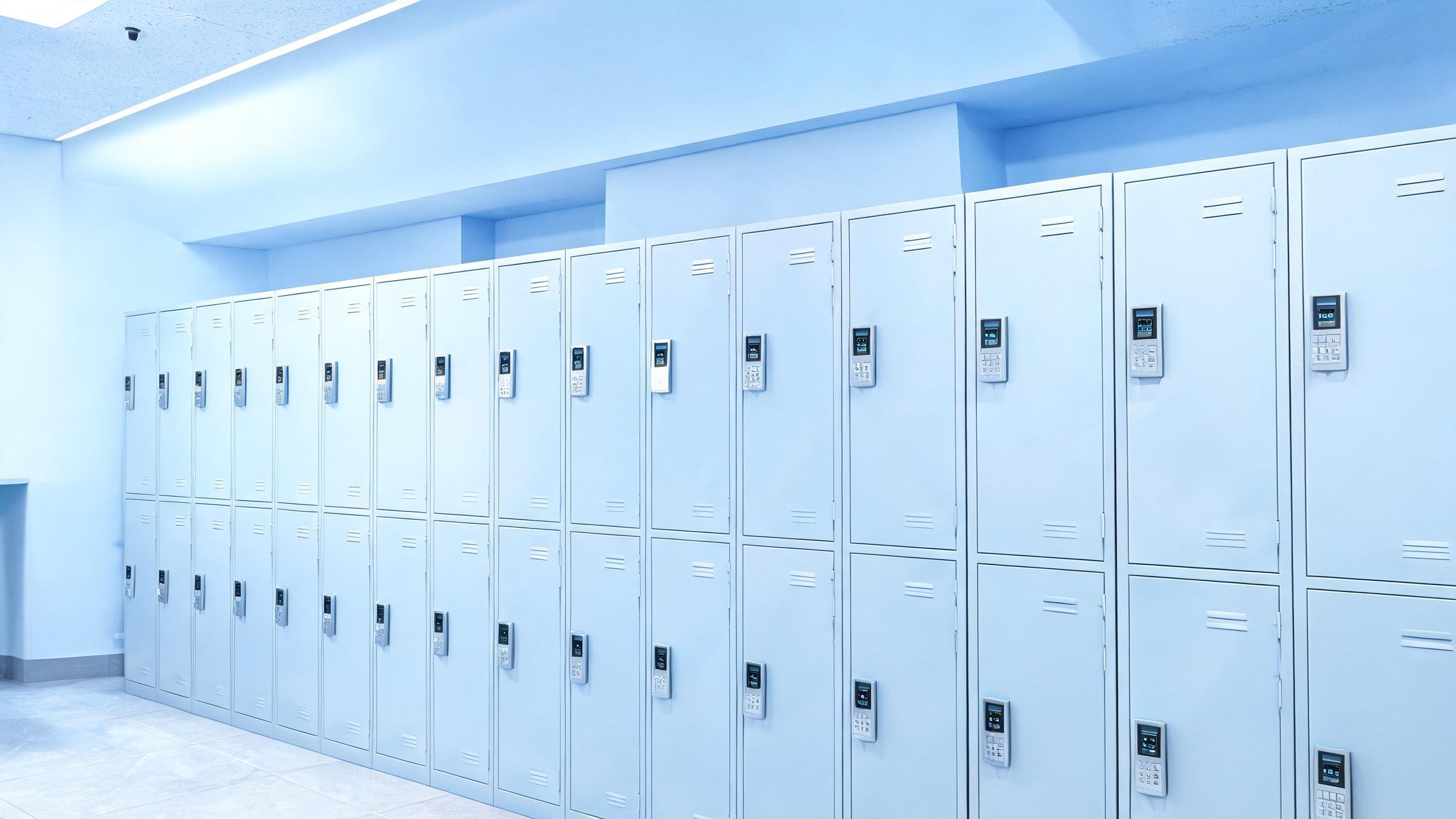
Cabinet locks look like a small version of a door lock but are specified by a completely different question: does the same compartment serve a different stranger every hour, or the same person for a year? That distinction — public/shared mode versus assigned mode — drives the firmware, the credential workflow and the management hardware. We manufacture compact electronic locks for gym and pool lockers, office personal lockers, staff cabinets, school storage, mailboxes and retail display furniture, across RFID card/wristband, keypad code and fingerprint modules. Product selection turns on operating mode, door material thickness, existing prep dimensions, environmental exposure (wet changing rooms require water-resistant SKUs), and how staff recover a compartment when a user forgets a code or loses a credential. Those parameters, plus battery access design and applicable compliance files, are properties of each SKU and are confirmed on its specification sheet and in your quotation.
Cabinet lock manufacturing at a glance
| Module types | RFID card/wristband, keypad code and fingerprint modules across different SKUs in the cabinet range; some combine two credentials |
| Operating modes | Public/shared mode (frees the compartment after each use) and assigned mode (dedicated user for a term); mode availability is per model |
| Staff recovery | Master card, master code or mechanical override per SKU so staff can open a compartment without damaging the locker |
| Mounting & prep | Common locker/cabinet prep dimensions per SKU, with cam/spindle options and retrofit-friendly fittings; measure the existing cut-out first |
| Material thickness | Supported door thickness range per model for steel, wood and laminate furniture doors |
| Environment | Standard indoor models and water-resistant SKUs with stated ratings for poolside and wet changing areas |
| Power & access | Battery placement and low-power behavior differ by model; emergency power contacts are provided on covered SKUs |
| Files & testing | Model-specific compliance files for covered SKUs plus mode-logic and repeated-cycle end-of-line checks — certifications, QC |
Answer unit
Choosing cabinet locks by scenario
Specify the locker room, not the lock catalog. Each scenario below implies a mode, an environment rating and a credential type; getting the mode wrong is the single most common ordering error in this category.
| Scenario | Mode & environment | Features to require |
|---|---|---|
| Gym day-lockers | Public mode, dry or mixed zones | Auto-freeing codes/cards, wristband option, fast reset |
| Office personal lockers | Assigned mode, indoor | Fingerprint or personal code, term-length assignment |
| Staff storage rooms | Assigned + master override | Staff credential plus management master card/key |
| Pool & spa wet zones | Public mode, water-resistant SKU | Stated water rating, wristband credential, sealed battery door |
| School student lockers | Assigned, high-durability | Robust housing, term reset policy, code recovery by staff |
| Mailboxes & logistics | Assigned or one-time credential | Audit/one-time code on connected models, compact cam fit |
How cabinet locks are built and checked
Small size makes mechanical tolerance proportionally more important, and mode firmware defines the whole user experience. Production validates both: the lock across a range of material-thickness jigs, and the public/assigned logic through complete user cycles.
- Incoming materialsCompact modules, sensors/keypads, cams and spindles, battery contacts, seals and housing parts checked against the SKU specification.
- Compact assemblyBoard and motor fitment in the small form factor, gasket placement on water-resistant SKUs, cam mounting.
- Mode provisioningFirmware loaded in public/shared or assigned configuration per purchase order, master credentials set or reserved.
- Credential & mode testsEnrollment, release, auto-freeing (public models) and master override verified per unit at end of line.
- Cycle & fit testsRepeated open/close cycling and fit checks across the model's supported material-thickness jigs; seal checks on wet-zone SKUs.
- Kitting & packingLocks, cams/spindles, fixing kits, master-management items and install guides packed per project with clear labeling.
Why this manufacturer
What cabinet-lock buyers depend on
Mode discipline
Public and assigned firmware shipped exactly per order, with the two workflows documented for operators.
Compact engineering
Tolerances and cam geometry validated across supported door materials and thicknesses.
Wet-zone options
Water-resistant SKUs with stated ratings and sealed battery access for poolside environments.
Master management
Master card, code or override key options so forgotten credentials never require destructive opening.
Retrofit fit
Common prep dimensions and adapter fittings designed for replacing mechanical locker locks.
OEM options
Logo, housing color, credential printing and firmware policy layers for facility and furniture brands.
Customization layers for cabinet locks
Mode firmware and wet-zone sealing are functional decisions validated before bulk; cosmetic layers follow the standard approval flow. Terms confirmed in writing.
| Layer | What changes | Approval needed | Program level |
|---|---|---|---|
| Laser / printed logo | Brand mark on the housing | Artwork proof | Branded stock |
| Housing color | Color run matched to locker furniture range | Signed color sample | OEM |
| Mode policy | Default mode, reset timing, master hierarchy | Policy configuration sheet | OEM project |
| Credential branding | Printed wristbands/cards for facility members | Card artwork proof | Branded / private label |
| Cam / fitting variant | Special cam, spindle or prep adapter for furniture lines | Drawing and fit sign-off | OEM |
| New tooling / ODM | New housing for a furniture manufacturer's platform | Design freeze, tooling milestones | ODM |
Cabinet locks by application
Gyms & fitness
Gym lockers
Public-mode day lockers with wristband credentials and staff master access.
Typical configuration example (L5)
500-locker gym rollout — typical bill of materials
This example illustrates a typical configuration, not a specific customer project. Counts and SKUs always follow the locker survey and wet/dry zone plan.
| Line | Item | Typical detail |
|---|---|---|
| 1 | Locker locks (dry zone) | The larger share, public-mode keypad or RFID modules for general lockers |
| 2 | Water-resistant locks | Separate wet-zone SKU count for poolside/changing areas, with stated rating |
| 3 | Credentials | Wristbands/cards for members plus reception-held spares |
| 4 | Master management | Master cards/programming devices for staff recovery and locker reset |
| 5 | Fittings & spares | Cam/spindle kits for the locker material, spare locks and install guides |
More on the project configurations hub.
Related manufacturers
Compare nearby lock categories
Cabinet lock manufacturing: common questions
Can the same lock serve a different walk-in user every visit?
Yes — that is public/shared mode: after each use the locker frees itself (the code expires or the card is released), ready for the next visitor. Assigned mode instead binds a compartment to one person for a term. Mode availability differs per model, so specify gym day-use versus dedicated personal lockers at RFQ.
How does staff open a locker when a user forgets the code?
Each SKU provides a management path — master card, master code or mechanical override depending on model — so staff recover the compartment without forcing the door. The management hierarchy and how many master credentials are included should be confirmed in the project BOM.
Do these locks survive wet changing rooms and poolside areas?
Only water-resistant SKUs with a stated rating should be specified for wet zones; standard indoor cabinet locks are not sealed for that environment. Provide the wet/dry locker split with your inquiry so the two SKU types are quoted separately, including sealed battery-access design on the wet models.
What cut-out size and door thickness do the locks fit?
Supported prep dimensions and material-thickness ranges are stated per SKU; many retrofit SKUs align with common mechanical locker-lock cut-outs, but steel, wood and laminate furniture differ. Measure the existing opening and door thickness before ordering, and request the fitting drawing for review.
How are batteries replaced and what if they die locked?
Battery access design differs by model — many cabinet locks allow external replacement or expose emergency power contacts on covered SKUs, and low-battery warning behavior is described on the spec sheet. Facilities teams should include battery checks in rounds for assigned-mode installations.
Request cabinet lock factory pricing
Send locker count, public/assigned mode, dry/wet zones and material thickness — receive SKU-level specs, fitting drawings and written terms.
Request a quoteOrder samples firstLast updated: October 31, 2026 · Reviewed by the Smart Lock Factory editorial team