
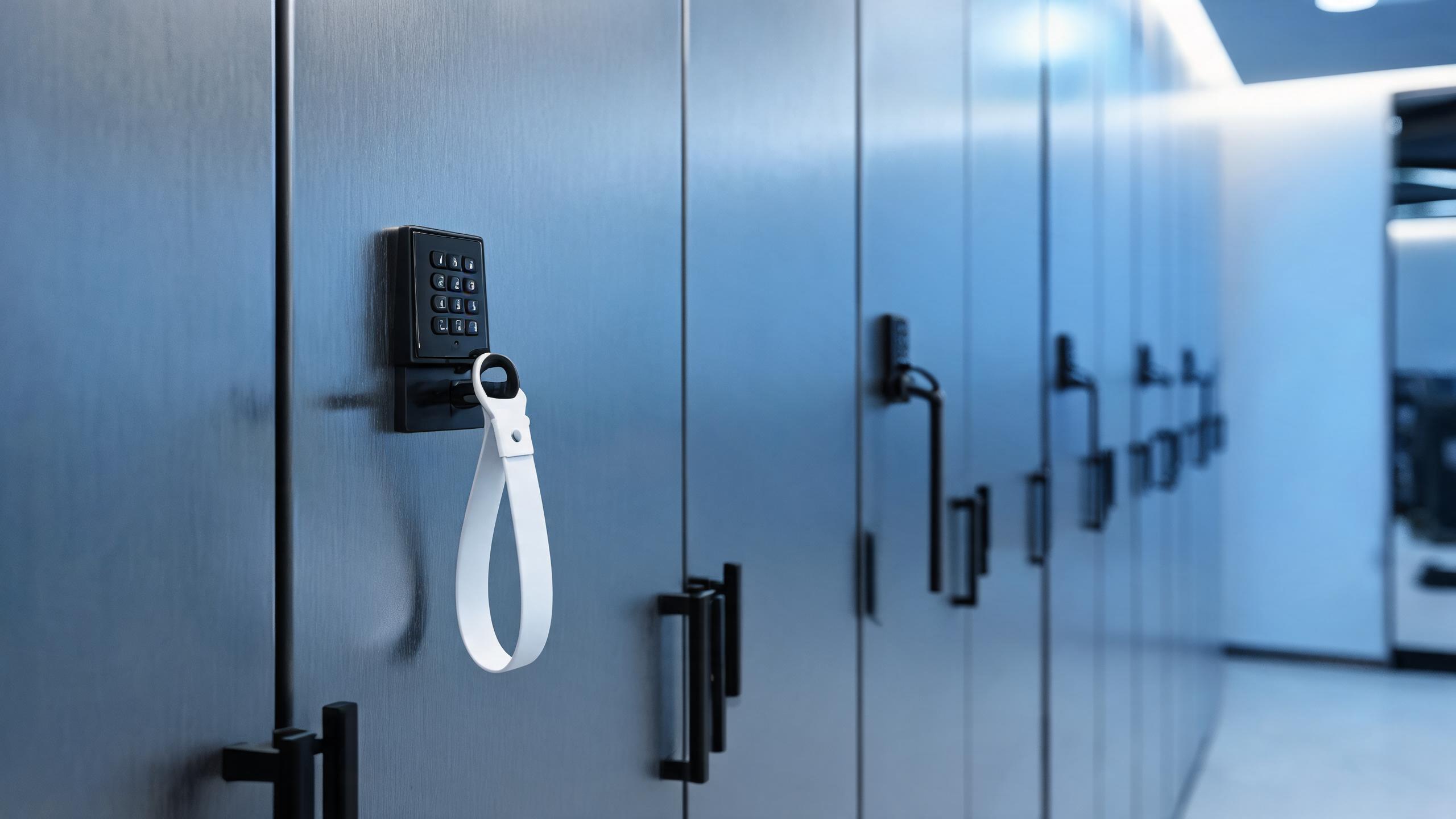
OEM by lock type
OEM cabinet locks: smart access for lockers and storage
Compact RFID, PIN and wristband locks replacing mechanical cam locks on metal lockers, wooden cabinets and furniture — built in public or assigned modes for gym, office, school and healthcare channels.
Cabinet and locker locks solve a different problem from door locks: the hardware is small, battery-powered and often used by hundreds of rotating people. Covered OEM platforms are cam-lock replacements that fit standard furniture and locker prep, plus latch-body models for sheet-metal lockers, with credentials across RFID card and wristband, user PIN and fingerprint on selected SKUs. The defining product decision is operating mode — public (roaming) for gym pools and water parks where a visitor takes an empty locker, sets a temporary code and frees it again, versus assigned (private) for staff and student lockers tied to one named user. Administration runs through manager cards, wristbands or a handheld programmer; the supported credential mix and battery type are fixed per SKU and listed on its spec sheet.
OEM cabinet locks at a glance
| Form factors | Cam-lock replacement bodies for furniture and existing lockers, plus latch models built for sheet-metal locker doors |
| Credentials | RFID card, fob and silicone wristband, user PIN, and fingerprint on covered SKUs; mechanical override where the model provides it |
| Operating modes | Public/roaming mode for transient use and assigned/private mode for a named user; mode configured per lock or batch |
| Power | Compact battery compartments sized for the locker body; battery type, typical life and low-battery behavior listed per SKU |
| Administration | Manager cards and wristbands, handheld programmers or cabinet-management software on covered platforms, with unlock-event records where supported |
| Typical sites | Gyms and fitness studios, schools and universities, offices and co-working, healthcare staff rooms, and self-storage facilities |
| OEM layer | Laser or printed logo, housing color, wristband and card art, color packaging, manuals and per-locker install templates |
Answer unit
Public-roaming or assigned-private locker mode?
The mode follows who uses the locker and for how long. Ordering the wrong mode is the most common cabinet-program mistake, because the daily workflow differs even though the lock body looks identical.
| Dimension | Public / roaming mode | Assigned / private mode |
|---|---|---|
| User model | Any visitor takes an empty locker for one session | One named user keeps the locker for a term or period |
| Typical venues | Gym floors, water parks, spas, day-use facilities | Schools, staff rooms, offices, long-stay storage |
| Credential flow | User sets a temporary PIN or pairs a wristband per visit | Card, wristband or fingerprint enrolled to the named user |
| Release logic | Locker frees automatically or by manager reset after the session | Access remains until admin revokes or the term ends |
| Manager role | Staff clear lockers and respond to forgotten codes daily | Staff assign, transfer and audit lockers less frequently |
| Durability emphasis | Very high use cycle count; simple keypad or wristband head | Stable user base; richer credentials such as fingerprint viable |
How a branded cabinet-lock program is built
- Locker surveyMetal or wood construction, existing cam-lock prep, door thickness, swing and the number of lockers per bank are measured and photographed.
- SKU and mode matchThe lock body and credential head are matched to the prep, and public or assigned mode is confirmed against the daily operating model.
- Fit sampleSamples are installed on representative locker doors and run through real opening cycles before production quantities are confirmed.
- Branded productionLogo, housing color, wristband and card art, packaging and manuals applied, with manager credentials and programming guides packed per shipment.
Related programs
Adjacent locker and facility pages
OEM cabinet locks: common questions
Can smart locker locks fit existing cam-lock holes?
Covered cam-lock replacement platforms are designed around standard furniture and locker prep, and many retrofits reuse the existing hole. Door thickness and the existing cut-out still vary by locker maker, so the prep drawing is checked against the lock body and a fit sample is installed on a representative door before volume production.
What is the difference between public mode and assigned mode?
In public or roaming mode, any visitor takes an empty locker, sets a temporary code or pairs a wristband for the session, and the locker frees for the next user. In assigned mode, a named student or staff member keeps one locker until an admin revokes access. Gyms usually need public mode; schools and staff rooms usually need assigned mode. The cabinet manufacturer guide compares both workflows.
Which credential is best for gym locker rooms?
Waterproof RFID wristbands suit pools and gym floors where members train with the credential on their wrist; keypads suit venues that prefer issuing no token at all. Card and fob programs suit assigned staff lockers, and fingerprint heads suit stable, higher-value user groups. The credential mix is chosen per SKU rather than mixed on one lock body.
How are lockers opened when a battery dies or a code is forgotten?
Behavior differs by SKU: covered models provide manager cards or wristbands, a handheld programmer, or an external emergency power contact, and low-battery warning is given in advance. The exact override sequence and battery type are on the spec sheet, and venue staff are trained on it during commissioning so lockers are never forced open.
What MOQ applies to branded cabinet locks and wristbands?
Locks, custom housing colors and printed wristbands or cards each carry their own thresholds, and programs are usually quoted per locker bank rather than per container. Send locker counts, prep details and the chosen credential mix through the RFQ form and the current MOQ and lead time are confirmed in writing per quotation.
Brand a locker-lock program built for real use cycles
Send locker prep details, locker counts, credential preference and public or assigned mode — receive SKU matching plus written MOQ and lead-time terms.
Request OEM termsOrder fit samplesLast updated: October 31, 2026 · Reviewed by the Smart Lock Factory editorial team