
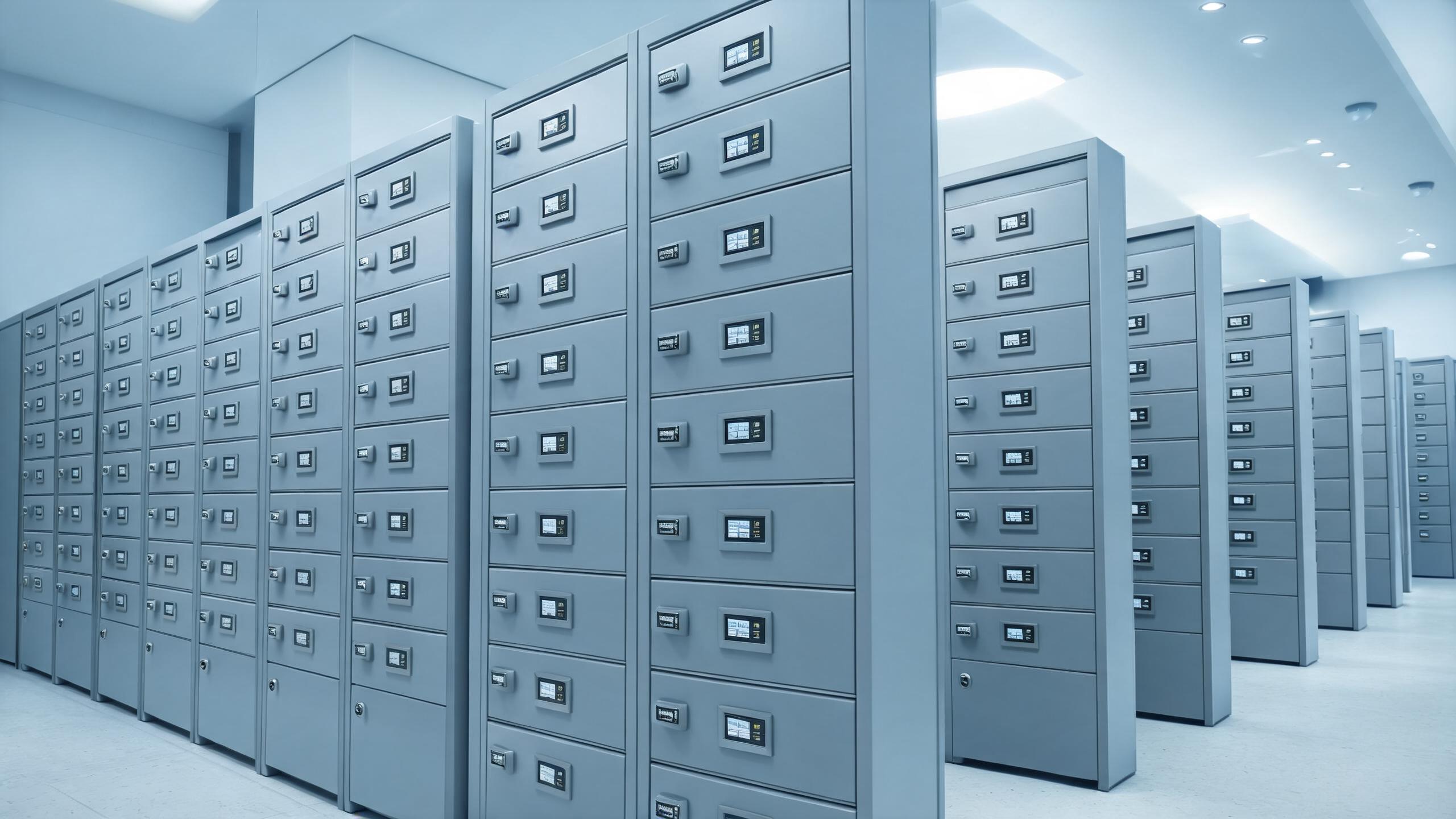
Door types
Smart cabinet locks: access control at the compartment level
High-value risk often lives in drawers, not rooms. Electronic cam locks protect medicines, files and stock per compartment with per-user audit.
Room-level access says who enters the storage room; cabinet locks say which nurse, technician or manager opens which compartment, and when. Smart cabinet and filing-cabinet locks are compact electronic cam or latch units that replace mechanical cam locks on metal drawers, lockers, medicine cabinets and server racks, accepting codes, cards or fingerprints and recording openings. They run on long-life batteries, inherit a master credential hierarchy, and integrate into higher-assurance systems for controlled substances and evidence rooms. This guide covers the cabinet types served, lock form factors, credential and audit choices, and the planning that prevents a battery crisis across hundreds of compartments.
Cabinet lock at a glance
| Form factor | Electronic cam locks drop into standard cam-lock holes; swinghandle and latch variants suit rack and panel doors. |
| Compartment audit | Each opening is attributed to a user, credential and timestamp, unlike shared cam keys. |
| Master hierarchy | Individual users plus supervisor/master credentials follow cabinet and zone policy. |
| Batteries | Coin or AA cells last months to years; large rollouts run scheduled replacement, not ad hoc. |
| Environment | Medical and cold-chain cabinets need compatible materials and ingress ratings. |
| High assurance | Controlled-substance and evidence cabinets use validated systems with dual control and sealed audit trails. |
| Scale | Rollouts commonly cover hundreds or thousands of compartments; provisioning and labeling are planned up front. |
Answer unit
Which cabinet lock form fits the furniture?
Cam locks retrofit standard drawer holes; swinghandles suit server racks; hidden latch systems serve premium retail displays.
| Cabinet type | Typical lock | Typical credential |
|---|---|---|
| Filing cabinet | Electronic cam in existing hole | Code or card per drawer |
| Locker | Cam or latch bolt | Code, card or wristband |
| Medicine cabinet | Sealed electronic latch | Fingerprint or assigned card |
| Server rack | Electronic swinghandle | Card plus audit to DCIM |
| Retail display | Concealed magnetic/cabinet latch | Staff card, silent release |
| Evidence / narcotics | Validated lock with controller | Dual credential, sealed log |
Door types and lock-body match
Cabinet locks secure the compartment; the room door, CCTV and inventory process provide the surrounding layers in high-value storage.
| Opening | Typical door | Lock approach |
|---|---|---|
| Office records room | Metal filing cabinets | Electronic cam locks with master codes |
| Hospital ward | Medicine and supply cabinets | Audited latches per staff role |
| Gym / workplace | Personal lockers | Battery cam locks with member codes |
| Data hall | Racks and cages | Electronic swinghandles linked to access system |
| Retail back room | Stock and high-value display cases | Card cabinet locks and staff zoning |
| Cold storage | Chillers and freezers | Low-temperature-rated latch hardware |
Example BOM shape for a cabinet lock program
This example illustrates a typical configuration, not a specific customer project. Compartment count drives provisioning design.
| Component | Typical logic | Notes |
|---|---|---|
| Electronic cam locks | Retrofit units for standard cam-lock holes | Credential type per zone |
| Swinghandles | Rack and panel lock systems | Audit integration available |
| Master credentials | Hierarchy and override policy | Documented per department |
| Battery program | Cell stock and replacement schedule | Provisioned at scale |
| Provisioning kit | Labels, enrollment tools and register | Commissioning support included |
How a cabinet lock rollout is managed
- Audit compartmentsList cabinet types, hole standards, environment and risk tier.
- Choose credentialsMatch code, card or biometric to users and assurance level.
- Design hierarchyDefine individual, supervisor and emergency master access.
- Pilot a zoneInstall on representative cabinets; test battery and audit workflows.
- Provision at scaleLabel, enroll and schedule battery service across the estate.
Related door types
Related cabinet and storage guides
Cabinets: common questions
Can mechanical cam locks on existing filing cabinets be upgraded?
In most cases yes, directly: electronic smart cam locks use the same standard mounting hole and cam tail as the mechanical cam locks already fitted to metal filing cabinets and lockers, so replacement is a matter of removing the nut, swapping the unit and fitting the appropriate cam. Different furniture manufacturers use slight variations in hole diameter and cam orientation, so a sample cabinet is checked before a large rollout. Wooden and custom cabinetry may need a small adapter or a concealed latch version. Because the swap is reversible and leaves the furniture intact, facility teams commonly run the upgrade floor by floor without replacing a single cabinet.
How are cabinet locks opened when batteries are flat?
Designs differ but all reputable systems provide a managed path: many cam locks expose external power contacts on the face so a staff member applies a battery pack and presents a credential; others allow the battery drawer to open from the verified inside or use a master key cylinder as override. Audit continues once power is restored. At scale, the operational answer is prevention: battery life is predictable by compartment traffic, and large sites batch-replace cells on a calendar rather than reacting to warnings, with spares held by facilities. Controlled-substance cabinets add supervisor-present override procedures, never user-shared bypass codes.
What audit trail do smart cabinet locks provide?
Each lock records who (credential identity), what (compartment), when (timestamp) and often the result (granted, denied, tamper, low battery), downloadable locally or streamed via a gateway. This is the key difference from shared mechanical cam keys, which cannot distinguish users: the audit supports hygiene and inventory investigations in hospitals, cash-loss reviews in retail, and compliance evidence for controlled records. The granularity depends on the system — offline cam locks hold logs until collected, while networked rack handles report in real time. Buyers should define retention and who may export logs, since data ownership matters in healthcare and finance deployments.
Are smart cabinet locks suitable for medicine and controlled substances?
They are widely used for general medicines and supplies, but controlled substances, evidence and high-risk narcotics require validated, often regulated systems: dual-credential access, automatic inventory reconciliation, sealed and tamper-evident audit, supervised break-glass procedures and sometimes specific regulatory certification in the jurisdiction. The cabinet lock is one component of a controlled workflow that includes registers, CCTV and authority procedures; specifying a consumer cam lock into that environment is a compliance failure regardless of convenience. We supply within the buyer’s specified assurance level and document each model’s capabilities; the regulated entity validates the full system against its obligations.
How is a rollout across hundreds of lockers or cabinets planned?
Scale changes the project shape: the work becomes provisioning rather than installation. Teams standardize on one lock family per furniture type, label every compartment in an asset register, enroll credentials by cohort (staff, members, students), define master hierarchy, and stage delivery by zone to avoid an unmanaged pile of uninstalled electronics. Gateways for audit collection are placed for coverage, battery type is standardized across the estate, and the first floor or ward runs as a pilot to surface workflow issues. Current MOQ, lead times and provisioning support are confirmed in writing per quotation, and maintenance responsibility is assigned before day one.
Secure individual cabinets and compartments
Send compartment counts, cabinet standards and assurance level — receive a lock family, gateway and provisioning plan with written terms.
Discuss your project (RFQ)Project configurationsLast updated: October 31, 2026 · Reviewed by the Smart Lock Factory editorial team