
Standards
ANSI/BHMA A156.2: the standard behind nearly every bored lock in North America
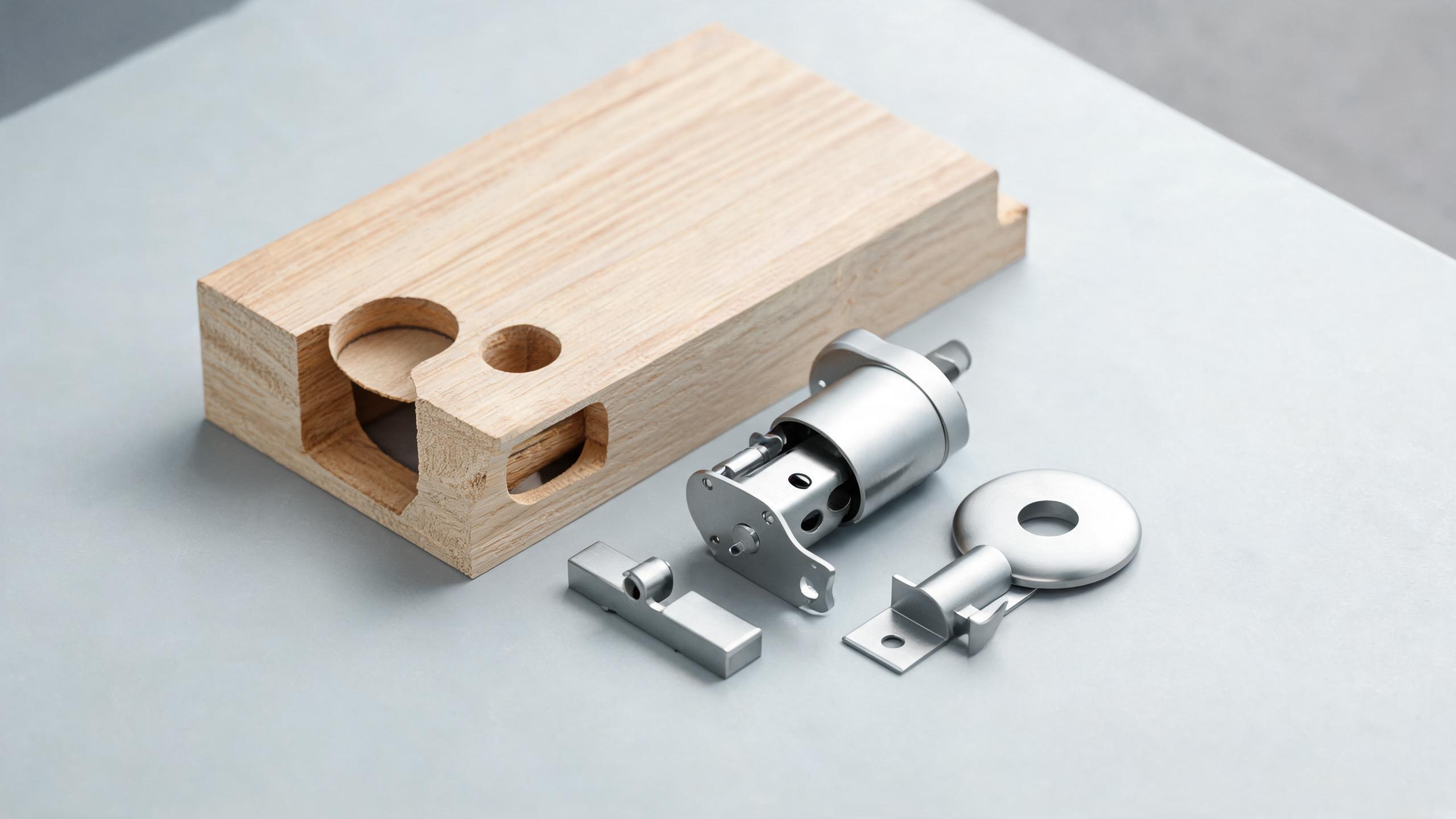
A156.2 covers bored and preassembled knob and lever locks. If a door has a 2-1/8 inch cross-bore, this is the document that grades the lock that fits it.
ANSI/BHMA A156.2, American National Standard for Bored and Preassembled Locks and Latches, is the most commonly encountered lock standard in the North American market. It applies to the knob and lever locks installed into a cross-bored hole — the familiar 2-1/8 inch (54 mm) face bore with a 1 inch edge bore — on doors prepared for cylindrical or tubular latches at 60 mm (2-3/8 inch) or 70 mm (2-3/4 inch) backsets. The standard defines three grades and the operational, cycle, torque, tension, pull, impact, key and finish tests behind them, commonly summarized as 800,000 operations for Grade 1, 400,000 for Grade 2 and 200,000 for Grade 3, with the certified report stating the exact requirement applied. It also organizes lock functions — entry, storeroom, classroom, privacy, passage and others. Smart cylindrical locks retain this proven prep and add keypads, cards or mobile opening; this page explains how to specify them and verify the certificate.
ANSI A156.2 at a glance
| Scope | Bored (cylindrical and tubular) and preassembled knob and lever locks and latches for doors, including their mechanical and operational requirements. |
| Typical prep | A 2-1/8 inch (54 mm) cross-bore, a 1 inch edge bore, and latches adjustable between 60 and 70 mm backsets on most models. |
| Grades | Grade 1 heavy commercial, Grade 2 light commercial and upgraded residential, Grade 3 basic residential, each with its own test limits. |
| Endurance | Cycle requirements are commonly cited as 800,000 operations at Grade 1, 400,000 at Grade 2 and 200,000 at Grade 3; the certified report is authoritative. |
| Functions | Entry, storeroom, classroom, privacy, passage and similar functions define whether the outside knob can be locked and how staff override it. |
| Tests | Operating effort, latchbolt load, knob and lever torque, tension, pull, deadbolt torque where applicable, impact, key strength, cycles and finish. |
| Evidence | A BHMA certificate naming the exact SKU, the A156.2 standard and its grade, backed by a public listing entry and the laboratory report. |
Answer unit
How is an A156.2 lock actually tested?
A single finished lock runs through a sequence that simulates years of use: millions of motions are not required, but torque, pull and impact peaks are high, and the lock must keep operating within limits.
| Test family | What it measures | What failure looks like |
|---|---|---|
| Operational test | Torque and effort needed to retract the latch and operate the knob or lever. | Sticky operation or forces above the grade limit at any point. |
| Cycle test | Repeated latch and knob operations through the grade requirement. | Wear, slack or malfunction before the required count. |
| Strength and torque | Lever and knob pull, rotational torque and tension applied to the trim. | Deformation that releases the latch or disables the lock. |
| Impact | Controlled blows to the trim and knob area. | Cracking, separation or unintended release. |
| Credential and key | Mechanical key torque and, on smart versions, access behavior under the electrical regime. | Key breakage in-tolerance loss or electronic lock-up. |
| Finish | Appearance and corrosion performance evaluated under A156.18. | Corrosion or finish degradation beyond the listed code. |
Markets, products and evidence
A156.2 locks appear on most light-commercial and residential door preps. The function letter and grade determine behavior more than the appearance of the trim, so specify both when selecting a smart cylindrical lock.
| Opening | Typical door | Lock approach |
|---|---|---|
| Office tenant doors | Grade 1 or 2 entry or storeroom function | Storeroom keeps outside locked always; entry adds a thumbturn model. |
| Hotel guest rooms | Grade 1 cylindrical where mortise is not used | Confirm the electronic escutcheon pairs with the certified chassis. |
| Apartment units | Grade 2 entry function as the common baseline | Check backset and door thickness range before ordering. |
| Classrooms and clinics | Classroom function: outside unlocked by key, then left open or locked | Lets staff set free-access hours without tools. |
| Privacy interiors | Privacy function with emergency release | No keyed entry on the outside, only an emergency tool slot. |
| Retrofit residences | Reuse of an existing standard cross-bore | A smart cylindrical lock swaps in without new door machining. |
Documentation pack for an A156.2 smart lock order
The documentation below is provided for named cylindrical smart lock SKUs per quotation. It ties the certified mechanical chassis, the electronic escutcheon and the sales code together so tenders can be checked line by line.
| Component | Typical logic | Notes |
|---|---|---|
| A156.2 certificate | Grade and scope certified for the exact bored-lock chassis. | Verify the SKU matches the quotation code. |
| Test report | Cycle, torque, pull, impact and finish data behind the grade. | Attach to architect or facility submittals. |
| Function sheet | Names the function (entry, storeroom, classroom, privacy). | Confirms staff override and lockdown behavior. |
| Prep and backset drawing | Cross-bore, edge bore, thickness and backset range. | Lets the installer confirm doors without re-cutting. |
| SKU mapping letter | Links sales name, certified chassis and electronic trim. | Prevents substitutions after specification. |
From door prep to certified lock in five steps
- Confirm the prepPhotograph the cross-bore, edge bore, backset and door thickness for each opening.
- Choose function and gradeSelect entry, storeroom, classroom or privacy function and the grade each door duty requires.
- Collect the certificateWe send the A156.2 certificate and report for the named SKUs with the quotation.
- Confirm before orderWe return written fit and function confirmation before any deposit is taken.
- Install and fileExisting bores are reused; the certificate and mapping letter enter the project file.
Related standards
Related standards and door types
Buyer questions about ANSI A156.2
Does an A156.2 smart lock still use the standard 2-1/8 inch cross-bore?
Yes, that is the point of the standard: certified bored locks are built for the conventional North American prep of a 2-1/8 inch (about 54 mm) cross-bore, a 1 inch edge bore and a latch at 60 or 70 mm backset. Most smart cylindrical locks replace an existing knob or lever without any new machining; the escutcheon may be slightly larger, so rose diameter and stile width should still be checked. Backset adjustment and supported door thickness are listed on the model spec sheet and confirmed in writing per door schedule.
What is the difference between entry, storeroom and classroom functions?
Function describes locking behavior. Entry function locks the outside knob while the inside stays free, with a key (or credential) from outside and a thumbturn inside. Storeroom function keeps the outside locked at all times — no thumbturn to leave it accidentally open — which suits storage, pharmacies and back doors. Classroom function lets staff lock or unlock the outside trim with a key and then remove the key, leaving the door in free-run or locked mode for the day. Privacy and passage functions serve interiors. The function is ordered explicitly; it is not changed reliably in the field.
Are the cycle numbers exactly 800,000, 400,000 and 200,000?
Those are the figures most often cited for the three grades in current A156.2 practice, but the authoritative requirement is the edition of the standard cited on the certificate for the exact SKU, and laboratories test to the defined sequence rather than a single headline number. Procurement should quote the standard, the grade and the certificate rather than relying on a cycle count repeated online. If a project needs a documented count — for example a transit or education tender — request the laboratory report, which states the method and result.
Can an electronic keypad version carry the same grade as the mechanical lock?
The grade applies to the tested assembly. When an electronic escutcheon is fitted to a certified A156.2 chassis, the certificate must name that configuration, and electrified behavior may additionally be evaluated under A156.25. A certificate for a bare mechanical chassis does not automatically certify the complete smart lock with its reader, tailpiece and clutch. Ask the supplier to show the listing entry that includes the electronic model code, not only the base chassis, before accepting the grade into a specification.
Why choose A156.2 cylindrical over an A156.13 mortise lock?
Cylindrical locks install into a simple cross-bore, cost less, retrofit quickly and meet the vast majority of light-commercial and residential duties at Grade 2 or Grade 1. Mortise locks spread load into the door stile, reach the highest commercial duty and offer richer functions, but require a mortise pocket and a larger budget. High-abuse corridors, luxury hotels and institutional buildings trend mortise; tenant improvements, apartments, retail back rooms and retrofits trend A156.2. We confirm the choice per opening and provide the matching evidence either way.
Request the A156.2 certificate for a quoted model
Share your door prep and function requirements. We supply the A156.2 grade certificate, test report and SKU mapping for each named cylindrical smart lock with the quotation.
Request Spec Sheet + QuoteCertifications overviewLast updated: October 31, 2026 · Reviewed by the Smart Lock Factory editorial team