
Standards
ANSI/BHMA A156.13: why serious commercial doors build around a mortise body
A156.13 grades mortise lock bodies and their trim. It is the standard behind hotel, institutional and premium commercial door schedules, with function numbers architects quote directly.
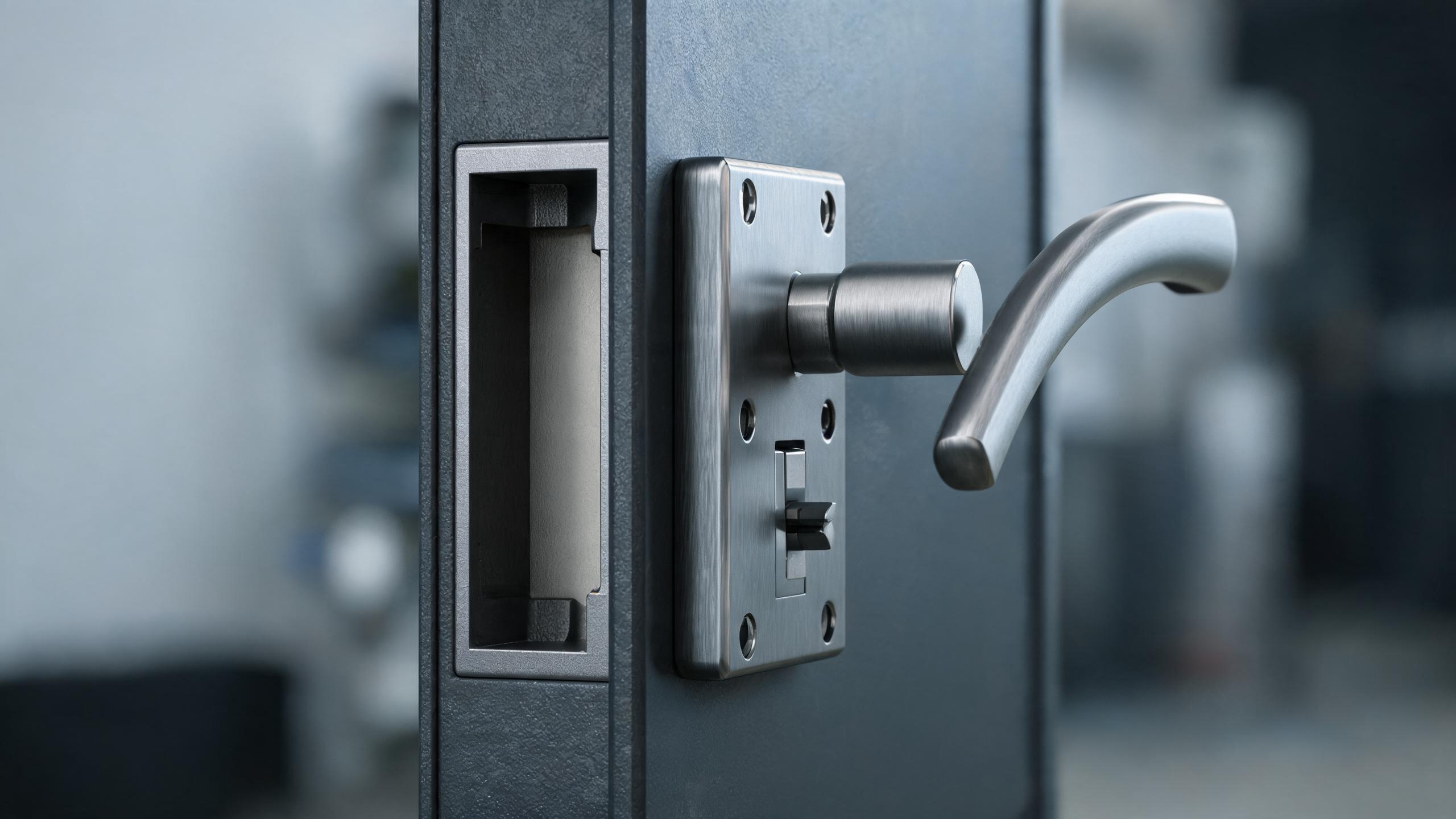
ANSI/BHMA A156.13 covers mortise locks and mortise lock trim: the rectangular lock bodies installed in a pocket cut into the door edge, with knob or lever trim and auxiliary latches on the face. Because the body spreads load deep into the stile rather than concentrating it on two through-bolts, mortise locks reach the highest commercial duty levels — Grade 1 endurance runs to 1,000,000 operations in this family — and offer the richest function list in the industry, identified by standard numbers such as F04 entry, F09 apartment and F20 storeroom. A156.13 grades lock bodies and trim, with cylinders commonly addressed under separate standards, and it evaluates operational effort, cycles, strength, security loading and finish. Mortise prep, handing and strike dimensions must be coordinated before doors are hung. This guide explains the standard, its functions and the evidence our factory provides for named smart mortise SKUs per quotation.
ANSI A156.13 at a glance
| Scope | Mortise lock bodies for installation in an edge pocket, plus their knob or lever trim and associated latch functions. |
| Duty level | The premium commercial choice: Grade 1 endurance in this family reaches 1,000,000 operations with the highest strength margins. |
| Functions | Standardized function numbers such as F04 entry, F09 apartment and F20 storeroom define latch, deadbolt and outside-trim behavior. |
| Components | The lock body, the trim (levers or knobs) and the cylinder may be covered by separate certificates and should be verified as an assembly. |
| Prep | A dimensioned mortise pocket, faceplate and strike cut into a sufficiently wide stile; handing is confirmed before order because many parts are handed. |
| Tests | Operational effort, cycles, torque, pull, deadbolt strength, security loading and finish, with limits set per grade. |
| Smart versions | Electronic escutcheons drive the same certified body; the listing must name the electrified or electronic configuration actually supplied. |
Answer unit
How do architects read an A156.13 function number?
The function number is the fastest way to communicate exactly how a door behaves. F04, F09 and F20 appear on most commercial schedules, each changing when the latch and deadbolt operate.
| Function | Typical behavior | Common opening |
|---|---|---|
| F04 entry/office | Outside trim unlocks by key or thumbturn action; deadbolt thrown inside. | General offices and commercial suites. |
| F09 apartment | Outside trim is locked by a stop button; inside handle always free for egress. | Apartments, condominiums and hotel-style rooms. |
| F20 storeroom | Outside always locked; key or credential required every entry; no bypass state. | Storage, pharmacies, IT and back-of-house rooms. |
| F22 privacy | Deadbolt locks outside trim; emergency release tool provided. | Washrooms, changing rooms and private offices. |
| Passage/privacy variants | Latch always free, or locked only from inside as configured. | Corridors and common rooms that must stay open. |
| Electrified functions | Fail-safe or fail-secure solenoid or latch retraction added to the body. | Access-controlled doors specified with A156.25. |
Markets, products and evidence
Mortise hardware is specified as an assembly — body, trim, cylinder, strike and door prep together. A certified body with mismatched trim or strike loses much of its intended value, so each element appears on the documentation.
| Opening | Typical door | Lock approach |
|---|---|---|
| Hotel guest-room doors | Grade 1 F04/F09-style body with electronic escutcheon | The listing must include the smart configuration and hotel function. |
| Class A office floors | Grade 1 entry or electrified mortise | Coordinate with access control and A156.25 evidence. |
| Institutional corridors | Grade 1 heavy-duty trim and fixed cores | High abuse and 20-year service expectations drive the spec. |
| Apartment unit doors | Grade 1 apartment function mortise | Confirm handing, backset and faceplate finish per unit. |
| Storerooms and pharmacies | F20 storeroom, always locked outside | Audit trail and key override specified together. |
| Narrow stile openings | Slender mortise body for reduced stile width | Verify pocket dimensions against the door engineering drawing. |
Documentation pack for an A156.13 smart mortise order
Mortise orders are documented as assemblies. For named SKUs we provide the pack below per quotation so the body, trim, electronic drive and strike can be verified against the door schedule.
| Component | Typical logic | Notes |
|---|---|---|
| A156.13 certificates | Grade certification for the lock body and for the trim where separately listed. | Confirm both cover the exact SKUs supplied. |
| Function confirmation | Written statement of the ordered function number per door. | Prevents F04/F09/F20 mix-ups across floors. |
| Prep and handing drawing | Pocket, faceplate, strike and handing dimensions. | Goes to the door manufacturer before leaves are machined. |
| Electrified addendum | A156.25 evidence when the body is solenoid or motor driven. | Names fail-safe or fail-secure mode and electrical data. |
| Assembly mapping letter | Body, trim, cylinder, reader and sales code on one page. | Gives architects a single submittal reference. |
Specifying mortise locks without rework
- Engineer the doorProvide stile width, thickness, material, handing and the pocket drawing the door factory will machine.
- Select function and gradeChoose the function number and Grade 1 trim level per opening duty.
- Validate the smart buildConfirm the electronic escutcheon and electrified options are listed on the certificate.
- Approve before machiningWe return a written fit and function confirmation; doors are then prepped and locks shipped to match.
- Install and hand overBodies are fitted, functions verified and the certificates filed with the O&M documents.
Related standards
Related standards and door types
Buyer questions about ANSI A156.13
Why do hotels and institutions standardize on mortise locks?
Two reasons: duty and function. A mortise body sits inside the door edge and spreads lever forces and attack loads into the full stile instead of two through-bolts, so Grade 1 bodies reach 1,000,000 operations with low wear. Hotels also rely on the precise function set — apartment and hotel functions that lock outside trim while keeping free egress inside, plus armored fronts, deadbolts and field-reversible handing. The total cost of ownership over a decade or two is typically lower on a 500-room property than repeated cylindrical replacements, even though the first cost is higher.
What do function codes like F04, F09 and F20 actually mean?
Each A156.13 function number describes one fixed combination of latch, deadbolt and outside-trim behavior. F04 entry or office function unlocks the outside trim and throws the deadbolt in the conventional office pattern. F09 apartment function locks outside trim via a stop button while the inside handle always provides free egress, which suits apartments and hotel rooms. F20 storeroom keeps the outside locked on every visit, with no thumbturn bypass, making it standard for storage and pharmacies. The code is ordered with the lock; converting functions in the field is usually not supported.
Is the cylinder certified under A156.13 as well?
Not automatically. A156.13 certifies the mortise body and trim; key cylinders are evaluated under their own standards, and high-security cylinders add A156.30 or a vendor-specific certification program. On smart mortise locks the electronic escutcheon may replace the outside cylinder while a mechanical override cylinder remains inside or below. The submittal should show the body certificate, trim certificate where separate, and the cylinder or override evidence as distinct documents rather than one implied approval.
Can a mortise lock be retrofitted to an existing cylindrical door?
Technically a mortise pocket can be cut into an existing solid door, but it is a skilled job and often uneconomic: the stile must be wide enough, the faceplate and strike differ, handing must be right, and on fire-labeled doors any field modification can void the listing. Retrofits usually stay with A156.2 cylindrical smart locks, while mortise is selected when doors are manufactured or replaced, so the pocket is machined at the factory. We review door photos and drawings and confirm in writing whether retrofit is advisable per opening.
How is handing determined for a mortise order?
Handing describes the side the hinges sit on and the swing direction, expressed as left-hand, right-hand, left-hand reverse or right-hand reverse from the secure side with the door closed. Latches, bevels, lever orientation, escutcheons and sometimes the bolt direction are ordered to hand, even on field-reversible bodies. We provide a one-page handing form: photographs from outside and inside with the door open at 90 degrees are enough for our team to confirm. Wrong handing is one of the few mortise errors that cannot always be repaired on site, so it is checked before deposit.
Need A156.13 evidence for a project door schedule?
Send door drawings, handing and required functions. We confirm fit in writing and supply the body and trim certificates, prep drawing and assembly mapping for every quoted SKU.
Request Spec Sheet + QuoteCertifications overviewLast updated: October 31, 2026 · Reviewed by the Smart Lock Factory editorial team