
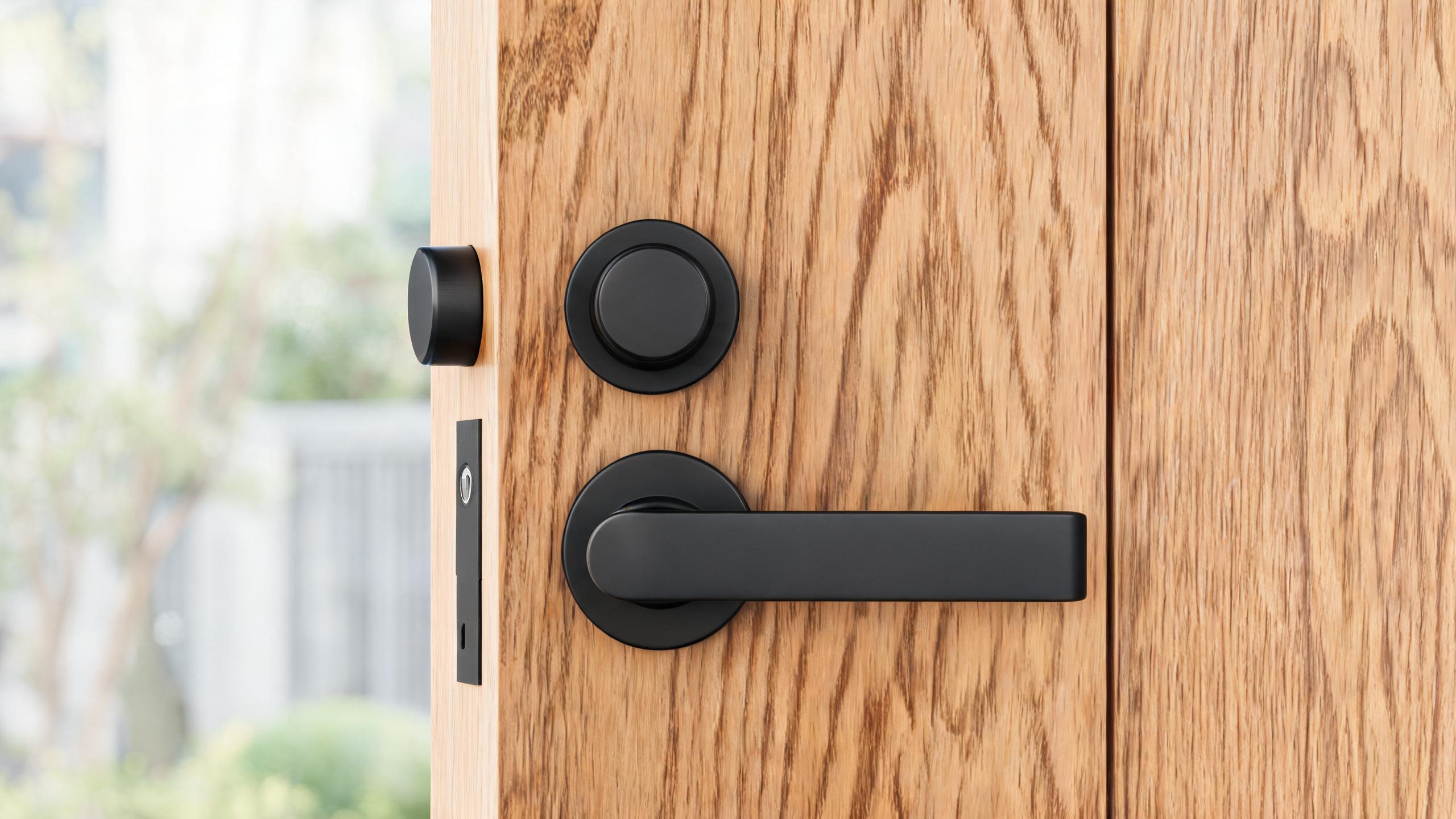
Door types
Cylindrical smart locks: the fastest retrofit on a bored door
Where the door carries the standard cross-bore and latch edge bore, cylindrical smart locks install quickly without a mortise pocket.
Cylindrical locks — also called bored locks — mount through a large cross-bore in the door face and a smaller latch bore in the edge, the standard preparation on millions of residential and light commercial doors worldwide, described in North America around ANSI A156.2 dimensions. A smart cylindrical lock or smart deadbolt replaces the old unit in those same holes, usually within minutes per door, with no routing and no strike change when backset matches. This guide covers backset and thickness limits, grade expectations, the differences from mortise hardware, and how cylindrical smart locks are scheduled across multi-door projects.
Cylindrical fit at a glance
| Bored prep | Standard cross-bore plus edge latch bore; no mortise pocket required for installation. |
| Backset | 60 mm (2-3/8″) or 70 mm (2-3/4″) adjustable latches cover most doors; the frame strike must align. |
| Thickness range | Standard bodies cover roughly 35–50 mm doors; thicker entrance doors need extended parts. |
| ANSI A156.2 | Series 4000 light, Series 5000 entry and Series 7000/8000 heavy-duty grades describe cylindrical lock levels. |
| Smart deadbolt pairing | A smart deadbolt can sit above a mechanical or smart lever using the same bored prep logic. |
| Limits | Extremely high-abuse institutional openings are normally specified with mortise hardware instead. |
| Verification | Backset, thickness and handed-free latch type are checked per door in mixed housing stock. |
Answer unit
Smart lever, smart deadbolt, or both on a bored door?
Lever units handle passage and entry; deadbolts add the security throw. Retrofits often add a smart deadbolt above an existing mechanical lever.
| Configuration | Occupies | Typical use |
|---|---|---|
| Smart lever only | One cross-bore | Offices, utility rooms, interior access |
| Smart deadbolt only | Cross-bore above a grip | Residential front door retrofits |
| Lever + deadbolt | Two preps vertically | High-residential-security entrances |
| Smart interconnected set | Linked lever and deadbolt | Properties wanting one-action egress of both |
| Keypad deadbolt + mechanical grip | Existing handle retained | Budget-friendly rental upgrade |
| Cylindrical on exterior gate | Weather-rated series | Only with IP-rated exterior hardware |
Door types and lock-body match
Door prep reuse is the strength of cylindrical: selecting a model with the same backset avoids enlarging the cross-bore or moving the strike.
| Opening | Typical door | Lock approach |
|---|---|---|
| Residential entrance | Solid wood bored front door | Smart deadbolt or lever-deadbolt set |
| Rental unit door | Mixed-age timber doors | Adjustable-backset smart deadbolt, reversible handing |
| Light office door | Hollow metal or timber, standard prep | Smart lever with reader, Grade 2 or Grade 1 |
| Utility / storage room | Steel or timber service door | Keypad cylindrical lock, audit optional |
| Apartment common room | Fire-rated hollow metal where listed | Listed cylindrical lock matching the schedule |
| High-abuse corridor | Institutional traffic | Mortise hardware instead of cylindrical |
Example BOM shape for cylindrical smart lock rollouts
This example illustrates a typical configuration, not a specific customer project. Backset mix drives the latch list.
| Component | Typical logic | Notes |
|---|---|---|
| Smart cylindrical locks | Levers and deadbolts for standard bored preps | Series/grade chosen per opening abuse level |
| Adjustable latches | 60/70 mm backsets with matched strikes | Door thickness adapters included |
| Interconnected sets | One-action egress lever-plus-deadbolt sets | Specified where code or policy requires |
| Cylinders and keys | Mechanical override keyed to project logic | Restricted keyway available for master systems |
| Sample lot | One per door age/type in mixed stock | Fitted before development-wide release |
How a cylindrical smart lock project is validated
- Survey prepsRecord cross-bore presence, backset and thickness across the door list.
- Classify abuseSeparate residential, light office and high-abuse openings for grade choice.
- Choose configurationSelect lever, deadbolt or interconnected set per security and egress policy.
- Sample-fit doorsInstall one per door type, checking latch alignment and strike.
- Roll out quicklyReused preps allow fast multi-door installation with standard tools.
Related door types
Related cylindrical and deadbolt guides
Cylindrical doors: common questions
What is a cylindrical lock and why is it the easiest smart retrofit?
A cylindrical (bored) lock is the familiar knob- or lever-and-latch unit installed through a large cross-bore in the door face with a spring latch in the edge bore — the preparation used on the majority of residential doors and many light commercial ones. Because the holes already exist, a smart cylindrical lock or smart deadbolt replaces the old hardware using the same bore and often the same strike, with a latch adjusted between the common 60 and 70 mm backsets. There is no mortise pocket to rout and no frame work when dimensions match, which is why multi-door rental and office rollouts favor this body class for speed and reversibility.
What do ANSI A156.2 series numbers mean for cylindrical locks?
ANSI/BHMA A156.2 groups bored locks into duty series: light-duty Series 4000, standard entry Series 5000, and heavier Series 7000/8000-type products, tested for cycles, torque and related performance within the standard. Separately, the BHMA certification grade (1, 2 or 3) summarizes security and durability for the certified assembly. Buyers should ask for the grade certificate for the exact SKU rather than assuming all “commercial” cylindrical locks are Grade 1. We map door abuse levels to series and grade during scheduling: meeting rooms differ from exterior service doors, and one family is not optimal across both.
Can a cylindrical smart lock fit very thick or very thin doors?
Most smart cylindrical bodies cover approximately 35–50 mm door thickness with adjustable mounting posts and tail pieces; thin 33 mm veneer doors can bottom out posts, while 55 mm+ hardwood or gate doors need extended spindle and bolt kits. The adjustable latch handles the standard 60 and 70 mm backsets, but non-standard 89 mm (3-1/2″) backsets on some older doors require a specific latch. The radius or square corner faceplate and drive-in versus mortise latch option are also confirmed from the edge prep. These details are why mixed-age housing developments are sample-fitted door type by door type.
Are cylindrical locks secure enough for an exterior door?
Yes within their designed grade. Grade 1 cylindrical locks and smart deadbolts with solid bolts, reinforced strikes and anti-pick cylinders are routinely used on residential and light commercial exterior doors, and the strike reinforcement matters as much as the lock — a box strike with long screws into the framing turns a common weak point into a strong one. Cylindrical hardware is not the preferred answer for maximum-abuse institutional or heavily attacked openings, where mortise or dedicated security-door schedules are used. Fire-rated exterior and stair doors need listed cylindrical assemblies, and weather exposure demands an IP-rated exterior series rather than an interior model.
Should rental owners choose a smart lever or a smart deadbolt?
It depends on the door and policy. A smart deadbolt above the existing mechanical handle is the cheapest reversible upgrade and preserves familiar grip operation, while a smart lever adds credential control to the latch itself and suits doors where deadbolts are unwanted or impractical; interconnected sets retract both with one action for fast egress. Turnover speed favors battery deadbolts with codes that lapse at lease end; common areas favor card or mobile readers that integrate with the building platform. We recommend one sample on a representative apartment door, checking backset, strike and door swing, before committing the whole stock. MOQ and warranty terms follow in the written quotation.
Map cylindrical smart locks to your bored doors
Send backset mix, thickness and door types — receive a model and grade list with sample, MOQ and lead-time terms.
Discuss your project (RFQ)Project configurationsLast updated: October 31, 2026 · Reviewed by the Smart Lock Factory editorial team