
Comparisons
Smart locks for outdoor gates and exposed doors
Outdoor openings punish consumer hardware: driving rain, dust, freezing spray, UV and gate flex. The realistic choices are weather-sealed keypad or RFID locks, motorized gate operators, and shielded hardwired readers rated for the envelope.
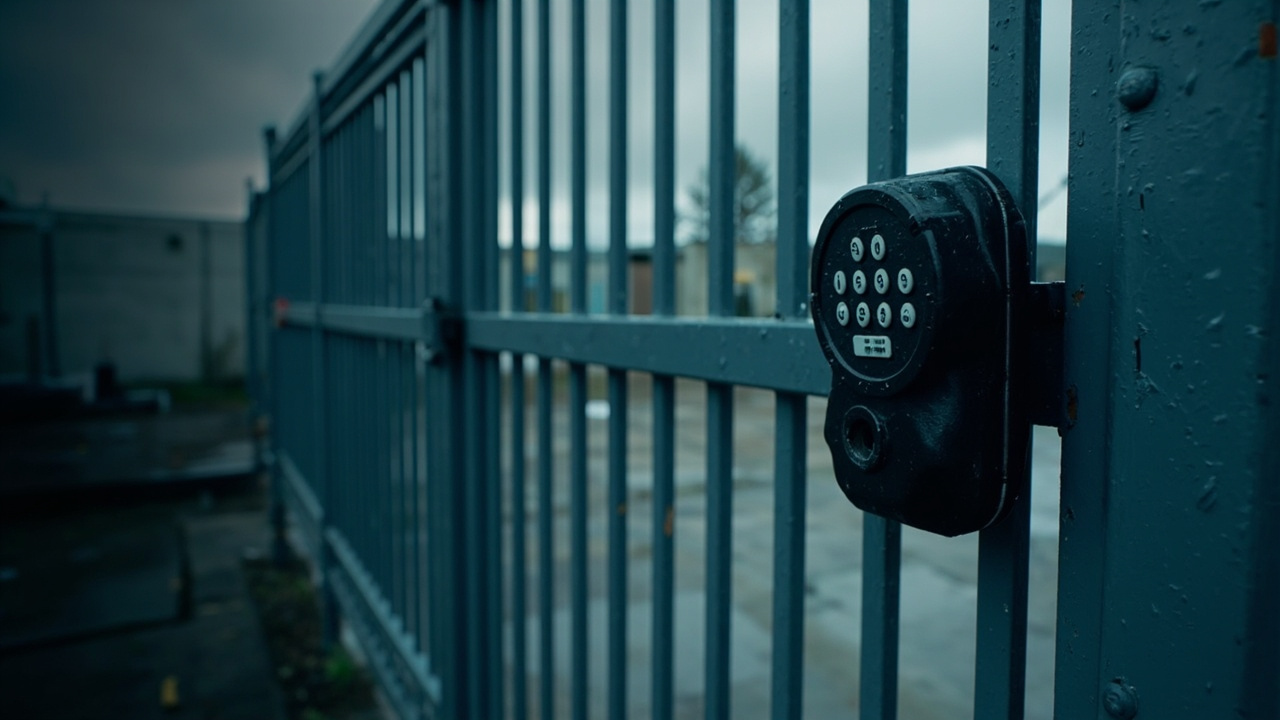
An outdoor lock is a different engineering problem from an entrance lock. Water runs over every seam, dust and salt enter gaps, sun ages plastics and keypads, metal gate frames flex and sag, and temperature extremes drain batteries and stiffen motors — often with no canopy at all. The first option is a purpose-sealed battery gate lock with a tactile keypad or RFID reader, a protective hood and a manual override, typical for construction sites, storage yards and residential perimeter gates. The second is to electrify the gate operator itself, with a card, keypad or intercom releasing a motorized sliding or swinging leaf on sites where the gate is already powered. The third is a hardwired metal reader and controller on protected hardware, used at telecom shelters, utilities and industrial compounds where audits and integration matter. The common spec language is the enclosure rating of the complete installed assembly (not just the PCB), impact rating, operating temperature range, drainage and a maintenance schedule. Tested IP/IK limits and temperature envelopes per model are confirmed in writing per quotation.
Outdoor options at a glance
| Sealed keypad locks | Battery gate locks with tactile codes, hoods and override for standalone sites. |
| Weatherized RFID locks | Tap locks for cards or tags where users already carry credentials. |
| Gate operator release | Electrified sliding or swing motors released by reader or intercom. |
| Hardwired readers | Metal readers and controllers for audited utility and industrial gates. |
| Envelope ratings | IP for water and dust, IK for impact, plus tested temperature range. |
| Installation realities | Drainage, hoods, gate sag and frame flex are part of the spec. |
| Our policy | We quote the complete-assembly envelope and maintenance plan, never indoor units outdoors. |
Answer unit
Which outdoor system fits the site?
Standalone yards take sealed battery locks, powered perimeter gates take operator release, and audited utilities and compounds take hardwired readers; canopy and exposure severity sharpen each choice.
| Outdoor site | Typical system | Reason |
|---|---|---|
| Construction site gate | Sealed keypad lock | Dated codes, no power, harsh transient use. |
| Self-storage perimeter | Keypad or operator release | Tenant codes and vehicle entry patterns. |
| Telecom shelter | Hardwired metal reader | Audit, integration and long service life. |
| Residential side gate | Sealed RFID or keypad lock | Battery operation under a rain hood. |
| Solar or wind farm | Hardwired industrial reader | Remote, exposed and audit-sensitive. |
| Gated community vehicle arm | Gate operator release | Motorized barrier with intercom logic. |
Side by side across real projects
The most common outdoor failure is quoting an indoor lock with an outdoor rating claimed from its circuit board. Rain finds the seam in the complete assembly, and the warranty usually follows.
| Decision factor | Battery sealed locks | Operator release or hardwired reader |
|---|---|---|
| Power source | Replaceable batteries, no site power. | Operator supply or wired controller. |
| Credential | Codes, cards or tags at the leaf. | Cards, intercom or long-range media. |
| Audit depth | Basic logs held on the lock. | Controller and operator event logs. |
| Abuse setting | Transient yards and residential gates. | Vehicle entrances and industrial sites. |
| Maintenance | Batteries, keypads, seals and hoods. | Wiring, surge protection and motor checks. |
| Integration | Standalone or light gateway sync. | Fire, intercom and controller systems. |
Outdoor specification checklist
Outdoor hardware should be specified against measured site conditions and a maintenance owner. Confirm the following before selecting models.
| Checkpoint | What to confirm | Why it matters |
|---|---|---|
| Complete-assembly rating | Tested IP and IK of the fitted lock, not the board alone. | Seams and cable glands set the real limit. |
| Temperature envelope | Lowest and highest expected temperatures at the gate. | Batteries and motors contract their range outdoors. |
| Exposure details | Direct rain, salt air, dust, UV and canopy cover. | Coastal and desert sites need special finishes. |
| Gate mechanics | Sag, flex and whether the leaf is powered. | Electronics cannot fix a misaligned gate. |
| Service access | Who changes batteries and how often. | Remote sites need deliberate service planning. |
Specifying outdoor access
- Survey the exposureRecord rain, temperature, salt, dust and canopy at the gate.
- Assess the leafMeasure gate type, sag, power availability and closing behavior.
- Choose the systemMatch sealed lock, operator release or hardwired reader to the site.
- Detail protectionAdd hoods, drainage, glands and finishes per the envelope.
- Weather-test a pilotRun hardware through the worst season before fleet rollout.
Related comparisons and guides
Related outdoor and enclosure guides
Buyer questions about outdoor smart gate locks
Can a normal smart lock be installed on an exterior gate?
Occasionally on a sheltered residential gate, but general outdoor gates should use hardware designed for the full assembly to be outdoors: sealed seams, drainage, UV-stable materials, tested water and dust limits and a tactile interface usable in gloves and rain. Indoor-rated smart locks placed outside tend to fail at the keypad membrane, the battery contacts and the motor within the first hard season, and their warranty rarely covers exposed installation. Gate frames add a second problem: welded steel and aluminum leaves flex and sag far more than building doors, so the lock and strike must tolerate movement and still present the bolt. The safe specification starts from the measured exposure and gate mechanics; our outdoor SKUs carry documented complete-assembly ratings and temperature envelopes, and we state plainly which indoor models must never be installed exposed.
What do IP and IK ratings mean for a gate lock?
IP ratings describe protection against solids and water — the first digit for dust, the second for water ingress — while IK rates mechanical impact resistance, and both should be read as tests of the complete installed product, including how cables enter and whether the rain hood is part of the listing. A high IP figure on a datasheet means little if the installer drills an unsealed cable hole, and the keypad window users press in gloves and ice is effectively its own impact surface. Buyers should ask for the exact tested configuration, not a generic label, and should pair the rating with drainage design and a maintenance owner; we provide the tested configuration, limits and mounting requirements for each outdoor SKU in writing rather than presenting IP digits as a substitute for site design.
Do outdoor keypad locks work in freezing rain and snow?
Purpose-built sealed keypads are designed to remain operable through cold and wet seasons: tactile buttons work with gloves where capacitive glass fails, heater elements are offered on selected models, and drainage prevents ice lockup inside the body, but every product has a documented temperature floor and snow accumulation still needs the interface kept accessible — a hood or shield is standard practice. Fingerprint readers are the weak point in freezing wet conditions and are usually specified as secondary outdoors. The pilot should deliberately cover the worst season at the actual site rather than trusting bench tests. We state the tested temperature range, heater availability and recommended shielding for each outdoor model in writing, and where a gate is fully exposed to ice we recommend keypad-primary designs with mechanical override.
How are outdoor gate locks powered?
Three patterns dominate. Sealed standalone gate locks run on replaceable batteries sized for the wake behavior, with cold weather shortening intervals and service planned around site visits. Gates that already have a motor operator usually power the access reader and release from the operator supply with backup battery or UPS for outages. Hardwired industrial readers at compounds and shelters run from a controller cabinet with surge protection, which matters for exposed wiring and lightning exposure. Solar is an option on remote sites but must be sized for the worst month, not the average. Every pattern needs a defined mechanical or emergency override for when power or batteries fail; power consumption, backup requirements and override procedures for each outdoor configuration are confirmed per quotation so the site never loses vehicle or pedestrian access silently.
How often do outdoor gate locks need maintenance?
More often than indoor locks, and the schedule should be explicit in the operating plan: inspecting seals and drainage, cleaning the keypad or reader window, checking hood and gland screws, testing batteries before the hard season, and watching strike alignment as the gate sags. Sites with salt air, dust or industrial grime shorten every interval and may need upgraded finishes and periodic gasket replacement. Buyers who treat outdoor locks as fit-and-forget pay for it in emergency call-outs; buyers who adopt the manufacturer’s service schedule typically see multi-year service life. We provide recommended inspection intervals, spare-part lists and finish guidance for each outdoor SKU and project envelope in writing, and we can recommend lock versions designed for the actual inspection cadence the site owner can commit to.
Specifying locks for an outdoor gate or compound?
Tell us the gate type, full exposure envelope, temperatures and power available. We recommend the sealed lock, operator release or hardwired reader, confirm complete-assembly IP/IK and temperature limits per SKU, and supply pilot hardware for worst-season testing.
Request Spec Sheet + QuoteComparison overviewLast updated: October 31, 2026 · Reviewed by the Smart Lock Factory editorial team