
Applications
Smart locks for telecom sites: technician windows on doors nobody guards
Shelter, cabinet and compound access for dispatched technicians, offline-first weatherproof hardware, multi-vendor credential sharing and service-interval planning for unmanned estates.
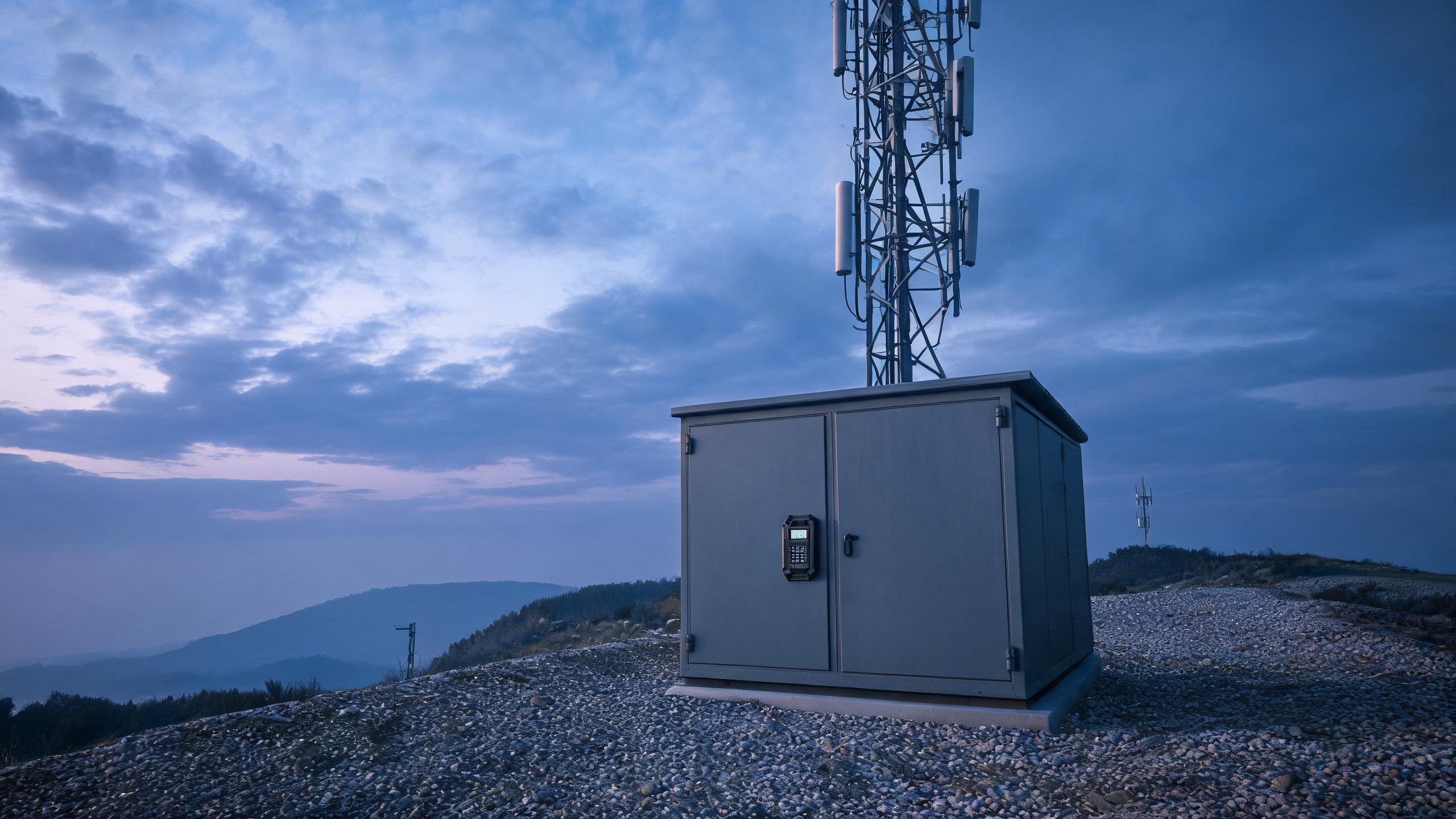
Telecom estates are defined by distance: hundreds or thousands of unmanned shelters, street cabinets, tower compounds and edge rooms spread across regions, visited briefly by technicians from operators, tower companies, equipment vendors and contractors. Access programs therefore optimize for accountability without connectivity: offline-capable locks accept dispatch-window credentials cached ahead of the visit, record who opened which cabinet, and survive years of weather with long service intervals. Shared sites — where several carriers or landlords use one compound — need credentials that separate tenants while letting an authorized technician reach the correct shelter, all coordinated through the named dispatch system in writing. The data center guide covers centralized critical facilities, the solar and wind page covers other distributed infrastructure, and outdoor-rated platforms cover shelter and compound doors.
Telecom access at a glance
| Unmanned estate | Sites are visited briefly and rarely staffed, so locks must operate and record without anyone watching |
| Offline first | Connectivity at shelters and street cabinets is unreliable; cached credentials and buffered events are the design basis |
| Dispatch windows | Technicians receive site-and-window credentials from the dispatch process, expiring after the visit |
| Multi-vendor sites | Operator, tower company and vendor access is separated on shared compounds without duplicating hardware blindly |
| Weather duty | Sealed, temperature-tolerant hardware with long battery service suits outdoor cabinets and rooftop housings |
| Key elimination | Removing master keys for whole regions reduces the risk that one lost key exposes an entire estate |
| BOM shape | Shelter and cabinet locks, compound gates, credential scope per vendor, service tooling and estate spares |
Answer unit
Regional master keys, or offline smart locks driven by dispatch windows?
Distributed estates move to dispatch-driven credentials; a single regional key is the risk that smart access exists to remove.
| Dimension | Regional master keys and padlocks | Dispatch-driven offline smart locks |
|---|---|---|
| Lost-key exposure | One key opens many sites region-wide | Credential scoped to one site and one visit window |
| Vendor visits | Key shared across companies | Each vendor organization holds its own expiring credentials |
| Visit records | Attendance inferred from paperwork | Shelter and cabinet events buffered and collected per site |
| Connectivity | N/A for mechanical keys | Offline-first; works identically with no network on site |
| Service model | Cylinder changes on loss | Battery rounds planned along existing maintenance routes |
| Typical fit | Tiny estates near offices | Tower networks, distributed cabinets, edge and utility sites |
Door types and lock-body match
Outdoor sealing and offline behavior dominate; indoor edge rooms follow standard controlled-door practice.
| Opening | Typical door | Lock approach |
|---|---|---|
| Equipment shelter | Sealed metal shelter in compound | Weatherproof offline lock with cached dispatch credentials and buffered events |
| Street cabinet | Curbside or pole-mounted metal cabinet | Tamper-resistant cabinet lock keyed to technician windows |
| Compound gate | Fence gate at tower or hut site | Gate credential separating the compound from shelter-level access |
| Generator / fuel cage | Mesh cage beside shelter | Narrow vendor windows for fuel and maintenance contractors |
| Rooftop / edge room | Building rooftop housing or riser room | Coordinated with building access; weatherproof hardware at the roof door |
| Internal equipment bay | Rack bay inside the shelter | Optional cabinet-level control where multi-tenant racks require it |
Example BOM shape for a regional site rollout
This example illustrates a typical configuration, not a specific customer project. Site count, cabinet mix and vendor model drive the list.
| Component | Typical logic | Notes |
|---|---|---|
| Shelter locks | One per unmanned shelter door | Offline cached credentials and multi-year outdoor duty |
| Cabinet and gate controls | Street cabinets, compound gates and fuel cages | Tamper-resistant hardware grouped by exposure level |
| Dispatch integration scope | Credential issuance from the named work-order platform | Field names and vendor model confirmed in writing |
| Service tooling | Battery service and event-collection equipment | Planned along existing regional maintenance routes |
| Estate spares | Shelter, cabinet and gate hardware in regional stock | Field swap by technicians without site downtime |
How a telecom access program rolls out
- Estate auditShelter and cabinet types, exposure, vendor-sharing model and dispatch platforms are catalogued across regions.
- Pilot regionA representative set of sites runs real dispatches, vendor visits, offline entry and event collection.
- Regional rolloutHardware deploys along maintenance routes with battery service folded into existing visit cycles.
- Vendor onboardingOperator, tower and contractor organizations receive separated credential policies and dispatch links.
- Assurance handoverField swap procedures, spare locations and audit reporting are documented for network operations.
Related applications
Related distributed-infrastructure pages
Smart locks for telecom sites: common questions
How do technicians open sites that have no internet connection?
Credentials are issued through the dispatch process before the visit and cached on the offline-capable lock, so a technician drives to a remote shelter with no network and the door still validates a credential scoped to that site and window; events buffer at the lock and are collected when the device is next serviced or reaches connectivity. This is the opposite of assuming a live cloud connection at a roadside cabinet. The dispatch integration passes site, vendor, technician and window fields as scoped in writing with the named work-order platform, and emergency break-fix outside planned windows follows a documented fast-authorization route that still records the opening.
How are multiple operators and vendors separated on shared sites?
Shared compounds model each organization as its own credential group: the tower company technician opens the compound, an operator’s technician reaches that operator’s shelter or rack bay, and a fuel vendor enters only the generator cage — all without handing out a compound master key. Credentials are issued through each organization’s own dispatch relationship and expire per visit. Where multi-tenant racks sit inside a shelter, cabinet-level locks add a second boundary. The vendor matrix is documented before rollout so every shared site has a written answer to who may open what, rather than discovering duplicated or inherited access during an outage investigation.
What hardware survives outdoor cabinets and rooftop housings?
Shelter doors and street cabinets take sealed, tamper-resistant hardware rated for the site’s actual temperature range, dust and moisture exposure, with battery service planned in years rather than months and materials chosen for UV and road-salt conditions where relevant; rooftop housings additionally coordinate with building roof-access rules. Hardware classes are matched to exposure — a curbside cabinet and a climate-controlled edge room should not receive identical specification. The estate audit groups sites by exposure so the rollout buys the tougher hardware only where it is needed, controlling cost without under-specifying the exposed fraction of the network.
What happens when a technician loses a credential device or leaves a vendor?
Loss of a phone or credential device no longer means rekeying shelters across a region: the credential is revoked centrally and the next cached update removes it, while the physical lock stays unchanged; when a vendor technician changes jobs, their site windows die with their dispatch identity rather than surviving in a shared key box. Mechanical override remains available through a documented chain for battery or device failure, and every override is recorded. This converts the worst-case security event from an estate-wide cylinder program into an administrative action, which is the core reason distributed-estate owners adopt the model.
How is a telecom estate BOM and MOQ scoped?
The BOM is built from the estate audit: shelter locks by type, cabinet and gate controls by exposure class, dispatch integration scope, service tooling and regional spare pools, with MOQ and lead time confirmed in writing per quotation. Programs typically pilot one region with all site types before national rollout, and volume accumulates when multi-site owners standardize one hardware class per exposure tier. Send the site inventory with shelter and cabinet types, exposure notes, the vendor-sharing matrix and dispatch platform names, and the quote is structured region by region for staged field deployment.
Accountability on doors an entire region once shared keys for
Send the typed site inventory, exposure notes and vendor matrix — receive a region-structured BOM with integration scope and written MOQ and lead-time terms.
Discuss your project (RFQ)Project configurationsLast updated: October 31, 2026 · Reviewed by the Smart Lock Factory editorial team