
Solutions
Temporary site access: full control for doors and gates that will not exist next month
Project-dated credentials for workers and visitors, portable offline-ready hardware, gate and zone control, and clean handover or removal at project end.
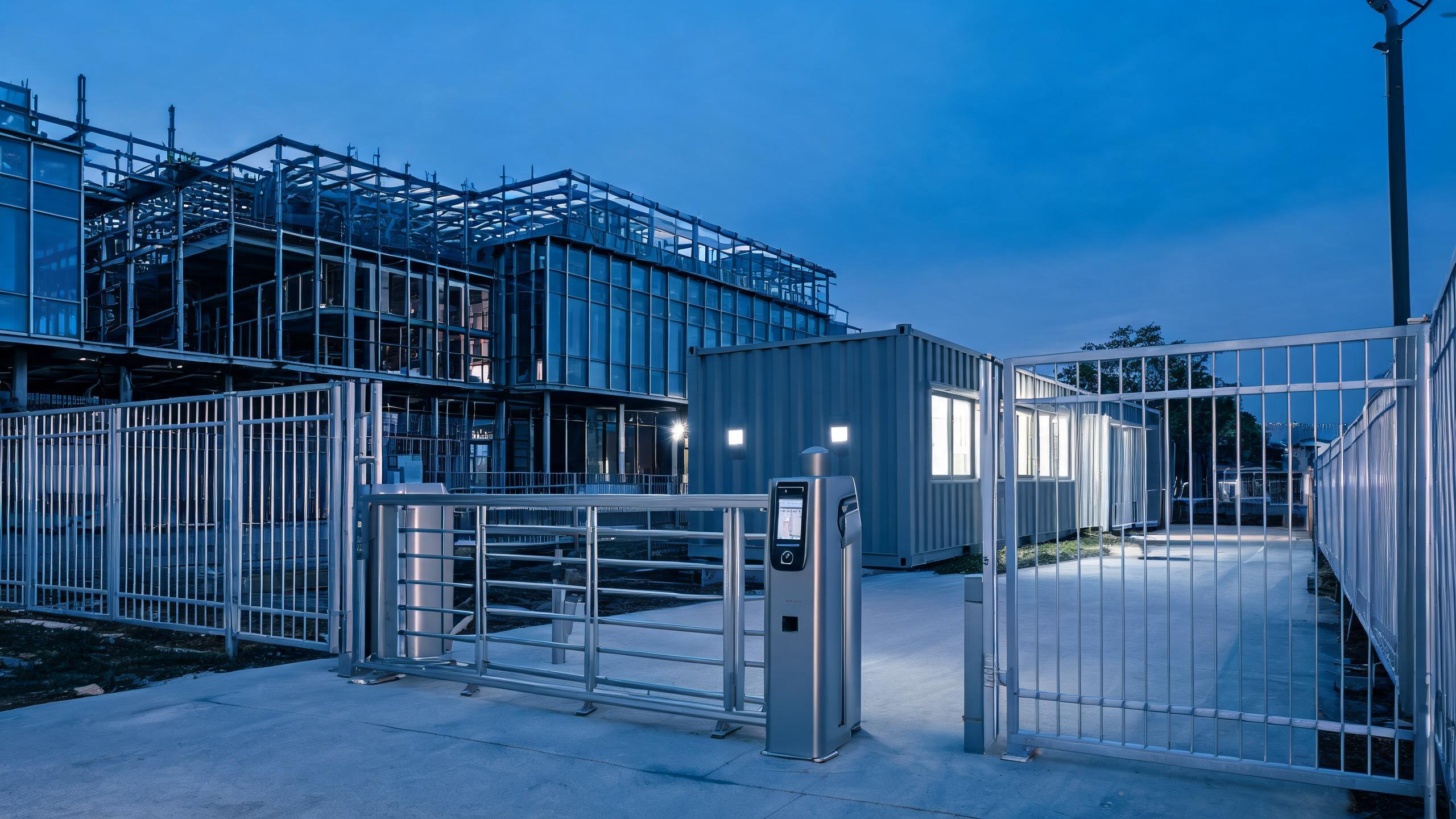
Construction projects, festivals, film sets, pop-ups and emergency installations need real access control for a short, changing life: a rotating workforce, a gate that moves as phases change, valuables delivered to an open site, and no permanent network or power to rely on. Temporary site access issues dated credentials tied to the project and the trade — valid from award date to the trade’s completion — plus visitor windows for deliveries and inspections, using portable, offline-rated gate and container hardware that records without infrastructure. When the phase ends, codes lapse and equipment is reconfigured for the next site or removed, leaving no orphaned shared codes. The construction guide covers building sites, the stadiums guide covers event access, and the offline solution covers the underlying resilience.
Temporary site access at a glance
| Project dating | Worker credentials run from award or induction date to the trade’s completion, then lapse |
| Trade zoning | Different trades open only their active zone and gate rather than the whole site |
| Visitors | Deliveries, inspectors and clients receive dated window codes for the sign-in point and destination |
| Portable hardware | Gate and container locks install without permanent wiring and record events offline |
| Phase changes | As the site evolves, gates and zones move and credentials follow the new layout |
| Project handover | At completion, access is withdrawn, hardware recovered or reconfigured, and records handed over |
| BOM shape | Portable gate and container locks, controllers, induction process and recovery plan |
Answer unit
Shared site codes and a gatekeeper, or project-dated portable access control?
Sites with many rotating trades and valuable materials use dated portable control; small short jobs may run a supervised gate with sign-in.
| Dimension | Shared code and gatekeeper | Project-dated portable access |
|---|---|---|
| Workforce | One code shared on site | Per-trade dated credentials from induction |
| After trade end | Code keeps working all project | Access lapses when the trade completes |
| Visitors | Verbally admitted at the gate | Dated window codes with destination |
| Infrastructure | Assumes power and signal exist | Offline-rated portable hardware |
| Phase moves | Fixed point bypassed as site grows | Gates and zones move with the works |
| Typical fit | Small short jobs | Construction, events, film and pop-ups |
Door types and lock-body match
The site gate and high-value containers are the permanent-on-a-temporary-site controls; phase zones move as work progresses.
| Opening | Typical door | Lock approach |
|---|---|---|
| Main site gate | Temporary vehicle and pedestrian gate | Worker credentials plus dated visitor and delivery windows |
| Phase zone | Internal gate between active work areas | Trade-scoped access that changes with the construction phase |
| Tool container | Shipping container or site store | Named or trade-group access with recorded entries |
| Site office | Portable site office or cabin | Management and visitor sign-in controls |
| High-value room | Plant, materials or commissioning room | Narrow credentials as fit-out progresses |
| Event perimeter | Festival or pop-up entrance point | Time-bounded crew and vendor credentials for event duration |
Example BOM shape for a project site
This example illustrates a typical configuration, not a specific customer project. Workforce size, duration and phases drive the list.
| Component | Typical logic | Notes |
|---|---|---|
| Portable gate controls | Battery or managed-power gate readers | Installed without permanent wiring, offline-capable |
| Container and zone locks | Tool-store and phase-zone hardware | Trade-scoped and repositionable as phases change |
| Induction process | Credential issuing tied to worker induction | Award-dated with automatic trade-completion lapse |
| Visitor windows | Delivery, inspector and client codes | Dated to sign-in and destination, expiring after the visit |
| Recovery plan | Removal or reconfiguration at handover | Records exported and all project credentials withdrawn |
How a temporary access program rolls out
- Site and phase planGates, zones, trade schedule, deliveries and duration are mapped against the project programme.
- MobilizationPortable hardware fits the initial gate, containers and office before workforce induction.
- Phase operationTrades receive dated credentials, gates move with phases, and visitors use window codes.
- Handover rehearsalCommissioning zones narrow as fit-out completes and life-safety routes are verified.
- DemobilizationAll credentials lapse, events are exported, and hardware is recovered or moved to the next site.
Related solutions
Related project and field-site pages
Temporary site access: common questions
How are workers controlled when the workforce changes every week?
Access is issued at induction against the project and the trade: each worker credential is dated from the start date to the planned completion of that trade and scoped to the active gate and zone, so an electrician who finished in week four cannot enter in week twelve and a new subcontractor cohort is onboarded without changing anyone else’s code. This replaces the single site-wide code that typically spreads through subcontractor group chats within days. Daily sign-in remains for attendance and safety briefings, but it no longer acts as the security boundary. The credential plan is built directly from the procurement programme and updated at each trade interface.
Can access control work with no permanent power or network on site?
Temporary sites use portable, battery or managed-power readers and locks that hold the credential schedule and buffer events on the device, so they operate from day one on a greenfield site with no infrastructure and continue through power and signal loss, the same resilience principles as permanent offline installations. Gate controllers are specified for outdoor weather and the physical conditions of a construction or event site, and battery service is aligned to site visits. Long-running projects add a gateway where power eventually becomes available. Hardware is chosen to be repositioned, because the gate that secures the groundworks phase is rarely where the entrance sits at fit-out.
How are deliveries, inspectors and clients admitted?
Visitors receive a dated code for the delivery or appointment window that opens the sign-in gate and the destination — a materials delivery reaches the laydown zone, a statutory inspector reaches the relevant area with an escort, and a client tour follows the safe visitor route — expiring after the visit rather than extending for the project. Recurring suppliers can hold scheduled windows matched to delivery slots. The site office manages issuing against the day’s expected arrivals. Separating visitor windows from worker credentials matters most on open sites, where an unescorted delivery driver with the main gate code can otherwise move anywhere.
What happens at handover between phases or at project end?
As fit-out progresses, zones narrow: commissioned rooms and the plant room move to tight credentials for testing and handover, while life-safety and evacuation routes are verified through every phase. At completion, every project credential is withdrawn, the event history is exported for the principal or client record, and portable hardware is either removed or reconfigured — re-cased, batteries serviced and enrolled for the next project — so the estate never accumulates active codes from finished jobs. For events, crew and vendor credentials lapse at teardown. The demobilization step is planned at mobilization, including who owns the recovered hardware and records.
How is a temporary-site BOM and MOQ scoped?
The BOM lists portable gate controls, container and zone locks, controllers and power method, the induction issuing process and the recovery plan, with MOQ and lead time confirmed in writing per quotation and project duration. Projects pilot the gate and one trade through induction, a delivery and a phase move before extending site-wide. Send the project duration, peak workforce, gate and zone plan and power availability, and the quote maps each line to portable, reusable hardware rather than permanent-door pricing.
Control the gate today and the next zone tomorrow
Send the project duration, peak workforce and gate-and-zone plan — receive a portable-hardware BOM with written MOQ and lead-time terms.
Discuss your project (RFQ)Project configurationsLast updated: October 31, 2026 · Reviewed by the Smart Lock Factory editorial team