
Comparisons
Smart locks for cabinets, drawers and lockers
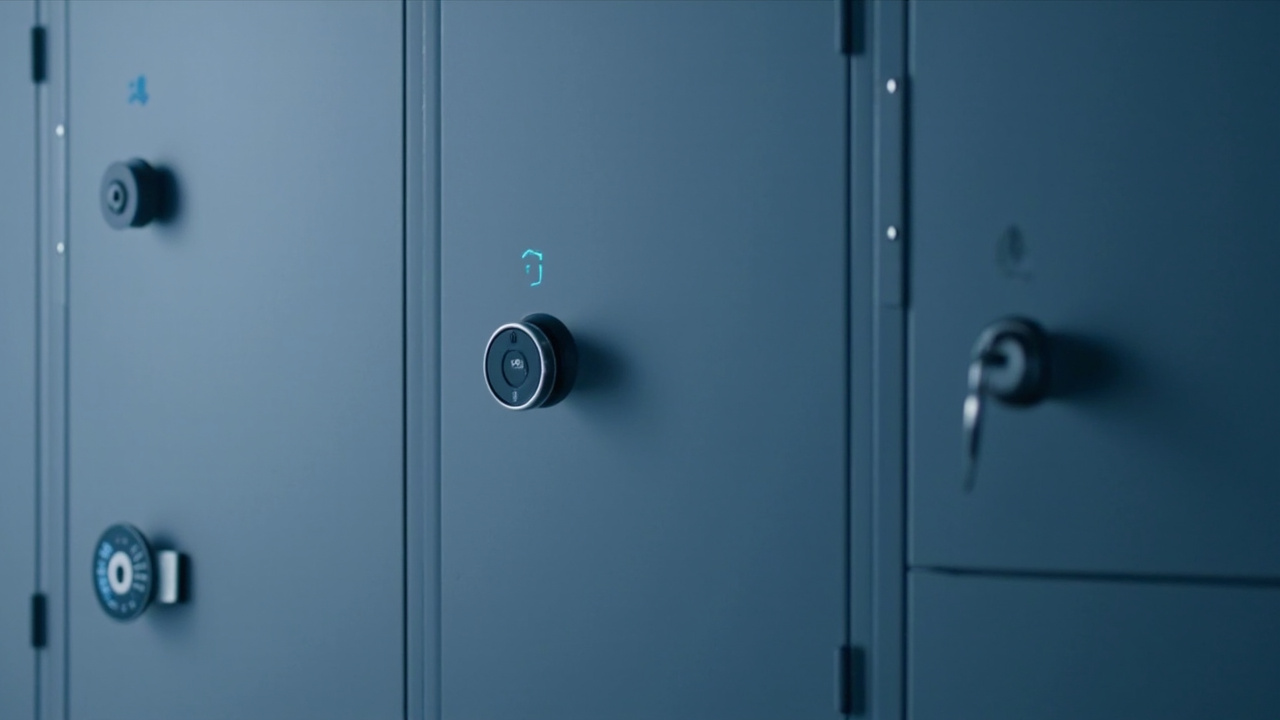
Cabinet locks trade door-size hardware for compact mechanisms on shared enclosures: RFID cam locks for tap-and-go fleets, keypad locks for code-based sharing, and networked locks for audited self-service lockers.
Cabinet and locker locks solve a different problem from entrance locks: the asset is small, the enclosure is thin sheet metal or wood, and sharing changes by the hour. The simplest smart upgrade is a battery RFID cam lock that replaces a standard cam cylinder and opens to enrolled cards, wristbands or tags — ideal for staff cabinets, warehouse bins and amenity cupboards where users already carry a credential. Keypad cabinet locks replace keys with user or dated codes and suit environments where cards are impractical, such as small self-storage rooms or maintenance enclosures. Networked locker locks add a controller, online or gateway management, audit and self-service assignment, which is what powers smart locker banks, gyms, university campuses and office parcel lockers; these systems plan battery routes carefully because lockers number in dozens or hundreds. Mechanical fit (cam length, tongue orientation, door thickness), credential media and whether locks must report events online drive the specification. Dimensions, cam options and fleet-management limits per model are confirmed in writing per quotation.
Cabinet lock types at a glance
| RFID cam locks | Replace a cam cylinder with a card or tag reader; simplest shared-cabinet upgrade. |
| Keypad cabinet locks | Open by user or dated codes; fit sites that do not want to issue media. |
| Networked locker locks | Connect to a locker platform for self-service assignment and audit. |
| Mechanical fit | Cam length, tongue and door thickness vary widely and must be matched. |
| Power reality | Batteries rule; large fleets need planned service routes for replacement. |
| Audit depth | Standalone locks show limited event history; networked locks report centrally. |
| Our policy | We match cam and tongue to the enclosure and confirm fleet limits per SKU. |
Answer unit
Which cabinet lock goes where?
RFID cam locks serve existing credential holders, keypads serve code-sharing without media, and networked locks serve self-service locker operations that assign and release doors remotely.
| Use case | Better lock type | Reason |
|---|---|---|
| Staff cabinets at work | RFID cam lock | Employees already carry an access card. |
| Gym locker bank | Networked locker lock | Self-service assignment by members. |
| Warehouse tool bins | RFID cam lock | Tap access with durable tags and no typing. |
| Self-storage rooms | Keypad or RFID lock | Tenants rotate without staff key cutting. |
| Office parcel lockers | Networked locker lock | Remote assignment and pickup audit. |
| Maintenance enclosures | Keypad cabinet lock | Dated codes for contractors, no media stock. |
Side by side across real projects
The mechanical interface decides more than the electronics: a cam lock with the wrong tongue or reach will not close flush, and fleets that ignore battery routes discover the problem hundreds of doors later.
| Decision factor | Standalone RFID or keypad lock | Networked locker lock |
|---|---|---|
| Credential | Card/tag tap or typed codes. | Platform-assigned card or phone. |
| Management | Enrollment or codes at lock or app. | Central self-service software. |
| Audit | Limited on-lock event history. | Full central reporting. |
| Install profile | Cam-cylinder replacement or screw fit. | Latch plus controller or gateway. |
| Best scale | Dozens of fixed or shared users. | Large dynamic locker banks. |
| Service focus | Batteries, enrollment and code hygiene. | Batteries across hundreds of locks. |
Cabinet lock checklist
Cabinet programs fail on fit details and fleet assumptions. Confirm the points below against the actual enclosure and operating model before volume orders.
| Checkpoint | What to confirm | Why it matters |
|---|---|---|
| Cam and tongue | Cam length, tongue style and hand of the enclosure. | Wrong hardware prevents clean latching. |
| Door thickness | Sheet metal or wood thickness at mounting. | Compact locks have narrow fit ranges. |
| Credential reuse | Whether existing door cards should open cabinets. | One-card programs need compatible RFID logic. |
| Fleet size | Number of locks and expected service access. | Battery routing becomes a labor line item. |
| Online needs | Whether remote assignment and audit are required. | Self-service lockers cannot run standalone. |
Specifying cabinet locks
- Measure the enclosureRecord thickness, cam geometry and latching direction.
- Choose credentialsDecide cards, codes or platform-managed media.
- Estimate sharingFixed users, dated sharing or hourly self-service.
- Plan battery serviceMap how staff will reach each lock for replacement.
- Pilot a bankTest the busiest locker row before full rollout.
Related comparisons and guides
Related locker and cabinet access guides
Buyer questions about smart cabinet and locker locks
Can the same staff cards open both doors and cabinet locks?
Usually yes when the cabinet locks read the same credential family as the entrance system, which is a common reason campuses and workplaces standardize on one RFID platform. One-card programs still require care: the cabinet lock must support the card frequency and read logic actually deployed (CSN-only versus sector-key systems, for example), and the locker platform must be allowed to consume the same ID rather than issuing parallel tags. Mixed-vendor projects sometimes end up with two card populations, which users hate and administrators spend hours reconciling. During design we list which of our cabinet SKUs are compatible with which reader logic and confirm whether the locker software maps to existing card IDs; compatibility per deployment is documented in writing rather than assumed from the word RFID alone.
How long do batteries last in networked locker locks?
Networked locker locks are designed for long battery intervals, but real life varies with how often the lock wakes, how it communicates (purely online versus event sync), the radio environment and even temperature, so published figures should be treated as planning ranges rather than guarantees. Professional operators do two things: configure low-power behavior and alarm thresholds centrally, and build a battery service route so a few hundred lockers never drain together after a busy season. Replacement should be a front-serviceable operation without emptying the locker. We publish the tested power behavior and low-battery alert logic of each locker platform and recommend configuration for the expected assignment frequency; service intervals and alert thresholds per SKU are confirmed per project quotation rather than promised from a single demo reading.
Are keypad cabinet locks secure enough for valuable equipment?
Keypad cabinet locks deter casual access and manage sharing well, but they inherit keypad trade-offs: codes can be observed, worn buttons hint at active digits, and compact cabinets often have thin doors that a determined attacker can defeat regardless of the lock. They are the right tool for maintenance cupboards and moderate-value shared storage with managed code hygiene; high-value tools, controlled substances, evidence or regulated assets usually justify RFID credential logging, mechanical reinforcement of the enclosure, or full networked audit. The asset risk, not the lock price, should set the tier. We help classify enclosures and confirm the audit depth and mechanical options of each cabinet SKU, and we state plainly where a cabinet lock alone is not the primary security control.
Do smart locker systems work without internet?
Quality locker platforms keep entry decisions working locally: a member with a valid assigned locker opens the door through the controller even when the WAN is down, and assignments sync when connectivity returns, much like door access control. What pauses offline is the cloud layer — new bookings, remote administration dashboards and customer-facing pickup messages — so the operator’s procedures should cover how new assignments are handled during an outage. Battery locker locks additionally ride out mains loss independently. Before purchasing, operators should demand the platform’s written offline matrix and test it on a pilot bank with the network deliberately disconnected; local-decision scope, sync behavior and outage administration for each locker platform are documented in writing rather than inferred from the online demo.
Can cabinet locks be retrofitted to existing lockers and mailboxes?
Often yes, because most smart cabinet products are designed as cam-cylinder replacements that reuse the existing mounting hole and swap only the cam and tongue to match the door. That said, retrofit success depends on the hole pattern, door thickness, available inner clearance for the battery body and the strike position on the frame; some old mailbox clusters or welded gym lockers need a small adapter or a revised tongue rather than the stock kit. The efficient approach is to sample the exact enclosures in question: send dimensions and photos (or sample doors), and we confirm fit before producing for the whole bank. Compatible cam kits, adapters and any required door modification for each cabinet lock SKU are listed per quotation, and pilot units are recommended before fleet-wide installation.
Specifying smart locks for cabinets or locker banks?
Share the enclosure dimensions, sharing model and existing card system with your RFQ. We match cam and tongue hardware, confirm credential compatibility and locker-platform limits, and supply pilot locks for a representative cabinet or locker row before volume production.
Request Spec Sheet + QuoteComparison overviewLast updated: October 31, 2026 · Reviewed by the Smart Lock Factory editorial team