
Comparisons
Battery versus hardwired: where does the power come from?
Battery locks install anywhere and ride out power loss, trading periodic battery service; hardwired locks gain continuous power and deep integration with strikes, fire and elevators, trading cabling, controllers and UPS design.
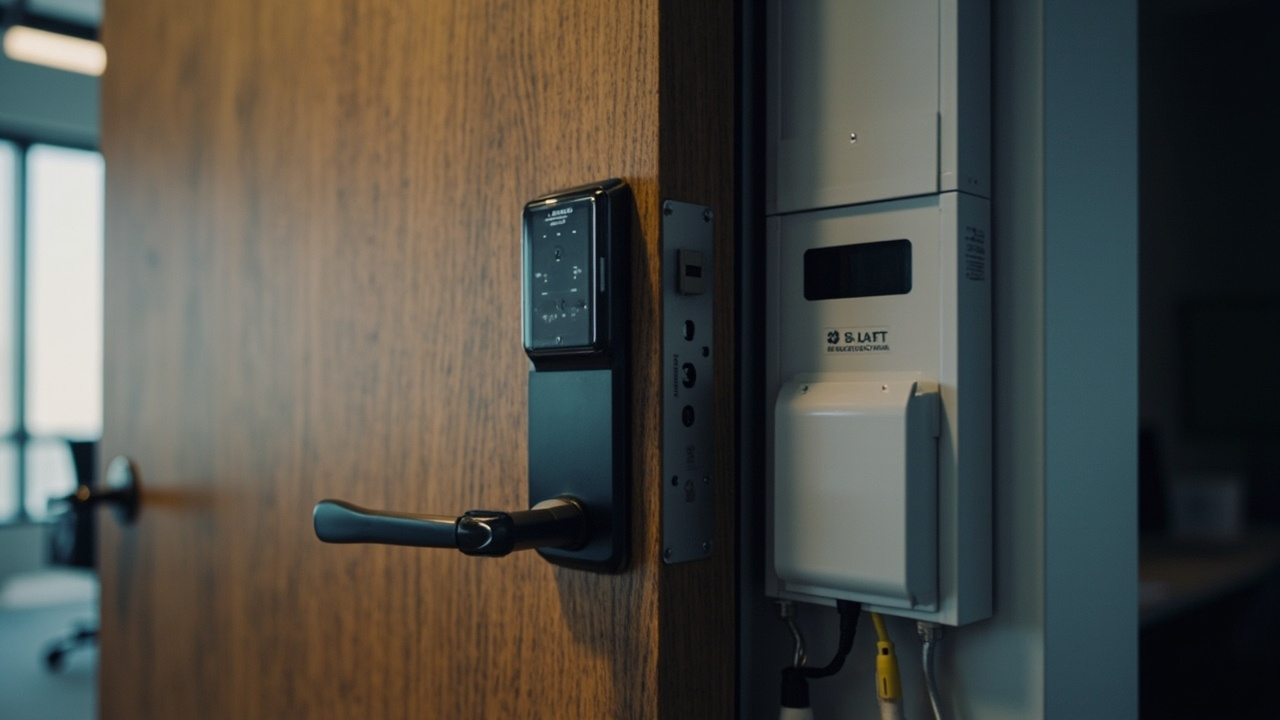
The power architecture of a smart lock shapes every other decision in an access project. Battery smart locks — whether Bluetooth, Wi-Fi or hub-based — need nothing but the door: installation avoids ceilings, frame cables and licensed electrical work, credentials verify locally even when mains power fails, and retrofits finish in hours. Their costs are a battery service routine, limits on motor force (heavy electric strikes are not practical to battery-power at the door) and feature choices that chase low energy. Hardwired locks and readers connect to a controller with stable power, which unlocks continuous online operation, stronger release devices, fire-alarm integration, elevator coordination, turnstiles and door monitoring — the architecture behind hotels, offices and institutional buildings, at the price of cabling infrastructure, controller cabinets, UPS planning and a larger project. Many buildings run hybrid: battery smart locks on rooms and interior offices, wired readers on the main entrance, elevators and life-safety doors. Power requirements, offline matrices and battery service logic per model are confirmed in writing per quotation.
Battery vs hardwired at a glance
| Installation | Battery locks need no cabling; hardwired doors need runs, controllers and trades. |
| Power reliability | Battery locks ride through mains loss; wired systems depend on UPS for the same. |
| Release force | Battery motors drive bolts; wired systems can drive strikes and maglocks. |
| Integration depth | Cloud fleet features versus fire, elevator and controller ecosystems. |
| Service work | Battery routes and replacements versus controller and UPS maintenance. |
| Project speed | Battery retrofits finish fast; wired builds follow electrical schedules. |
| Our policy | We design both patterns and commonly specify hybrid buildings door by door. |
Answer unit
Which power model fits the opening?
Individual rooms, retrofits and cable-free doors go battery; main entrances, high-security and life-safety openings, elevators and monitored doors go hardwired; most medium and large buildings combine both.
| Opening | Better power model | Reason |
|---|---|---|
| Retrofit apartment door | Battery smart lock | No cabling and fast installation. |
| Main lobby entrance | Hardwired reader | Strikes, monitoring and fire integration. |
| Hotel guest room | Battery lock typical | Proven fleet pattern with encoder systems. |
| Elevator lobby turnstile | Hardwired controller | Continuous logic and integration. |
| Remote site cabin | Battery smart lock | No reliable mains infrastructure. |
| Server room door | Hardwired with UPS | Monitoring and fail-safe duties. |
Side by side across real projects
Power is rarely a building-wide binary. The mature designs put batteries where cabling is expensive and wiring where integration and life-safety duties are non-negotiable, then manage both fleets deliberately.
| Decision factor | First option | Second option |
|---|---|---|
| Install cost | Low: labor and no electrical work. | Higher: cable, controllers and UPS. |
| Power outage | Keeps working for months on cells. | Controller UPS determines ride-through. |
| Online features | Depend on hub or radio power design. | Continuous by architecture. |
| Release devices | Integrated bolt motor only. | Strikes, maglocks, operators available. |
| Fire and elevators | Not the primary integration path. | Designed to integrate with both. |
| Lifecycle work | Battery replacement logistics. | Controller, power and cable maintenance. |
Power architecture checklist
Choose per opening from duties and infrastructure, then plan service for both models. The items below should be resolved at design stage.
| Checkpoint | What to confirm | Why it matters |
|---|---|---|
| Life-safety duties | Which doors must integrate with fire alarm logic. | Usually forces wired release hardware. |
| Cable feasibility | Ceiling, frame and historic constraints on runs. | Battery wins where wiring is prohibitive. |
| Outage expectations | Required entry behavior during mains loss. | Compare battery months with UPS windows. |
| Service ownership | Who replaces batteries and maintains UPS. | Both models need an explicit owner. |
| Monitoring needs | Door contacts, forced-door and tamper alarms. | Monitoring favors continuous power. |
Designing the power layout
- Classify openingsTag life-safety, monitored and plain access doors.
- Assess cable pathsSurvey ceilings, frames and electrical schedules.
- Define outage policyWrite required behavior during power loss.
- Assign power modelsBattery the rooms; wire the critical openings.
- Plan both fleetsSchedule battery routes and UPS maintenance together.
Related comparisons and guides
Related power and integration guides
Buyer questions about battery and hardwired smart locks
Do battery smart locks stop working when the building loses power?
No — that is one of their genuine advantages. A battery lock creates its own entry decision and motor power at the door, so mains outages in the building do not block credentials at all, and quality locks continue operating for months on their cells; the features that pause are the network-dependent ones, such as remote dashboards or remote unlock when they depend on a powered hub or router. Hardwired access systems instead rely on UPS or generator backup to keep controllers and readers alive, with ride-through time deliberately sized during design. Battery locks also need their own discipline: low-battery alerts and a service route before cells die. We publish tested battery behavior and the offline feature matrix for each battery SKU and the UPS assumptions for wired systems in writing, so buyers can compare real outage behavior rather than marketing claims.
Can battery locks power an electric strike or maglock?
Generally not directly, and this is the hard limit of the battery approach. Electric strikes and magnetic locks draw surge current far beyond a practical door-mounted battery envelope and belong on a controller power supply, which is why life-safety and entrance doors with strike release are wired. Battery products instead drive an integrated low-power bolt motor. A few hybrid assemblies combine a battery lock head with wired frame hardware, but the release device still takes wired power. Designs that need free-egress fail-safe release, door-position monitoring or elevator integration therefore default to the hardwired pattern from the start. We detail which release devices each product supports and supply the electrical load schedule per opening; the boundary between battery and wired hardware is documented per configuration rather than discovered on site.
How often do commercial battery smart locks need new batteries?
Commercial-grade battery locks are engineered for long service intervals, typically handled on a planned route rather than through emergency changes, but the real interval depends on daily cycles, radio behavior (pure offline versus frequent gateway sync), temperature and battery quality. Cold lobbies and exterior doors shorten life meaningfully. Mature operators standardize on one battery type, replace on fleet-wide schedules triggered by low-battery alerts rather than waiting for lockouts, and keep the change procedure tool-free for staff. The useful comparison between products is not the headline figure but alert lead time and whether the lock remains unlockable during the warning window. Tested consumption assumptions, alert behavior and recommended service pattern for each commercial SKU are stated per quotation, including how the lock behaves at each battery level.
Is hardwired access control more secure than battery smart locks?
Not automatically — credential security is decided by the verification design, key management and firmware in either architecture, and a well-built battery lock with local credential verification is not weaker because it lacks a cable. What hardwired architecture provides is not better cryptography but deeper system security: continuous monitoring, door contacts, forced-door alarms, tighter integration with fire and elevator systems and centralized policy that never waits on a battery schedule. High-risk, high-traffic and regulated openings therefore tend toward wired systems for operational rather than cryptographic reasons, while ordinary room doors are served completely by battery fleets. We recommend threat-modelling the opening rather than associating cables with safety; the security features, certifications and monitoring limits of both battery and wired SKUs are listed per model in writing so the choice follows the actual risks.
Can a building mix battery and wired locks under one management system?
Yes, and that is the standard mid-size and large-building design: wired readers and controllers on the main entrance, turnstiles, elevators and life-safety doors; battery smart locks on guest rooms, apartment units, offices and amenity rooms; one software layer issuing credentials and collecting audits from both populations. The integration points to verify are whether both hardware families genuinely share one credential and one audit console (some vendors market a fleet that actually splits into two tools), how offline events sync from battery locks, and how staff are trained on two service routines. We design these hybrid deployments around an opening schedule and document the shared-platform behavior, sync windows and training plan per project; sample architectures for hotels, multifamily and office buildings are available with the exact hardware families confirmed in writing.
Designing battery and hardwired access for a building?
Share the opening schedule, life-safety duties and cable constraints. We assign battery and wired hardware door by door, document power loads, outage behavior and service routines for each model, and supply samples plus a hybrid reference design for review.
Request Spec Sheet + QuoteComparison overviewLast updated: October 31, 2026 · Reviewed by the Smart Lock Factory editorial team