
OEM by lock type
OEM outdoor door locks: weather-sealed access for gates and exterior doors
Smart locks specified for real exposure — rain, dust, freezing nights and coastal salt air — with the per-SKU ingress and temperature ratings, battery planning and gate hardware fitment checked before production.
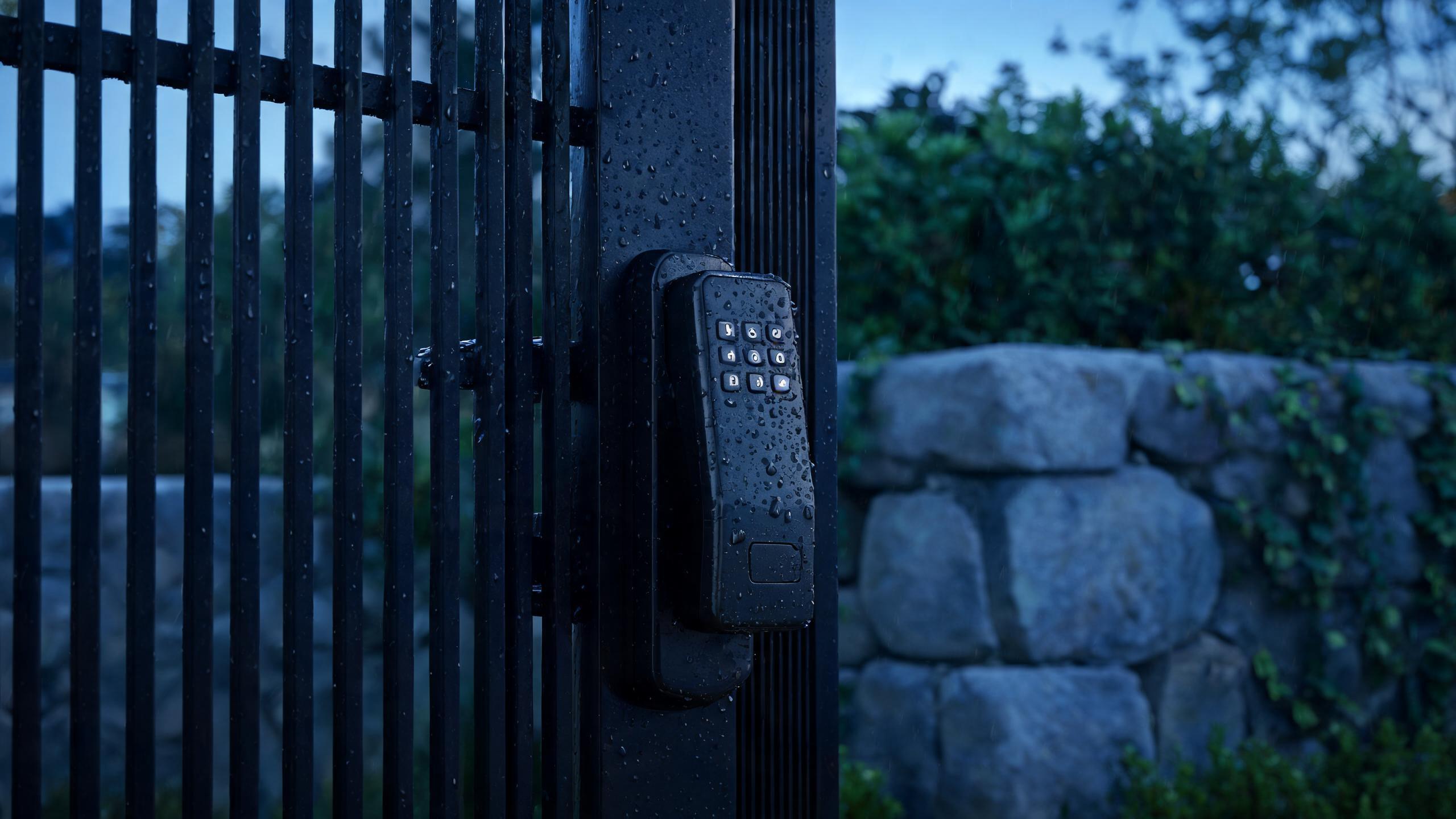
An outdoor lock fails in ways an indoor lock never meets: driven rain finds every seam, dust packs the sensor window, cold reduces battery capacity and UV ages the keypad fascia. OEM outdoor programs therefore start from the exposure profile — sheltered exterior door, open pedestrian gate, coastal or dusty site — and select a SKU whose spec sheet carries the matching ingress protection level, operating temperature range and corrosion treatment rather than stamping a generic “weatherproof” claim. Gate fitment is a second engineering question: gates sag, lack a solid frame and often need access from both sides, so the latch, strike and cable run are surveyed on the actual opening. Battery chemistry is planned for the climate, because a lock that works in a showroom may report low battery through a hard winter. The outdoor gate scenario page covers site planning; this page covers the hardware program.
OEM outdoor locks at a glance
| Ingress protection | The IP rating is fixed per SKU and supplied on its spec sheet; selection follows actual rain and dust exposure, not a generic weatherproof label |
| Temperature range | Operating and storage temperature windows listed per SKU; cold-climate projects plan battery capacity and replacement intervals around the lower bound |
| Corrosion treatment | Sealed body seams, gasketed battery doors and material and finish choices; coastal programs require the higher salt-air treatment documented for that SKU |
| Gate hardware | Latch and strike matched to metal or timber gates, with sag allowance, dual-side access where required and weatherproof cable runs for wired models |
| Credentials | RFID fob, PIN, fingerprint and app-capable heads across covered outdoor SKUs; sensor and keypad surfaces chosen for wet-hand use where the model supports it |
| Override path | Mechanical override or external emergency power contact per SKU, designed to remain operable after rain, ice or a depleted battery |
| OEM layer | Logo method rated for outdoor durability, housing color, packaging, climate-specific manuals and installer checklists for sealing and drainage |
Answer unit
Sheltered exterior door or exposed pedestrian gate?
The opening decides both the lock body and the latch hardware. A gate is not simply an exterior door, and treating it as one is the usual cause of outdoor callouts.
| Dimension | Sheltered exterior door | Exposed pedestrian gate |
|---|---|---|
| Exposure | Rain and sun partly shielded by a porch or canopy | Direct rain, dust, spray and UV with no shelter |
| Mounting structure | Solid timber or metal door frame with defined prep | Flexible gate leaf that can sag and move over time |
| Closing hardware | Standard deadbolt or mortise operation | Gate-specific latch, adjustable strike and often a gate closer |
| Access sides | Credential head usually on the outer face only | Frequently requires credential access from both sides |
| Rating emphasis | Per-SKU IP rating plus UV-resistant fascia | Higher IP level, corrosion treatment and drainage dominate |
| Install sign-off | Door prep and gasket seating checked | Sag, strike alignment, cable run and drainage all verified |
How an outdoor program is specified
- Exposure surveyLocation, shelter, rainfall and dust conditions, coastal proximity, expected temperature window and photos of the exact opening are collected.
- SKU rating matchThe lock is selected so its documented IP rating, temperature range and corrosion treatment cover the surveyed exposure with margin.
- Gate hardware checkFor gates, leaf material, sag, latch style, strike position and any two-sided access or cable requirement are confirmed against hardware drawings.
- Sample and battery planA sample is fitted to the representative opening, battery chemistry and service interval are planned for the climate, and sealing is checked at install sign-off.
Related programs
Adjacent outdoor and facility pages
OEM outdoor door locks: common questions
What IP rating do outdoor smart locks need?
There is no single figure: the rating must cover the surveyed exposure of the exact opening, from a sheltered porch door to a gate receiving driven rain and dust. Every covered outdoor SKU lists its fixed IP rating and operating temperature range on the spec sheet, and selection is made against the site conditions with margin rather than from a generic “weatherproof” label. The outdoor manufacturer guide walks through the selection inputs.
Can a standard smart lock be fitted to an outside gate?
Not usually without compromise. Gate leaves flex and sag, need gate-specific latches and adjustable strikes, and frequently require credential access from both sides. Exposed gates also demand the higher corrosion treatment and drainage design offered on the outdoor SKU range. The opening is surveyed and a sample is fitted before production, rather than adapting an indoor model.
How does cold weather affect battery life?
Battery capacity falls as temperature drops, so locks in freezing climates can report low battery earlier in winter even when the same cells last longer indoors. The operating range is printed per SKU; cold-climate programs plan the battery chemistry, spare capacity in the housing and a documented replacement interval instead of relying on the showroom battery figure.
What happens if rain gets into the lock or the battery runs flat outside?
Covered outdoor SKUs seal the body and battery compartment against the rated ingress level and provide either a mechanical override or an external emergency power contact, positioned to remain usable in rain or ice. Correct gasket seating and drainage are part of the installer checklist, and override operation is verified during commissioning.
What MOQ and lead time apply to branded outdoor locks?
Thresholds follow the SKU and whether a specific corrosion treatment or housing color is involved. Send the exposure survey, opening details and quantities through the RFQ form and the current MOQ and lead time are confirmed in writing per quotation, including the spec sheets that carry the ratings.
Specify outdoor locks against real exposure
Send the site conditions, opening photos, gate hardware details and quantities — receive SKU matching with documented ratings plus written MOQ and lead-time terms.
Request OEM termsOrder a site sampleLast updated: October 31, 2026 · Reviewed by the Smart Lock Factory editorial team