
Door types
Mortise smart locks: the strongest option when the pocket already exists
Mortise bodies live inside the door edge, spread load into the stile and dominate hotel, multi-family and institutional hardware schedules.
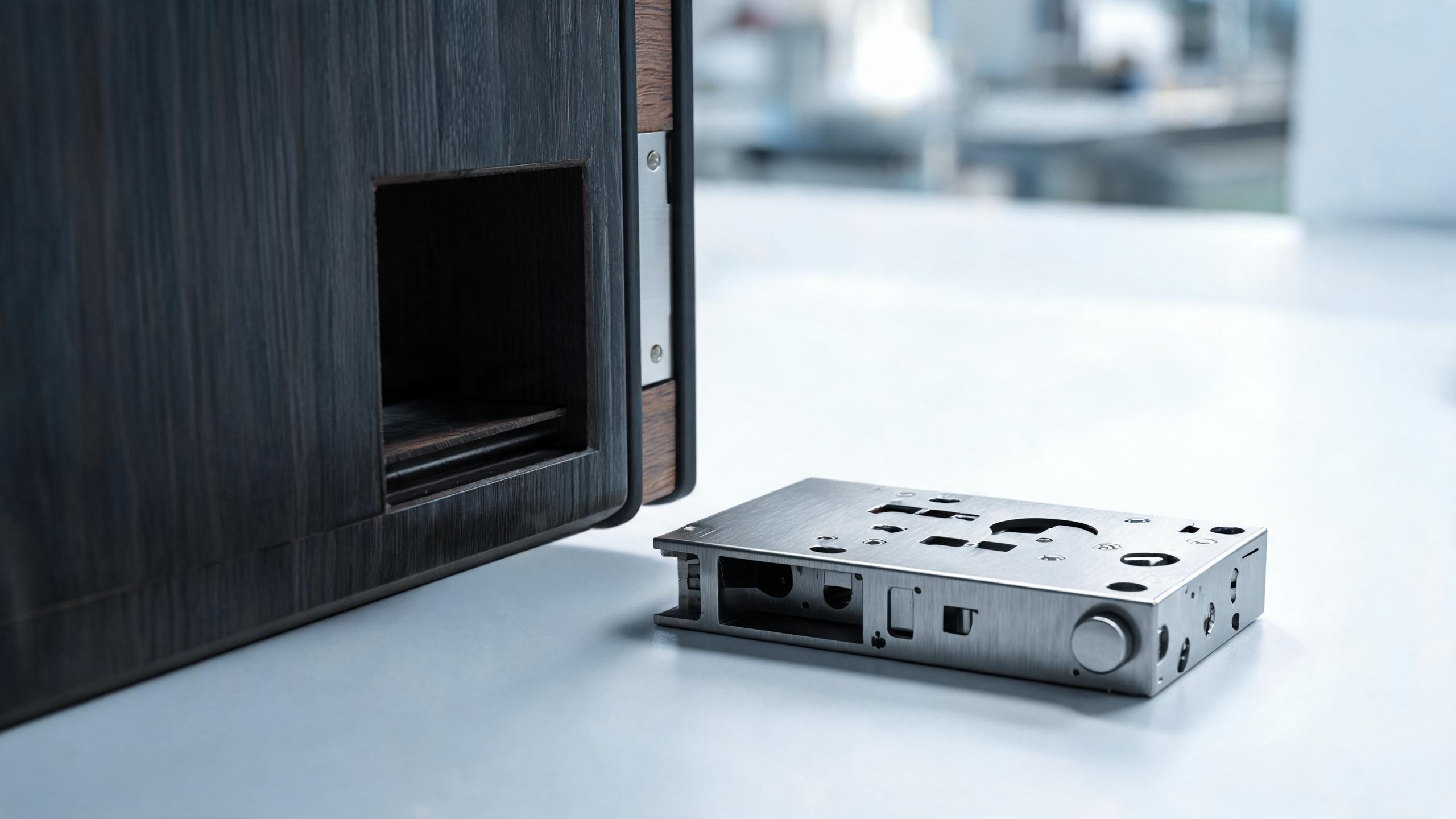
A mortise lock is a rectangular lock body installed in a pocket cut into the door edge, carrying the latch, deadbolt, handle follower and often an electrified solenoid in one housing. Compared with cylindrical locks it spreads forces into a much larger volume of the door, which is why mortise hardware dominates high-cycle commercial, hospitality and institutional openings. Retrofitting requires the correct pocket — ANSI mortise preps and European/Euro mortise preps are dimensionally different — plus handing, backset and strike box confirmation. This guide explains when a mortise smart lock is the right choice, how the prep is verified, and what documentation accompanies project orders.
Mortise fit at a glance
| Pocket standard | ANSI A156.13 series mortise preps and Euro/DIN mortise pockets are not interchangeable; the body is ordered to the prep. |
| Door thickness | Most commercial mortise bodies suit 40–55 mm+ doors; thin interior doors are not typical mortise candidates. |
| Handing | Mortise bodies are handed or field-reversible; handing is confirmed from the door schedule to avoid site rework. |
| Strike box | A matching strike in the frame distributes load; electric strikes are a separate listed component. |
| Electrification | Electrified mortise locks add solenoid control, request-to-exit and latch monitoring while keeping mechanical egress. |
| Life cycle | High-grade mortise bodies are built for multi-million-cycle corridors and hotel turnovers rather than occasional use. |
| Documentation | Cut sheets, prep templates and grade references for the exact SKU are provided with project quotations. |
Answer unit
Mortise versus cylindrical: which prep does the door have?
Existing mortise pockets take mortise smart locks; standard bored holes take cylindrical locks. Converting a cylindrical door to mortise means major routing and is rarely done on site.
| Factor | Mortise smart lock | Cylindrical smart lock |
|---|---|---|
| Existing prep | Rectangular edge pocket | Two cross-bores through the face |
| Typical door | Hotel, office, institutional, premium entrance | Residential and light commercial entrance |
| Load handling | Load spread through the large pocket | Load concentrated around the rose and latch |
| Electrification | Solenoid, monitoring and REX options in-body | Usually via separate strike or add-on reader |
| Grade options | Commonly specified at BHMA Grade 1 | Grade 1 to Grade 2 depending on series |
| Retrofit effort | Low if pocket exists; high if new routing | Low into standard bored prep |
Door types and lock-body match
Mortise schedules usually pair lock, cylinder, escutcheon and strike as one listed assembly; mixing unmatched components voids the intended grade.
| Opening | Typical door | Lock approach |
|---|---|---|
| Hotel guest floor | Solid-core fire-rated timber or steel | Electrified mortise with hotel cylinder and audit |
| Office corridor | Hollow metal door in steel frame | Grade 1 mortise with card reader and REX |
| Institutional room | Heavy timber or steel, high abuse | Heavy-duty mortise with restricted override |
| Premium residential | Solid wood entrance, DIN prep | Euro mortise smart lock with lever furniture |
| Apartment unit | Solid-core entrance door | Mortise standardized across the building for service |
| Light interior room | Thin veneer door | Cylindrical or light lever is usually more suitable |
Example BOM shape for a mortise lock rollout
This example illustrates a typical configuration, not a specific customer project. Prep standard and handing drive the list.
| Component | Typical logic | Notes |
|---|---|---|
| Mortise bodies | ANSI or Euro smart mortise locks per prep | Electrified vs mechanical chosen per opening |
| Cylinders | Interchangeable core or Euro cylinders keyed per schedule | Master-key logic confirmed in writing |
| Strikes | Mechanical or listed electric strikes per frame | Fail state set per fire strategy |
| Escutcheons | Lever furniture and readers matching the body | Finish and accessibility clearances confirmed |
| Documentation pack | Templates, cut sheets and grade evidence | Named SKUs only, per quotation |
How a mortise smart lock program is confirmed
- Verify the prepMeasure pocket dimensions and identify A156.13 versus Euro/DIN geometry.
- Confirm handingRecord left/right and in/out for every opening, or specify reversible bodies.
- Select electrificationChoose solenoid, monitoring and REX options per the access design.
- Sample-fit firstInstall one complete assembly per door type and check strike and egress.
- Standardize floorsLock body, cylinder, strike and furniture are held identical per zone.
Related door types
Related lock body guides
Mortise doors: common questions
Can a cylindrical door be converted to a mortise smart lock?
Technically yes, but it is a fabrication task rather than a retrofit. A mortise body needs a large rectangular pocket in the edge, a through-slot for the handle follower and cylinder hub, and a matching strike prep in the frame; factory machinery or skilled door shop work is required, and on fire-labeled doors the conversion is generally not permissible outside a certified assembly. On non-labeled solid doors it can be done, but cost and downtime usually favor a high-grade cylindrical smart lock instead. When the mortise pocket already exists, however, upgrading to a mortise smart lock is one of the cleanest hardware paths available.
Are ANSI and Euro mortise locks interchangeable?
No. ANSI A156.13 mortise preps and Euro/DIN mortise pockets differ in case dimensions, spindle and cylinder hub positions, strike geometry and often screw placement, so a body built for one prep does not seat in the other. Cylinders also differ: interchangeable-core or key-in-lever systems on the ANSI side versus Euro-profile cylinders on the DIN side. The prep is identified from a measured template or the original hardware specification before models are quoted. International projects sometimes mix both across buildings by origin of the doors, in which case the lock list is split by prep rather than forcing one global body.
Do electrified mortise locks still open mechanically in an emergency?
Yes, mechanical free egress is a design requirement rather than an option. Electrified mortise bodies control the outside credential side with a solenoid, while the inside lever retracts the latch mechanically at all times; where a deadbolt or night function exists, its release in emergency modes follows the listed schedule. Electric strikes used with mortise locks have their own fail-secure or fail-safe behavior selected per the fire strategy. Request-to-exit and latch-monitoring switches feed the access system but never block egress. Every electrified opening is tested at commissioning in both powered and de-energized states, and the tested behavior is documented.
Why do hotels prefer mortise smart locks?
Hotels combine the harshest turnover cycle in real estate with thin, standardized door schedules. Mortise bodies tolerate millions of openings, accept hotel-specific cylinders with audit trails, and integrate deadbolt, latch and anti-panic functions in one listed assembly, so housekeeping, emergency override and guest deadbolt behavior are predictable floor after floor. Standardizing one mortise family across a property also rationalizes spares, training and warranty handling. Standalone keypad or cylindrical locks appear in small guesthouses and budget conversions, but full-service hotels and chains specify mortise families in their brand standards, and replacement projects usually follow the existing prep rather than changing body class.
How do buyers confirm a mortise lock will fit before ordering?
The reliable package is a prep template check: door thickness measured at the edge, pocket height/depth/width, center distances to the handle hub and cylinder, handing, and the existing strike dimensions in the frame. Photographs of the lock edge with a ruler plus the door schedule cover most retrofits; new builds simply reference the specified prep standard (ANSI A156.13 series or Euro/DIN). We return a model-by-model confirmation named to SKU with the relevant strike and escutcheon. A sample installation on one door of each prep type is standard before volume release, and MOQ plus lead times are confirmed in writing per quotation.
Specify mortise smart locks for your doors
Send prep measurements or the mortise standard with handing — receive a named-SKU body, cylinder and strike list with sample terms.
Discuss your project (RFQ)Project configurationsLast updated: October 31, 2026 · Reviewed by the Smart Lock Factory editorial team