
Door types
Rim smart locks: surface-mounted security when the door should not be cut
Rim locks bolt to the door face rather than into a pocket. They suit heritage doors, thin panels and quick reversibility, with reinforcement done right.
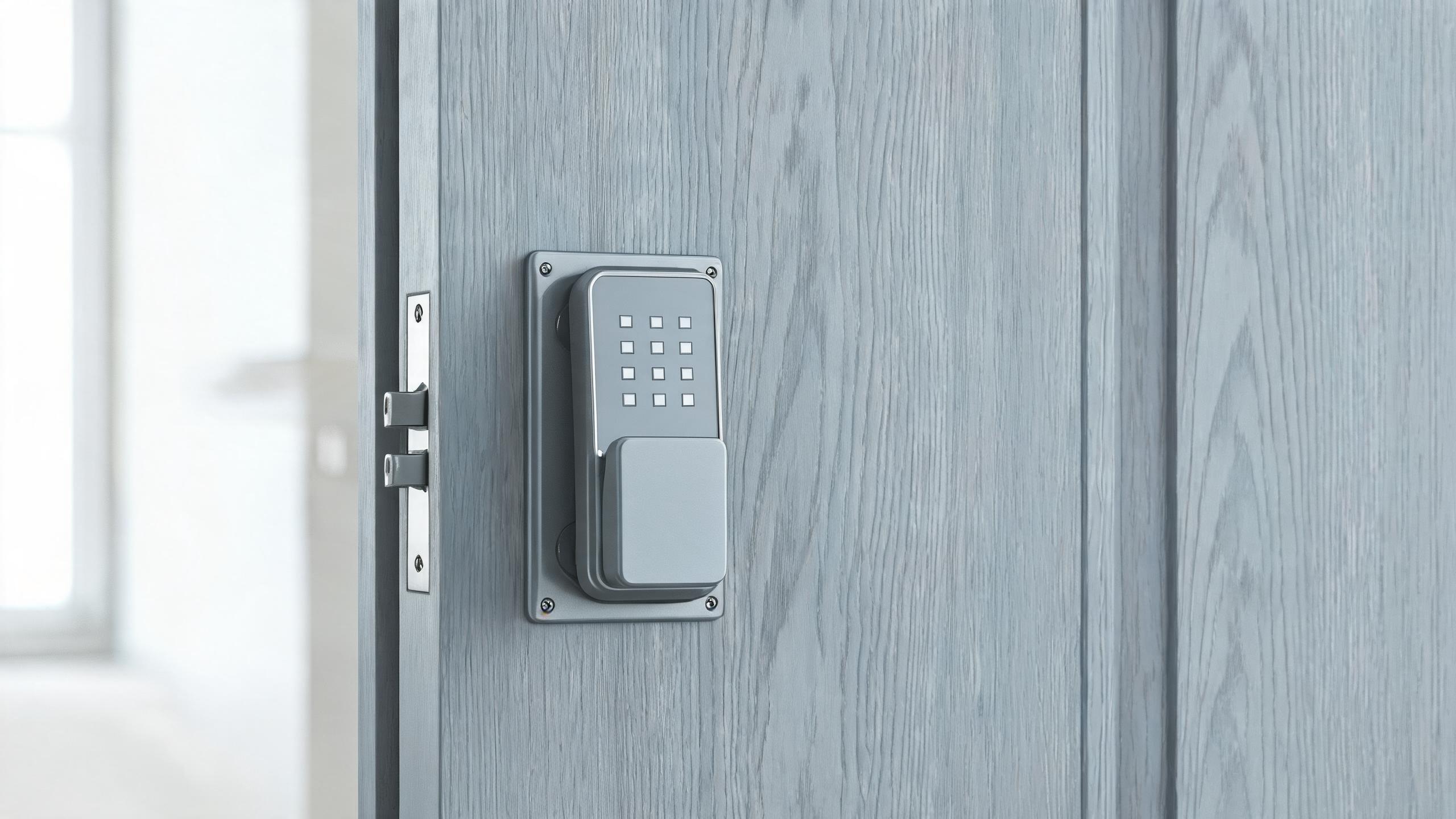
A rim lock (or night latch) mounts on the surface of the door face with its keep on the frame, historically the automatic-locking latch on British and older entrance doors. A smart rim lock replaces or augments that surface box with an electronic actuator — keypad, card or mobile credential releases the latch while a handle or snib inside controls hold-open and egress. Because nothing large is routed into the door, rim locks are preferred for heritage and thin doors, temporary installations and rapid retrofits, but security depends entirely on strong fixings into the door structure and a substantial frame keep. This guide covers suitable doors, reinforcement, cylinder options and where rim hardware should give way to mortise.
Rim lock fit at a glance
| Mounting | Surface-mounted box on the inner face with a cylinder or reader through a small door hole. |
| Door types | Heritage timber, thin panel doors, composite domestic doors and some metal personnel doors. |
| Reinforcement | Long screws into solid substrate or a spreader plate prevent levering of the surface box. |
| Auto-locking | Rim latches typically lock on closure; hold-open and day-latch functions vary by model. |
| Cylinder | Most rim smart locks pair with a rim cylinder; key override remains available. |
| Weather | Inner-mounted boxes are protected; exterior-only surface locks need weather-rated design. |
| Limits | High-security and high-cycle commercial openings usually specify mortise hardware instead. |
Answer unit
When is a rim smart lock the pragmatic choice?
Rim locks win when the door cannot be mortised, reversibility matters or install time is tiny; they lose when attack resistance or traffic volume is high.
| Situation | Rim smart lock | Mortise alternative |
|---|---|---|
| Heritage door | No pocket routing, reversible | Mortise would damage historic fabric |
| Thin panel door | Small through-hole only | Mortise pocket impossible structurally |
| Fast retrofit | Surface fix in minutes | Routing and finishing time required |
| Temporary site | Removable between projects | Permanent door modification |
| High-security opening | Not preferred | Grade 1 mortise with strike box |
| Very high cycle | Surface wear at fixings | Mortise distributes load better |
Door types and lock-body match
Rim lock keeps are often the weak component: the frame side must resist spreading forces as strongly as the door-side box.
| Opening | Typical door | Lock approach |
|---|---|---|
| Victorian timber entry | Solid wood but no modern pocket | Smart rim night latch with spreader plate |
| Thin composite door | Limited edge depth | Rim cylinder smart lock, no deep routing |
| Internal office door | Panel door with existing rim latch | Electronic rim latch replacement |
| Metal personnel door | Flat inner face available | Plate-mounted smart rim box |
| Site office / cabin | Temporary building door | Reusable surface smart lock |
| High-risk exterior | Attack-exposed entrance | Mortise or security-door hardware instead |
Example BOM shape for rim smart lock projects
This example illustrates a typical configuration, not a specific customer project. Door substrate drives fixing design.
| Component | Typical logic | Notes |
|---|---|---|
| Smart rim locks | Surface night latches with electronic release | Hold-open logic selected per site |
| Rim cylinders | Matching cylinders with key override | Finish matched to door furniture |
| Reinforcement plates | Spreaders behind the box and keep | Long screws into structural substrate |
| Frame keeps | Substantial keeps with frame fixings | Steel-frame variants for metal doors |
| Sample fitting | One per door substrate type | Fixing and closure validated first |
How a rim smart lock is installed correctly
- Inspect the substrateConfirm solid fixing area behind the door face and the frame side.
- Choose reinforcementAdd a spreader plate or long structural screws for thin doors.
- Fit the cylinderInstall the rim cylinder through the small cross-hole and connect the tail bar.
- Mount and alignFix the box and keep so the latch seats fully when the door closes.
- Test override and holdVerify key release, egress and hold-open/day-latch behavior before handover.
Related door types
Related rim and retrofit guides
Rim lock doors: common questions
Are rim smart locks secure enough for a front door?
A properly installed smart rim night latch on a solid door with a reinforced keep is a recognized entrance solution in markets where rim hardware is traditional, and premium versions include anti-snap cylinders and deadlocking snibs that resist carding. The difference from a mortise lock is where load concentrates: the rim box relies on surface screws and frame-keep strength, so thin veneer or short screws undermine it quickly. We specify spreader plates and long fixings into structural material for exterior use. For attack-exposed commercial or high-value doors, a Grade 1 mortise remains the conservative choice; rim smart locks are ideal where reversibility and fabric protection dominate the decision.
Can a rim smart lock be fitted without drilling a large hole?
Rim hardware needs only the small existing cylinder hole (typically around the night-latch cylinder diameter) to pass the credential tail or cylinder bar; the main box bolts to the inner face with screws. Where a mechanical rim cylinder already exists, the smart box often reuses its hole and keep alignment, making the job one of the quickest reversible upgrades available — useful for rented heritage properties where owners restrict door modification. The frame keep may need new screw positions, and a spreader plate sits behind thin panels. No edge mortising or large cross-boring is involved, which distinguishes rim fitting from both mortise and cylindrical retrofits.
Do rim smart locks auto-lock when the door closes?
Most rim latches follow the night-latch tradition: the spring latch engages automatically as the door shuts, providing lock-on-close behavior without any credential action, while an inside snib or electronic setting enables hold-open for daytime trade. Some models add an automatic deadlocking element that blocks external manipulation once shut. Projects should decide deliberately whether lock-on-close is wanted — it improves compliance (doors are never left latched-only) but can lock out users who leave credentials inside unless an egress and override policy exists. Delivery staff and shared spaces commonly use timed hold-open windows instead of disabling auto-lock.
What maintenance do surface-mounted rim locks need?
Because the box is exposed on the door face, maintenance is straightforward and visible: keep the latch bolt and keep clean, lubricate the cylinder and pivots with the recommended lubricant, confirm screws remain tight (surface fixings can loosen on heavy doors), and replace batteries through the accessible inner cover. Door sag directly affects rim alignment — if the latch starts rubbing the keep, hinge adjustment restores clean seating rather than filing the keep. Seals on exterior doors protect the inner box from driven rain. Maintenance cycles are included in the support documentation, and property teams can service the units without removing the door hardware.
When should a buyer choose mortise instead of rim?
Choose mortise when the door already has a mortise pocket, when expected traffic is heavy (lobbies, hotel back-of-house, institutions), when attack resistance drives the spec, or when the visual standard requires furniture flush with the door face. Choose rim when the door is historic or thin, when the owner forbids routing, when the install window is very short, or when hardware must move with a tenant. Fire-rated doors follow their listed schedule and rarely accept generic rim additions. We classify each opening during the survey instead of defaulting to the cheaper surface option, because long-term cost on a high-cycle door favors the body that distributes load into the stile.
Plan rim smart locks for doors that cannot be cut
Send door substrate and existing cylinder details — receive a rim model list with reinforcement spec and sample terms in writing.
Discuss your project (RFQ)Project configurationsLast updated: October 31, 2026 · Reviewed by the Smart Lock Factory editorial team