
Door types
Euro-profile smart cylinders: the reversible upgrade behind most aluminum and uPVC doors
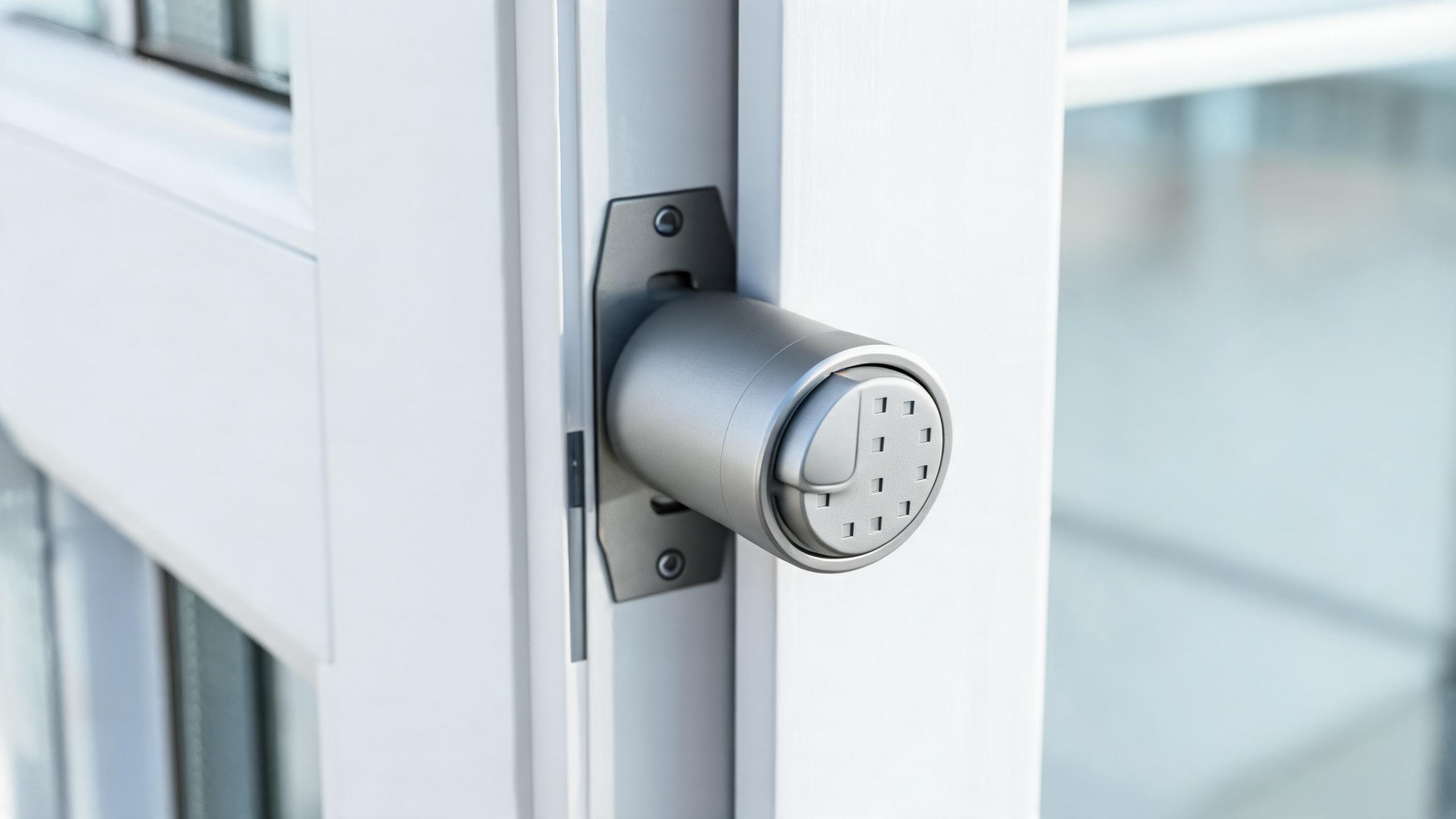
Swap the cylinder, keep the handles and gearbox. Correct length and cam selection is the whole engineering of a Euro smart cylinder order.
The Euro-profile cylinder is the standard lock plug across Europe, the UK and much of the Middle East and Asia, recognizable by its figure-eight section. An electronic Euro smart cylinder replaces the mechanical cylinder directly — the outer knob carries a keypad, card reader or fingerprint module with batteries, while the inner knob stays free-turning for egress. Nothing about the door’s handles, gearbox or multi-point hooks changes, which is why it is the default smart upgrade for uPVC and aluminum doors. This guide covers asymmetric sizing, cams, security features, battery behavior and the retrofit limits where a smart cylinder is not enough.
Euro cylinder fit at a glance
| Profile | Figure-eight Euro-profile (DIN 18254 / EN 1303 family) fits the same chamber as the mechanical cylinder. |
| Length notation | Lengths are quoted as outer/inner halves from the cam center, e.g. 30/40, and must be ordered per door. |
| Cam type | Cam profile varies by gearbox; the wrong cam leaves hooks or latches under-driven. |
| Finish and color | Outer knob finishes are matched to existing hardware; thumb-turn style inner knobs suit most doors. |
| Security versions | Anti-snap, anti-drill and anti-bump constructions and security cards exist at higher tiers. |
| Standards context | EN 1303 covers cylinders; EN 1906 covers handle hardware; electromechanical locks relate to EN 14846. |
| Limits | Very high-throughput shared entrances often use motor locks rather than battery cylinders. |
Answer unit
When is a smart Euro cylinder the right answer?
It is right for reversible retrofit on any door already using a Euro cylinder; motor locks or escutcheons suit new fabrications and extremely high traffic.
| Question | Smart Euro cylinder | Escutcheon/motor lock |
|---|---|---|
| Door change needed? | Cylinder swap only | Mounting plate or frame routing |
| Handles | Existing handles retained | Often replaced with matching set |
| Multi-point gearbox | Driven exactly as before | Only with verified follower geometry |
| Battery service | Batteries in the outer knob | In plate or frame, varies by model |
| Best for | Retrofit, rentals, mixed aluminum/uPVC stock | Premium new build, high-traffic shared doors |
| Reversibility | Mechanical cylinder can be refitted | More involved to revert |
Door types and lock-body match
A protruding cylinder invites snapping attacks; measured flush or security-standoff fit plus an anti-snap model is standard for exterior doors.
| Opening | Typical door | Lock approach |
|---|---|---|
| uPVC residential | Multi-point gearbox door | Electronic Euro cylinder, gearbox untouched |
| Aluminum storefront | Euro chamber narrow stile | Cylinder-only upgrade with slim outer knob |
| Composite entrance | Euro cylinder in composite door | Security-grade anti-snap smart cylinder |
| Timber Euro door | DIN-prepped solid wood | Smart cylinder or full Euro escutcheon set |
| Apartment shared entrance | High traffic, motor lock often present | Keep motor lock; cylinder is override/backup |
| Interior office | Light aluminum partition | Compact electronic cylinder, light duty |
Example BOM shape for Euro smart cylinder orders
This example illustrates a typical configuration, not a specific customer project. Measured length lists drive the order.
| Component | Typical logic | Notes |
|---|---|---|
| Smart cylinders | Outer/inner lengths cut to measured schedule | Security tier selected per opening |
| Cams and fittings | Cam types and coupling pieces per gearbox | Confirmed from strip or sample cylinder |
| Mechanical keys | Emergency override keys with security card where offered | Keyed logic defined per building |
| Battery service pack | Replacement cells and change instructions | Planned cycle for managed sites |
| Gauge support | Measurement cards and remote review | Sample cylinder for unusual gearboxes |
How a Euro smart cylinder order is prepared
- Measure each doorRecord outer and inner half lengths from the cam center.
- Identify the camPhotograph or send the existing cylinder to confirm cam type.
- Choose security tierSelect standard or anti-snap/anti-drill versions per exterior exposure.
- Sample the gearboxTest one cylinder on each gearbox type for full hook engagement.
- Schedule lengthsOrder the asymmetric length list with finish and override key logic.
Related door types
Related cylinder and standards guides
Euro-profile cylinders: common questions
How is a Euro smart cylinder sized for a door?
Euro cylinders are ordered by two half-lengths measured from the center of the cam (the rotating tongue) to each outer face, quoted like 30/35 or 30/40. On a uPVC door the outer face is usually flush with the handle plate, while on an aluminum door the chamber geometry differs slightly; measuring with the existing cylinder removed or using a gauge through the fixing screw gives the exact values. Choosing too long leaves a protruding cylinder vulnerable to snapping, while too short binds on the follower or leaves the coupling unsupported. Symmetric and asymmetric halves are both common in the same building, which is why projects measure per door rather than ordering one length in bulk.
Do smart Euro cylinders work with a multi-point gearbox?
Yes — that is their primary use case. The electronic cylinder turns the same cam as the mechanical one, so the key operation that lifts and throws hooks, rollers and deadbolts is unchanged, whether the motor assist comes from a knob on the outer side or the handle sequence remains manual. What matters is cam match: gearbox makers use slightly different cam profiles, and an incorrect cam can under-drive the mechanism even though the key turns. We identify the cam from the old cylinder or gearbox strip and validate full multi-point engagement on one sample door of each gearbox generation before releasing the full schedule.
What happens if the battery dies on a smart Euro cylinder?
The door is never sealed by a flat battery. Quality smart cylinders provide an external power-contact point where a standard 9 V battery is held to power the keypad for an authorized opening, and the mechanical emergency key remains as a second override; the inside knob always free-turns for egress regardless of battery state. Battery life depends on traffic, and managed sites run a planned replacement cycle rather than waiting for warnings. Low-battery alerts appear weeks ahead of failure. Maintenance teams keep the override keys in a controlled store — losing both battery access and the override key is a process failure, not a lock feature.
Are smart Euro cylinders as secure as mechanical anti-snap cylinders?
They can be when specified at the same security tier. Premium smart cylinders carry anti-snap weak-point geometry, hardened anti-drill and anti-bump elements and are tested alongside standards such as EN 1303 and related attack-resistant cylinder standards, just as high-security mechanical cylinders are; budget smart cylinders without those features are not equivalent. Exterior doors in burglary-exposed markets should be specified with the anti-snap tier and installed flush or within the allowed standoff, with a compatible security handle. Credential convenience does not change mechanical attack resistance — the physical construction still does that work, so tier choice should be explicit in the RFQ.
Can tenants or contractors install Euro smart cylinders themselves?
The physical swap is genuinely simple — loosen the center fixing screw, slide out the old cylinder, slide in the smart one at the same cam angle, and retighten — so owner-occupiers and maintenance teams routinely perform it. The engineering risk is measurement and cam selection rather than installation skill: an incorrect length or cam is the common reason for return. For multi-door housing or aluminum storefronts we recommend a guided measurement pack and one supervised sample, after which in-house teams install the rest. Gearboxes with unusual cams or fire-labeled assemblies are handled by qualified installers, and full escutcheon replacements remain a glazier/fabricator task.
Order Euro smart cylinders to measured schedules
Send half-lengths and cam details per door — receive a cylinder schedule with security tiers, samples and written commercial terms.
Discuss your project (RFQ)Project configurationsLast updated: October 31, 2026 · Reviewed by the Smart Lock Factory editorial team