
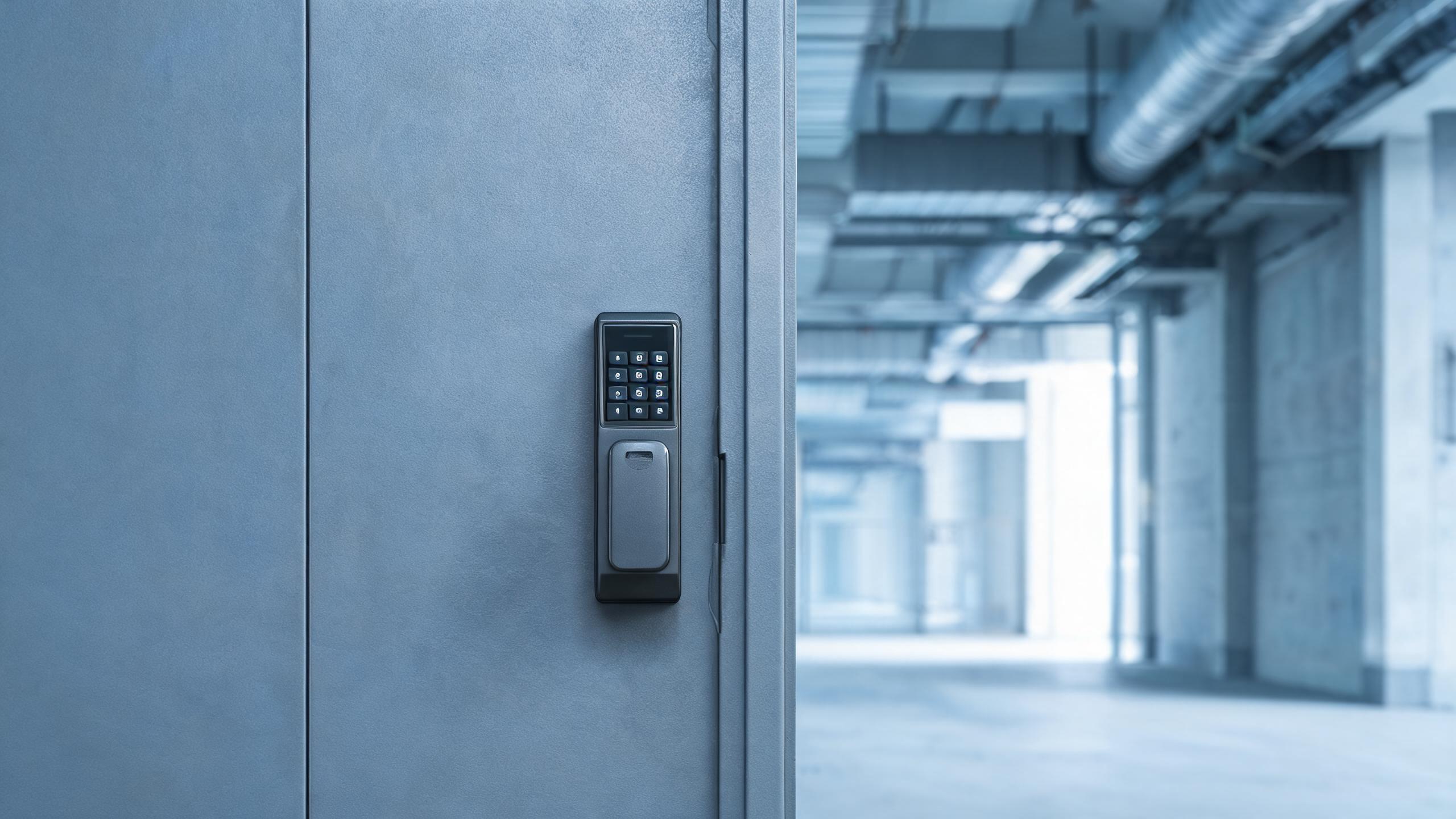
Door types
Smart locks for hollow metal and steel doors: sections, strikes and electrified hardware
Steel doors rarely accept new cut-outs cleanly. The smart lock strategy follows the existing hollow-metal-prep standard, the frame and the fire schedule.
Commercial steel doors — hollow metal sections in particular — are built around standardized prep dimensions from standards such as ANSI/SDI A250.6 and the ANSI A156 series. A smart lock project on steel is usually less about cutting metal and more about matching the existing prep: a mortise prep takes a listed mortise body, a cylindrical prep takes a heavy-duty cylindrical lock, and electrified access is frequently delivered through electric strikes, maglocks or exit hardware rather than replacing the door’s certified lock. This guide explains the steel door measurements that matter, the electrified options that preserve fire and egress ratings, and the documentation we provide per quotation.
Steel door fit at a glance
| Door type | Hollow metal (HMD) flush doors dominate commercial projects; solid plate and security doors are a separate hardware class. |
| Prep standard | Existing mortise, cylindrical or exit-device prep is reused; new field cutting is avoided to protect rating and finish. |
| Frame and strike | Electric strikes and latch guards must match the frame section; ANSI strike sizes are confirmed against the schedule. |
| Electrified options | Electric strikes, magnetic locks and electrified exit hardware carry access control without changing the certified lock body. |
| Fire schedule | Fire-rated steel doors require listed holders and strikes and immediate mechanical free egress; see the UL 10C guide. |
| Corrosion | Washdown, coastal and chemical environments specify 304/316 stainless and rated ingress protection per the IP guide. |
| Documentation | Prep drawings, cut sheets and compliance packs for selected models are provided in writing with the quotation. |
Answer unit
Replace the lock, or electrify the opening another way?
On steel doors, access control is often achieved by keeping the certified mechanical lock and adding a listed electric strike, exit device or magnetic lock controlled by a reader.
| Opening type | Common requirement | Typical controlled approach |
|---|---|---|
| Office HMD entrance | Credential entry, free exit | ANSI cylindrical or mortise smart lock in existing prep |
| Corridor fire door | Must close and latch, free egress | Listed electric strike or electrified exit device with reader |
| High-security portal | Audit, strong mechanical rating | BHMA Grade 1 mortise smart lock with restricted keyway override |
| Server / plant room | Zone control, fail-safe logic | Electric strike or maglock sized to fire strategy, request-to-exit |
| Exterior steel gate | Weather and abuse resistance | Stainless lock furniture, protected reader, IP-rated components |
| Emergency exit door | Always-open egress, controlled entry | Exit device with outside trim and credential reader; no egress restriction |
Door types and lock-body match
Steel door openings are specified as a system: door, frame, closer, strike and exit device must all sit inside the same fire and hardware schedule.
| Opening | Typical door | Lock approach |
|---|---|---|
| Hollow metal entrance | 16–18 gauge flush door, steel frame | ANSI mortise or cylindrical smart body in factory prep |
| Fire-rated stair door | Labeled HMD with closer and exit hardware | Electrified listed trim or strike; rating documentation matched |
| Security / plant room | Thicker plate or filled steel door | Grade 1 mortise, reinforced strike, audit electronics |
| Cleanroom / washdown | Stainless steel door and frame | Corrosion-resistant furniture with IP-rated electronics |
| Exterior service door | Painted steel, exposed exterior | Stainless components, gasketed reader, drainage at threshold |
| Overhead / roller | Rolling steel or shutter | Separate personnel smart door recommended alongside shutter control |
Example BOM shape for a steel-door access program
This example illustrates a typical configuration, not a specific customer project. Prep mix and fire schedule drive hardware split.
| Component | Typical logic | Notes |
|---|---|---|
| Smart lock bodies | ANSI mortise or cylindrical units for existing preps | Grade selected per opening risk, confirmed in writing |
| Electric strikes | Listed strikes for corridor and stair openings | Fail-secure/fail-safe chosen per fire strategy |
| Exit hardware | Panic devices with electrified outside trim | Free egress preserved on every controlled door |
| Readers and control | Card or keypad readers at controlled openings | Wired or wireless topology decided per site survey |
| Compliance pack | Cut sheets and certificates for selected SKUs | Provided per quotation for named models only |
How a steel-door hardware schedule is built
- Survey the prepRecord each steel door: gauge, existing ANSI prep, frame section, closer and exit device.
- Classify the openingMark fire-rated, security, exterior and washdown doors; the strategy differs for each.
- Choose electrificationDecide smart lock body versus electric strike, exit trim or maglock per the fire and egress strategy.
- Document and sampleCut sheets and compliance packs are issued; a sample opening is fitted before volume rollout.
- Commission togetherDoor, frame, closer, strike and reader are commissioned as one system and tested under failure modes.
Related door types
Related steel and standards guides
Metal and steel doors: common questions
Can a smart lock be retrofitted to an existing hollow metal door?
Yes, when it matches the existing factory prep. Hollow metal doors are normally prepped at manufacture to ANSI dimensions for either cylindrical or mortise hardware, so the cleanest retrofit is a smart lock body in the same class — cylindrical into cylindrical prep, mortise into mortise prep — with compatible strike spacing. Field cutting steel is noisy, weakening and often incompatible with the door label, so if access control is wanted without changing the certified lock, an electric strike or electrified exit trim is used instead. We review the prep dimensions from the schedule and confirm the model path before order.
Are maglocks allowed on fire-rated steel doors?
A magnetic lock is only one component of a code-compliant opening. Fire-rated and egress doors require immediate, single-action mechanical egress, so maglock installations include listed releasing hardware, request-to-exit devices, fire alarm integration and signage according to the adopted code — commonly referencing IBC and NFPA requirements in US markets. The maglock itself does not “upgrade” a fire door; the door, frame and closer carry the rating. We supply hardware against the documented strategy, and the installing contractor and specifier confirm the local authority having jurisdiction approval.
Which BHMA grade should exterior steel doors use?
There is no single grade for every exterior door, but high-use and exterior commercial openings are commonly specified around BHMA Grade 1 for heavy-duty performance in cycle, strength and security tests. Interior low-use office doors may be served by Grade 2 products. The grade belongs to the complete listed lock assembly, not the electronics alone, and the evidence should be requested for the exact SKU. We map openings to graded hardware during scheduling and supply the test references with named models; we never quote a grade generically across a family.
How do you prevent corrosion on exterior steel door locks?
Corrosion control starts with material selection: 304 or 316 stainless furniture in coastal or washdown settings instead of plated zinc, gasketed reader housings, and an appropriate IP rating for direct rain or cleaning exposure. Water drains away from the lock line, mounting screws are sealed, and dissimilar-metal contact is isolated to stop galvanic staining. Salt-air projects should name the environment in the RFQ so the correct finish is quoted; an unprotected standard interior finish is not upgraded by wiping it down. Maintenance expectations are documented in the warranty and support pack.
Do steel smart locks work during a power failure?
The safe state is defined per opening, not per product. Fail-secure electric strikes and most battery smart locks keep the door locked when power is lost while preserving mechanical egress inside; fail-safe devices release to protect life safety where required by code. Battery smart locks keep operating through mains failures on their own batteries but still need a planned battery replacement program. Wired openings receive battery backup or monitored release according to the fire strategy. Every project records fail-secure versus fail-safe per door during commissioning, and the behavior is physically tested.
Specify smart access for your steel door schedule
Send the hollow-metal prep list, frame sections and fire schedule — receive a hardware map with compliance references for named SKUs.
Discuss your project (RFQ)Project configurationsLast updated: October 31, 2026 · Reviewed by the Smart Lock Factory editorial team