
Door types
Smart locks for fire-rated doors: the listing comes first, electronics second
Fire doors compartmentalize buildings. Every lock, strike and holder must be part of the rated assembly, and immediate free egress is non-negotiable.
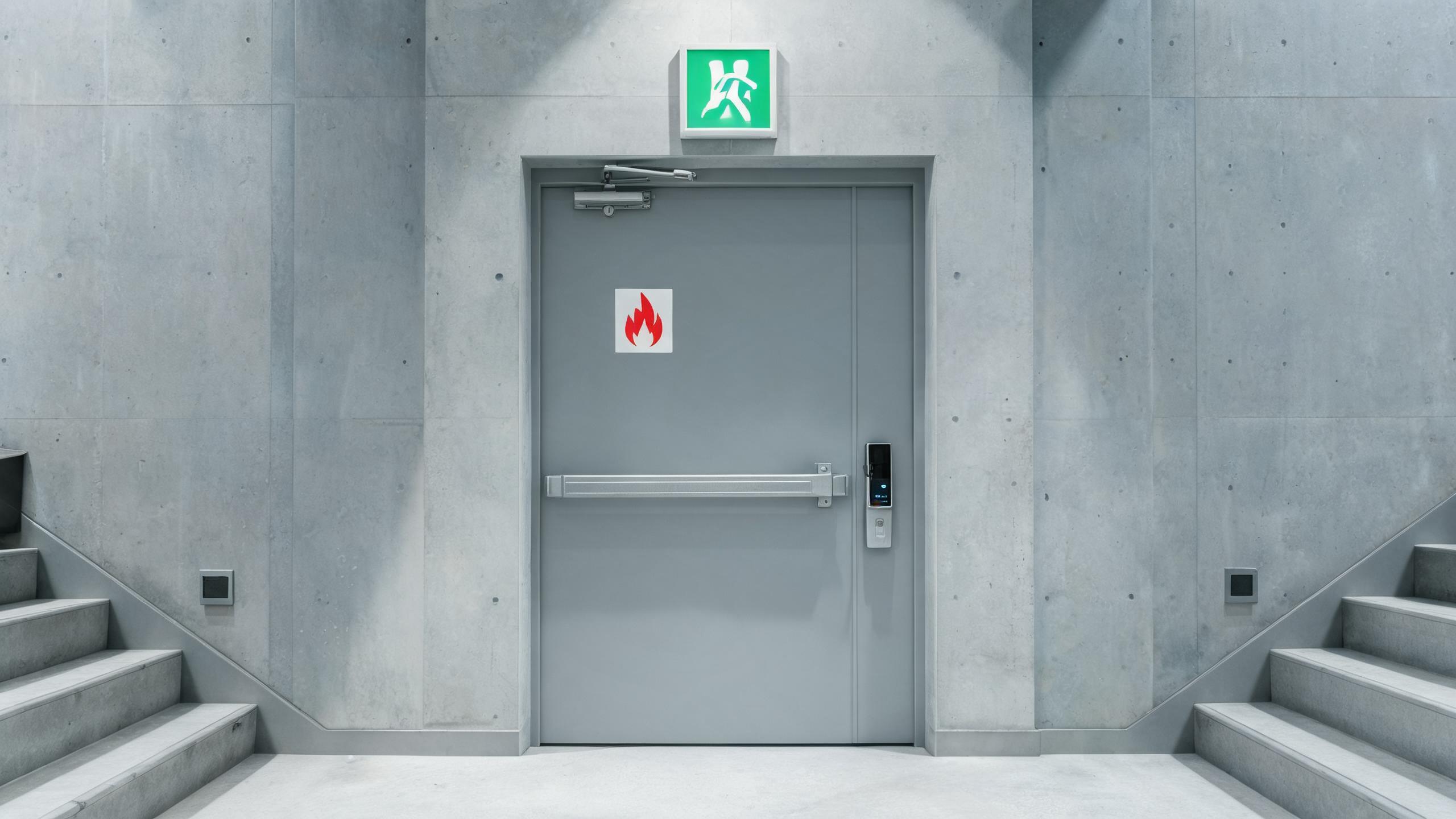
Fire-rated doors are labeled assemblies — door, frame, hinges, closer, lock and glazing all certified together to resist fire and smoke for a rated period, under standards such as UL 10C in the US or EN 1634 in Europe. Electromagnetic access can absolutely be added, but only through listed components: fire-rated electric strikes, electrified mortise or cylindrical locks, electromagnetic holders that release on alarm, and exit devices with electrified trim. Free, single-action egress from inside is preserved in every state, and fail-safe/fail-secure behavior is chosen per the fire strategy. This guide explains the compliance logic, the hardware families, and the documentation trail buyers and inspectors expect.
Fire-rated lock at a glance
| Labeled assembly | The door label lists permitted hardware categories; non-listed locks or field drilling void the rating. |
| UL 10C / EN 1634 | US and European fire test frameworks for door assemblies; the hardware certification references the relevant one. |
| Free egress | Occupants exit without keys or special knowledge; inside hardware is purely mechanical or listed panic hardware. |
| Fail states | Fail-secure keeps the door locked (egress remains free) or fail-safe releases it, chosen per location and code. |
| Electric strikes | Fire-rated strikes are labeled for the door/frame pair; ordinary strikes are never substituted. |
| Door holders | Magnetic holders keep doors open and release on fire alarm per the smoke control strategy. |
| Documentation | The hardware schedule, listings and commissioning tests are handed over for inspection. |
Answer unit
Which electrified hardware belongs on a fire door?
Access control is delivered through listed electric strikes, electrified listed locks or panic hardware with electric trim; release behavior follows the fire strategy.
| Component | Function | Fire-door requirement |
|---|---|---|
| Electric strike | Remote release of the frame keep | Fire-labeled strike for the assembly |
| Electrified mortise/cyl. | Credential entry at the door | Listed lock body in the rated schedule |
| Exit device trim | Card reader outside panic bar | Listed trim, panic function unchanged |
| Maglock + release | Electromagnetic hold/entry | Listed releasing hardware and REX per code |
| Door holder | Holds door open legally | Releases automatically on alarm |
| Closer | Ensures self-closing | Rated closer; never propped or disabled |
Door types and lock-body match
A door that self-closes and self-latches is doing its fire job; smart features must never defeat closing, latching or egress.
| Opening | Typical door | Lock approach |
|---|---|---|
| Stairwell door | Labeled HMD with panic hardware | Electrified trim or fire-rated strike |
| Corridor compartment door | Self-closing timber or steel | Listed electric strike, fail-secure common |
| Hotel guest door | Fire-rated timber with mortise | Listed electrified mortise, free egress |
| Apartment entrance | Rated unit door with deadbolt | Listed interconnected hardware per code |
| Server room door | Rated security door | Listed lock with fail state per strategy |
| Open-atrium door | Door held open by design | Listed magnetic holder releasing on alarm |
Example BOM shape for a fire door access program
This example illustrates a typical configuration, not a specific customer project. The door labels define the allowed hardware list.
| Component | Typical logic | Notes |
|---|---|---|
| Fire-rated strikes | Listed strikes per door/frame pair | Fail state set per location |
| Electrified locks | Listed mortise and cylindrical bodies | Matched to existing prep |
| Exit hardware | Panic devices with electrified trim | Single-action egress preserved |
| Holders and closers | Alarm-released holders and rated closers | Commissioned for full closure |
| Compliance file | Listings, schedules and test records | Assembled for inspection handover |
How fire-door smart access is delivered compliantly
- Read every labelRecord door, frame and hardware labels and the relevant rating per opening.
- Set the strategyDefine fail-secure/fail-safe, alarm interlock and holder policy with the specifier.
- Select listed partsChoose only components certified within the assembly categories.
- Install without alterationNo extra drilling or substituted parts; follow listing instructions.
- Test and documentCycle, alarm-release and egress tests are recorded for inspection.
Related door types
Related fire and standards guides
Fire-rated doors: common questions
Can any smart lock be fitted to a fire-rated door?
No. Fire-rated doors carry a physical label describing the rated assembly, and hardware must come from categories permitted by that listing; fitting an unlisted smart lock, enlarging holes or adding surface brackets can void the rating and breach building code. Listed electrified products exist for the standard paths: fire-rated electric strikes, electrified mortise and cylindrical locks, and exit devices with electrified outside trim. The conservative rule is “like for like within the listing” plus documented approval from the specifier or authority having jurisdiction. The labeling standards differ by market — UL 10C in the US, EN 1634 in Europe — and the hardware certificate references the matching framework for the named SKU.
What is the difference between fail-safe and fail-secure on a fire door?
Fail-secure hardware remains locked when power is lost while still permitting free mechanical egress from inside — common on stair and security doors where the compartment should stay controlled. Fail-safe hardware releases on power loss or alarm, allowing passage both ways — used where smoke movement and evacuation strategy require the door to open, often with magnetic holders. Neither choice defeats self-closing: the closer still shuts the door after passage. The decision belongs to the fire protection engineer or code official per opening; it is documented on the door schedule and physically tested in alarm and power-loss states during commissioning.
Do fire-rated doors with electric locks still allow quick exit?
Yes, without exception in occupied buildings. Inside egress is mechanical and single-action: turning the lever or pressing the panic bar withdraws the latch regardless of credential state or power, a principle embedded in life-safety codes. Maglock installations add listed request-to-exit devices and fire alarm release, but these supplement rather than replace mechanical egress hardware on rated doors. Exterior doors can remain credential-controlled from outside. Commissioning tests include timed egress, obstruction checks and verification that no added feature — smart or otherwise — requires two actions, a key, or special knowledge to leave the space.
Are electromagnetic door holders legal on fire doors?
Yes when they are listed holders connected to the fire alarm system: the magnet legally holds a self-closing fire door open for traffic, and the alarm de-energizes it so the closer shuts the door, often with a sequenced release strategy for smoke compartmentation. Wedging a fire door open is illegal and dangerous precisely because the listed holder solves that same convenience safely. Holders are paired with appropriate closers and smoke detection in the zone, and installation follows the listing and the smoke control design. During inspections the release sequence is tested — every held door must close and latch fully on alarm, including coordinated pairs with coordinators.
What documentation proves smart fire-door hardware is compliant?
The inspection file typically contains the door’s fire label and rating, the hardware schedule naming each strike, lock, closer, holder and exit device, the listing/certification documents for each named model (UL or EN as applicable), installation instructions followed, and commissioning records including alarm-release, power-loss and egress tests. Buyers request certificates for the exact SKU rather than generic brand claims. We provide the model-specific documentation packs available for the supplied hardware and confirm in writing which products are listed for which assemblies; the specifier, installing contractor and authority having jurisdiction remain responsible for final approval.
Specify electrified access on listed fire doors
Send door labels and the fire strategy per opening — receive a listed hardware schedule with model certificates and documentation for inspection.
Discuss your project (RFQ)Project configurationsLast updated: October 31, 2026 · Reviewed by the Smart Lock Factory editorial team