
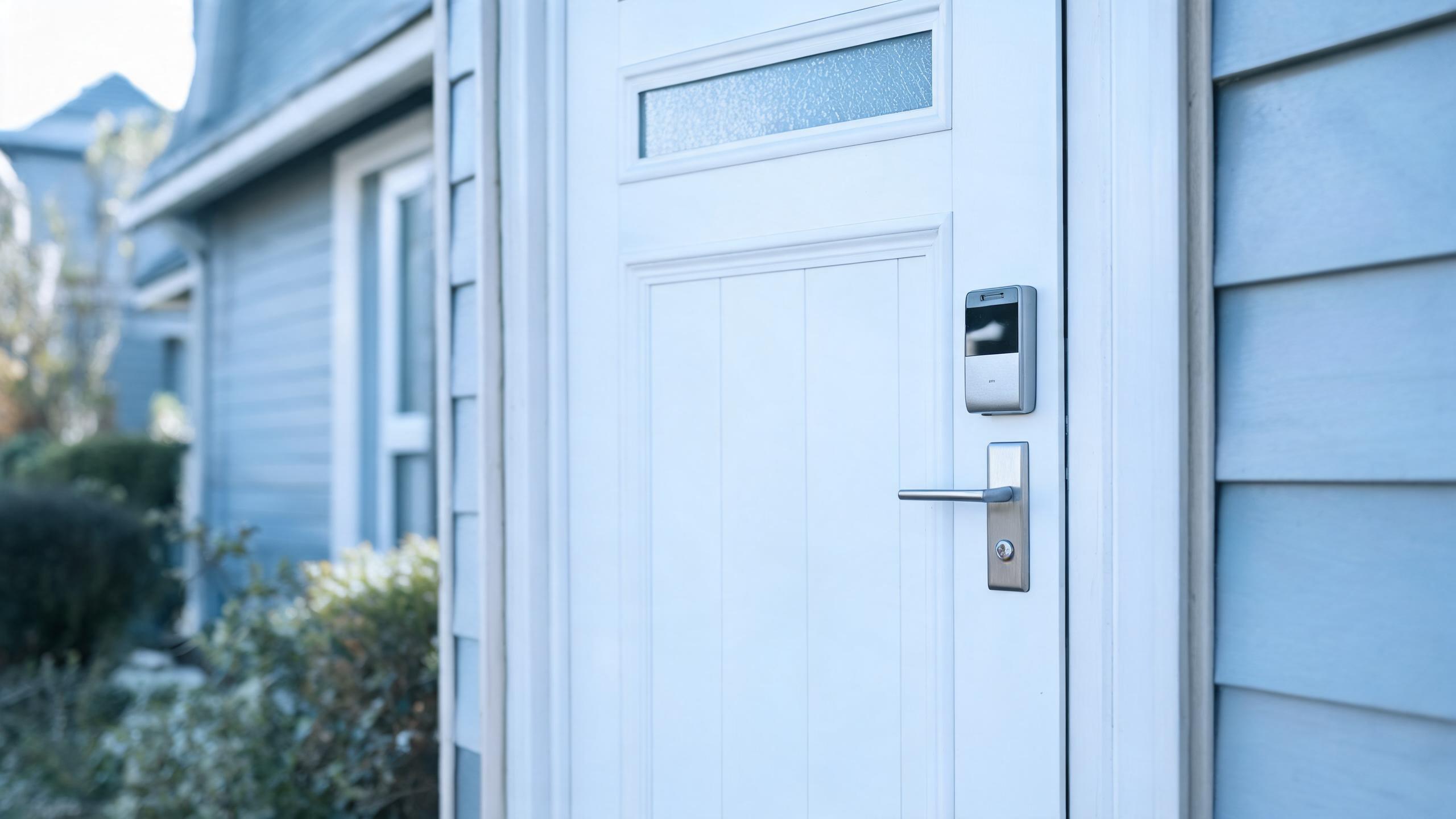
Door types
Smart locks for uPVC doors: the gearbox sets the rules, not the panel
Most uPVC doors lock through a multi-point gearbox operated by a Euro cylinder. Smart upgrades work around that gearbox and its lever/spring geometry.
uPVC (vinyl) doors are built around a steel-reinforced multi-point locking gearbox, and nearly every retrofit starts from one fact: the Euro-profile cylinder operates the gearbox, while the lever lifts the hooks and rollers. That means electronic Euro-profile cylinders are the safest first-fit smart option — they replace the cylinder without touching gearbox pre-travel. Full smart escutcheons are possible only when their cam and follower geometry matches the gearbox, because a motorized or mis-sized lever can stop the door locking at all points. This guide explains uPVC measurements, gearbox generations, reinforcement and the written fit process that prevents call-backs.
uPVC door fit at a glance
| Multi-point gearbox | Hooks, rollers and deadbolts engage from one lift of the lever; smart hardware must preserve that travel and springing. |
| Euro cylinder | Replacing the mechanical Euro cylinder with an electronic one is the standard low-risk smart upgrade. |
| Lever offset | Escutcheon spindle height and offset must match the gearbox follower or the door will not fully lock. |
| Door reinforcement | uPVC skins flex; lock plates spread load into the steel reinforcement inside the profile. |
| Cylinder protrusion | Cylinders must not protrude beyond the hardware standard allowance; snapping risk is measured, not guessed. |
| Weather sealing | Gaskets under escutcheons protect the profile chamber and electronics from rain and condensation. |
| Fit check | Gearbox brand and a measured edge photo are requested; sample fit is recommended on mixed developments. |
Answer unit
Electronic cylinder, or a full smart handle on uPVC?
Electronic Euro cylinders fit the broadest range of uPVC doors; smart escutcheons are specified only when geometry with the specific gearbox is verified.
| Option | Suitable when | Notes |
|---|---|---|
| Electronic Euro cylinder | Any uPVC door already using a Euro cylinder | Keeps gearbox, handles and multi-point operation unchanged |
| Smart escutcheon + cylinder | Verified gearbox with matching follower geometry | Motor-driven lever models checked for full hook travel |
| Keypad door handle unit | New-build uPVC door at fabrication | Specified with the door maker so gearbox and plate align |
| Rim-style smart lock | Secondary internal uPVC door without gearbox | Surface fit; not typical for exterior multi-point doors |
| Reader + motor gearbox | Premium managed residential entrance | Integrated at fabrication with online credential platform |
| Keep mechanical, add access control | Tenanted door with proven gearbox | Electronic cylinder only, fastest and reversible |
Door types and lock-body match
Exterior uPVC doors and internal uPVC room doors are different hardware classes: exterior multi-point gearboxes dominate, while interiors may be simple latch doors.
| Opening | Typical door | Lock approach |
|---|---|---|
| Residential entrance | White or foiled uPVC, multi-point locks | Electronic Euro cylinder; escutcheon only on verified gearbox |
| Apartment balcony / French | Narrow-profile uPVC, lever operated | Compact electronic cylinder sized to flush face |
| Patio sliding uPVC | Sliding patio door with hook lock | Sliding-specific smart cylinder/handle — see sliding glass guide |
| Commercial uPVC | Reinforced commercial profile | Plate-mounted escutcheon into steel reinforcement |
| Internal uPVC room | Simple latch, light duty | Light smart knob/lever, lower security requirement |
| Composite hybrid | uPVC frame with composite skin | Treat as entrance gearbox door; measure at the lock line |
Example BOM shape for a uPVC housing development
This example illustrates a typical configuration, not a specific customer project. Gearbox generations drive the mix.
| Component | Typical logic | Notes |
|---|---|---|
| Electronic Euro cylinders | Bulk path for existing multi-point doors | Lengths and cams cut to measured schedules |
| Smart escutcheons | For premium units with verified gearboxes | Mounting plates aligned to reinforcement |
| Cylinders for spares | Replacement stock for turnover and service | Keyed-alike or master options by building |
| Installation aids | Cylinder gauges and removal cards | Supplied with contractor training pack |
| Sample lot | One per gearbox generation found on site | Fitted before development-wide release |
How a uPVC smart upgrade is confirmed
- Identify the gearboxRecord brand and era of the multi-point mechanism from the strip on the frame or door edge.
- Measure the cylinderMeasure Euro length each side and confirm cam and handle center distance.
- Choose cylinder or escutcheonDefault to an electronic cylinder; specify an escutcheon only with verified geometry.
- Sample-fit each typeInstall on one door per gearbox type and test full multi-point engagement and exit.
- Roll out with sparesRelease the schedule with matched cylinders and service stock per building.
Related door types
Related uPVC and cylinder guides
uPVC doors: common questions
Can I fit a smart lock to a uPVC front door without replacing the gearbox?
In the majority of cases yes, by replacing the Euro-profile cylinder rather than the multi-point gearbox. An electronic Euro cylinder uses the same operating cam, so the lever still lifts the hooks and rollers and the door continues to lock at all points. This keeps the installation reversible and preserves the door maker’s assembly. Full smart handles are a different matter: their motorized followers must replicate the exact lever travel of the specific gearbox, so they are specified only after the gearbox generation is identified. Sending the gearbox strip text and an edge photograph is enough for the first assessment.
Why do some smart handles fail to lock all points on uPVC doors?
Multi-point locks depend on precise lever angle and return force: the lever must lift fully to set hooks, rollers and the deadbolt, and spring back without dragging. A smart handle with the wrong follower offset, cam timing or return spring can move the gearbox only part of its travel, leaving top and bottom points unengaged even when the handle feels normal. Electronic cylinders avoid the issue because the handle mechanism is untouched. When escutcheons are specified, we validate the full lift-and-lock sequence on a real door of that gearbox type during the sample stage rather than relying on datasheet claims.
How is the Euro cylinder length measured on a uPVC door?
With the door open, measure from the center of the cylinder fixing screw to the outer face of the handle plate on each side. Those two numbers define the asymmetric cylinder length (for example 30/40). Add the cam type and the center distance to the handle hub for escutcheon checks. Security-conscious projects also check that the cylinder does not protrude beyond the allowed standoff, since exposed cylinders invite snapping. Because uPVC faces are often flush with the hardware channel, a standard symmetric cylinder may be wrong even when the door thickness is ordinary; per-door measurement across a development is standard practice.
Will an electronic cylinder survive rain on an exposed uPVC door?
Electronic cylinders for exterior uPVC doors are specified with sealed housings and an ingress rating suited to the exposure, and the letter plate, drip trim and threshold drainage handle most water away from the lock line. Condensation inside unventilated porches is a bigger variable than direct rain, so battery contacts are gasketted and battery changes follow a planned cycle. Doors in fully exposed coastal or driving-rain positions should be declared in the RFQ so the higher-rated model is quoted. The surrounding seals on the door itself must remain intact — a smart cylinder cannot compensate for a failing weather gasket.
Do smart locks affect uPVC door warranties?
It depends on how the upgrade is performed. Replacing the Euro cylinder with a compatible electronic unit is generally treated as a like-for-like consumable change, while drilling the profile, altering the gearbox or fitting a non-listed motorized handle can fall outside the door maker’s terms. For new developments we recommend specifying smart hardware with the door fabricator at order stage, or using cylinder-only retrofits with a documented fit confirmation. Where the system supplier publishes an approved hardware list, that list governs the choice. Written records of gearbox type, cylinder spec and installer protect both the warranty and the housing developer’s handover file.
Plan smart cylinders for your uPVC doors
Share the gearbox brand and measured cylinder dimensions — receive a per-door model map and sample, MOQ and lead-time terms in writing.
Discuss your project (RFQ)Project configurationsLast updated: October 31, 2026 · Reviewed by the Smart Lock Factory editorial team