
Comparisons
Retrofit module or full lock replacement?
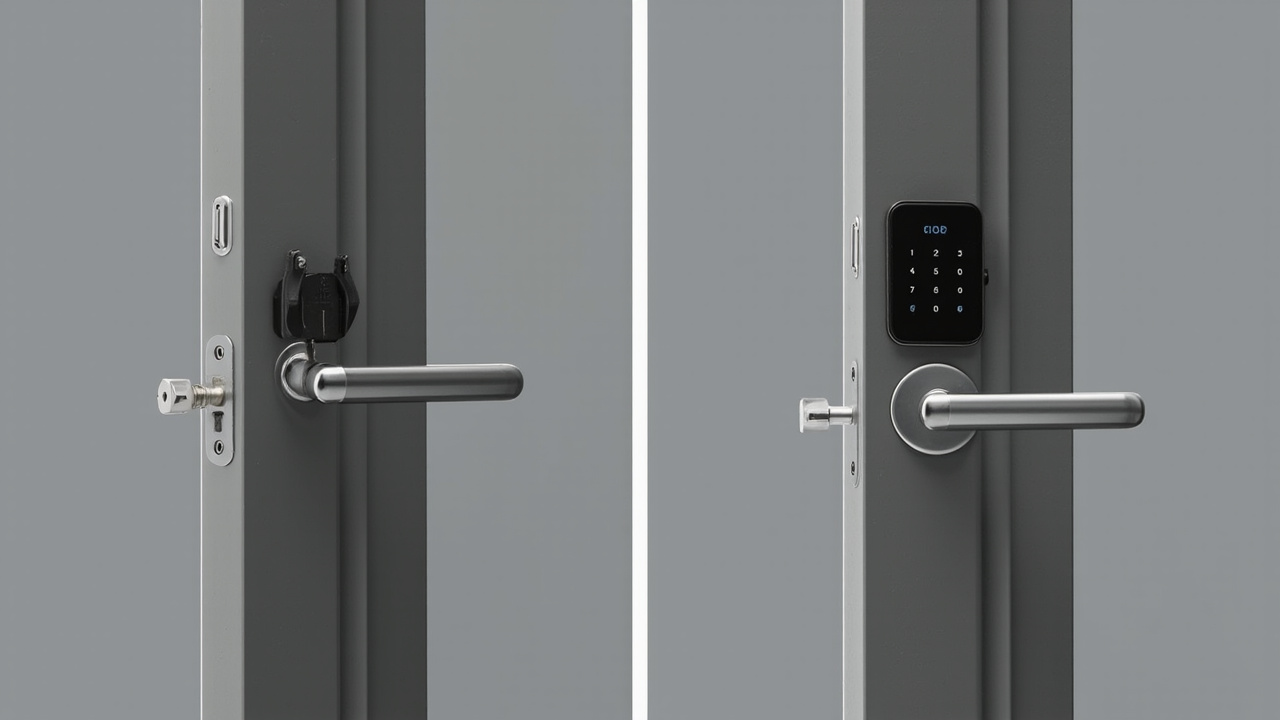
Retrofit modules motorize an existing lock in minutes with no new door prep; full replacement swaps the body, trim and sometimes strike for a purpose-built assembly. Speed and reversibility fight against integration, feel and long-term reliability.
Retrofit covers two distinct upgrades that buyers often conflate. The first is a retrofit module: a small motorized device that turns the existing deadbolt’s thumb-turn from inside, controlled by Bluetooth or a hub, leaving the cylinder, bolt and keys untouched. Installation takes minutes with a screwdriver, the door gets no new holes, and removal returns the door to its original state — ideal for renters, listed buildings and pilot programs. The second is a smart replacement: the existing lock body comes off and a purpose-built smart deadbolt, mortise case or commercial lock takes its place, with coordinated trim, a stronger strike if needed and electronics designed into the mechanism rather than strapped onto it. Replacement needs more labor and sometimes new prep, but it removes the double-mechanism compromises of retrofit kits, improves weather sealing and gives commercial projects graded hardware. A third hybrid path replaces only the cylinder with a smart cylinder on euro-profile markets. Door prep, warranty transfer, who owns the door and the required security grade decide the path; compatibility lists and install limits per model are confirmed in writing per quotation.
Retrofit vs replacement at a glance
| Core idea | Retrofit motorizes the existing lock; replacement installs a purpose-built smart assembly. |
| Installation | Minutes with a screwdriver versus body removal, prep and trim work. |
| Door modification | No new holes in classic retrofits; replacement may add or change prep. |
| Reversibility | Fully removable, often renter-friendly; replacement is effectively permanent. |
| Hardware quality | The old mechanical lock sets the ceiling; replacement can upgrade grade and strike. |
| Failure surface | Two coupled mechanisms; replacement has one integrated mechanism. |
| Our policy | We offer retrofit cylinders and full smart locks and recommend per door ownership and grade needs. |
Answer unit
Which upgrade path fits the project?
Renters, pilots and heritage doors favor reversible retrofit; owned homes wanting full control replace the deadbolt; commercial and multifamily upgrades replace to gain graded bodies, fleet consistency and warranties.
| Situation | Better path | Reason |
|---|---|---|
| Rented apartment | Retrofit module | No permission needed and fully reversible. |
| Owned family home | Smart lock replacement | Integrated feel and upgraded strike. |
| Euro-profile door upgrade | Smart cylinder retrofit | Swaps the cylinder without touching the case. |
| Multifamily renovation | Full replacement fleet | Consistent graded hardware and warranties. |
| Heritage or listed door | Reversible retrofit | Preserves fabric and satisfies conservation. |
| Pilot program before rollout | Retrofit modules | Tests appetite with minimal commitment. |
Side by side across real projects
Retrofit modules shine where the constraint is the door itself — lease, history or uncertainty. Once the constraint is gone, a purpose-built replacement is almost always the cleaner long-term installation.
| Decision factor | First option | Second option |
|---|---|---|
| Install time | Minutes per door, no special tools. | Half an hour to hours, possibly routing. |
| Security ceiling | Inherited from the old lock and strike. | Selected fresh, including grade and strike. |
| Weather sealing | Original seal plus an interior add-on. | Designed as one sealed assembly. |
| Bulk and feel | Add-on visible on the interior turn. | Coordinated trim inside and outside. |
| Key override | Original keys continue unchanged. | Designed into the new product cleanly. |
| Warranty picture | Module warranty; old lock unchanged. | Single warranty on the complete assembly. |
Decision checklist before upgrading
The path depends on ownership, prep and duty. Answer the following before buying modules or bodies across a project.
| Checkpoint | What to confirm | Why it matters |
|---|---|---|
| Door ownership | Whether the buyer can permanently modify the door. | Drives reversibility requirements outright. |
| Existing hardware | Lock type, backset, cylinder and strike condition. | Determines compatibility lists for retrofits. |
| Required grade | Any commercial or insurance-mandated grade. | Retrofit cannot lift the old lock’s grade. |
| Aesthetic tolerance | Acceptance of an interior add-on module. | Replacement gives a factory-finished look. |
| Rollout scale | Pilot, single home or hundreds of units. | Labor and warranty economics change with scale. |
Choosing the upgrade path
- Confirm permissionsCheck lease, strata or conservation constraints.
- Inspect the lockRecord brand, prep, cylinder and strike state.
- Define the grade needDecide whether security must be upgraded, not just connected.
- Pilot both if unsureFit a module and a replacement on sample doors.
- Commit per opening classUse reversible and replacement paths where each fits.
Related comparisons and guides
Related retrofit and hardware guides
Buyer questions about retrofit and replacement smart locks
Are retrofit smart modules as secure as replacing the lock?
The module does not change the mechanical security at all: the deadbolt, cylinder, strike and frame remain exactly as they were, so a retrofit connects an average lock but cannot upgrade a weak one. Its additional risks are operational rather than structural — the interior motor must be protected from a through-door attack path, and a lost phone is managed through the app’s account security. When the existing lock is already solid with a reinforced strike, a quality module delivers most of the convenience of replacement with reversible installation. When the door carries a worn or low-grade lock, replacement upgrades the whole assembly. We recommend inspecting the existing hardware first; module compatibility lists and the graded replacement options that fit the same prep are provided per model in writing.
Can a renter install a smart lock without the landlord’s permission?
A purely interior retrofit module that clips onto the thumb-turn and leaves the cylinder, exterior face and keys unchanged is designed for exactly this situation and can usually be removed without trace, but lease terms vary and some contracts explicitly restrict even reversible modifications, while exterior changes or cylinder swaps almost always require written permission. The practical path is to use a reversible interior module, keep the original keys fully working, and restore everything at move-out; tenants should photograph the installation and retain the original parts. Where building fire or insurance rules exist, they still apply regardless of reversibility. We supply product dimensions and confirm which SKUs leave the exterior and cylinder untouched so tenants and landlords can assess the modification objectively per model rather than guessing from the product category.
Does a retrofit module work with any deadbolt?
Not any deadbolt: modules need a thumb-turn shape, backset clearance and door geometry inside the published compatibility list, and they struggle with decorative plates, narrow stiles and certain interconnected locksets. Euro-profile markets instead use smart replacement cylinders that motorize the existing cam without touching the case, again with a compatibility list covering cylinder length and cam form. Before buying a quantity, fit the exact module on the exact door type; the most common pilot surprise is interior trim collision, not electronics. We publish fit lists and required measurements for each retrofit SKU and recommend sample fitting on the worst door in the project; confirmed fit conditions and any required adapters are documented per quotation rather than described as universally compatible.
Is replacing the whole lock more reliable than a retrofit module?
Generally yes over a long service life, because a replacement smart lock is one mechanism engineered together, while a module couples a new motor to an old mechanical lock — two products from different eras sharing one bolt, with more alignment tolerance and an interior part that can be bumped or mis-seated. Modules remain impressively reliable for light-duty homes and short tenancies, and their electronics are mature; the gap shows on high-traffic doors, harsh climates and commercial fleets where consistent factory alignment matters. Warranty handling is also cleaner with a single assembly. For permanent installations and managed portfolios we therefore lean to replacement, recommending modules mainly for reversibility and pilot needs; expected duty cycles and the service logic of each path are discussed per project, with model-specific terms stated in writing.
What happens to the original keys after retrofitting or replacing?
A true interior retrofit leaves the cylinder untouched, so the original keys continue to work exactly as before and become the fallback when batteries fail — tenants and landlords should agree who holds them. A full smart replacement is supplied with its own override, typically a mechanical cylinder with new keys, and the old keys no longer match; multifamily projects plan rekeying or key-control policy as part of the rollout for exactly this reason. Smart replacement cylinders in euro markets come with their own keys as well. Whichever path is chosen, the override must be tested and spare access documented before anyone relies on the smart credential. We list the override type, supplied keys and keyway for each SKU so building operators can write their key-control procedure; override details and spare-key availability are confirmed per model in writing.
Planning a retrofit or fleet replacement program?
Send us the existing lock details, door ownership constraints and required grade. We map reversible retrofit modules, smart cylinders and full replacement SKUs to each opening class, confirm fit lists and warranties, and arrange pilot units for side-by-side evaluation.
Request Spec Sheet + QuoteComparison overviewLast updated: October 31, 2026 · Reviewed by the Smart Lock Factory editorial team