
Comparisons
Smart locks versus mechanical locks: what actually changes
Electronic locks add credentials, audits and remote administration but also batteries, firmware and a new failure model. Mechanical locks offer decades of predictable function with keys that can be lost, copied and reissued only in person.
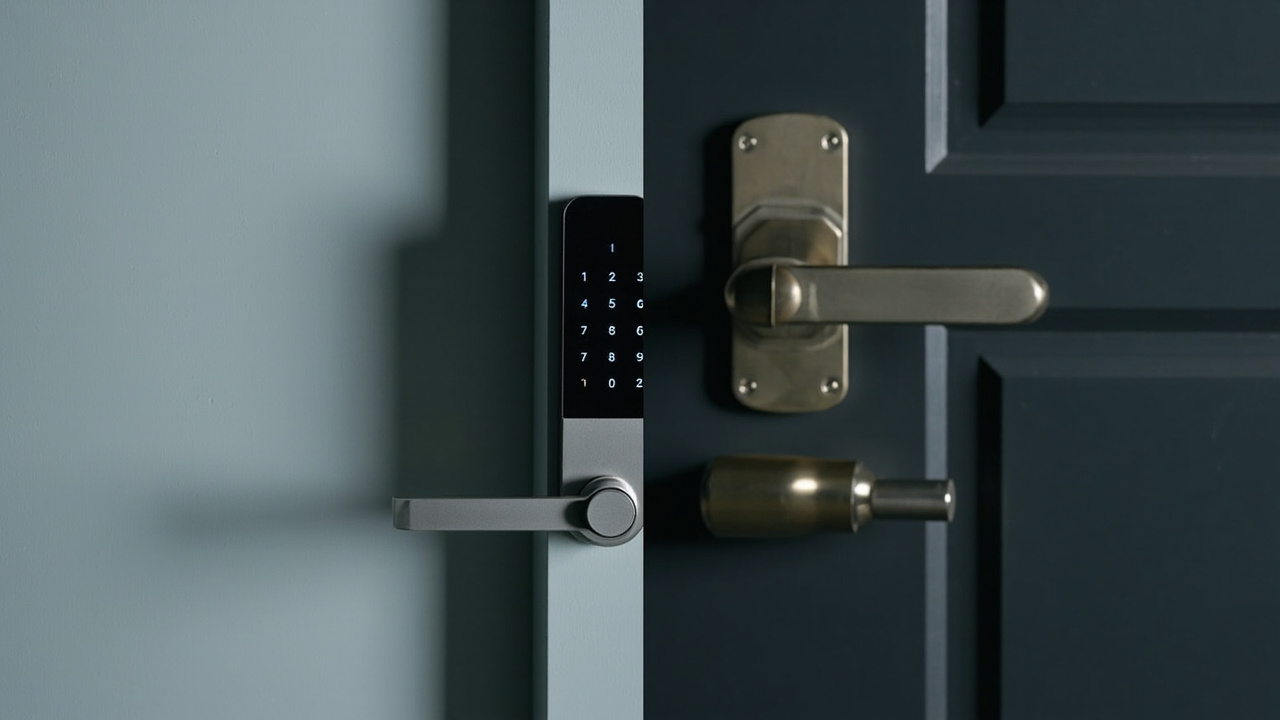
The debate between smart and mechanical locks is really a debate about key management. A quality mechanical cylinder or deadbolt offers a century of refined engineering: no batteries, no firmware, no accounts, operation across any climate, and security determined by grade, cylinder anti-pick features and strike plates. Its costs are physical-key logistics: keys are copied, lost and collected, master-key systems are expensive to rekey after staff turnover, and there is no audit trail. Smart locks replace or augment the key with codes, cards, fingerprints or phones, adding time-limited credentials, event logs and remote management, which transform rental and staff operations; they introduce batteries, electronics weather limits, firmware maintenance and electronic failure modes. The strongest real-world choice is often an electromechanical hybrid: electronic access plus a retained mechanical override. This guide compares the two honestly; grade and electronics ratings per model are confirmed per quotation.
Smart vs mechanical at a glance
| Credential model | Mechanical locks use physical keys; smart locks use codes, cards, biometrics or phones, often with a mechanical override retained. |
| Administration | Rekeying mechanical cylinders requires a locksmith or replaceable cores; electronic credentials are changed, dated and revoked in software. |
| Audit visibility | Mechanical locks record nothing; smart locks log which credential opened the door and when, depending on model. |
| Power dependence | Mechanical locks never need power; smart locks run on batteries with low-battery warnings and emergency power paths. |
| Weather maturity | Mechanical designs have long outdoor track records; electronic assemblies need matched IP rating and thermal design. |
| Upfront and lifecycle cost | Mechanical hardware is cheaper initially; electronics cost more upfront but cut key-management labor over time. |
| Our policy | We supply both classes and electromechanical hybrids and state grade ratings, override design and environmental limits per SKU. |
Answer unit
Where does each lock belong?
High-turnover doors, rentals and managed properties benefit strongly from electronics; low-traffic, extreme-environment and purely physical-security openings remain well served by mechanical cylinders; most primary entrances land on hybrid locks.
| Opening or owner | Better choice | Reason |
|---|---|---|
| Rental entrance door | Smart or hybrid lock | Codes eliminate key handover and rekey costs. |
| Outdoor gate in severe climate | Mechanical or sealed hybrid | Proven survival with minimal service visits. |
| Family home front door | Hybrid smart lock | Convenience daily; mechanical key as backup. |
| Warehouse plant room | Mechanical restricted core | Few users, harsh dust, no network needed. |
| Staffed office suite | Smart lock or access system | Revocation on departure and audit trails. |
| Construction site temporary door | Mechanical or dated-code electronic | Either suits; turnover pattern decides. |
Side by side across real projects
Security comparisons must include the physical layer: a Grade-3 smart lock with a short throw bolt is not automatically stronger than a well-installed Grade-1 mechanical deadbolt with reinforced strike.
| Decision factor | First option | Second option |
|---|---|---|
| Turnover rekey | Code change in seconds, no locksmith. | Physical rekey or core change per door. |
| Lost credential | Delete the code or key remotely or by sync. | Rekey affected doors or accept exposure. |
| Audit trail | Credential-level logs of entries. | No record of who opened the door. |
| Battery failure | Warnings plus emergency power or override. | Impossible; no power is involved. |
| Service life model | Electronics produced in runs; firmware maintained. | Decades of operation with simple servicing. |
| Purchase cost | Higher unit price, lower key labor. | Low unit price, recurring key logistics cost. |
Lock-type decision checklist
The right class follows operational needs and the physical door, not fashion. The items below are resolved before hardware selection.
| Checkpoint | What to confirm | Why it matters |
|---|---|---|
| Security grade | ANSI/BHMA or EN grade of the complete lock. | Compare like with like across electronic and mechanical. |
| Override design | Mechanical key, core type and emergency power on smart locks. | Defines rescue when electronics or batteries fail. |
| Environmental rating | IP rating, temperature range and exposure of the fit. | Outdoor electronics need the assembly rating. |
| Keying policy | Master system, restricted keyways or removable cores. | Mechanical estates need a documented key hierarchy. |
| Maintenance plan | Battery calendar, firmware updates and spare parts. | Electronics need a service owner for multi-year life. |
Choosing the lock class in five steps
- Count turnoverMeasure how often holders change per year per door.
- Assess the openingRecord exposure, door material, fire duties and grade needs.
- Model rekey costPrice locksmith visits against credential-management labor.
- Define the rescue pathDecide acceptable failure and backup procedures.
- Pilot hybrid hardwareTest electronics and mechanical override together.
Related comparisons and guides
Related lock-class and hardware guides
Questions comparing smart and mechanical locks
Are smart locks less secure than traditional mechanical locks?
Not categorically, but the security comparison is often made incorrectly. A certified high-grade smart lock with a full-size deadbolt or mortise latch, anti-pry escutcheon and a quality mechanical override meets the same physical standards as a traditional lock while adding credential controls; a cheap electronics-first gadget with a short throw bolt and weak strike can be physically inferior to an inexpensive Grade-2 mechanical deadbolt. Electronics also add new attack surfaces such as default codes or unmaintained firmware, which mechanical locks simply do not have. Buyers should compare the physical grade of the complete assembly, the cylinder and keyway quality, the strike reinforcement and the firmware update policy together rather than trusting the word “smart”. Physical and electronic security specifications for each model are documented per quotation.
What happens when a smart lock battery dies?
Quality smart locks give low-battery warnings weeks ahead through the app, keypad tones or LED patterns, and they provide one of several rescue paths when batteries are fully drained: a retained mechanical cylinder opened with a physical key, external power contacts on the escutcheon that accept a standard battery pack, or a backup 9-volt-style feed on selected models. The lock also fails in a defined state — locked or unlocked according to its certification — and fire egress always retains mechanical inside release. Operators should put batteries on a calendar rather than waiting for alerts. Battery format, warning policy, emergency power method and fail state for each SKU are stated in writing; we recommend practicing the rescue procedure during handover rather than discovering it during a lockout.
Do smart locks work for many years like mechanical locks?
Mechanical locks can operate for decades with lubrication and simple servicing because they contain no electronics. Smart locks combine a durable mechanical chassis with electronic components produced in production runs, batteries on service cycles and firmware that ideally receives updates; a well-chosen smart lock gives many years of reliable service, but its service model includes spare-part availability, battery changes and occasional firmware updates, which is why institutions ask about long-term supply and warranty terms in writing rather than expecting mechanical-grade immortality. Environmental discipline matters too: electronics exposed outside their rated temperature or water envelope fail earlier. We design lock bodies for long life and document current warranty, spares and firmware policy per model per RFQ, without promising open-ended decades for electronic components.
Is it worth rekeying mechanically instead of installing smart locks?
For low-turnover doors with trusted long-term holders — private plant rooms, owner-occupied second homes, stable utility rooms — a restricted keyway with removable cores can remain cheaper and simpler than electronics, because rekeys are rare and no service owner is needed. Where turnover is frequent — rentals, staff doors, student housing, shared facilities — each rekey costs locksmith labor, core inventory and coordination, and electronic credential changes quickly pay back the higher lock price through eliminated visits. A hybrid estate is common: high-grade mechanical cores on a few sensitive doors and smart locks everywhere people rotate. Buyers should annualize the locksmith cost per door and compare it against the electronic service cost; we help model both using current hardware and service pricing per RFQ.
Can I keep my existing keys when converting to a smart lock?
Often yes. Many smart deadbolts and retrofit motors are designed to retain the existing cylinder and keyway, letting owners use their current physical keys while adding electronic credentials; full-replacement smart mortise locks may instead include a new override cylinder requiring fresh keys. The rekey question is therefore separate from the electronics question and depends on the product type and door prep. Retrofit solutions minimize installation work and preserve keys, while replacement solutions improve the full lock body and strike but add rekeying. Buyers should state which cylinders and keys they want preserved and whether master-key hierarchy must continue; compatibility with specific keyways and cylinder standards is confirmed per model, and our retrofit-versus-replacement guidance is matched to the actual door survey.
Deciding between mechanical and smart lock hardware?
Send your door inventory, turnover frequency and exposure conditions with your RFQ. We confirm physical grades, override designs, environmental ratings and maintenance terms for both classes, with hybrid samples for doors that need electronics and keys.
Request Spec Sheet + QuoteComparison overviewLast updated: October 31, 2026 · Reviewed by the Smart Lock Factory editorial team