
Comparisons
Deadbolt versus mortise: two ways to motorize the bolt
A deadbolt smart lock drives one bolt in a bored cross-bore and retrofits fast; a mortise smart lock runs a pocketed case that combines latch and deadbolt behind lever trim. Door prep, handle plans and traffic level decide between them.
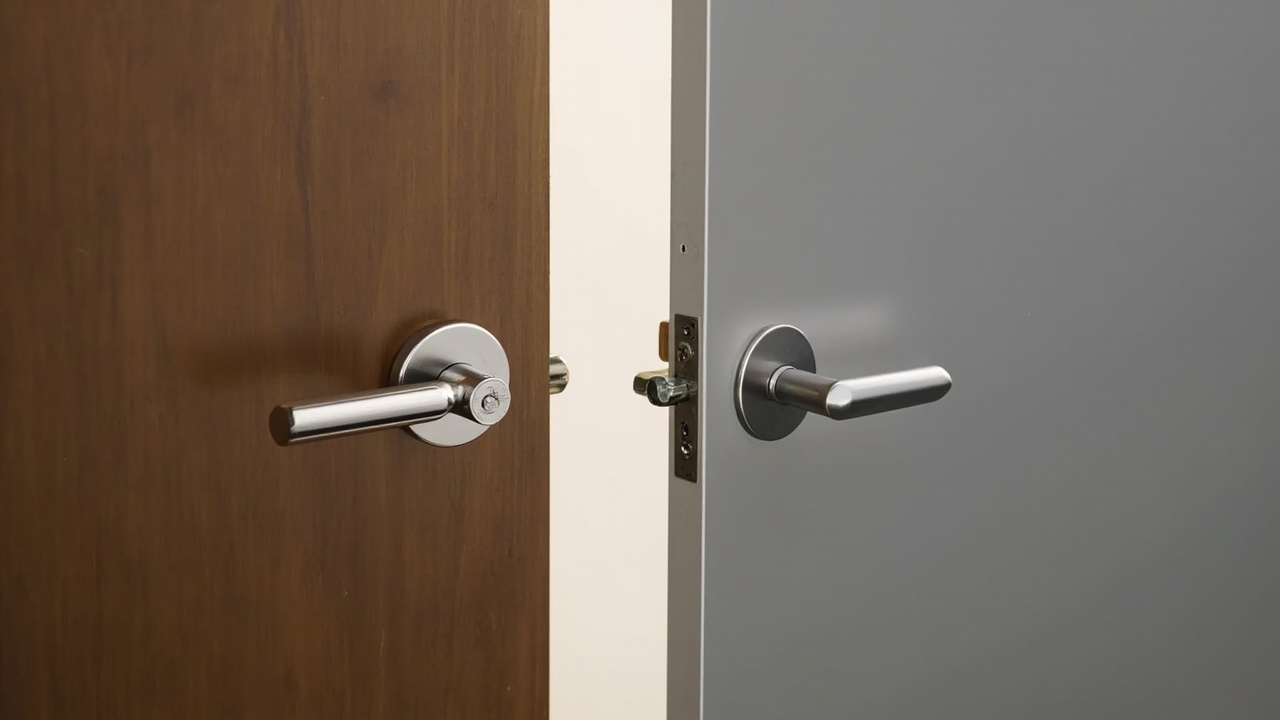
The deadbolt-versus-mortise decision begins with the door, not the electronics. North American wood and steel doors commonly carry two cross-bores: a cylindrical latch for passage and a separate deadbolt above it, which is why a tubular deadbolt smart lock can replace an existing deadbolt in under an hour with no new prep. A mortise lock instead occupies a rectangular pocket cut into the door edge; the case carries the latch, the deadbolt, the clutch and frequently a clutch-adjustable lever, with a long armored front on the edge. Mortise bodies cost more and need skilled fitting, but they reward high-traffic doors with stiffer construction, freer handle choices and better field serviceability. Electronically, both patterns can offer the same credentials — PIN, card, fingerprint or phone — so the honest comparison is mechanical: prep, abuse tolerance, trim and price. Case dimensions, backset and motor torque for each SKU are confirmed in writing per quotation, and our workshop advises which pattern fits the door schedule before tooling is finalized.
Deadbolt vs mortise at a glance
| Core idea | A deadbolt lock drives one bolt in a cross-bore; a mortise lock drives a multi-function case set in an edge pocket. |
| Door prep | Deadbolts use standard bored holes and retrofit quickly; mortise bodies need a routed pocket, a long front and skilled fitting. |
| Hardware scope | Deadbolts often lock an existing passage knob; mortise sets include latch, bolt and lever trim in one coordinated system. |
| Strength profile | Mortise cases generally carry heavier components and longer fronts for abusive commercial openings. |
| Handle freedom | Mortise platforms accept a wider range of lever and escutcheon trims on the same case. |
| Unit economics | Tubular deadbolts win on unit price and install time; mortise sets win on service life at high cycle counts. |
| Our policy | We manufacture both patterns and recommend based on the measured door schedule, not on whichever case is in stock. |
Answer unit
Where does each pattern fit?
Retrofits, apartments and light-duty homes favor the deadbolt; lobbies, hotel guest floors and high-abuse commercial doors favor mortise cases. Mixed projects often combine both by opening type.
| Project type | Better pattern | Reason |
|---|---|---|
| Rental apartment upgrade | Deadbolt smart lock | Reuses the existing bore; fast turnover installation. |
| New hotel guest floor | Mortise smart lock | Lever trim, duty cycle and service access match hotel use. |
| Single-family retrofit | Deadbolt smart lock | No pocket routing and lower installed cost. |
| Commercial corridor door | Mortise smart lock | Heavier case and coordinated trim survive abuse. |
| Premium residential entrance | Mortise smart lock | Lever aesthetics and a solid feel at the front door. |
| Budget multifamily refresh | Deadbolt per door | Keeps renovation cost predictable across many units. |
Side by side across real projects
Projects get into trouble when they buy mortise aesthetics for doors that were bored for tubular locks, or try to run cheap deadbolts on doors that cycle constantly. Match the body to the opening first.
| Decision factor | First option | Second option |
|---|---|---|
| Installation speed | About an hour on a standard bored door. | Longer: pocket routing, front fitting and trim alignment. |
| Door damage on install | Minimal; reuses existing bores. | A new pocket is cut into the door edge. |
| Traffic tolerance | Good on homes and moderate-use doors. | Engineered for frequent commercial cycling. |
| Trim options | Pad style or limited handleset designs. | Broad lever and escutcheon catalog on one case. |
| Service and parts | Whole-unit swap is typical. | Case and trim can often be serviced separately. |
| Installed price | Lower hardware and labor cost. | Higher hardware cost plus skilled prep labor. |
Decision checklist before ordering
The points below should be answered from the actual door schedule. We confirm dimensions and compatibility for the shortlisted models in writing before volume orders.
| Checkpoint | What to confirm | Why it matters |
|---|---|---|
| Bore and backset | Existing cross-bore diameter, edge bore and backset of every door type. | Determines whether a deadbolt retrofit is possible. |
| Door material and thickness | Wood, steel or composite and the full thickness range. | Mortise pockets and motor torque are material dependent. |
| Trim coordination | Whether passage levers and locked trims must match. | Mortise sets solve this in one catalog family. |
| Expected cycles | Daily openings and expected service years. | High-cycle doors justify the heavier case. |
| Install team | Whether site crews can route mortise pockets accurately. | Bad pocket routing is the top cause of call-backs. |
Specifying in five steps
- Survey the openingsRecord bores, backsets, thickness and edge material per door.
- Estimate trafficClassify each opening by daily cycles and expected abuse.
- Choose the body patternAssign deadbolts to retrofit doors and mortise cases where warranted.
- Confirm trim familyLock lever styles, finishes and handle handedness project wide.
- Validate samples on siteInstall pilot units on the worst door before full rollout.
Related comparisons and guides
Related lock body and hardware guides
Buyer questions about deadbolt and mortise smart locks
Can a deadbolt smart lock be installed on an existing mortise-prepped door?
Usually not without adaptation. A mortise door carries a long rectangular pocket and an armored front rather than the two round cross-bores a tubular deadbolt expects, so fitting a deadbolt means either filling and re-boring the door (rarely worth it on quality wood or steel doors) or selecting a mortise-case smart lock that drops into the existing pocket. The reverse is easier: a door already bored for a deadbolt accepts a deadbolt smart lock directly, while converting it to mortise requires routing a new pocket and often replacing the trim. Before ordering either way, measure the edge front, the bore spacing and the backset rather than trusting the door label; compatible case families and required adapters are listed per model in the quotation.
Are mortise smart locks safer than deadbolt smart locks?
The mortise body gives designers more steel and a longer frame engagement to work with, and grade-certified mortise locks dominate the upper end of commercial hardware, but the installed security depends on the certified grade of the exact SKU, the strike, the frame and the door itself rather than the body label alone. A properly installed, grade-rated tubular deadbolt with a reinforced strike and a strong bolt comfortably secures millions of homes, while a cheap mortise case with weak screws offers little. Buyers should compare the ANSI/BHMA grade, the bolt throw and the included strike of the shortlisted products side by side instead of assuming the body shape settles the question; tested grades and bolt details for each SKU are documented in writing.
Which is cheaper for a multifamily renovation, deadbolts or mortise?
For a typical renovation budget the tubular deadbolt path is cheaper twice: the unit price is lower and installation reuses the existing bore, so a crew can finish far more doors per day without routers or new fronts. Mortise economics improve when doors are already mortise prepped, when the design demands matching lever trim, or when the calculated service life makes reduced maintenance worth the premium. The right comparison is total cost across the hold period — hardware, labor, batteries, call-outs and rekeying — rather than unit price alone. Send the door schedule and expected hold period with the RFQ; we model both patterns and confirm the bill of materials per project.
Do mortise smart locks need a special door thickness?
Mortise cases are larger than tubular mechanisms, so manufacturers publish a door thickness range for each case family, and doors outside that range need thin-door kits, custom fronts or a different model rather than force-fitting. Beyond thickness, the edge width must accommodate the armored front and the stile must leave enough material around the pocket, which matters on narrow aluminum or glass-framed doors. Fire-labeled doors additionally require compatible listed hardware without disturbing the label — always check the door certification before routing. Minimum and maximum door thickness, stile constraints and compatible fronts for each case are confirmed per model in the quotation rather than assumed across product families.
Can I mix deadbolt and mortise smart locks in one building?
Yes, and many well-run projects do exactly that: mortise smart locks on the lobby, amenity rooms and high-abuse corridor openings, tubular deadbolt smart locks on individual unit entrance doors, all managed by the same credential platform. The mixing risk is not electronics but fleet consistency — different bodies mean different spare parts, battery access routines and installer training, so the maintenance manual should name exactly which openings use which pattern and keep spares for each. Choosing both patterns from one manufacturer also keeps finishes, firmware and support aligned. Body schedules, common platform support and spare-part lists are documented per project so the on-site team knows what is installed where.
Choosing between deadbolt and mortise smart locks?
Send us your door schedule with bores, thickness, materials and expected traffic. We recommend the body pattern per opening, confirm case dimensions and grades for each model, and supply matched samples for pilot installation before volume orders.
Request Spec Sheet + QuoteComparison overviewLast updated: October 31, 2026 · Reviewed by the Smart Lock Factory editorial team