
Comparisons
ANSI/BHMA Grade 1, 2 and 3: what the levels mean
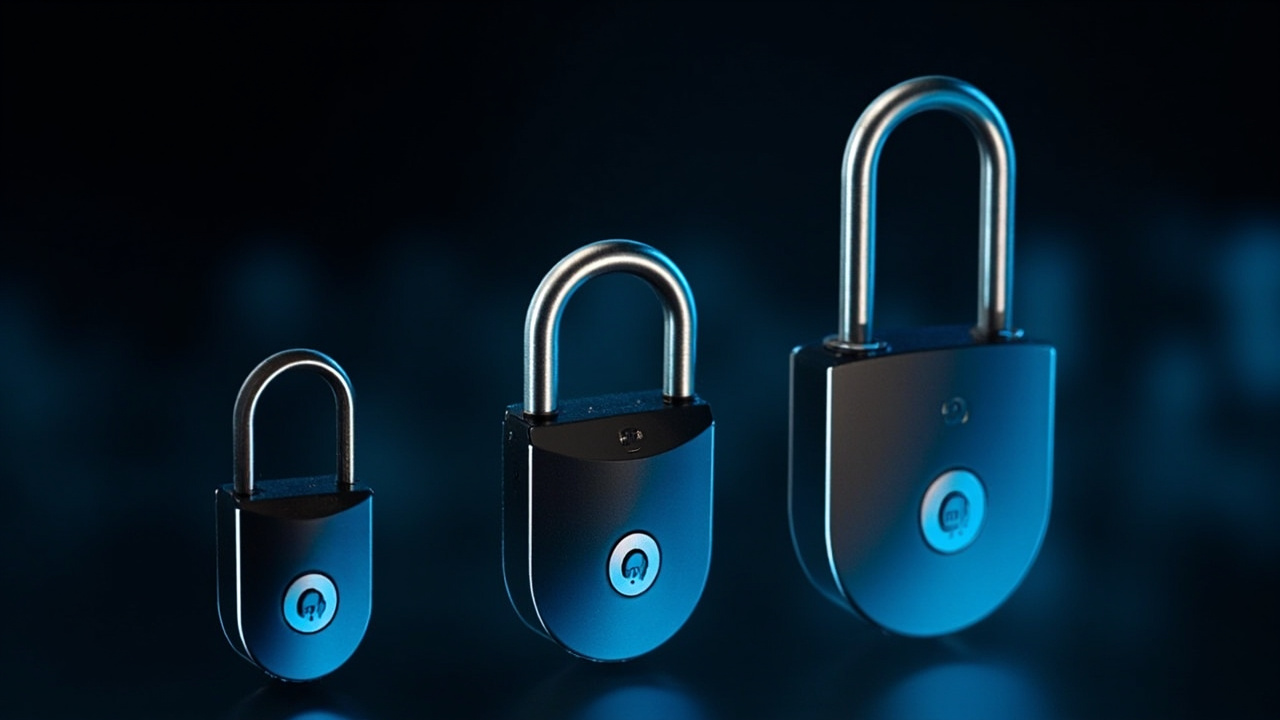
The three grades summarize performance in standardized cycle, force and security tests, not marketing labels. Grade 1 heads into heavy commercial abuse, Grade 2 covers most light commercial and multifamily duty, and Grade 3 serves standard residential use.
ANSI/BHMA grading gives buyers a common language for how much abuse a lock is built to survive. A lock earns its grade by passing a defined suite of operational cycle, torque, impact, forced-entry and finish tests on the complete product, with the grade thresholds published in the relevant ANSI/BHMA standard; the exact current test values should always be read from the standard and the product’s certification listing rather than from memory or sales sheets. Grade 1 products are built for high-abuse commercial openings such as lobbies, corridors and institutional doors; Grade 2 products carry the bulk of light commercial, office and multifamily demand where traffic is real but not brutal; Grade 3 products are designed for typical residential entrance duty. Crucially, a grade applies to a certified SKU, not a brand or a body shape, and a lock is only as strong as its strike, frame and door. Our commercial team provides the certification listing for each grade-rated model in writing per quotation, and our standards hub explains the current ANSI/BHMA requirements in detail.
Grading at a glance
| Meaning | Grades summarize standardized cycles, force, impact and security tests on the complete lock. |
| Grade 1 | The highest tier, intended for heavy commercial and institutional abuse. |
| Grade 2 | The workhorse tier for light commercial, office and multifamily doors. |
| Grade 3 | The standard tier for typical residential entrance duty. |
| Scope rule | A grade belongs to a certified SKU, never to a brand, shape or price tag. |
| System effect | Strike, frame, door and install quality cap the real-world security of any grade. |
| Our policy | We name the certified grade per model and never upgrade a product’s label in marketing language. |
Answer unit
Which grade goes on which opening?
Specify from traffic and exposure, not aspiration alone: Grade 1 where abuse and duty cycles are severe, Grade 2 for managed everyday doors, Grade 3 where residential use is the documented duty.
| Opening | Typical grade | Why |
|---|---|---|
| Institutional corridor | Grade 1 | Very high cycles and deliberate abuse. |
| Office main entrance | Grade 1 or 2 | Driven by traffic and security spec. |
| Multifamily unit door | Grade 2 typical | Daily managed traffic over many years. |
| Small office interior | Grade 2 | Predictable light commercial use. |
| Family home entrance | Grade 2 or 3 | Depends on desired margin and budget. |
| Storage closet | Grade 3 | Low cycles and low forced-entry exposure. |
Side by side across real projects
Over-grading every door wastes budget that could pay for proper strikes and door hardware; under-grading the lobby guarantees premature wear. Match the grade to the opening’s documented duty.
| Decision factor | Grade 1 (heavy commercial) | Grades 2 and 3 (light duty) |
|---|---|---|
| Designed duty | Heavy commercial and institutional duty. | Grade 2: light commercial; Grade 3: residential. |
| Typical openings | Lobbies, corridors and high-risk rooms. | Grade 2: offices and units; Grade 3: homes. |
| Abuse margin | Largest margin for force and cycles. | Grade 2: solid daily margin; Grade 3: household duty. |
| Price posture | Highest unit cost in the family. | Grade 2: balanced; Grade 3: most economical. |
| Spec posture | Often mandatory in institutional specs. | Grade 2: multifamily default; Grade 3: retail homes. |
| Certification view | Top tier of the graded family. | Progressive lower duty tiers of the standard. |
Checklist for grade-based specifications
Asking for the certification listing and the tested configuration prevents label disputes after delivery. Confirm the following per SKU.
| Checkpoint | What to confirm | Why it matters |
|---|---|---|
| Certification listing | The exact certified model and its current ANSI/BHMA listing. | Similar-looking models are not automatically covered. |
| Tested configuration | Whether the grade covers the full lock or a component only. | Grades must reflect the delivered assembly. |
| Strike and frame | The strike specified with the lock and frame condition. | A Grade 1 lock on a weak frame underperforms. |
| Fire duties | Whether the opening also needs fire-listed hardware. | Grade and fire listing are separate requirements. |
| Finish testing | Expected finish performance for the environment. | Coastal and humid sites need tougher finishes. |
Specifying the right grade
- Inventory openingsList doors by traffic, abuse exposure and required life-safety role.
- Read the standardUse current ANSI/BHMA thresholds from the published standard.
- Assign gradesMatch Grade 1, 2 or 3 to documented duty rather than price.
- Verify listingsCollect certification listings for the exact SKUs offered.
- Specify the systemInclude strikes, frames, door condition and fire duties in the spec.
Related comparisons and guides
Related grade and hardware standards
Buyer questions about ANSI/BHMA lock grades
Is Grade 1 always the best choice for a commercial project?
Grade 1 is the safest choice for openings that genuinely deliver heavy cycles or abuse, but specifying it for every door in a building is an expensive habit: interior storerooms, low-traffic offices and back-of-house closets rarely reach the duty that justifies the premium, and the saved budget is often better spent on correct strikes, door closers and frame reinforcement where they matter. Professional specs therefore grade by opening — Grade 1 on lobbies, main entrances and high-risk rooms, Grade 2 across typical office and multifamily doors, Grade 3 only where residential-style duty is documented. We help map grades to an opening schedule and confirm which certified SKUs fit each tier, so the project buys the margin where it is used rather than paying for uniform over-specification.
Does a Grade 2 smart lock compromise security compared with Grade 1?
Grading measures an overall performance envelope — cycles, torque, impact, finish and security tests — so Grade 2 is not “failing” security; it is certified to a lower duty tier than Grade 1, and it comfortably secures the light commercial and multifamily openings it is designed for when installed with the specified strike on a sound frame. The right question is the door’s actual duty: a Grade 2 lock correctly matched to its opening will usually outlast a misapplied Grade 1 product installed badly, because system quality dominates. Buyers should compare the certification listings of the exact SKUs and the complete opening design rather than treating the grade number as a binary safe-or-unsafe label; current listings and tested configurations are provided per model in writing.
Can a manufacturer claim Grade 1 for a lock that looks the same as the certified model?
Only if that specific model and configuration are covered by the certification listing. Certification applies to the tested construction — case material, bolt, strike and sometimes finish — and visually similar products, private label variants or trimmed-down SKUs are not automatically included, which is why serious buyers request the listing number and compare it with the product label. When we quote a grade-rated lock, we identify the exact certified model and configuration in writing and flag any SKU whose grade listing is pending rather than inheriting grades across a product family. Brands sourcing private-label versions should also ask whether the certification transfers or needs re-listing under their name, as rules vary by program and market.
Do smart locks get graded differently from mechanical locks?
The grade evaluates the lock as a delivered product, so a smart lock must pass the same mechanical performance suite as a mechanical one; the electronics do not earn the grade a discount, and battery or motor failures are a separate reliability concern on top of the mechanical tests. This is why commercial-grade smart locks use heavier motor drives and clutches than residential pads — they must survive graded cycling with the electronics fitted. In addition, smart models carry their own considerations such as credential security, radio certifications and emergency override, none of which replace the ANSI/BHMA grade. Buyers specifying graded smart locks should collect both the ANSI/BHMA listing and the electronic compliance documents; the complete document set for each commercial smart-lock SKU is confirmed in writing per quotation.
Does the grade guarantee the door cannot be forced open?
No grade makes a door impregnable. Grading standardizes laboratory performance against defined attacks and duty cycles, but real-world resistance is a property of the whole opening: the lock case, the bolt engagement, the strike and its screws, the frame material, the door core and even the adjacent glass. A Grade 1 lock on a thin frame with a short strike screw can be defeated faster than a Grade 2 lock properly installed with a reinforced strike and a steel frame. Specs should therefore name the lock grade together with the strike, frame preparation and, where relevant, fire and glass requirements; our submittal packages show the tested assemblies and recommended frame hardware per model so the designer, not the lock label alone, carries the opening security decision.
Specifying graded locks for your project?
Send us the opening schedule with expected traffic and abuse levels. We map Grade 1, 2 and 3 certified SKUs to the doors, provide certification listings for exact configurations, and recommend strikes and frame preparation per opening.
Request Spec Sheet + QuoteComparison overviewLast updated: October 31, 2026 · Reviewed by the Smart Lock Factory editorial team