
Applications
Smart locks for bike rooms: registered riders, sealed rooms, safer charging
Registered-user room access, individual bike lockers, separately governed e-bike charging zones, maintenance cages and credential rules for residential and commercial buildings.
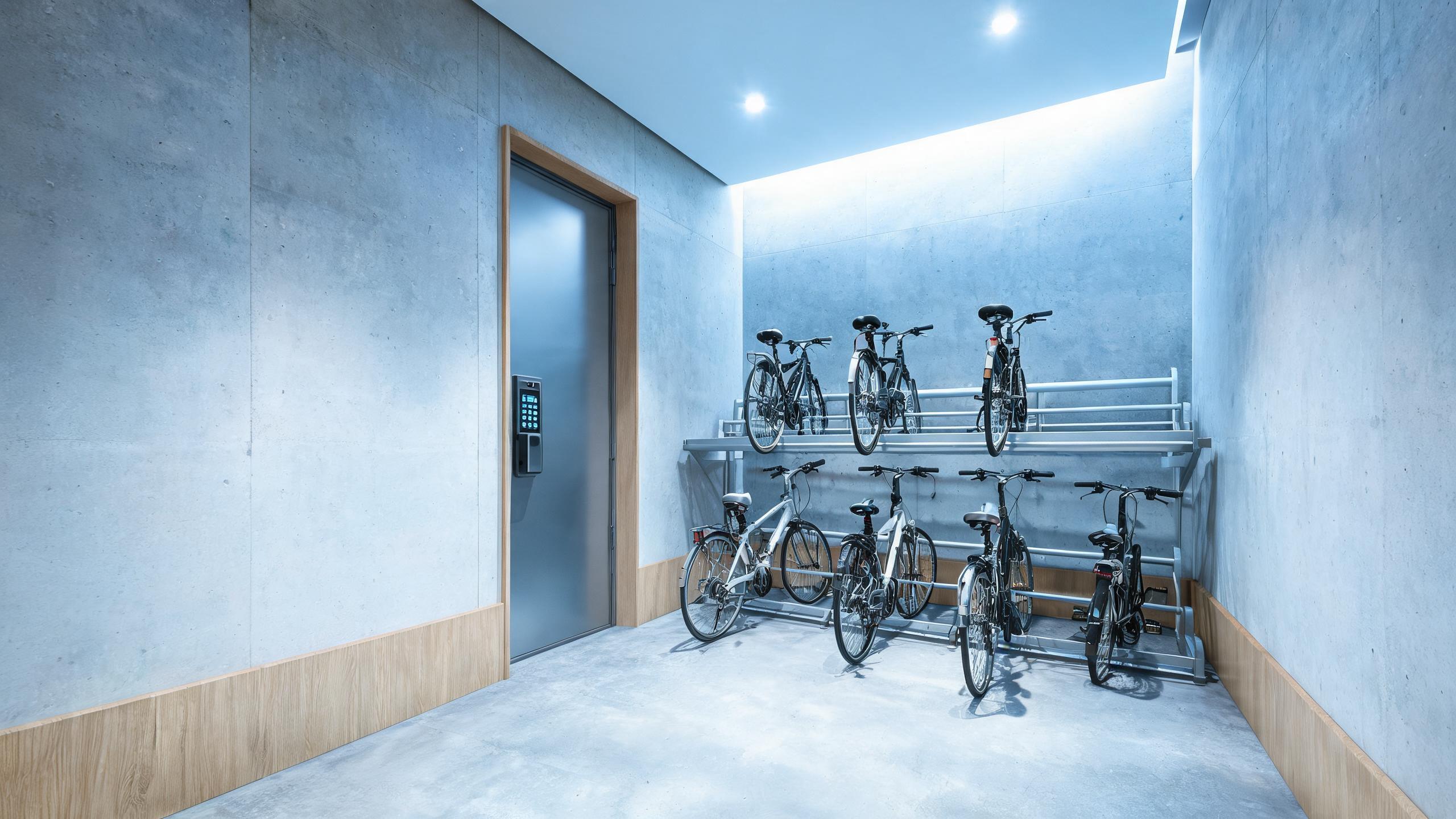
Bike theft drives a hard bargain with tenants and employees: a bike room is only as good as its door discipline, and shared keys or propping quickly turn secure storage into an open amenity. Smart access models the room around registered riders — residents or staff enroll, receive room credentials for their tenancy or employment, and lose them centrally when they leave — with individual lockers, maintenance cages and e-bike charging areas operated as zones within the room. Charging deserves its own rules because battery fire concerns increasingly push building policies toward fire-watched, scheduled charging compartments rather than powering the whole room. At transit hubs and commercial facilities, rider access can link to permits or day passes. The multifamily guide covers residential amenity rollout, the locker page covers compartment platforms, and the parking page covers garage-level rooms.
Bike-room access at a glance
| Registered riders | Room credentials follow enrollment and tenancy rather than a shared amenity key copied across the building |
| Individual lockers | High-value bikes use registered lockers with compartment records inside the shared room |
| E-bike charging | Charging runs as a scheduled, fire-watched zone reflecting building policy rather than outlets left always live |
| Departure control | When a resident or employee leaves, room and locker credentials are withdrawn centrally with no key chase |
| Mixed schedules | Commercial buildings can open daytime rider access while keeping residential rooms restricted around the clock |
| Facility types | Apartment rooms, office end-of-trip facilities, transit hubs and public bike stations share the model |
| BOM shape | Room-door controls, locker latches, charging-zone scope, enrollment workflow and held spares |
Answer unit
An open cage with a shared key, or a registered-rider room with zoned lockers and charging?
Buildings serious about cycling amenity move to registered rooms; shared keys are the reason most bike cages fail their theft-review test.
| Dimension | Shared-key bike cage | Registered-rider smart room |
|---|---|---|
| Door discipline | Propping and copied keys | Credentials follow enrollment; propping visible in events |
| Theft review | No record of room entries | Entry events narrow incidents to enrolled riders and times |
| E-bike charging | Outlets always live | Scheduled fire-watched charging zone under building policy |
| Lockers | Personal padlocks only | Registered compartments with override and swap support |
| Turnover | Key return rarely enforced | Central withdrawal at end of tenancy or employment |
| Typical fit | Low-use outdoor racks | Residential rooms, end-of-trip facilities, transit hubs |
Door types and lock-body match
The room door carries the primary control; lockers and the charging zone add compartment-level scope inside it.
| Opening | Typical door | Lock approach |
|---|---|---|
| Bike room entrance | Secured room or cage door at grade or garage level | Registered-rider credentials with entry records and controlled propping review |
| Individual bike locker | Compartment within the room | Enrolled locker credentials with logged override, backed by locker platforms |
| E-bike charging locker | Ventilated compartment with power | Scheduled charging window, fire-watch policy and separate zone credentials |
| Maintenance / cage area | Pump, tools and repair stand area | Open to registered riders; tool cabinets optionally separately locked |
| Exterior bike hub | Transit or commercial outdoor cage | Weather-rated hardware and permit-linked day-pass credentials |
| Staff / store room | Facilities door serving the room | Building-staff credentials for audit and maintenance rounds |
Example BOM shape for a residential bike amenity
This example illustrates a typical configuration, not a specific customer project. Room size, locker count and charging policy drive the list.
| Component | Typical logic | Notes |
|---|---|---|
| Room-door controls | Primary bike-room and cage access | Registered enrollment workflow with departure withdrawal |
| Locker compartments | Individual high-value bike lockers | Standardized latches with logged override and spare swaps |
| Charging-zone scope | Scheduled e-bike power and fire-watch rules | Governed by the building’s documented safety policy |
| Enrollment workflow | Resident, staff or permit registration to credentials | Managed by property or facilities teams, optionally self-service |
| Held spares | Door and locker hardware in building stock | Swap through the existing maintenance contract |
How a bike-room program rolls out
- Room and policy surveyRoom layout, locker demand, charging policy, rider population and facility type are documented first.
- Pilot roomOne room runs enrollment, daily use, locker assignment and a scheduled charging cycle with review.
- Building rolloutRoom doors and lockers install across properties on one standard amenity specification.
- Rider adoptionProperty teams rehearse self-service enrollment, locker moves and departure withdrawal.
- Assurance handoverTheft-review reporting, charging rules, spare swaps and rider guidance are documented.
Related applications
Related amenity and mobility pages
Smart locks for bike rooms: common questions
How do residents or staff get access to the bike room?
Riders enroll against the building’s registration — a resident signs up through property management or a self-service amenity portal, an employee through facilities or the workplace platform — and receives room credentials valid for their tenancy or employment, with locker assignment added where available. Entry events support theft review and make door-propping visible, which is the behavior that destroys most shared-key cages. When someone moves out or offboards, credentials are withdrawn centrally instead of trusting a key return, and waiting-list lockers can be reassigned in minutes. The room stays an open, convenient amenity for enrolled riders; it is the anonymous non-rider access that is removed.
How should e-bike charging be handled inside a bike room?
Charging is treated as its own zone rather than leaving room outlets permanently live: buildings increasingly define scheduled charging hours, fire-watch arrangements, ventilation and sometimes dedicated charging lockers, with credentials or schedules enforcing the policy and any unsafe or damaged battery reported through a documented route. The access system supports whichever written safety policy the building adopts — it cannot substitute for the fire-safety assessment itself. Compartment charging keeps a charging bike separated from parked bikes and gives staff a clear lockout for misuse. Residential operators often phase the rollout: room access first, governed charging added once the fire-safety policy and insurer position are documented.
Can individual bike lockers be added inside a shared room?
Yes, and the two layers complement each other: the room door admits enrolled riders, while registered compartment lockers secure high-value bikes with per-locker credentials, logged staff overrides and fast latch swaps from common spares. Locker holders still pass the room credential, so a lost locker code never exposes the whole facility. Assignment and waiting lists move through the same enrollment workflow, and locker hardware follows the same high-cycle, low-maintenance model as other electronic locker systems, standardized across properties so parts and procedures repeat. The room survey sizes lockers against demand rather than assuming every rider wants one.
Do these systems work at transit hubs and public bike stations?
Exterior bike hubs use weather-rated room or cage hardware with permit-based or day-pass credentials, so a monthly parker enrolls for the hub while an occasional rider buys dated access at the kiosk, and events support theft review at unattended locations. The operating model mirrors indoor rooms but hardware selection follows the outdoor exposure — moisture, road salt and tamper — and maintenance intervals adjust accordingly. Sites combining bike parking with EV charging or garage levels coordinate zones with the facility operator. As with other unattended amenities, free egress and emergency considerations are preserved on the room door, and the acceptance check includes a real entry and exit test at peak commuting time.
How is a bike-room BOM and MOQ scoped?
The BOM counts the primary room-door controls, locker compartments by demand, charging-zone scope, enrollment workflow and building-held spares, with MOQ and lead time confirmed in writing per quotation. Multi-property portfolios standardize one amenity specification so volume accumulates and property teams repeat one enrollment procedure everywhere, typically piloting one room before portfolio rollout. Send the room dimensions, desired locker count, charging policy, rider population type and facility environment, and the quote is structured by room, locker and charging line items so the amenity budget and the safety budget stay visible separately.
Make the bike room an amenity riders actually trust
Send the room layout, locker demand and charging policy — receive a room-and-locker BOM with safety-zone scope and written MOQ and lead-time terms.
Discuss your project (RFQ)Project configurationsLast updated: October 31, 2026 · Reviewed by the Smart Lock Factory editorial team