
Applications
Smart locks for cold storage: hardware chosen by the temperature zone
Room-level access across chilled, frozen and processing zones, low-temperature and washdown-rated locks, guaranteed inside-room egress and coordinated dock workflows.
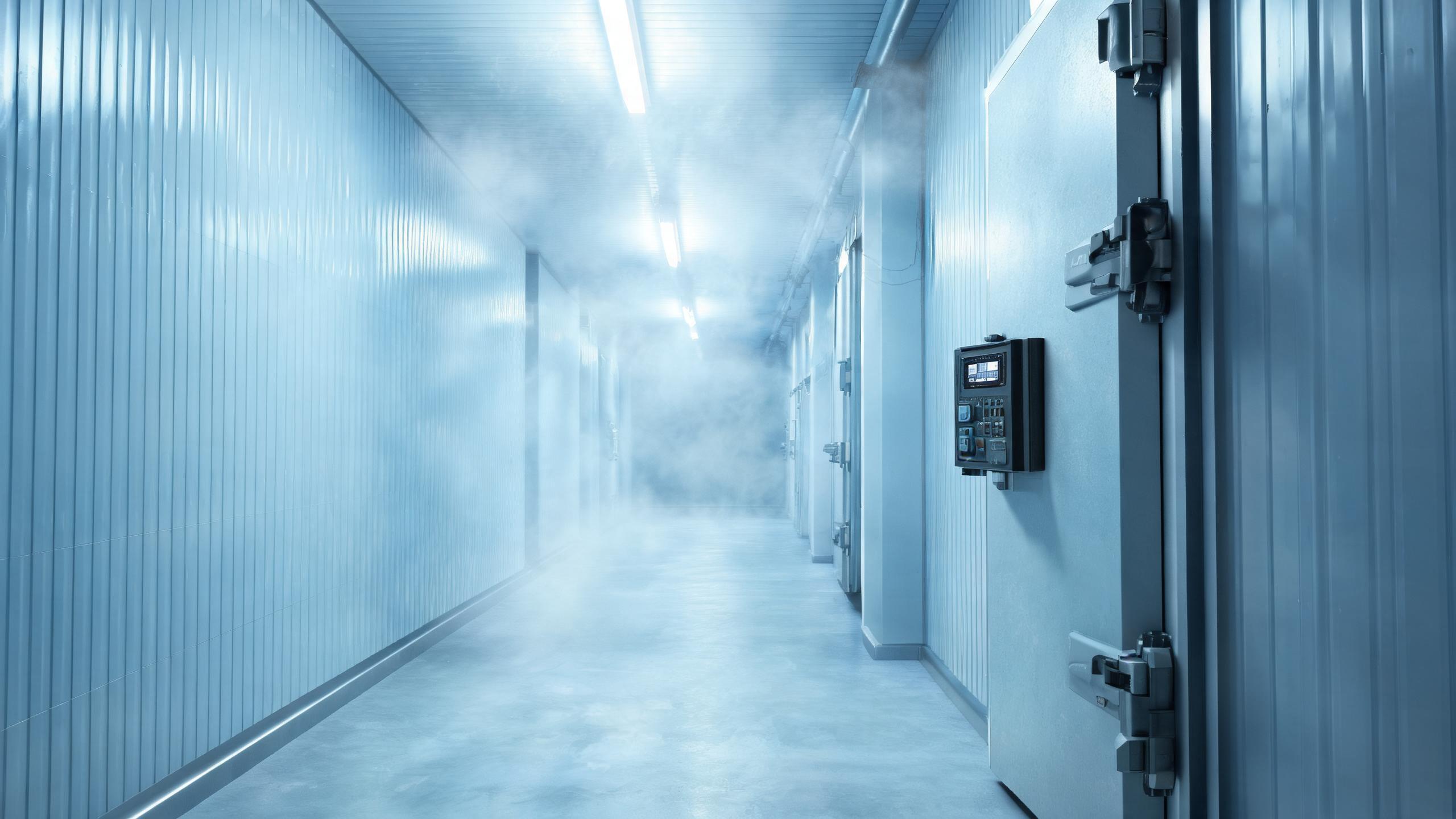
Cold-storage warehouses and food-processing facilities sort access by temperature and hygiene rather than by department: chilled rooms, freezers, blast freezers, processing lines under washdown, dry storage and loading docks all behave differently, and a lock specified for a dry office will seize, fog or corrode in those conditions. Access zoning follows both food-safety procedures and operations: production staff enter their own rooms, sanitation crews work in scheduled washdown windows, and dock doors stay coordinated with carrier appointments without propping open temperature-controlled openings. Above every feature sits life safety — a person trapped in a freezer must always be able to get out, so hardware selection starts from inside-room egress and the site’s emergency procedures. The warehouse guide covers general logistics doors, the laboratories page covers research cold rooms, and the locker page covers refrigerated pickup lockers.
Cold-storage access at a glance
| Temperature zones | Chilled, frozen, blast and processing rooms each require hardware rated for the actual temperature and condensation load |
| Inside-room egress | Freezer doors must always release from inside regardless of credential, battery or network state |
| Washdown duty | Processing areas use corrosion-resistant, sealed hardware compatible with the documented cleaning chemistry |
| Frost behavior | Low-temperature components and battery planning prevent seizing and false faults in freezer environments |
| Hygiene workflow | Production, sanitation, quality and visiting staff follow zone credentials aligned to food-safety procedures |
| Dock coordination | Carrier windows open dock and receiving routes without compromising cold-chain door discipline |
| BOM shape | Zone-rated door controls, washdown hardware, egress provisions, dock coordination and maintenance spares |
Answer unit
Standard warehouse locks everywhere, or hardware specified per temperature and washdown zone?
Cold-chain operators specify by zone; using dry-area hardware in freezers and processing rooms is the most common and costly mistake.
| Dimension | Standard warehouse locks | Zone-rated cold and washdown hardware |
|---|---|---|
| Freezer operation | Mechanisms seize or frost faults | Low-temperature components and battery planning |
| Washdown areas | Corrosion and water ingress failures | Sealed corrosion-resistant hardware by chemistry |
| Entrapment risk | Afterthought exit devices | Inside release guaranteed by design and drilled |
| Condensation | Fogging and ice on electronics | Hardware selected for freeze-thaw and humidity cycles |
| Hygiene zoning | One workforce credential | Production, sanitation and quality groups per zone |
| Typical fit | Dry ambient warehouses | Cold storage, processing, seafood, dairy and prepared food |
Door types and lock-body match
Temperature and cleaning regime define the hardware class per opening; the survey records both for every door.
| Opening | Typical door | Lock approach |
|---|---|---|
| Chilled room (0 to 4 C) | Insulated sectional or swing door | Cold-rated hardware with condensation sealing and staff zone credentials |
| Freezer room | Heavier insulated door in frost zone | Low-temperature-rated lock, guaranteed inside release and frost-tolerant fit |
| Blast / process freezer | Thick insulated door with heavy use | High-cycle low-temperature hardware and coordinated loading windows |
| Processing / washdown area | Stainless or polymer doors in wet zone | Sealed washdown-rated hardware matched to cleaning chemistry |
| Loading dock | Insulated dock door or curtain | Carrier-window coordination without propping cold-chain doors |
| Dry goods / office | Standard internal doors | Standard controlled hardware, separate from the cold specification |
Example BOM shape for a multi-zone cold-store
This example illustrates a typical configuration, not a specific customer project. Room temperature mix, washdown regime and dock count drive the list.
| Component | Typical logic | Notes |
|---|---|---|
| Zone-rated door controls | Chilled, frozen and blast room hardware | One class per documented temperature and humidity band |
| Washdown hardware | Processing-area sealed locks and readers | Material and sealing confirmed against the cleaning chemistry |
| Egress provisions | Inside-release devices and signalling | Installed and drilled per the site entrapment procedure |
| Dock coordination | Receiving workflow at insulated dock doors | Carrier windows managed without cold-chain door propping |
| Maintenance spares | Cold-rated components held on site | Fast swap matters in continuously operated facilities |
How a cold-storage access program rolls out
- Zone surveyEvery door is recorded with temperature, humidity, washdown chemistry, cycle rate and egress path before selection.
- Pilot zoneOne freezer and one processing room run real shifts, washdown cycles and an entrapment drill end to end.
- Facility rolloutRooms commission by temperature zone during planned defrost or maintenance windows.
- Team adoptionProduction, sanitation and dock teams rehearse zone credentials and carrier windows in daily language.
- Assurance handoverEgress drills, frost-service intervals, spare swaps and washdown compatibility are documented.
Related applications
Related warehousing and controlled-environment pages
Smart locks for cold storage: common questions
Can electronic locks work inside freezers and blast freezers?
Yes with hardware actually rated for the room: low-temperature components, frost-tolerant sealing and battery planning matched to the documented temperature band, because standard electronics lose battery performance, collect ice and develop false faults in freeze-thaw cycling. High-cycle blast rooms additionally need components built for repeated daily openings. The zone survey records temperature, humidity and cycle rate per door rather than assuming one freezer rating covers everything, and the pilot runs a real freezer through loading cycles and defrost before replication. The choice is never made from a datasheet temperature alone — condensation behavior at the specific door is observed during the pilot.
How is someone trapped inside a freezer protected?
Inside-room egress is non-negotiable and independent of credentials, battery or network: every controlled freezer and blast-room door retains a mechanical inside release that opens the door regardless of system state, supplemented where the facility chooses with alarm or signalling pull cords, and the emergency procedure is drilled with staff on a documented schedule. Locking is added to cold rooms only in ways that cannot disable the release, and installations are checked against the site’s life-safety assessment before acceptance. This principle is confirmed early in the project rather than treated as an accessory add-on, because entrapment is the single risk in cold storage that overrides every access-control convenience.
What hardware survives daily washdown and sanitation?
Processing and packaging areas receive sealed, corrosion-resistant hardware whose materials and ingress protection are matched to the actual cleaning regime — chemical foam, pressure rinse or steam — rather than generic stainless finishes chosen by appearance; the survey records the sanitation chemistry and cycle so incompatible electronics are excluded before purchase. Credentials additionally separate sanitation windows from production, so a room under washdown is not entered against procedure. Mounting avoids ledges and pockets that trap soil, consistent with hygienic design. Hardware is validated in the pilot room across real washdown cycles, including how readers and keypads are themselves cleaned without damage.
How do access controls work at cold-chain loading docks?
Dock coordination keeps temperature-controlled doors closed until the appointed carrier is staged and the seal exchange begins, with credentials for dock staff, carriers and quality sampling kept as separate groups; electronic access removes the temptation to prop freezer doors while waiting for a late truck, which is a daily source of temperature excursion and energy loss. Receiving offices and dry transit areas use standard hardware, so the tougher cold specification is reserved for doors that actually see the zones. Detention and temperature-excursion procedures are documented alongside the access workflow, and event records help supervisors review door-open time against the cold-chain log when a load is challenged.
How is a cold-storage BOM and MOQ scoped?
The BOM is built door by door from the zone survey — chilled, frozen, blast, washdown and dock classes — plus egress provisions and on-site cold-rated spares, with MOQ and lead time confirmed in writing per quotation. Programs normally pilot one freezer and one processing room before facility-wide rollout, because the two harshest classes carry the validation risk. Send the door schedule with temperature per room, washdown chemistry, cycle rates and dock count, and the quote maps each lock to its zone class, which keeps procurement from paying freezer pricing for dry doors or under-specifying the rooms that will fail first.
Specify every door for the room it actually lives in
Send the door schedule with temperatures, washdown chemistry and cycle rates — receive a zone-mapped BOM with egress scope and written MOQ and lead-time terms.
Discuss your project (RFQ)Project configurationsLast updated: October 31, 2026 · Reviewed by the Smart Lock Factory editorial team