
Applications
Smart locks for RV parks and mobile home communities
Gate codes tied to the reservation window, bathhouse and amenity access that switches with occupancy, and hardware rated for dust, rain and wide temperature swings.
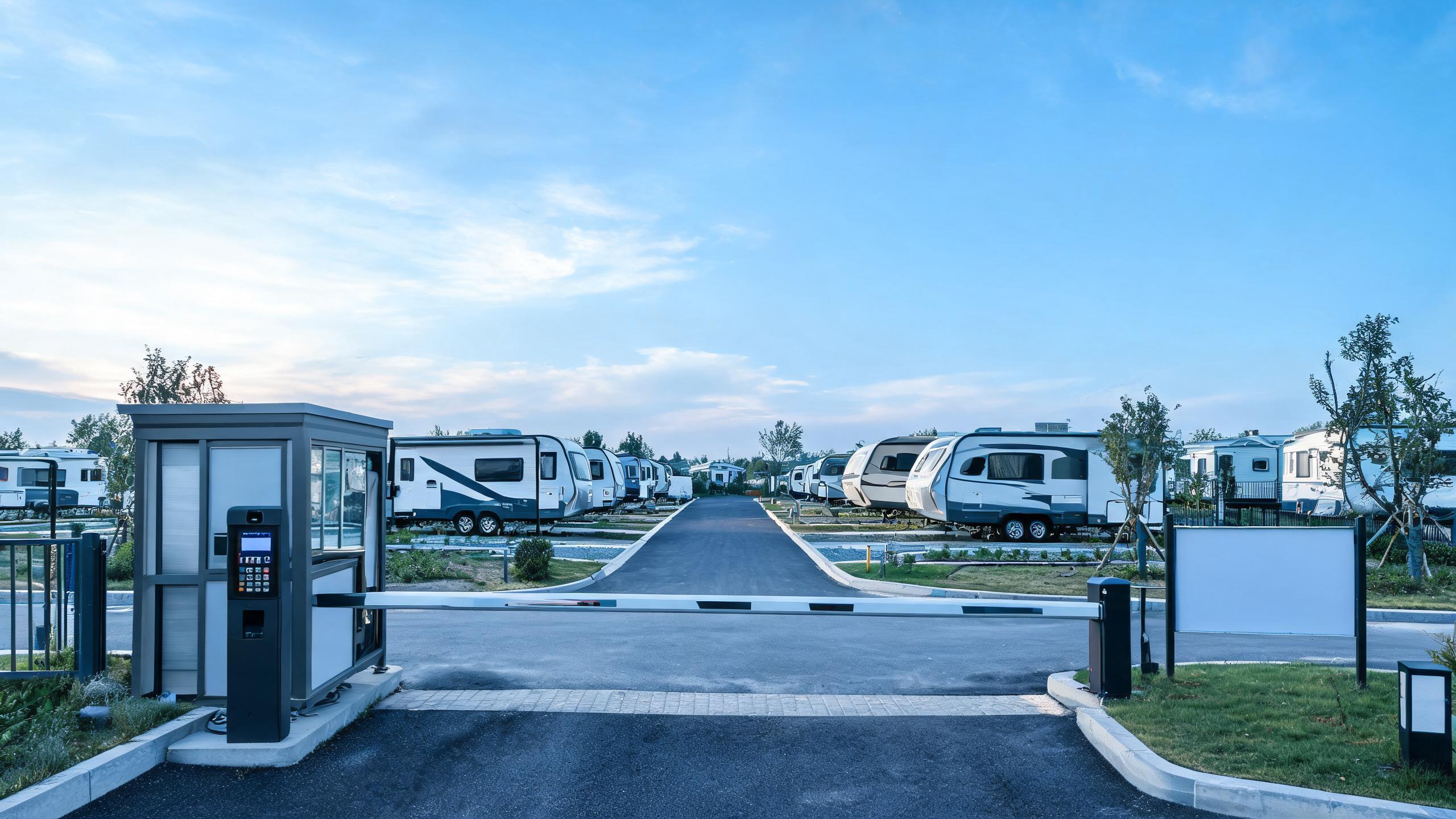
Access at an RV park or manufactured-home community lives mostly outdoors: the entry gate and kiosk, bathhouses, laundry, pool gates, clubhouse and storage yards, plus the doors of rental cabins or park-owned mobile homes. Smart access replaces the honor-system gate code taped behind the desk with per-stay credentials that expire on departure, lets amenity doors follow seasonal or occupancy schedules, and gives maintenance a credential with a record. Dust, rain, UV and winter temperature swings make per-SKU environmental ratings the first filter, not the last, and the electrical reality of gates — powered operators, keypads on pedestals — is surveyed separately from door hardware. Permanent mobile-home residents run more like a small residential community with vendor and office access. The outdoor gate guide covers gate engineering, the tiny home page covers factory-built units, and the senior living page covers age-qualified communities.
RV park and mobile home access at a glance
| Access points | Entry gate and kiosk, bathhouses, laundry, pool and amenity gates, clubhouse, storage yards and rental unit doors |
| Stay credentials | Per-reservation gate codes valid for the booked dates, replacing shared season codes that ex-guests keep forever |
| Amenity scheduling | Bathhouse and amenity locks follow occupancy, season or paid-access rules instead of being open around the clock |
| Environment | Per-SKU dust, water and temperature ratings are the first hardware filter for exposed pedestals and gates |
| Integration | Gate operators and reservation systems are scoped against the named equipment and software, never on generic compatibility |
| Resident model | Mobile-home communities manage permanent resident credentials plus maintenance, vendor and office access separately |
| BOM shape | Gate keypads and operators, amenity locks, rental cabin locks, gateway where coverage exists, and outdoor-rated spares |
Answer unit
Shared gate codes or per-reservation codes?
The industry default of one season code is convenient for staff and useless for security. Per-reservation codes are now the baseline for managed parks.
| Dimension | Shared seasonal gate code | Per-reservation codes |
|---|---|---|
| Security | Known by every guest of the past year | Dies at departure; ex-guests cannot return |
| Staff work | Trivially easy to communicate | Issued automatically with the booking or at check-in |
| Contractors | Given out freely and never recovered | Scheduled vendor credentials with windows and records |
| Overstay handling | Code still works after the paid period | Access ends with the reservation, supporting turnover |
| Audit | No record of who entered | Entry events available on connected gate controllers |
| Typical fit | Unmanned low-tariff parks with no staff | Managed parks, cabin rentals, amenity-heavy resorts |
Door types and lock-body match
Outdoor ratings and powered-gate electrical work dominate; indoor doors on rental cabins follow residential practice.
| Opening | Typical door | Lock approach |
|---|---|---|
| Entry gate | Metal swing/slide gate with operator | Weatherproof keypad or reader integrated with the named gate operator |
| Bathhouse / laundry | Metal or timber exterior door, wet interior | Rated keypad lock suited to wet use, credentials by occupancy or payment |
| Pool / amenity gate | Aluminum or vinyl pool-code gate | Self-latching hardware plus access control matched to pool-safety requirements |
| Rental cabin door | Timber or steel residential-prep door | Standard or outdoor-rated smart lock by exposure, coded per booking |
| Office / store | Timber site-built door | Staff credential lock with audit; package window where applicable |
| Storage yard | Corrugated steel gate | Rugged rated lock or smart padlock for maintenance and boat/RV storage |
Example BOM shape for a mid-size RV resort
This example illustrates a typical configuration, not a specific customer project. Amenity count, gate electrical work and rental units drive the list.
| Component | Typical logic | Notes |
|---|---|---|
| Gate control | Keypad/reader per entry lane plus integration to the operator | Named operator and reservation platform scoped in writing |
| Amenity locks | Bathhouse, laundry, pool and clubhouse openings | Rated hardware per exposure and wet-use requirements |
| Rental unit locks | One per park-owned cabin or mobile home | Booking-window codes, same credential family as the gate |
| Gateways / networking | Coverage at amenity buildings where power exists | Dispersed outdoor loops often use rated offline controllers |
| Outdoor spares | Weather-rated locks and keypads in the maintenance stock | Dust and freeze exposure makes spares more important than indoors |
How an RV park program rolls out
- Site surveyGates, amenity doors and rental units are logged with power availability, exposure, distance and the named gate operator.
- Reservation mappingThe booking-window credential flow is designed against the actual reservation system, including overstay and extension rules.
- Pilot at the gatePer-reservation codes run at the entry gate for a season before amenity and cabin rollout, proving weather and staff behavior.
- Amenity rolloutBathhouse, laundry and pool access moves to occupancy or scheduled rules, with vendor windows added for maintenance.
- Seasonal handoverStaff are trained on winterization, rating limits, spare replacement and guest communication scripts for the next season.
Related applications
Related outdoor and accommodation pages
Smart locks for RV parks and mobile home parks: common questions
How do guests get through the gate after office hours?
Each reservation receives a gate code valid from arrival to departure, delivered with the booking confirmation or at check-in, so late arrivals never depend on a staffed kiosk. The code opens the entry lane and, where configured, the amenity buildings attached to the stay; extensions push the expiry forward and overstays find the gate closed at the end of the paid window. The gate controller is integrated with the named operator and reservation platform, a scope confirmed in writing rather than implied by a generic compatibility claim.
Can smart hardware survive dust, rain and freezing weather?
Only hardware whose per-SKU ratings cover the actual conditions is specified for exposed gates and pedestals; the survey records temperature range, wash-down, UV and dust exposure per opening instead of assuming one rated lock covers everything. Indoor-rated electronics are kept for clubhouse interiors, and seasonal parks receive a winterization procedure that protects keypads through closure months. Real rating data and maintenance access drive the BOM, which is why outdoor spares are planned as part of the initial order rather than bought reactively.
How are bathhouses and laundry rooms controlled?
Those doors move from permanently open or staff-managed to credentials tied to occupancy: a current guest code opens them during the stay, sometimes within posted hours, while expired guests and non-guests do not get in. Paid extras such as shower credits can remain on separate equipment, with the lock handling identity only. Wet interiors select locks specified for damp environments, and seasonal schedules close amenities automatically in the off season, which removes a nightly staff round for an unmanned park.
Do permanent mobile-home residents use the same system?
Resident credentials run on a separate, longer-lived hierarchy from transient guest codes, while maintenance and vendors receive scheduled windows; the gate can admit both groups through the same controller with different rules. Age-qualified and long-term communities operate much like a small residential portfolio, with the office holding issue rights and entry records available on connected hardware. Rental cabins inside the park stay on the booking-window model, so one platform serves both populations without sharing credentials.
What does an RV park BOM include and what is the MOQ?
The BOM separates gate controls and operator integration, amenity door locks, rental cabin locks, networking where power exists and weather-rated spares, because gate electrical work and door hardware are different cost lines. Current MOQ and lead time are confirmed in writing per quotation after the site survey; send the gate operator model, amenity door count, rental unit count and climate notes, and the quote states hardware, integration scope and seasonal delivery timing in distinct lines.
Replace the shared season gate code with codes that expire
Send your gate operator model, amenity door list and climate notes — receive a site BOM with integration scope and written MOQ and lead-time terms.
Discuss your project (RFQ)Project configurationsLast updated: October 31, 2026 · Reviewed by the Smart Lock Factory editorial team