
Applications
Smart locks for marinas and boatyards: access that survives the salt air
Berth-holder and visitor gate codes, contractor windows for haul-out and service, and lock hardware selected against real marine ratings rather than indoor lookalikes.
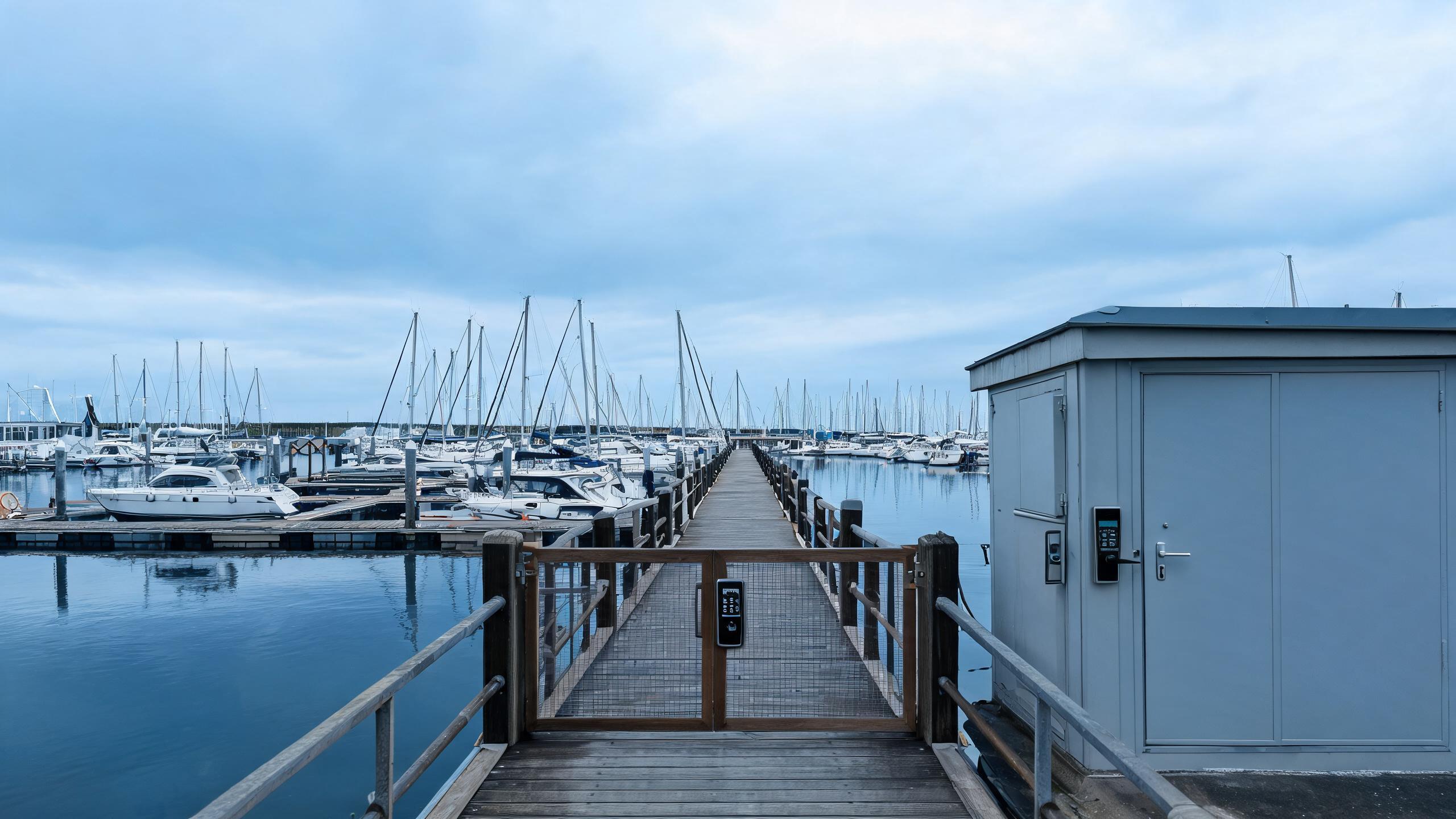
Marinas sell access to water: the dock gate, pontoon gates, fuel dock, washrooms, laundries, chandlery, boatyard sheds and haul-out areas. Berth holders want simple year-round credentials; visitors and transient boats need codes for the nights they paid; contractors need time-boxed access during service periods, and the marina office needs to know who entered when. Salt air, driving rain, UV and wash-down make the environment the defining engineering constraint — indoor-rated smart locks corrode within months, so every opening is matched to hardware with a real per-SKU rating and a maintenance plan. Gates often sit on solar or pedestal power and interact with marina software and CCTV. The outdoor gate guide covers environmental selection, the RV park page covers similar outdoor hospitality, and the self storage page covers dry-stack and unit storage.
Marina and boatyard access at a glance
| Access points | Dock and pontoon gates, fuel dock, washrooms and laundry, chandlery, workshops, boatyard sheds and haul-out equipment areas |
| Berth holders | Recurring credentials by season or contract, with visitor codes issued for charter guests and service dates |
| Contractors | Time-boxed windows for surveyors, riggers and cleaners coordinated with haul-out and yard schedules |
| Marine environment | Salt-air corrosion and wash-down drive hardware choice, with per-SKU ratings and an inspection calendar |
| Power reality | Pontoon and solar-powered gates need low-power controllers, surveyed separately from wired doors ashore |
| Audit needs | Entry records support safety investigations and after-hours incident review on connected gates |
| BOM shape | Marine-rated gate locks and keypads, amenity locks ashore, low-power controllers where needed, and corrosion spares |
Answer unit
Annual berth-holder codes or per-visit codes?
Most marinas run both at once: long credentials for contracted berths, short dated codes for transients, charter guests and contractors.
| Dimension | Annual berth-holder credentials | Per-visit dated codes |
|---|---|---|
| Population | Contract holders and liveaboards | Transient boats, charter guests, delivery crews |
| Lifecycle | Renewed with the berth contract | Valid for the booked nights or service day only |
| Contractor use | Not issued to contractors at all | Scheduled windows tied to haul-out and yard slots |
| Management | Bulk renewals at season start | Issued daily by the office or reservation desk |
| Risk profile | Stable, known population | High turnover, revocation must be automatic |
| Typical gate | Main pontoon and washrooms | Visitor pier, fuel dock windows, service areas |
Door types and lock-body match
Corrosion and wet service define the shortlist; doors ashore can use milder hardware than gates on the water.
| Opening | Typical door | Lock approach |
|---|---|---|
| Main dock gate | Aluminum or stainless gate on the pier | Marine-rated keypad/reader on low-power control, corrosion-resistant mount |
| Pontoon gate | Light alloy gate, solar or pedestal power | Low-power weatherproof controller rated for salt exposure |
| Fuel dock | Self-closing metal safety gate | Access control coordinated with fuel-area safety rules and staff hours |
| Washroom / laundry | Timber or GRP door, wet interior | Damp-rated keypad lock on berth-holder and visitor groups |
| Workshop / shed | Steel yard door | Staff-and-contractor credential, audit on connected models |
| Dry storage / unit | Metal container or locker bank | Rugged cabinet locks or rated door locks for tenant gear |
Example BOM shape for a mid-size marina
This example illustrates a typical configuration, not a specific customer project. Dock layout, power source and winterization policy decide the final list.
| Component | Typical logic | Notes |
|---|---|---|
| Dock gate controls | Marine-rated locks or keypads per secured gate | Rated hardware plus corrosion-resistant fixings |
| Low-power controllers | Solar and pedestal-fed gates away from mains power | Battery service interval planned per gate location |
| Ashore amenity locks | Washrooms, laundry, chandlery and office doors | Damp-rated rather than fully marine-rated where sheltered |
| Contractor workflow | Scheduled credential capability tied to yard slots | Scope against the marina management system in writing |
| Corrosion spares | Keypad faces, seals and fixings in maintenance stock | Salt air makes consumable replacement part of the plan |
How a marina program rolls out
- Harbor surveyEach gate and door is logged with exposure, power source, wash-down practice and the busiest seasonal access patterns.
- Rating selectionHardware is shortlisted strictly on marine ratings; sample units are inspected for fixings, seals and service access.
- Gate pilotOne pontoon gate runs a full season covering transients and contractors before estate-wide rollout.
- Credential rolloutAnnual berth holders, visitor codes and contractor windows are introduced with the office and yard team trained together.
- Maintenance handoverAn inspection and seal-replacement calendar, spare list and winterization procedure are handed to the harbor master.
Related applications
Related marine and outdoor pages
Smart locks for marinas and boatyards: common questions
What makes a lock suitable for a dock gate?
Salt air, driving rain, wash-down and UV exposure rule out ordinary indoor smart locks within months, so dock gates use hardware whose per-SKU ratings and construction address corrosion, with corrosion-resistant fixings and replaceable seals. Low-power operation matters on pontoon gates fed by solar or pedestal power, and the mount must survive vibration from passing boats. The marina survey records exposure per gate — a sheltered office door and a gate at the end of a pier are never quoted with the same hardware.
How do transient boaters and charter guests get access?
Transients receive a dated code for the nights booked, often bundled with the berth reservation, while charter guests receive a code scoped to their arrival window and the amenities the charter includes. The main pontoon and washrooms admit both berth holders and current visitors through group rules, and codes expire at departure without an office visit. Contractors are handled separately with windows aligned to haul-out slots, so a rigger cannot enter outside the service day even if known to the yard.
Can the gates run where there is no mains power?
Yes, pontoon and remote pier gates use low-power controllers on battery or solar feeds, with the service interval planned per location in the survey; the choice trades update frequency and audit uploads against power budget. Gates near the office run standard wired or gateway-connected hardware. The fuel dock and high-safety areas generally stay on managed power with staff-hour rules rather than relying on a solar gate. Power engineering is always quoted as a separate line from the lock itself.
How do yards control contractor and haul-out access?
Contractors receive credentials valid for the scheduled yard slot — the surveyor on survey day, the rigger while the boat is in the cradle — rather than standing gate codes distributed across the trades. Entry records on connected gates support incident review and insurance questions, and the marina office can open a one-off window for an owner delivery. Integration with marina management software is scoped against the named system in writing, with manual workflows retained as a fallback.
What MOQ and maintenance plan should a marina expect?
The BOM separates marine-rated gate controls, low-power controllers, ashore amenity locks and corrosion spares such as seals and keypad faces, because consumable replacement is a planned cost in salt air. Current MOQ and lead time are confirmed in writing per quotation following the harbor survey; send the gate list, power sources, wash-down routine and season length, and the quote includes hardware, the inspection calendar and winterization guidance rather than a box of indoor locks.
Control the docks with credentials built for salt air
Send the gate list, power sources and wash-down routine — receive a marine-rated BOM with inspection planning and written MOQ and lead-time terms.
Discuss your project (RFQ)Project configurationsLast updated: October 31, 2026 · Reviewed by the Smart Lock Factory editorial team