
Technology
Bluetooth smart locks: phones as keys, with optional remote reach
BLE gives every lock a low-energy local channel to phones. A gateway extends that to the internet, which separates the always-nearby experience from true remote management.
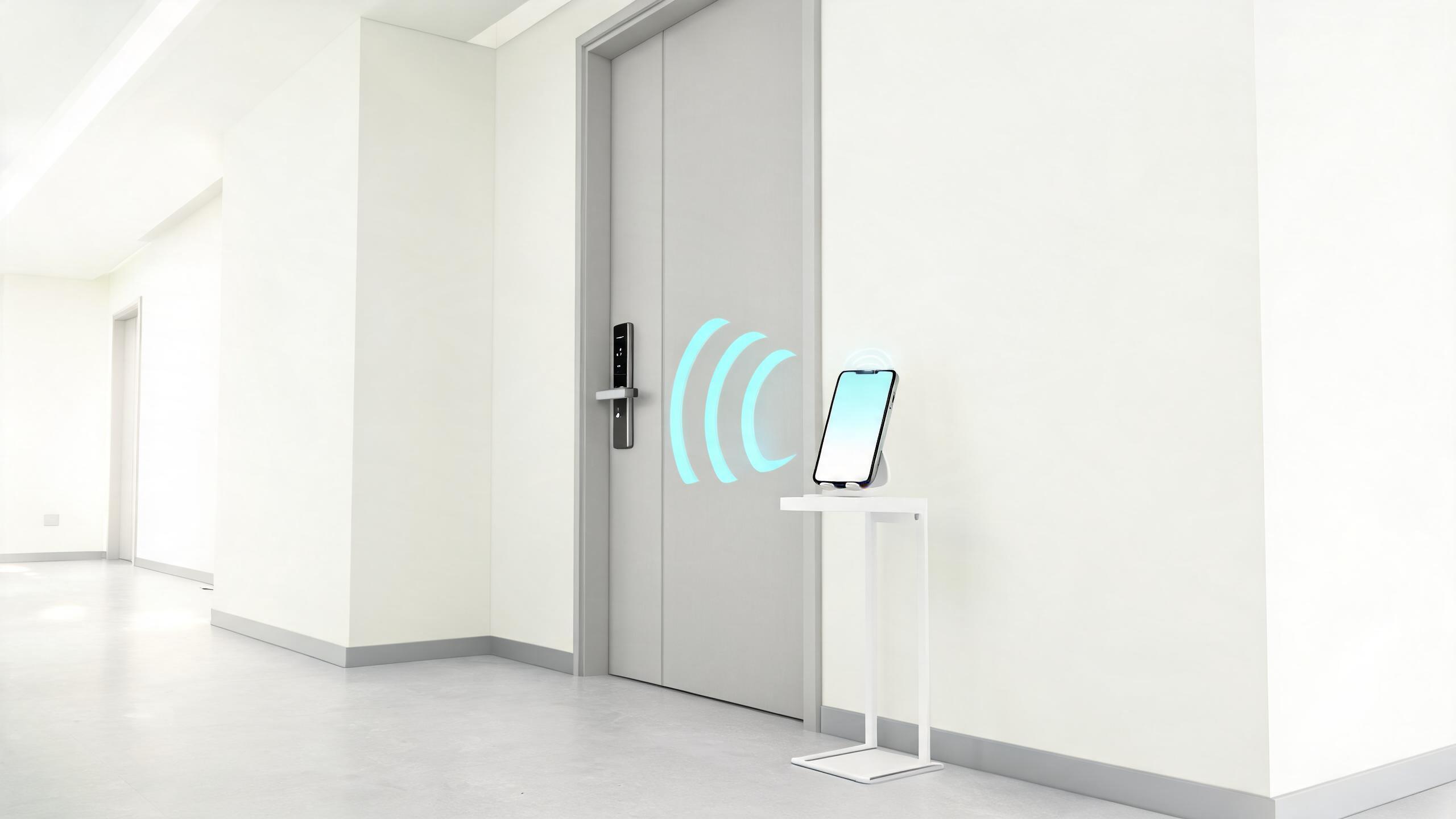
Bluetooth Low Energy became the default radio inside battery smart locks because it was designed for exactly this profile: small data bursts at short range on a coin-cell energy budget. A BLE lock communicates with an authorized phone within a few meters, delivering mobile keys, proximity unlock, audit downloads and configuration without connecting to the Wi-Fi network at the door. Remote control is intentionally indirect: a small Bluetooth-Wi-Fi gateway placed inside the apartment bridges the lock to the cloud, so residents can issue codes or check status away from home while the lock itself keeps its low-power radio. This architecture dominates rentals, multi-family retrofits and hospitality mobile-key pilots because it tolerates weak home Wi-Fi at the door and preserves long battery life. This guide explains BLE operation, gateway trade-offs, proximity behavior and how mobile keys coexist with cards and codes. Current BLE versions and gateway support per model are confirmed per quotation.
Bluetooth locking at a glance
| Local radio | BLE 4.2 and 5.x generation modules exchange encrypted credentials with phones over short range at very low average power. |
| Phone as key | Mobile keys issued by an app authorize unlock nearby, often with tap or hands-free proximity modes. |
| Gateway role | A plug-in BLE-to-Wi-Fi bridge enables remote status, code delivery and alerts while keeping Wi-Fi off the lock. |
| Offline first | Nearby phone credentials and local PINs work without internet or home Wi-Fi at the door. |
| Battery advantage | Low-energy bursts and short sessions give BLE locks a strong battery-life basis versus direct Wi-Fi models. |
| Range expectations | Typical operation is measured in a few meters with the phone at the door; walls and bodies reduce reliability beyond that. |
| Our policy | We state BLE generation, gateway model and platform availability per SKU and avoid implying native long-range control without a bridge. |
Answer unit
When does BLE (with or without gateway) fit a project?
BLE is the safe default for battery locks and rental fleets. Add a gateway where remote features are required; reserve direct Wi-Fi for sites that refuse an extra bridge and have strong signal at the door.
| Project | BLE configuration | Why it fits |
|---|---|---|
| Rental property portfolio | BLE locks, gateways in connected units | Long batteries, nearby guest app access and remote code delivery. |
| Single smart home | BLE lock, optional gateway for voice hubs | Phone proximity daily, bridge only if remote features matter. |
| Multi-family retrofit | BLE locks plus floor or unit gateways | Avoids depending on uncertain Wi-Fi at each unit door. |
| Serviced apartments | BLE mobile keys plus keycard fallback | Guest app entry with cards for dead phones and traditional guests. |
| Temporary construction sites | BLE locks operated by manager phones | Works on sites with no permanent internet connection. |
| Pure remote-only management | Direct Wi-Fi or gateway fleet required | BLE without a bridge cannot be controlled from another city. |
Projects, products and evidence
BLE locks are chosen for energy tolerance and offline resilience. The gateway placement question deserves as much attention as the lock itself, because the bridge defines the remote experience.
| Opening | Typical door | Lock approach |
|---|---|---|
| Apartment unit | Wood or metal door off a corridor | BLE lock inside, gateway by the living-room router. |
| Rental studio | Single room with the router nearby | Optional compact gateway; many hosts manage remotely through it. |
| Office meeting room | Framed-glass door with local users | BLE plus keypad credentials; gateway only if central reporting is needed. |
| Hotel guest floor | Fire-rated guest doors | BLE mobile keys alongside RFID cards and the existing PMS workflow. |
| Storage facility unit | Corrugated metal units with poor Wi-Fi | BLE locks operated by manager tablets on patrol, gateway at the office. |
| Home front door | Timber entrance near the hallway | BLE deadbolt; gateway optional for remote alerts and automation. |
BLE and gateway specification pack
Mobile-key projects require clarity about phones, gateways and platforms. Our model documentation states what runs locally, what needs a bridge, and which app ecosystem the brand uses.
| Component | Typical logic | Notes |
|---|---|---|
| BLE generation | Module generation and key security features of the lock. | Affects pairing behavior, range and security options. |
| Gateway details | Bridge model, capacity per gateway and placement guidance. | Prevents one weak bridge causing an apartment-wide issue. |
| Mobile-key model | How keys are issued, revoked and dated from the app or dashboard. | Essential for rental and staff turnover workflows. |
| Offline credentials | Which codes and phone keys operate with the internet down. | Defines resilience during outages and remote-site use. |
| Platform statement | The lock app or SDK ecosystem and branding options. | Needed for white-label and ODM projects before tooling starts. |
Deploying BLE locks in five steps
- Define remote needsDecide whether management happens on site with phones or remotely via gateways.
- Plan gateway placementSite bridges near routers with reliable BLE reach to each lock.
- Issue mobile keysSet roles, expiry windows and admin rights in the management platform.
- Keep fallback credentialsProvision PINs or cards for dead phones and visitors without the app.
- Validate the experienceTest proximity unlock, gateway alerts and revocation on sample doors.
Related technology guides
Connectivity guides related to Bluetooth locks
Questions about Bluetooth smart locks
Can I control a Bluetooth smart lock when I am far away from home?
Not directly through Bluetooth, which is a short-range technology operating across a few meters. Nearby functions — proximity unlock, phone key operation, settings and audit download — work without the internet whenever the phone is at the door. For remote control, the lock ecosystem uses a gateway: a small plug-in device that listens to the lock over BLE and connects to the cloud over home Wi-Fi, allowing status checks, code delivery and alerts from anywhere. Some installations use an old phone at the property as a bridge, but the purpose-built gateway is the supported design. Whether a gateway is included or optional, and how many locks each bridge supports, is specified per model.
How long do batteries last in a Bluetooth lock compared with Wi-Fi?
Bluetooth Low Energy was designed for short, infrequent bursts, so the radio contributes relatively little average current; battery life in a BLE lock is dominated instead by motor turns, keypad lighting and cold weather, often giving a long service interval under normal use. Direct Wi-Fi radios draw substantially more peak and average current during association and uploads, which is why Wi-Fi locks tend to need batteries sooner, especially on weak signal. A BLE lock paired with a gateway keeps the Wi-Fi radio on the plugged-in bridge rather than the door. Exact intervals still depend on daily unlock count and temperature, and current model figures are confirmed per quotation with the assumptions stated.
Does a guest need to install an app to open a BLE rental lock?
It depends on the welcome flow the host chooses. Many rental platforms support true mobile keys through the brand app, which guests install and activate after booking; others avoid app installs by issuing dated PIN codes that work on the lock keypad regardless of phone, while the host’s own app uses BLE or a gateway for administration. RFID cards offer a third path for guests who prefer neither. Best practice is offering two channels: a dated code as the universal, zero-install option and mobile key as the upgrade. We support combinations of BLE, keypad and card on the same models, and the exact credential channels are listed for each SKU so hosts can write accurate arrival instructions.
Can Bluetooth locks be opened through walls, and how secure is proximity unlock?
BLE can sometimes be detected through thin walls, but reliable communication and secure unlock normally require the phone within a few meters and in the approved configuration; proximity unlock uses encrypted key exchange and often requires an authenticated phone state, so simply detecting the signal is not enough to open the door. Users who prefer extra control can switch from hands-free to tap-to-unlock or app-confirm modes. Concerns about relay attacks — extending the BLE conversation between phone and door — are mitigated by distance checks and encrypted sessions on current modules, and high-security doors should use an additional factor. We document available unlock modes and security settings per model and recommend the conservative modes for shared hallways.
What happens to BLE access when the property Wi-Fi or internet is down?
The core lock keeps working, because BLE credentials and PINs are evaluated on or directly beside the door: residents and staff unlock with phones at the door, dated codes remain valid, and audit events are stored until the gateway or phone next synchronizes. What pauses is anything mediated by the cloud — new remote key delivery, off-site dashboard updates and third-party automations. This offline-first behavior is one reason BLE fleets suit properties with uncertain connectivity. Once the network returns, the gateway uploads buffered events and pulls pending changes. The exact offline storage depth and synchronization rules for each platform are documented per quotation.
Building a BLE mobile-key program?
Tell us the property type, gateway plans and whether guests install apps. We document BLE generation, gateway capacity, mobile-key issuance and offline behavior for every model, with white-label app options for brand owners.
Request Spec Sheet + QuoteTechnology overviewLast updated: October 31, 2026 · Reviewed by the Smart Lock Factory editorial team