
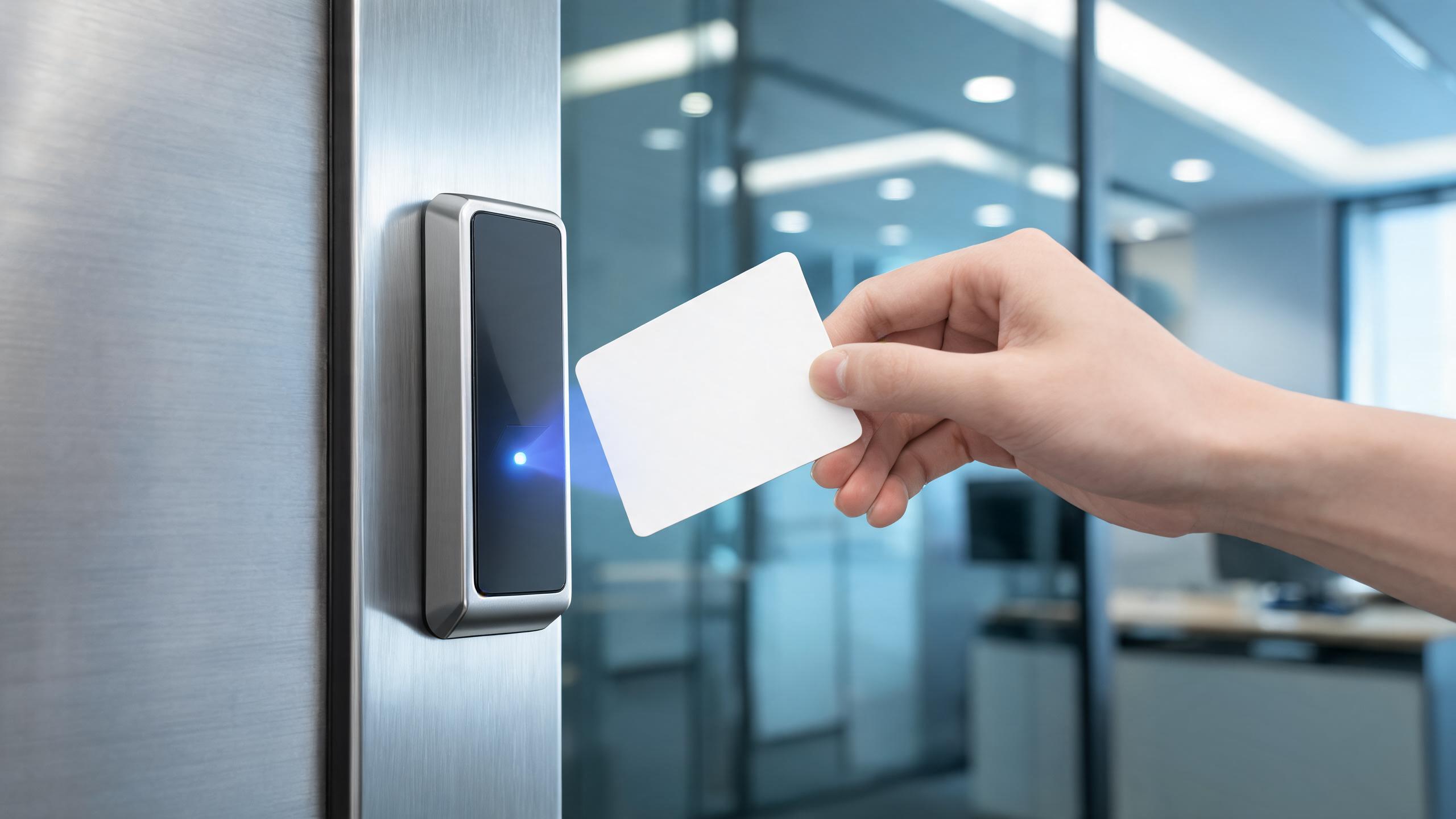
OEM by lock type
OEM RFID door locks: readers, credentials and management as a system
Card and fob locks branded as your product — with the encoders, credential stock and management software that make an RFID lock a working system instead of a single SKU.
RFID programs are system sales: the lock only has value together with its credentials, encoder and management rules. OEM supply covers the card-reader lock in the chosen mortise or rim body, the desktop encoder for issuing credentials, blank or pre-printed cards and fobs, and the management software with room/grade/time-based access rules. Projects usually choose between the 13.56 MHz family (MIFARE-type cards, common in newer installations) and 125 kHz proximity credentials, or a covered multi-frequency reader. Because compatibility with existing hotel or campus card systems is an engineering question rather than a sales claim, credential family and data structure are tested with samples before the BOM is locked.
OEM RFID systems at a glance
| System components | RFID reader lock, desktop encoder, credential stock (cards/fobs/wristbands) and management software |
| Credential families | 13.56 MHz MIFARE-type, 125 kHz proximity and covered multi-frequency readers — compatibility tested, never assumed |
| Lock bodies | Hospitality mortise bodies (ANSI/Euro), apartment and office rim or mortise options, plus cabinet readers for facilities |
| Access rules | Assigned or public mode, room/grade/time permissions, staff hierarchies and validity windows set in the software |
| OEM identity layer | Lock logo, encoder branding, card and fob printing, color box, manual and software splash screen where supported |
| Integration scope | PMS interfaces for hotels and building platforms for campuses are scoped per project; see the hotel OEM page |
| Commercial terms | Locks, encoders and credentials carry separate MOQs and pricing; current terms confirmed in writing per quotation |
Answer unit
Which RFID configuration matches the project?
RFID covers very different operating models — the table below separates them so the BOM does not ship a hotel system into a self-storage facility.
| Dimension | Hospitality | Multi-tenant residential | Facility / locker |
|---|---|---|---|
| Credential issued | Guest card + staff cards | Resident fob + staff fob | User card or self-set code pairings |
| Validity logic | Check-in to checkout window, room and floor access | Lease window, unit plus common doors | Public or assigned locker mode |
| Issuing point | Front-desk encoder, PMS-scoped | Management office or bulk pre-issue | Kiosk, attendant or app mode |
| Lock body focus | ANSI/Euro mortise hospitality sets | Apartment mortise and common-door readers | Cabinet and locker locks |
| Consumables | High card turnover, card stock critical | Low turnover, fobs and wristbands | Mixed; wristbands in gyms and pools |
| Related page | Hotel OEM | Multifamily housing | Cabinet OEM |
Reusing an existing card ecosystem
- Send samplesBuyer provides sample cards or fobs plus the existing encoder and software details and the target credential family.
- Engineering testThe factory tests whether covered readers accept the same credential family and data structure.
- DecisionIf compatible, the new locks join the installed system; if not, the BOM includes the matching encoder and a card-replacement plan.
- Pilot doorsA limited rollout on representative doors validates issuing workflows before full shipment.
Related programs
Adjacent RFID and facility pages
OEM RFID door locks: common questions
Can we reuse cards from our existing hotel or campus system?
Sometimes, but only after a compatibility check. Send sample cards and your encoder or software details, and engineering tests whether the covered readers accept the same credential family and data structure. When they do not match, the BOM includes the correct encoder and a card-replacement plan rather than failing on opening day.
What is the difference between 13.56 MHz and 125 kHz cards?
13.56 MHz MIFARE-type cards are the mainstream choice in newer hotel and campus installations; 125 kHz proximity cards remain common in older systems. Frequency alone does not guarantee interoperability — the data structure and issuing system matter too, which is why sample testing is required.
Do we have to buy the encoder and software with the locks?
If you already run a proven-compatible issuing system, you can extend it without new encoders. New installations need at least one supported encoder and the management software, which are quoted as separate BOM lines rather than bundled invisibly into lock pricing.
Can cards and fobs be printed with our brand and room numbers?
Yes. Credential printing covers logo-only, logo with serial numbering, and project-specific card art; fobs and wristbands offer identity printing or molding within supported options. Printing method and credential family are confirmed on the artwork approval sheet.
What MOQ applies to an RFID lock order?
Lock, encoder and credential thresholds differ and are quoted separately — a project with many doors needs relatively few encoders but a larger card stock. Send door counts, the credential family decision and customization list to receive written MOQ and lead-time terms.
Configure your RFID lock system with us
Send door counts, credential family, existing-system details and branding needs — receive a component-level BOM with written terms.
Request OEM termsIntegrator resourcesLast updated: October 31, 2026 · Reviewed by the Smart Lock Factory editorial team