
Project configurations
A representative 200-unit unmanned self-storage access plan
At 200 self-storage units the system must run the site unmanned: gate entry, corridor access and individual unit locks coordinated from one cloud platform.
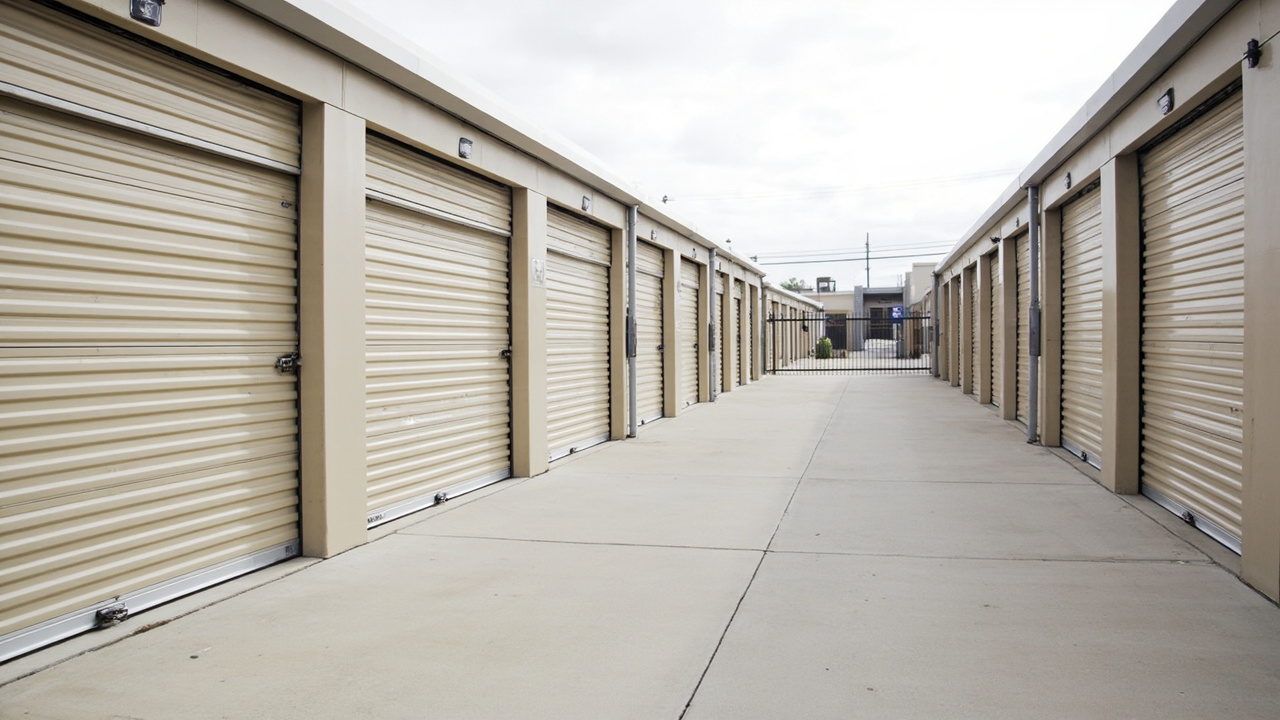
This page is a representative typical configuration for a self-storage facility of about 200 units, not a delivered project for a named operator. It shows how unmanned facilities combine a gated perimeter with keypad entry, corridor or building access, and unit-level smart locks so a tenant receives one code that admits them only during their valid rental period and opens only their own unit. At the 200-unit scale, software handles move-ins, auto-expiry on overdue accounts, manager overlock and audit review without staff on site, while gate and unit events are correlated for security. Hardware choices reflect a dusty, often outdoor environment with wide temperature swings, so rated latches, protected keypads and long battery life matter, and network coverage across the yard must be surveyed. Quantities, gateway ratios and specifications are planning estimates only; exact quantities and specifications are confirmed per project quotation.
200-unit self-storage at a glance
| Site profile | A representative unmanned or lightly staffed self-storage facility of roughly 200 units with gated perimeter and outdoor corridors. |
| Openings in scope | Planning estimate of about 200 unit latches plus the entry gate, keypads, corridor or building doors and manager overlock points. |
| Credential architecture | Tenant PIN codes valid for the rental period, gate-to-unit access correlation, and manager codes for overlock and inspection. |
| Software/integration | Cloud management for move-in, auto-expiry, payments-linked overlock and audits, integrated with facility software per RFQ. |
| Network/power | Battery unit latches with yard-wide radio coverage via gateways; gate and keypads hardwired where available, with surveyed coverage. |
| Compliance evidence | Outdoor environmental and radio evidence for named SKUs are provided per RFQ; fire and egress rules follow local code. |
| Commercial terms | Current MOQ policy, sample terms and lead time are confirmed in writing per quotation; certificates and test reports for named SKUs are provided per RFQ. |
Answer unit
How do gate, corridor and unit access work together at 200 units?
Access is layered: one tenant code passes the gate only during a valid tenancy, opens permitted corridor doors, and releases only the rented unit. Expiry and manager overlock are enforced centrally so the site runs without on-site staff.
| Opening group | Typical choice | Scale reasoning at 200 units |
|---|---|---|
| Perimeter entry gate | Hardwired keypad and gate controller | The choke point where every entry is checked and logged against active tenancies. |
| Corridor and building doors | Keypad or reader linked to access groups | Limits tenants to their building or zone and supports after-hours control. |
| Individual unit doors | Battery smart latch with tenant code | About one per unit; auto-expiry and overlock remove manual lock swaps. |
| Manager and overlock points | Manager-credential override | Overdue accounts are overlocked centrally and released on payment. |
| Office and mechanical rooms | Staff-credential locks with schedules | Back-office access is separate from tenant and gate credentials. |
| Emergency and service gates | Rated hardware with egress compliance | Free egress and fire rules are preserved regardless of credential state. |
What evidence backs this configuration page
| Evidence level | What this page states |
|---|---|
| L1 authorized named case | A named storage-operator case with identifiable facilities requires written authorization. None is published without NDA, so no such case is claimed here. |
| L2 public-reference case | Public references to comparable unmanned storage facilities may be cited where independently published, without confirming we supplied them. |
| L3 NDA photo or record case | Photos and delivery records for similar roughly 200-unit facilities are shared with qualified buyers under mutual NDA per RFQ. |
| L4 genericized record | Anonymized records keep unit counts, gate architecture and software workflows while removing operator and site identity. |
| L5 representative typical configuration | This is an L5 typical configuration: an illustrative 200-unit unmanned plan for budgeting and RFQ, not a delivered project. Higher levels are provided to qualified buyers under NDA per RFQ. |
Indicative bill of materials for this scale
This is a planning BOM for budgeting, not a quotation. Unit-latch and gateway counts follow the facility layout and measured radio coverage, with exact quantities confirmed per project quotation.
| Component | Quantity logic | Notes |
|---|---|---|
| Component | Typical quantity logic | Notes |
| Unit smart latches | Approximately one per storage unit from the door schedule | Outdoor-rated latches selected for temperature and dust. |
| Gate keypad and controller | One main entry plus any secondary vehicle gates | Hardwired where power is available; integrated with the platform. |
| Gateways | One per radio coverage zone across the yard | Coverage survey sets the ratio for outdoor metal rows. |
| Corridor or building readers | One per controlled building or zone entry | Supports access grouping by rented area. |
| Manager credential devices | One per site manager role | Overlock and inspection rights are role-scoped and audited. |
| Spare latches and batteries | A pool sized to unit count and service distance | Long-service batteries reduce site visits; policy confirmed per quote. |
What changes when a small yard becomes 200 unmanned self-storage units?
Re-check the items below when your project is smaller or larger than the representative scale on this page.
| Scale factor | How the configuration changes | What to verify |
|---|---|---|
| Scale factor | Impact on configuration | Planning note |
| Unit count | Manual overlocking becomes impractical; centralized auto-expiry is required | Plan software workflows before selecting unit hardware. |
| Unmanned operation | Gate, door and unit events must correlate without staff present | Specify one platform across all three access layers. |
| Outdoor environment | Dust, rain and wide temperature ranges drive hardware rating | Require verified ratings for the fitted assembly. |
| Radio coverage over metal | Metal unit rows create dead spots across the yard | Survey coverage and zone gateways before rollout. |
| Payment and delinquency | Overlock and release should track account status | Confirm facility-software integration scope per RFQ. |
| After-hours security | Audit review and exception alerts carry more weight | Define who reviews events and how alerts are escalated. |
From yard survey to unmanned operation in five steps
- Survey the facilityMap units, gates and buildings with radio coverage, power and exposure noted.
- Design layered accessDefine gate, corridor and unit rules plus tenant and manager code logic.
- Validate outdoor samplesTest rated latches, gate hardware and battery behavior through a temperature cycle.
- Confirm software linksVerify move-in, auto-expiry, overlock and facility-software integration.
- Deploy and commissionInstall by zone, confirm event correlation and train managers on overlock.
Related pages
Related self-storage and unmanned access pages
Planning a similar 200-unit self-storage configuration?
Send your facility layout, unit mix and management software. We confirm gate and unit architecture, gateway coverage, outdoor ratings and overlock workflow; current MOQ policy, sample terms and lead time are confirmed in writing per quotation, and certificates and test reports for named SKUs are provided per RFQ.
Request Similar ConfigurationProject configurationsLast updated: November 1, 2026 · Reviewed by the Smart Lock Factory editorial team