
Project configurations
A representative 100-berth marina access plan for holders and visitors
Marinas mix salt air, weekend traffic and seasonal contracts; the access plan has to survive all three without reissuing a key every season.
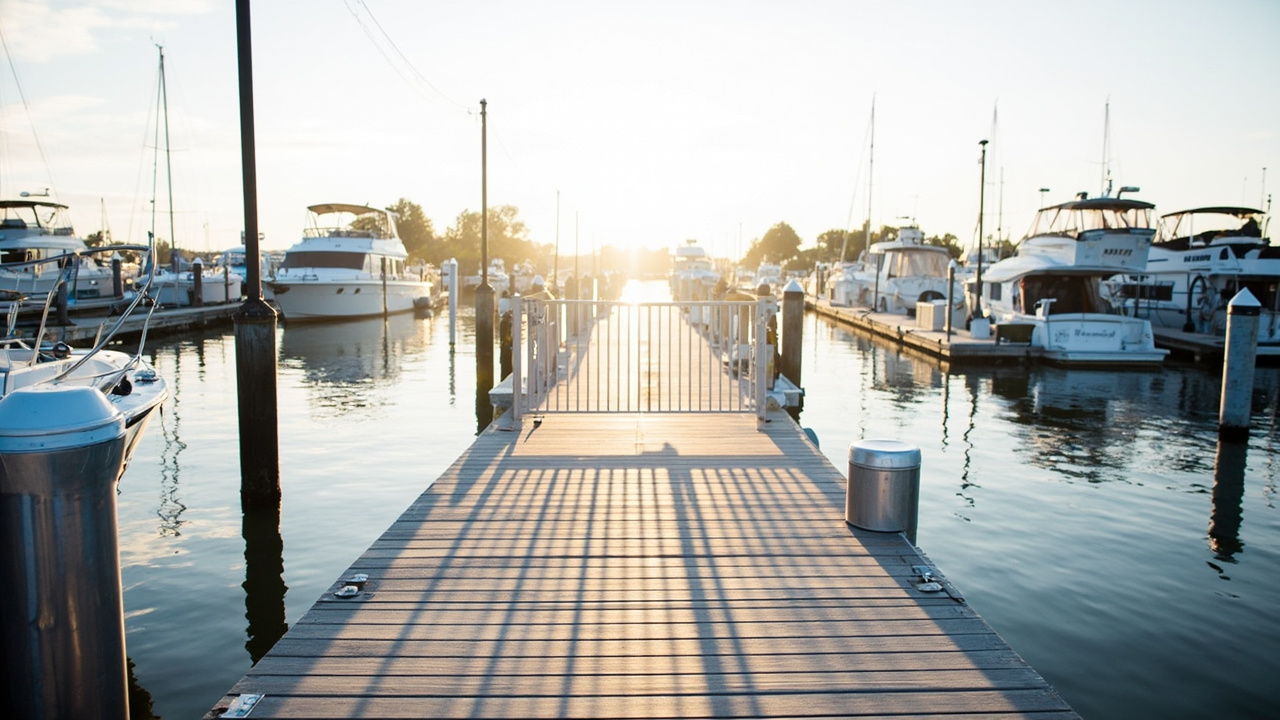
This page is a representative typical configuration for a marina, boatyard or yacht club with about 100 berths, not a delivered project for a named operator. It shows how harbour managers usually separate shore access from berth access. Contract holders receive credentials matched to their berth and pontoon for the season, short-stay visitors get dated codes for their assigned berth, and contractors such as riggers and cleaners receive narrow service windows. Shore power pedestals are locked against unauthorised draw, dry storage and boat racks follow the rental period, and fuel docks and workshops stay under staff control with audit review. Salt air, spray and ultraviolet light push hardware toward rated stainless assemblies and sealed keypads, so the fitted assembly matters more than the model name. Storm preparation, pump-out access and rescue paths must remain available when the network or mains supply fails. Quantities, gateway ratios and specifications are planning estimates only; exact quantities and specifications are confirmed per project quotation.
100-berth marina at a glance
| Site profile | A representative marina, boatyard or yacht club with roughly 100 berths across pontoons, plus dry storage and service areas. |
| Openings in scope | Planning estimate of about 100 controlled points covering the shore gate, pontoon gates, pedestals, storage racks, fuel dock and workshop. |
| Credential architecture | Seasonal berth-holder credentials, dated visitor codes, contractor service windows and staff role codes with central revocation. |
| Software/integration | One harbour dashboard with contract status, pontoon groups, visitor scheduling and audit retrieval, optionally linked to billing per project. |
| Network/power | Battery locks at pontoons with gateways zoned along the marina, plus offline code support where mains power is unreliable. |
| Compliance evidence | Salt-spray, environmental and electrical evidence for named SKUs are provided per RFQ; rescue and egress follow local marine rules. |
| Commercial terms | Current MOQ policy, sample terms and lead time are confirmed in writing per quotation; certificates and test reports for named SKUs are provided per RFQ. |
Answer unit
How should shore, pontoon and pedestal access be split?
Split by contract, not by convenience. Shore access identifies who is on site, pontoon gates limit movement to the berth group a contract covers, and pedestal locks control the power a berth is entitled to. Visitors slot into the same structure for a fixed window, which keeps weekend traffic auditable without burdening the harbour office.
| Opening group | Typical choice | Scale reasoning at 100 berths |
|---|---|---|
| Marina main gate | Outdoor-rated keypad with berth-holder PINs | One checkpoint before the pontoons, logged against active berth contracts. |
| Pontoon gates | Weather-rated reader with berth groups | Each walkway opens only to holders assigned to that pontoon. |
| Shore power pedestals | Keyed pedestal lock with service credential | Stops unauthorised power draw without cutting supply to paying berths. |
| Dry storage and racks | Outdoor lock with tamper alert | Storage access follows the rental period and reports forced entry. |
| Fuel dock and workshop | Supervised access with audit review | Service areas stay staff-controlled rather than open to all holders. |
| Emergency and rescue access | Mechanical release with egress compliance | Rescue must enter when power or network is down. |
What evidence backs this configuration page
| Evidence level | What this page states |
|---|---|
| L1 authorized named case | A named marina or boatyard case with identifiable berths requires written authorization. None is published without NDA, so no such case is claimed here. |
| L2 public-reference case | Public references to comparable marinas or yacht clubs may be cited where independently published, without confirming we supplied them. |
| L3 NDA photo or record case | Photos and delivery records for similar 100-berth facilities can be shared with qualified buyers under mutual NDA per RFQ. |
| L4 genericized record | Anonymized records keep berth counts, pontoon grouping and service logic while removing operator and site identity. |
| L5 representative typical configuration | What is published here is an L5 typical configuration: an illustrative 100-berth marina plan for budgeting and RFQ discussion, not a statement of a delivered project. Higher levels are provided to qualified buyers under NDA per RFQ. |
Indicative bill of materials for this scale
This is a planning bill of materials for budgeting, not a quotation. Berth and pontoon counts follow the harbour plan, while pedestal, gateway and marine-grade spare quantities are confirmed against the layout per project quotation.
| Component | Quantity logic | Notes |
|---|---|---|
| Component | Typical quantity logic | Notes |
| Gate keypads and readers | One per controlled shore or pontoon gate | Housing and fixings specified for salt exposure. |
| Pedestal locks | One per powered pedestal | Compatible with the pedestal supplier and supply arrangement. |
| Storage and rack locks | One per controlled rack or dry-storage bay | Rental-period release is configured centrally. |
| Gateways | One per coverage zone along the pontoons | Water and metal hulls affect radio reach; survey before ordering. |
| Marine-grade fixings | One weather kit per exposed lock | Stainless fasteners and sealed gaskets extend service life. |
| Spare locks and batteries | A pool sized to berth count and season peaks | Season-start checks reduce peak-week callouts. |
What actually changes when a marina grows to about 100 berths?
Re-check the items below when your project is smaller or larger than the representative scale on this page.
| Scale factor | How the configuration changes | What to verify |
|---|---|---|
| Scale factor | Impact on configuration | Planning note |
| Seasonal contracts | Berth holders change every season | Automate expiry instead of reissuing keys annually. |
| Salt and spray exposure | Corrosion attacks exposed hardware first | Require rated assemblies and inspect at season start. |
| Visitor traffic | Short-stay boats arrive without notice | Dated codes let the office issue access remotely. |
| Pontoon layout | Multiple walkways multiply access points | Group credentials by pontoon rather than by person only. |
| Power management | Pedestals carry billing and safety duties | Coordinate lock design with the pedestal supplier. |
| Rescue access | Emergency entry must work in a storm outage | Keep a mechanical release path documented and tested. |
From harbour survey to season launch in five steps
- Survey the harbourMap gates, pontoons, pedestals and storage with exposure and power notes.
- Group by contractDefine shore, pontoon and pedestal rules from berth contracts.
- Validate marine samplesTest housings and fixings through salt-spray and ultraviolet exposure.
- Integrate billing and auditConfirm contract status sync, visitor codes and audit export per project.
- Launch before seasonCommission gate by gate, test rescue release and brief harbour staff.
Related pages
Related marina and outdoor access pages
Planning a similar 100-berth marina configuration?
Send your harbour plan, berth contracts and pedestal supplier details. We confirm gate and pedestal hardware, marine-grade fixings, gateway zoning and credential groups; current MOQ policy, sample terms and lead time are confirmed in writing per quotation, and certificates and test reports for named SKUs are provided per RFQ.
Request Similar ConfigurationProject configurationsLast updated: November 1, 2026 · Reviewed by the Smart Lock Factory editorial team