
Applications
Smart locks for micro-apartments: hundreds of doors, one clean workflow
Compact locks for dense studio floors, unattended move-in, instant turnover between short tenancies and common doors managed separately from units.
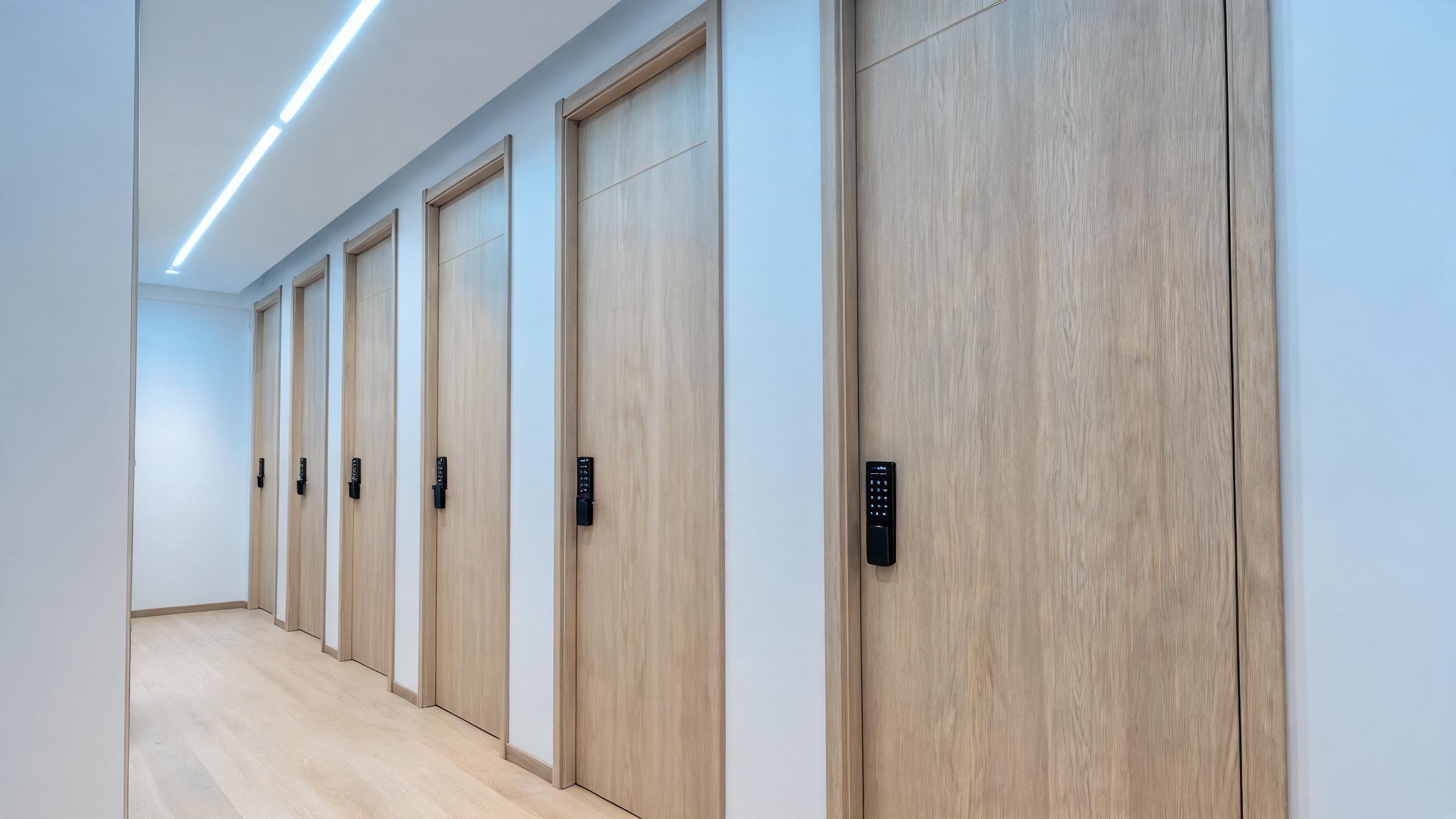
Micro-apartment buildings pack hundreds of compact studios onto small floorplates with high turnover, unmanned lobbies and a remote operations team, so the access program is optimized for density and repetition rather than long feature lists: one compact lock SKU across every unit, codes that make self check-in and same-day turnover routine, and common doors planned as a separate layer from the units. Gateways cover the doors where remote operation saves real staff time — entrances, package rooms, self-tour units — while upper-floor studios can run offline if the operator turns them with a field visit. Standardization is the economic point: one battery format, one spare part, one training path for a building the size of a hotel. The multifamily guide covers conventional unit mixes, the co-living page covers shared suites, and the apartment solution covers platform scoping.
Micro-apartment access at a glance
| Density | Hundreds of compact studios on repetitive floors reward one standardized compact lock SKU across the building |
| Turnover speed | Pre-arrival codes support unattended move-in, and expiry at move-out enables same-day re-letting on connected units |
| Self tours | Vacant units can open on one-time touring windows for prospects without staff escort |
| Common layer | Entrance, package, laundry and amenity doors are scheduled separately from the hundreds of unit doors |
| Connectivity split | Gateways concentrate on entry and high-value doors; repetitive upper-floor units may remain offline |
| Service model | One battery format, one spare part and one workflow keep maintenance viable at unit counts this high |
| BOM shape | Unit locks per studio, common-door locks, gateways by high-value zone, credential stock and a percentage spare pool |
Answer unit
Connect every studio or concentrate gateways?
At this density the gateway bill can rival the lock bill, so operators connect doors by operational payback rather than by reflex.
| Dimension | Offline code-first studios | Gateway-connected studios |
|---|---|---|
| Move-in | Code set during the turnover visit | Pre-arrival code with no staff visit |
| Lockouts | Resident uses keypad; staff dispatch if needed | Remote resolution from the operations center |
| Self tours | Tours staffed or limited to sample units | Any vacant unit offers one-time touring windows |
| Audit | Read at the door when needed | Events reviewed remotely and continuously |
| Infrastructure | No gateway count across upper floors | Coverage engineering floor by floor |
| Typical fit | Thin-margin high-density operators | Premium positioning, short tenancy, unmanned buildings |
Door types and lock-body match
Repetitive interior doors simplify specification; common and package doors carry the engineering attention.
| Opening | Typical door | Lock approach |
|---|---|---|
| Studio unit door | Standard timber residential-prep door, repeated | One compact smart lock SKU across all floors for service simplicity |
| Building entrance | Glazed entrance with intercom, often unmanned | Connected reader/keypad with release workflow and remote staff support |
| Package room | Secure interior or exterior door | Connected lock with delivery-window access and entry records |
| Laundry / amenity | Timber or glazed interior door | Resident group credential, scheduled hours where operated |
| Self-tour unit | Same standard studio door | Connected model or selected showcase units with one-time codes |
| Service / stair | Fire-rated metal door | Fire-compatible hardware and staff credential per the fire schedule |
Example BOM shape for a high-density micro building
This example illustrates a typical configuration, not a specific customer project. Studio count and unmanned-operation depth drive the list.
| Component | Typical logic | Notes |
|---|---|---|
| Unit locks | One compact SKU per studio across the building | Volume standardization gives one spare and battery path |
| Common-door locks | Entrance, package, laundry and amenity openings | Connected where remote operation has clear payback |
| Gateways | High-value zones rather than one per floor by default | Count fixed by the connectivity survey and operating model |
| Credential stock | Resident codes with limited fob stock | Sized for move-in waves at peak leasing season |
| Percentage spares | A defined spare pool for dense turnover | Keeps same-day re-letting realistic at scale |
How a micro-apartment program rolls out
- Density surveyRepetitive floors are confirmed for one SKU, and common doors are logged separately with connectivity conditions.
- Payback splitThe online/offline boundary is drawn from turnover data, staffing model and self-tour ambition.
- Pilot floorOne full floor plus the entrance runs real leasing and turnover cycles to measure staff time saved.
- Building rolloutFloors commission in waves during leasing, with common doors and package rooms prioritized early.
- Scale handoverBattery rounds, spare swaps and remote issue are documented for an operations center managing many buildings.
Related applications
Related dense-housing pages
Smart locks for micro-apartments: common questions
Why standardize on one lock model for the whole building?
At hundreds of units, variety multiplies every downstream cost: different batteries, different spare parts, different install quirks and different staff troubleshooting paths. One validated compact lock SKU turns maintenance into a routine and keeps the spare pool small, and volume procurement gives cleaner MOQ and pricing. The common doors can and should use different matched hardware, because entrances and package rooms are not studio doors. Standardization applies to the repetitive unit layer rather than the building as a whole.
Can applicants tour vacant units without staff?
Connected showcase units — or every vacant unit in fully unmanned buildings — open on one-time touring windows issued against a verified appointment, then lock down automatically afterward, which extends leasing hours without adding staff. The entrance and the unit both participate in the workflow, and entry events give leasing teams the tour record. Operators who keep staffed touring retain the same locks and simply do not enable the feature, so the BOM does not force an operating choice at purchase.
How fast can a unit turn over between tenancies?
On connected studios the departing code expires at move-out and the new resident’s pre-arrival code is live before the clean is finished, so same-day re-letting needs no key handoff; offline units are recoded during the physical turn visit, which already includes cleaning and inspection. Either model removes the lock change from the critical path. High-turnover buildings size a spare pool specifically so a hardware defect never blocks a leased day.
Is gateway coverage needed on every floor?
Usually not, which is the difference between a sensible BOM and a surprised invoice: gateways concentrate on the entrance, package and self-tour doors where remote operation saves measurable staff time, while repetitive upper-floor studios often run code-first offline. The split comes from the connectivity survey and the staffing model rather than aesthetics, and buildings can deepen connectivity later because the unit locks remain the same platform.
How is a micro-apartment BOM and MOQ quoted?
The quote counts unit locks by studio count, common-door locks separately, gateways by the chosen zones and a percentage spare pool, with MOQ and lead time confirmed in writing per quotation. Volume across multiple buildings improves terms and allows one shared spare inventory. Send the studio count, common-door list, planned online/offline split and opening schedule, and delivery can be phased by floor or building to match leasing absorption.
Run hundreds of studio doors with one lock and one workflow
Send studio count, common-door list and your online/offline target — receive a density-scaled BOM with written MOQ, gateway zones and lead-time terms.
Discuss your project (RFQ)Project configurationsLast updated: October 31, 2026 · Reviewed by the Smart Lock Factory editorial team