
Applications
Smart locks for co-living spaces: private bedrooms, shared everything else
Per-member bedroom credentials that expire with the tenancy, suite and amenity group rules, event-space booking access and turnover without staff visits.
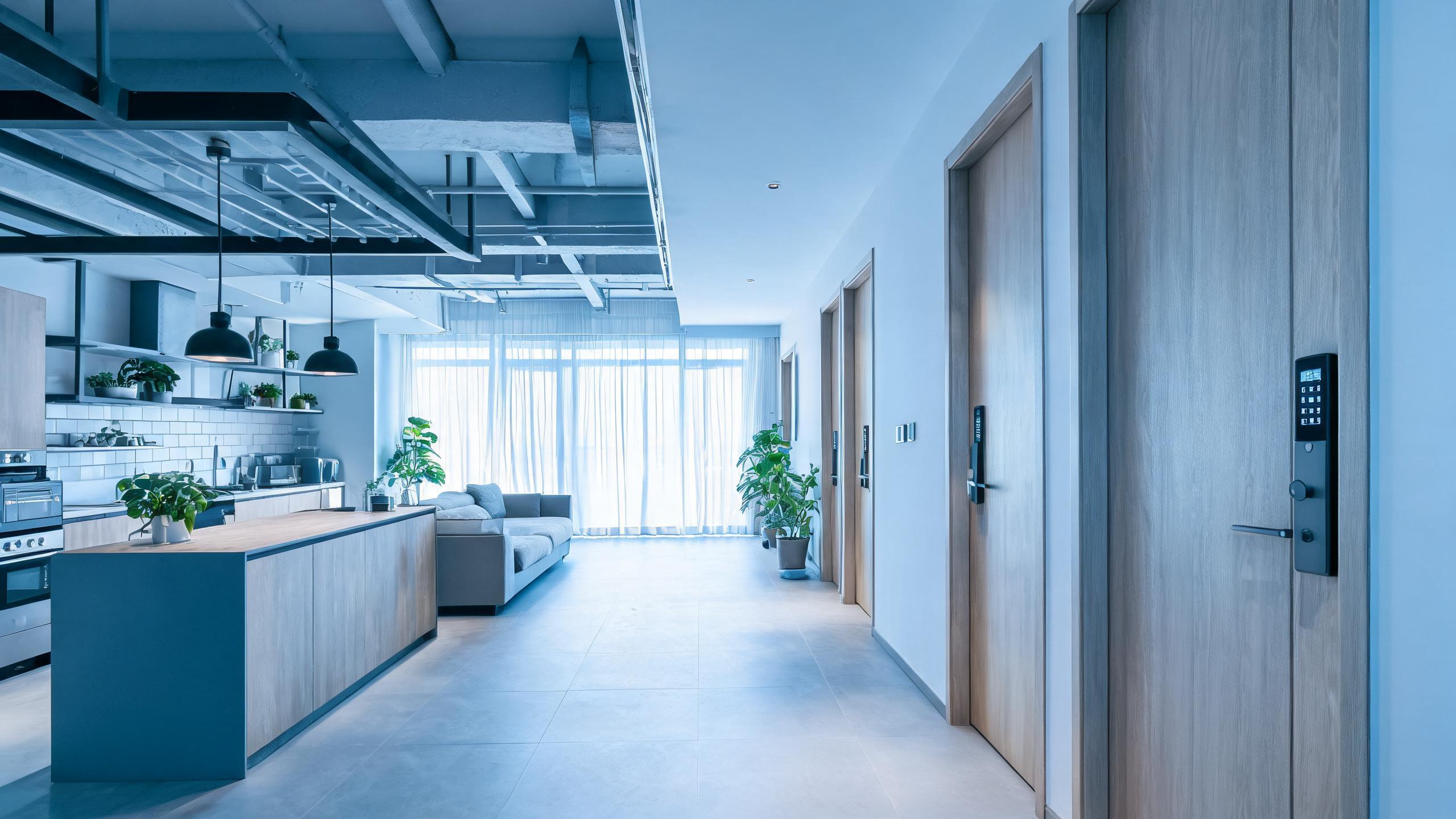
Co-living compresses the multifamily access problem: one member rents a bedroom inside a shared suite, with the suite door, kitchen, storage, gym, rooftop and event rooms governed by membership rather than a lease on a front door. Smart access separates the layers — a bedroom credential unique to the member, a suite group shared by current roommates and rotating when one leaves, amenity access tied to membership tier and event rooms opening only in booked windows — all turning over digitally as members move month to month. Operators with buildings in several cities run one platform and one remote-issue workflow. The shared-suite rekey moment, historically a painful staff visit every time a roommate changes, disappears. The apartment operating model explains the baseline, the micro-apartment page covers compact single-occupancy buildings, and the student housing page covers term-based communities.
Co-living access at a glance
| Access layers | Private bedroom, shared suite, floor amenities, building amenities and bookable event rooms each hold different credential logic |
| Member turnover | Bedroom credentials expire with the tenancy; suite groups rotate as roommates change without rekeys or staff visits |
| Amenity tiers | Gym, rooftop, coworking and storage can follow membership tier or opening hours on group credentials |
| Event rooms | Bookable spaces open only within the booked window, with the host credential distinct from member access |
| Operation | One platform across buildings supports remote issue, centralized staff and multi-city portfolios |
| Fitment | Bedroom doors take compact residential locks; amenity and fire doors take matched hardware per survey |
| BOM shape | One bedroom lock per bed, suite and amenity locks, gateways per coverage area, fobs by brand choice and a turnover spare pool |
Answer unit
Codes for members or fobs as the brand default?
Most operators issue a code on day one and add a branded fob or card as a keepsake amenity; event and gym access then rides the same credential.
| Dimension | Member PIN codes | Branded fobs / cards |
|---|---|---|
| Move-in | Code delivered before arrival for self check-in | Fob picked up at community kickoff or welcome desk |
| Bedroom access | Private code never shared with roommates | Fob plus code; bedroom still feels personal |
| Amenities | Code at gym and rooftop readers | Tap access faster at turnstiles and gym doors |
| Loss handling | Nothing physical to lose or deactivate | Revocable fob, replacement billed per house rules |
| Brand value | Functional and free | A physical membership artifact operators can brand |
| Typical fit | Digital-first operators, short stays | Club-style communities, premium-tier members |
Door types and lock-body match
The bedroom/suite split is the defining survey; amenity and fire doors follow standard multi-door logic.
| Opening | Typical door | Lock approach |
|---|---|---|
| Private bedroom | Lightweight timber interior door | Compact smart lock with one member credential and staff override |
| Shared suite door | Timber corridor-side door | Group credential rotating with the current roommate set, plus staff |
| Kitchen / lounge | Open or glazed interior door | Member group access, scheduled hours only where operations wants limits |
| Gym / rooftop | Fire-rated or exterior amenity door | Group reader matched to door rating, access tied to active membership |
| Event room | Timber or glazed bookable room | Booking-window credentials with a host and staff override |
| Storage / service | Metal utility door | Staff credential; optional paid storage lockers via cabinet locks |
Example BOM shape for a co-living building
This example illustrates a typical configuration, not a specific customer project. Bed count, amenity load and brand style drive the list.
| Component | Typical logic | Notes |
|---|---|---|
| Bedroom locks | One per rentable bedroom across suites | Compact model suited to interior doors |
| Suite and amenity locks | Suite entries, gym, rooftop, coworking and event doors | Hardware matched to fire and exterior ratings |
| Gateways | Per coverage area across floors and amenity zones | Placed during the connectivity survey |
| Credential kit | Codes as default with branded fobs where chosen | Stock sized for move-in waves and replacements |
| Turnover spares | Spares for high-frequency member change and event wear | Protects same-day re-letting of bedrooms |
How a co-living program rolls out
- Layer surveyEvery opening is mapped to bedroom, suite, amenity tier or bookable room, including fire rating and existing prep.
- Credential designBedroom, suite-group, tier and event-window rules are built from the membership model and house rules.
- Pilot floorOne floor runs real member moves, suite rotations and an event booking cycle before building-wide rollout.
- Building rolloutFloors and amenities commission in waves, with remote issue rehearsed by the central operations team.
- Operations handoverTurnover, roommate change, lost fob and event-host procedures are documented, with spares and audit paths confirmed.
Related applications
Related shared-living pages
Smart locks for co-living spaces: common questions
What happens to the suite door when a roommate moves out?
The suite group rotates: the departing member’s bedroom credential expires at move-out and the shared suite credential is reissued to the remaining roommates and the new arrival, with no rekey and usually no staff visit. On connected doors this runs remotely from the operations team as part of the turnover workflow; the bedroom stays personal to each member throughout, so roommates never hold each other’s private access. That single change removes the most repeated operational cost in shared-suite housing.
Can amenities be restricted by membership tier or hours?
Yes, amenity doors sit on group credentials separate from residential access, so a tier can include evening coworking but not 24-hour rooftop, or premium members can carry gym access that standard members do not; bookable event rooms open only inside the reservation window under a host credential. The rules are configured from the actual membership product rather than left open by default. Fire-rated and exterior amenity doors use matched hardware, and tier changes update credentials without anyone visiting the door.
Do members self check in across multiple cities?
Digital-first operators issue a bedroom code before arrival so a member can enter a building in another city with no local office visit, while a welcome session delivers any branded fob separately. One platform across the portfolio keeps the member record and credential lifecycle consistent city to city, and central staff can resolve lockouts remotely. Local teams retain a credential for maintenance and emergencies, with mechanical override documented at every building, so self check-in does not mean unattended safety.
What is the difference between co-living and student housing locks?
The hardware families overlap, but the logic differs: co-living rotates suite groups month to month around short memberships and bookable amenities, while student housing rotates once per term around bed leases, resident assistants and a stricter resident-to-master hierarchy. Co-living also brands credentials as a membership artifact more often. The student housing guide details that model; operators running both use one platform with two credential rule sets rather than two lock systems.
What does a co-living BOM and MOQ look like?
The BOM counts one bedroom lock per bed plus suite, amenity and event locks, gateways by coverage area and credential stock for move-in waves, so bed count and amenity load drive the quote rather than apartment count. Current MOQ and lead time are confirmed in writing per quotation; send the suite layout, bed count, amenity list and the code-versus-fob brand decision, and multi-building rollouts can be scheduled per opening with common spares held centrally.
Rotate the suite, re-let the bed — without a single rekey
Send bed count, suite layout and amenity list — receive a bed-based BOM with written MOQ and lead-time terms for one building or a portfolio.
Discuss your project (RFQ)Project configurationsLast updated: October 31, 2026 · Reviewed by the Smart Lock Factory editorial team