
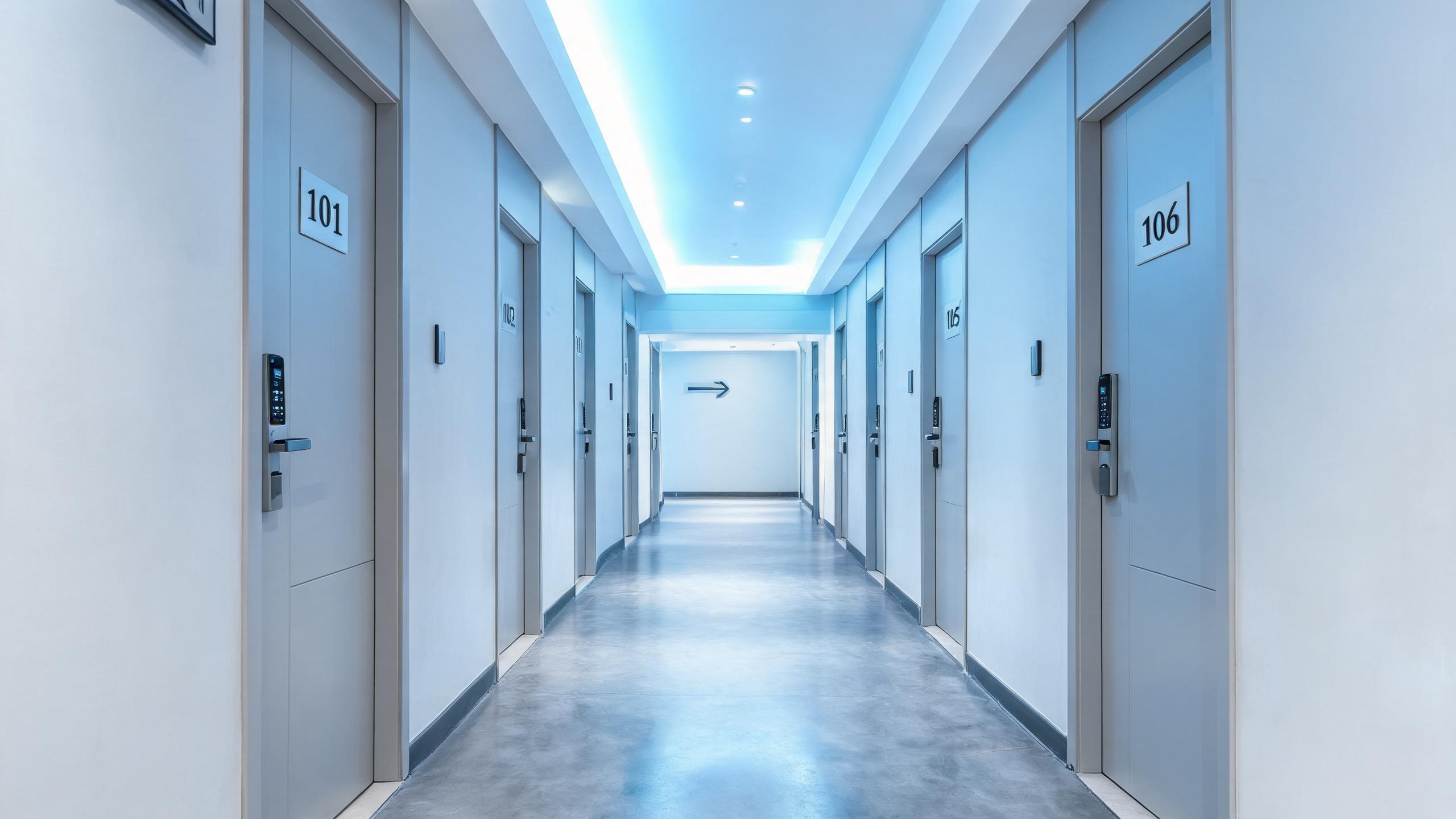
Applications
Smart locks for hostels: per-bed access without the front-desk key wall
Dorm beds, private rooms and locker rooms issued by the booking window — with housekeeping windows, staff hierarchy and hardware built for high-turnover budget stays.
Hostels run the highest door-turnover in hospitality: the same dorm bed can change occupant every night, and a lost physical key means a rekey or a lock change before the bed can be sold again. Smart access replaces that cycle with a code or credential valid only for the booked dates, issued at check-in and dead at check-out, so front-desk time and key replacement cost collapse together. The property still has several door classes — dorm rooms with multiple occupants, private rooms, shared bathrooms, staff-only areas and luggage or locker rooms — and each takes a different decision about PIN codes, RFID wristbands or locker locks. Common doors can run on gateways for remote audits and housekeeping windows; low-traffic rooms can run offline. The hotel operating model explains the hospitality workflow, the hotel lock platform page covers the hardware families, and the applications hub lists adjacent property types.
Hostel access at a glance
| Door classes | Dorm rooms, private rooms, shared bathrooms, luggage and locker rooms, plus staff and back-of-house doors each specified separately |
| Per-bed turnover | Codes or wristbands tied to the booking window expire at check-out; the same bed can be re-let the same night without a rekey |
| Shared rooms | Dorm occupants receive individual time-limited credentials rather than one shared key, so departures and extensions do not disturb other beds |
| Staff access | Front desk, housekeeping and maintenance hold tiered credentials with scheduled windows and event records on connected doors |
| Credentials | PIN codes suit code-first hostels; RFID wristbands or cards suit properties with pools, kitchens and locker rooms; mechanical override is retained |
| Connectivity | Gateways cover common and high-turnover doors where remote issue and audit pay back; storage and service rooms often run offline |
| BOM shape | Room and locker locks by opening count, encoders or gateways as chosen, wristband stock for peak season, and a defect spare pool |
Answer unit
Booking-window PIN codes or RFID wristbands?
Most hostels mix both: codes for the bed door and wristbands for amenities. The split follows how guests move through the property, not a single platform preference.
| Dimension | Booking-window PIN codes | RFID wristbands / cards |
|---|---|---|
| Check-in | Code delivered with the booking; no desk queue for simple arrivals | Wristband issued at the desk, doubles as an amenity pass |
| Dorm logic | Each bed occupant receives an individual dated code | One credential per guest; shared-room access managed by group rules |
| Loss handling | A lost code costs nothing; it is simply re-issued | Lost wristband is deactivated and replaced from stock |
| Amenities | Separate codes for kitchens, laundry or bike rooms | One wristband opens the bed door and every paid amenity |
| Hardware cost | Keypad locks with no encoder or card stock | Reader locks plus encoders and consumable wristbands |
| Typical fit | City hostels, self check-in, small teams | Resort hostels with pools, gyms, beach clubs and large grounds |
Door types and lock-body match
Fitment follows the surveyed opening. Hostel doors are often lightweight interior doors with simple prep; fire-rated corridor doors still require matched hardware.
| Opening | Typical door | Lock approach |
|---|---|---|
| Dorm room | Lightweight timber or hollow-core interior door | Keypad or RFID lock with multiple dated credentials per occupant and mechanical override |
| Private room | Standard timber residential-prep door | Hospitality lever set with code or card, configured for one booking window at a time |
| Shared bathroom | Moisture-exposed interior door | Reader or keypad lock specified for damp environments, credentials shared by floor or zone |
| Luggage / locker room | Metal lockers or a secured storage door | Cabinet and locker locks for individual compartments or one access-managed room door |
| Back / service gate | Metal exterior or fire-rated door | Weather-rated lock where exposed, staff-only credential, offline is common |
| Staff office | Interior timber or glazed door | Staff-credential lock with audit on connected models, distinct from guest permissions |
Example BOM shape for a mid-size hostel
This example illustrates a typical configuration, not a specific customer project. Quantities follow the bed count, the dorm/private mix and the credential decision.
| Component | Typical logic | Notes |
|---|---|---|
| Room locks | One per rentable room, sized across dorm and private doors | Model family chosen by code, wristband or mixed credentials |
| Locker locks | One per paid luggage compartment or locker bank | Public or assigned mode per the locker-room operating rules |
| Gateway / encoder | Gateway per connected coverage area, or one encoder for RFID issue | Selected by the online/offline split from the survey |
| Credential stock | Wristbands or cards for occupancy peaks and re-issues | Spare stock sized for high season and lost items |
| Spares and keys | Defect spare locks plus mechanical override keys | Spare pool protects same-night re-letting after a failure |
How a hostel program rolls out
- Door and bed surveyEvery opening is logged with material, prep and fire rating, then mapped to dorm beds, private rooms, amenities and service areas.
- Credential decisionCodes, wristbands or a mixed model are chosen from the amenity footprint and desk staffing, and the online/offline split is agreed.
- BOM and samplesThe component BOM is quoted and sample locks are fitted to representative dorm and private doors for sign-off before volume order.
- Floor-by-floor installFloors commission one at a time around the booking curve, keeping beds on sale and avoiding a property-wide shutdown.
- Desk handoverStaff are trained on booking-window issue, extensions, housekeeping windows and overrides, and spare stock is logged.
Related applications
Related hospitality and access pages
Smart locks for hostels: common questions
How do smart locks handle shared dorm rooms?
Each bed occupant receives an individual credential that is valid only for their booked dates instead of one physical key shared around the room. When a guest extends, their credential is extended; when they leave, it expires, and neither action disturbs the other beds. Housekeeping and front-desk staff hold separate scheduled credentials, and a mechanical override remains for emergencies or dead batteries. The lock model is chosen to hold enough dated credentials for the largest dorm sold, so the room’s bed count drives the specification rather than a generic product brochure.
Can guests check in without passing the front desk?
Yes on connected doors: a booking-window code can be delivered with the reservation and works from the stated arrival time, which suits late flights and overnight arrivals. Offline locks require the code to be set at the door or via a nearby manager, so properties wanting unattended arrival specify gateways for the room classes that need it. The choice is stated per door class rather than assumed for the whole building, and any third-party booking-channel connection is scoped against the named system in writing.
What happens when a guest loses a wristband?
The lost wristband is deactivated in the system and a replacement is issued from front-desk stock, usually in less than a minute; unlike a metal key it cannot open the door once revoked. That is why the BOM includes consumable wristband stock sized for peak season and for re-issues. With a code-first property the question largely disappears because there is nothing physical to lose. Either way, per-guest credentials beat shared keys because revocation affects one stay rather than the whole room.
Are smart locks suitable for old or lightweight hostel doors?
Many hostels occupy converted buildings with hollow-core or thin timber doors, and several lock families fit standard residential prep without structural work, provided door thickness and handing are surveyed first. Fire-rated corridor and stair doors are handled differently, with matched mortise platforms that respect the fire-door schedule. Very thin or non-standard doors are flagged in the survey rather than adapted in the field, and sample fitting on one representative door confirms the choice before a volume order.
What MOQ and lead time apply to a hostel project?
Minimums follow the lock SKUs, the credential option and whether encoders or gateways are included, so the honest answer comes from a component BOM rather than a single number. Send the room list, bed counts, the code-versus-wristband decision and the planned opening date through the project form, and current MOQ, pricing logic and lead time are confirmed in writing per quotation, with phased delivery possible for floor-by-floor rollouts.
Re-let every bed the same night, without a single rekey
Send room and bed counts, the dorm/private mix and your code-versus-wristband preference — receive a component BOM with written MOQ and lead-time terms.
Discuss your project (RFQ)Project configurationsLast updated: October 31, 2026 · Reviewed by the Smart Lock Factory editorial team