
Applications
Smart locks for serviced apartments: hotel turnover, apartment hardware
Code-first guest access for stays of days to months, housekeeping windows, remote credential delivery and back-of-house control — specified as one building BOM, with integration scope settled in writing.
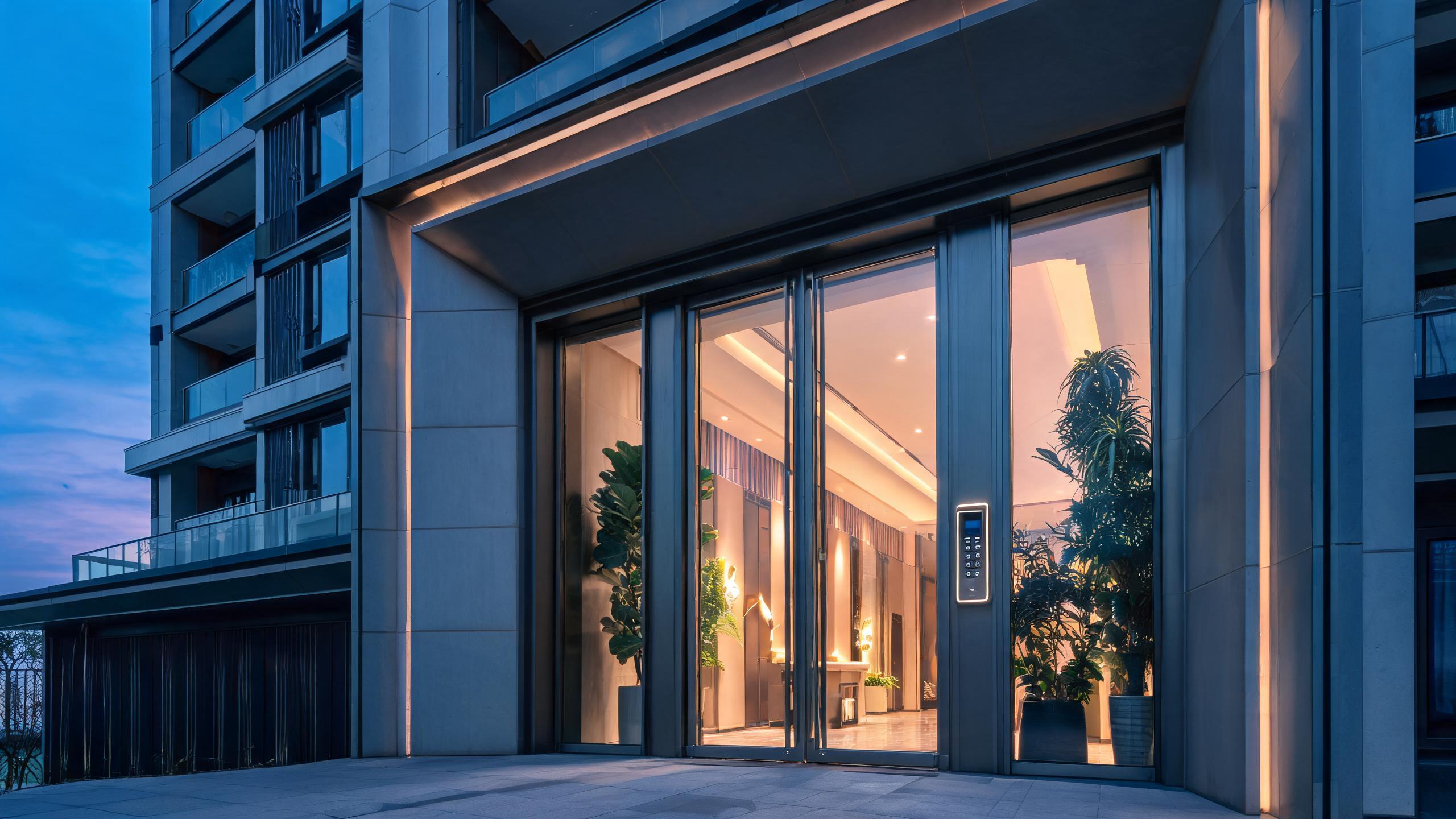
Serviced apartments sit between hotels and residential lets, and the lock program borrows from each. From hotels they take the turnover event: a guest arrives, often without any staff present, receives a time-limited code, and that code must die at checkout so a late departure does not keep a valid key. From apartments they take the doors: residential deadbolt and mortise prep rather than hospitality card bodies, plus amenity rooms, gyms, package areas and back-of-house spaces that hotels staff continuously and serviced apartments do not. The default credential is therefore the code — delivered by message or from a connected platform, no front-desk queue — with optional cards or fobs for long-stay residents and staff credentials that follow housekeeping windows rather than standing 24-hour access. Connectivity is the main architecture choice: gateways enable remote code issue and arrival alerts for unattended buildings, while a smaller operator may manage codes locally at turn. Any link to a property-management or channel platform is scoped against the named system. The apartment solution and vacation rental page cover neighboring operating models.
Serviced-apartment smart access at a glance
| Stay profile | Stays range from a few nights to several months; credentials and house rules must handle both short turnover and long-stay residents |
| Default credential | Time-limited PIN codes delivered remotely for unattended arrival, with expiry tied to the booking checkout rather than manual cancellation |
| Staff access | Housekeeping and maintenance credentials valid only inside scheduled service windows, with entry records on connected doors |
| Connectivity | Wi-Fi gateways for remote code issue, alerts and audit on unattended buildings; local Bluetooth coding remains viable for small, staffed sites |
| Door classes | Unit entrances on residential prep, amenity and glass doors, package and laundry rooms, staff offices and service rooms |
| Hardware fitment | Smart deadbolts for timber unit doors and matched mortise platforms for fire-rated metal or Euro-prep doors, per the opening survey |
| BOM shape | Unit locks, amenity and back-of-house locks, gateways by coverage area, small fob stock for long stays and staff, defect spares, scoped integration |
Answer unit
Code-only stays or codes plus fobs for long residents?
The guest mix decides. Buildings serving mostly short stays run lean; extended-stay operators usually add a physical credential for residents who stop thinking in check-in dates.
| Dimension | Code-only program | Codes plus cards / fobs |
|---|---|---|
| Typical stay | Nights to a few weeks, high turnover | Weeks to months, returning residents |
| Arrival flow | Code delivered before arrival; nothing to hand over | Code for arrival, fob issued or posted for the long stay |
| Amenity access | Separate codes or shared building codes per stay | One fob opens unit and permitted amenities by schedule |
| Lost credential handling | Code reset only, no physical reissue | Fob deactivation and courier or on-site reissue needed |
| Stock and cost | Minimal credential stock; simplest operation | Fob stock, issuance process and deposit policy required |
| Best fit | Urban short-stay and corporate-transit buildings | Extended-stay, relocation and monthly serviced units |
Building openings and lock match
Residential prep dominates but amenity and fire-rated doors add variety; bodies are confirmed from the opening survey.
| Opening | Typical door | Lock approach |
|---|---|---|
| Apartment unit | Timber or metal residential door | Code-led smart deadbolt or matched mortise, with booking-window expiry and staff override |
| Building entrance | Common entrance, sometimes intercom-controlled | Guest and staff credential entry; gateway-connected for remote release where scoped |
| Gym / lounge amenities | Interior timber or glass doors | Stay-valid credentials during the booking; glass clamps for frameless doors |
| Package / laundry | Secure utility doors | Resident-valid codes plus staff access; individual locker locks where parcels need them |
| Housekeeping / service | Metal back-of-house doors | Scheduled staff credentials with override; offline is common on low-traffic doors |
| Fire-rated corridor door | Rated metal door with mortise prep | Fire-door-compatible platform selected against the rating and schedule |
Example BOM shape for a serviced building
This example illustrates a typical configuration, not a specific customer project. Quantities follow unit count, amenities and the connectivity decision.
| Component | Typical logic | Notes |
|---|---|---|
| Unit locks | One per serviced unit plus defect spares | Deadbolt or mortise per door survey |
| Common and amenity locks | Entrance, gym, lounge, package and laundry doors | Stay-valid credentials and staff windows |
| Gateways | One per coverage area for unattended remote operation | Positioned from a connectivity survey |
| Credential stock | Mostly code delivery; small fob stock for long stays and staff | Issuance and deposit policy set by operator |
| Integration scope | Named property-management or channel connection | Quoted separately with limits in writing |
How a serviced-apartment program launches
- Operating model reviewStay lengths, staff presence, housekeeping windows and arrival procedure define whether the building runs code-only or adds fobs.
- Door and connectivity surveyUnit prep, amenity and fire-rated doors are logged, and gateway positions are planned against building construction and internet availability.
- Turnover workflow designBooking-window expiry, late-checkout handling, staff windows and the named PMS or channel workflow are documented before ordering.
- Pilot unitsA representative set of units and amenity doors runs real arrivals, cleanings and late checkouts end to end, including offline behavior.
- Rollout and handoverBuilding-wide install follows the turn cycle, staff train on code issue and overrides, and integration behavior is verified against the named platform.
Related applications
Adjacent hospitality and housing pages
Smart locks for serviced apartments: common questions
How do guests receive access if nobody staffs a front desk?
A time-limited PIN code is delivered before arrival — by message, booking confirmation or the connected platform — valid from the check-in window and expiring automatically at checkout, so there is no key handover and no live key after a late departure. On gateway-connected buildings the code is issued remotely; small or partly staffed operators can instead code locks locally during the turn, which suits lower-turnover buildings.
What is the difference from a hotel card-lock system?
Hotels run purpose-built hospitality mortise bodies with front-desk encoders and continuous staff; serviced apartments usually sit in residential buildings with deadbolt or mixed prep, minimal on-site staff and code-first unattended arrival, with optional fobs only for long-stay residents. Where a property is effectively an apart-hotel with hotel-style service and card preference, the hotel lock program may fit better, and the two can coexist across different floors.
How are housekeeping and maintenance controlled?
Staff credentials are valid only inside scheduled service windows rather than carrying standing access, and on connected doors each entry is recorded against the booking and the staff member. Emergency maintenance retains a documented override path. Operators define the window rules — standard clean, replenishment visit, repair slot — during workflow design, because the lock simply enforces rules the operating policy sets.
Can codes be issued automatically from our booking platform?
That depends on the named property-management or channel system: the integration is scoped against its actual version and workflow — which event creates the code, how checkout and extension change it, and who handles failures. Generic compatibility claims are not treated as specifications. If an integration is not available on the selected platform, the fallback is manual code issue from the management app, which is tested during the pilot before rollout.
What MOQ and BOM apply to a serviced-apartment building?
The BOM covers unit locks, common and amenity locks, gateways per coverage area, a small fob stock for long stays and staff, and a defect pool, with any platform integration quoted separately. Send unit and amenity counts, prep details, stay-length mix and the booking platform name via the project form and current MOQ and lead time are confirmed in writing per quotation.
Run unattended turnover without losing control
Send unit and amenity counts, stay-length mix, connectivity conditions and booking platform name — receive a building BOM with written MOQ and lead-time terms.
Discuss your project (RFQ)Vacation rental modelLast updated: October 31, 2026 · Reviewed by the Smart Lock Factory editorial team