
Technology
Palm vein recognition: invisible patterns for high-assurance doors
Near-infrared light reads the vein pattern beneath the skin, which is hard to observe, copy or present without a live hand. It is a premium choice for lobbies and sensitive zones.
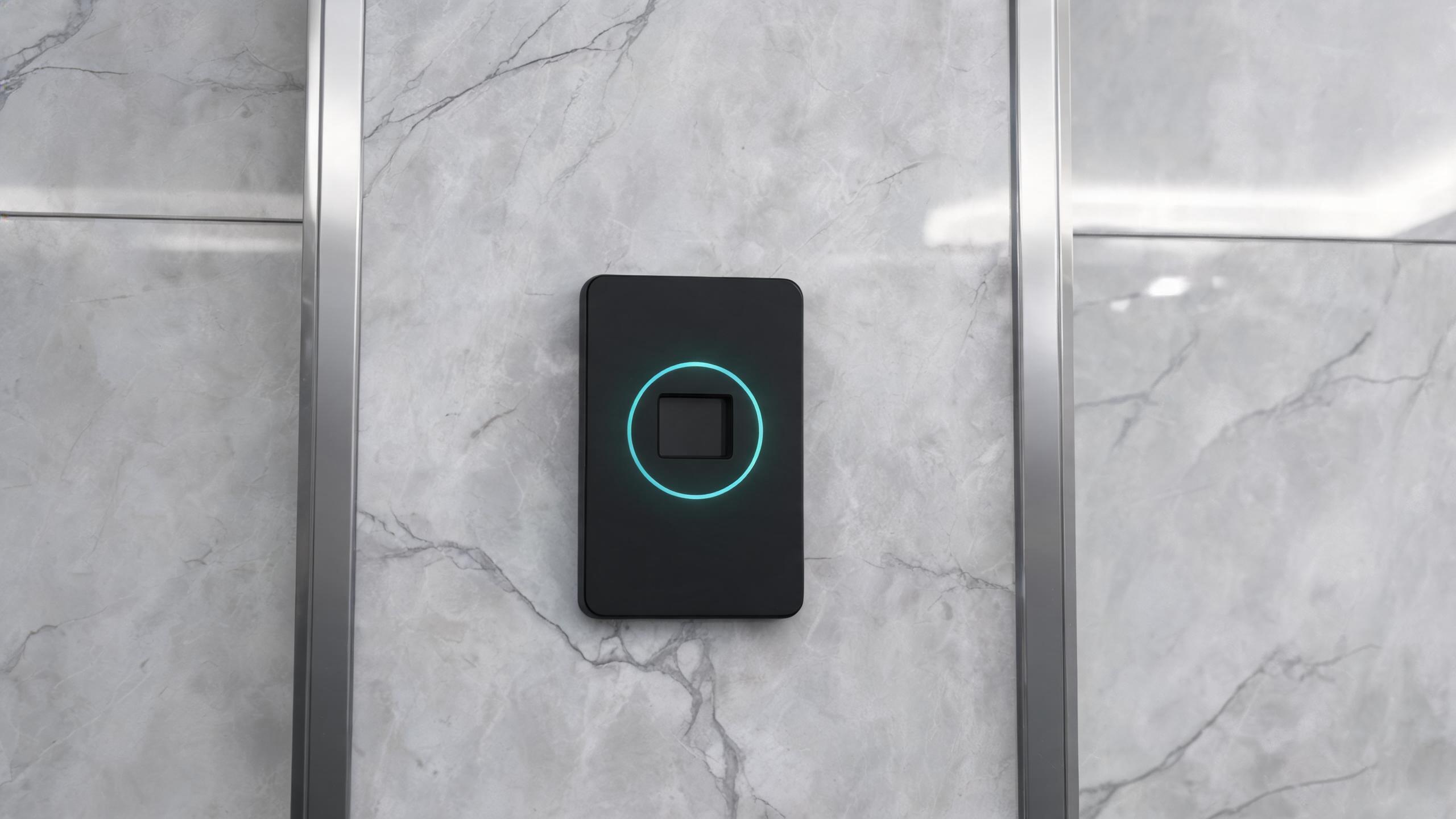
Palm vein authentication reads the pattern of blood vessels inside the palm rather than anything on the skin surface. A near-infrared sensor captures the deoxygenated-hemoglobin contrast as a shadow network, extracts a template and matches it in well under a second on modern readers. Because the pattern is internal, it is not left on glass the way fingerprints are, it cannot be lifted from a photograph, and presentation requires a living hand, which gives the technology a strong reputation in banking, data centers and government facilities. In the smart-lock industry it appears more often as a wall reader paired with an electric lock than as a battery deadbolt, because sensors and processing are larger and more power hungry. This guide explains how palm vein works, where it is cost-justified, how it handles gloves and accessibility, and how it integrates with access panels and smart locks. Current reader models and integration interfaces are confirmed per quotation.
Palm vein recognition at a glance
| Principle | Near-infrared imaging captures the internal vein network of the palm; the stored template is mathematical, not a photo. |
| Security profile | Internal, non-surface patterns resist lifting and casual spoofing, with liveness inherent in blood flow and infrared imaging. |
| User experience | Touchless, hygienic and fast after a short learning gesture; users hold the palm open at the indicated distance and height. |
| Hardware profile | Readers are larger and pricier than fingerprint modules and usually need wired power, favoring wall mounting over battery locks. |
| Inclusivity | Works through the hand rather than worn fingerprints; some users need positioning guidance, and wheelchair reach must be designed. |
| Typical sites | Data centers, banks, laboratories, government zones and premium corporate lobbies value the assurance and hygiene story. |
| Our policy | We specify reader interfaces, power needs and integration topology in writing; no biometric system is described as impossible to defeat. |
Answer unit
When does palm vein justify its premium?
The value case is strongest at a few high-consequence doors shared by a stable population, not across every opening of a building. Combine it with a card or mobile factor and use simpler credentials elsewhere.
| Site profile | Palm vein fit | Recommended design |
|---|---|---|
| Data center or server cage | Very strong for mantraps and cages | Palm plus card, logged at the access panel, wired readers. |
| Bank vault or cash office | Strong audit and hygiene story | Enroll all staff, supervised enrollment and dual-factor policy. |
| R&D or records vault | High assurance for a small stable group | Palm reader at the sensitive room, cards on general areas. |
| Corporate lobby turnstile | Premium touchless option for flagship sites | Palm or card at gates with visitor QR flow beside staff. |
| Hospitality and homes | Rarely cost-justified at unit level | Face, fingerprint or cards remain the mainstream choice. |
| Accessibility-sensitive sites | Good with proper reach planning | Test seated users and provide alternate credential paths. |
Projects, products and evidence
Palm vein normally protects a defined inner zone. The architecture pairs a wired reader with an electric strike, magnetic lock or motorized door, while credentials like mobile or card handle general circulation.
| Opening | Typical door | Lock approach |
|---|---|---|
| Data center man-trap | Steel interlocking doors | Wired palm reader plus card, interlock logic in the controller. |
| Cash handling room | Hollow-metal security door | Fail-secure electric lock, supervised enrollment and audit logs. |
| Laboratory clean zone | Sealed door with gowning area | Touchless reader supports hygiene, with badges for visitors. |
| Executive floor lift lobby | Glass speed gates in premium space | Palm or credential at gates; elevator rights follow the same identity. |
| Government restricted wing | Fire-rated steel doors | Palm plus card under site security policy and emergency egress. |
| Private safe room | Reinforced residential door | Wired reader where power and budget allow, with mechanical override. |
Integration specification for palm vein readers
A palm vein project is an access-control integration, not a lock replacement. Our documentation covers the reader, panel topology and enrollment workflow so integrators can quote accurately.
| Component | Typical logic | Notes |
|---|---|---|
| Reader interface | Wiegand or OSDP output, relay logic and power requirements. | Defines compatibility with the existing access panel. |
| Mounting geometry | Reader height, reach distance and clearance for the hand. | Critical for comfortable use and accessibility compliance. |
| Enrollment process | How templates are captured, stored and revoked. | Banking and government projects require supervised procedures. |
| Template storage | On reader, panel or server, and export behavior. | Feeds privacy documentation and system ownership decisions. |
| Fallback design | Card, mobile or supervised path for visitors and failures. | Ensures business continuity and inclusive access. |
Deploying palm vein in five steps
- Zone the buildingIdentify the few doors whose risk level justifies premium biometrics.
- Confirm integrationMap reader interface, controller, electric lock and power supply.
- Plan enrollmentDefine supervised capture, template ownership and revocation rules.
- Mock up the entranceValidate mounting height with standing and seated users before installation.
- Audit and hand overTest false rejection flows, logging and visitor fallback, then train staff.
Related technology guides
Biometric and high-security guides related to palm vein
Questions about palm vein access systems
How does palm vein recognition differ from fingerprint access?
Fingerprint systems examine ridge patterns on the skin surface, which can be worn, dirty, wet or affected by manual work, and the sensor requires physical contact or a very close hover. Palm vein systems instead image blood vessels beneath the skin with near-infrared light, so the pattern is not left on surfaces, is difficult to observe from the hand alone and requires a living palm presented with blood flow. That drives different product economics: fingerprint modules fit inside battery door locks at consumer prices, while palm vein readers are larger wired devices used at high-value doors. Both store templates rather than raw images on properly configured systems and both carry the same biometric privacy obligations under GDPR-style regimes.
Can palm vein be fooled with a photo, a fake hand or a stolen glove?
The infrared sensor looks for the subsurface vessel pattern, which is not reproduced by a printed photograph or a surface glove, and the liveness signal comes from blood-bearing tissue presented at the imaging distance. Security researchers build sophisticated artificial hands for laboratory tests of any biometric, so vendors use multiple quality and liveness checks, but palm vein has a strong track record against casual spoofing in banking deployments. We present it as a high-assurance rather than an absolute factor and recommend combining it with a card or PIN at the most sensitive doors. The appropriate claim set and test evidence for the selected reader is provided in writing per project.
Is palm vein recognition hygienic and useful during disease concerns?
It is inherently touchless: the palm hovers in the reader field without contacting a shared plate, which is why healthcare, clean manufacturing and food-related facilities value it. The housing still sits in a public corridor and needs normal surface cleaning, but there is no fingerprint glass touched by every user. Some users initially hold the hand at the wrong angle or distance, so clear visual guidance and a brief enrollment session improve adoption; children and very small hands may fall outside the designed envelope, which should be checked per model. For inclusive environments, the installation height must serve seated users and a card or mobile path must remain available.
Why are palm vein readers uncommon on residential smart locks?
The optics, infrared illumination and processing require more space and continuous power than a battery deadbolt reasonably provides, and bill-of-materials cost is substantially higher than fingerprint or keypad modules. Palm vein therefore thrives where a door already has wired power, high traffic and real consequence — data centers, cash rooms and government zones — rather than on a family entrance that opens a few times a day. Residential ultra-high-security safe rooms can be exceptions if they are designed with wired power. For mainstream homes and multi-family units, fingerprint, 3D face, RFID or mobile credentials deliver the better value, and we help buyers choose rather than overselling the premium technology.
How does palm vein integrate with an existing Wiegand or OSDP access system?
A palm vein reader typically behaves as a high-security credential reader at the panel: on a successful match it presents the enrolled identity over Wiegand or OSDP just like a card reader, and the existing controller decides door release, schedules and logging. This means deployment hinges on interface matching, voltage and reader address planning rather than replacing the whole platform. Templates usually reside on the reader or a dedicated biometric controller, while access rights remain on the panel, which keeps the architecture familiar to integrators. We document interface, power and enrollment topology for each supported reader and recommend a bench integration test before site installation; OSDP is preferred for encrypted wiring on new builds.
Planning a high-security biometric entrance?
Share your door schedule, access panel model and enrollment policy with your RFQ. We confirm reader interfaces, power design and integration topology for palm vein deployments and support integrator bench testing before rollout.
Request Spec Sheet + QuoteTechnology overviewLast updated: October 31, 2026 · Reviewed by the Smart Lock Factory editorial team